
The Seeds of Dissent
Following annexation in 1849, the Punjab province underwent extensive administrative, economic, and social transformation. New systems of government were established, canals expanded agriculture, railways connected major cities, and educational institutions created new opportunities for many Punjabis.
As a result of this rapid change, attitudes towards colonial rule were often complex. Some social groups benefited from the new administration and chose to work within it, while others gradually became critical of certain policies and limitations. These changes in public opinion developed slowly through decades of social change, education, migration, and public debate.
New Ideas and Political Discussion
The expansion of education during the British Raj created a growing class of teachers, lawyers, journalists, civil servants, and students. Many of these individuals were exposed to political ideas from across India and beyond.
At the same time, newspapers and print culture expanded rapidly throughout Punjab. Publications in Urdu, English, and Punjabi allowed political discussions to reach a wider audience than ever before. Cities became centres of intellectual activity, where questions about governance, representation, and the future of India were increasingly debated.
For many people, these discussions were not initially about independence. Instead, they focused on reform. The educated Punjabi class began asking why senior government positions remained dominated by expatriate officials and whether local populations should have a greater role in shaping policies that affected their lives.
The Indian National Congress
The formation of the Indian National Congress in 1885 provided a platform through which many of these concerns could be expressed. In its early decades, Congress was generally moderate in its aims. Rather than demanding immediate independence, its leaders advocated constitutional reform, greater Indian participation in government, and expanded political representation.
Punjab was not initially a stronghold of Congress activity. Compared to provinces such as Bengal and Bombay, political mobilisation developed more gradually. Eventually, Congress ideas slowly spread through the province's schools, colleges, newspapers, and professional networks.
While support remained limited in some areas, the organisation introduced many Punjabis to a broader political movement that connected local concerns with developments occurring across British India.
Rural Grievances and Public Unrest
In rural Punjab, dissatisfaction occasionally emerged over issues relating to land, agriculture, and government authority.
Many farmers had benefited from irrigation projects and agricultural expansion, yet others became concerned about increasing regulation and official involvement in rural life. These tensions were highlighted with the unrest of 1907, when protests emerged in parts of Punjab against proposed land and canal-related policies.
Although the agitation did not develop into a mass nationalist movement, it showed that support for the colonial administration was not unconditional. Even in a province that was often viewed as loyal to the Raj, government policies could generate significant opposition when local interests and core Punjabi values were perceived to be under threat.
The Ghadar Movement
One of the most influential early nationalist movements connected to Punjab actually emerged overseas.
During the 18-1900s, many Punjabis migrated abroad in search of economic opportunities. Communities were established across North America, Southeast Asia, East Africa, and other parts of the British Empire.
While abroad, many migrants saw racial discrimination, immigration restrictions, and unequal treatment. These experiences helped shape new political ideas and encouraged some members of the diaspora to become active critics of colonial rule.
In 1913, Punjabi migrants helped establish the Ghadar Party in San Francisco. Unlike the moderate approach of the Indian National Congress, the Ghadar movement openly advocated the overthrow of colonial rule in India. Through newspapers, speeches, and political organising, its members attempted to encourage resistance and revolution. Although its efforts failed to spark a widespread uprising, the movement became one of the earliest revolutionary organisations associated with Punjab and played an important role in the development of Indian nationalism.
A Province of Many Opinions
By the beginning of the 1900s, political opinion within Punjab was becoming increasingly diverse. Some people continued to support and cooperate with the colonial administration, while others sought reform, greater representation, and eventually complete independence.
There was no single Punjabi response to British rule. Attitudes varied according to class, occupation, education, location, and personal experience. The province contained loyalists, reformers, revolutionaries, and many people who fell somewhere between these positions.
The foundations of future nationalist movements were being laid, but they emerged gradually rather than suddenly. The same forces that transformed Punjab under the Raj - education, migration, urban growth, communication networks, and social change also created the conditions for new political ideas to take root.
By the early 1900s, the first seeds of dissent had begun to grow.
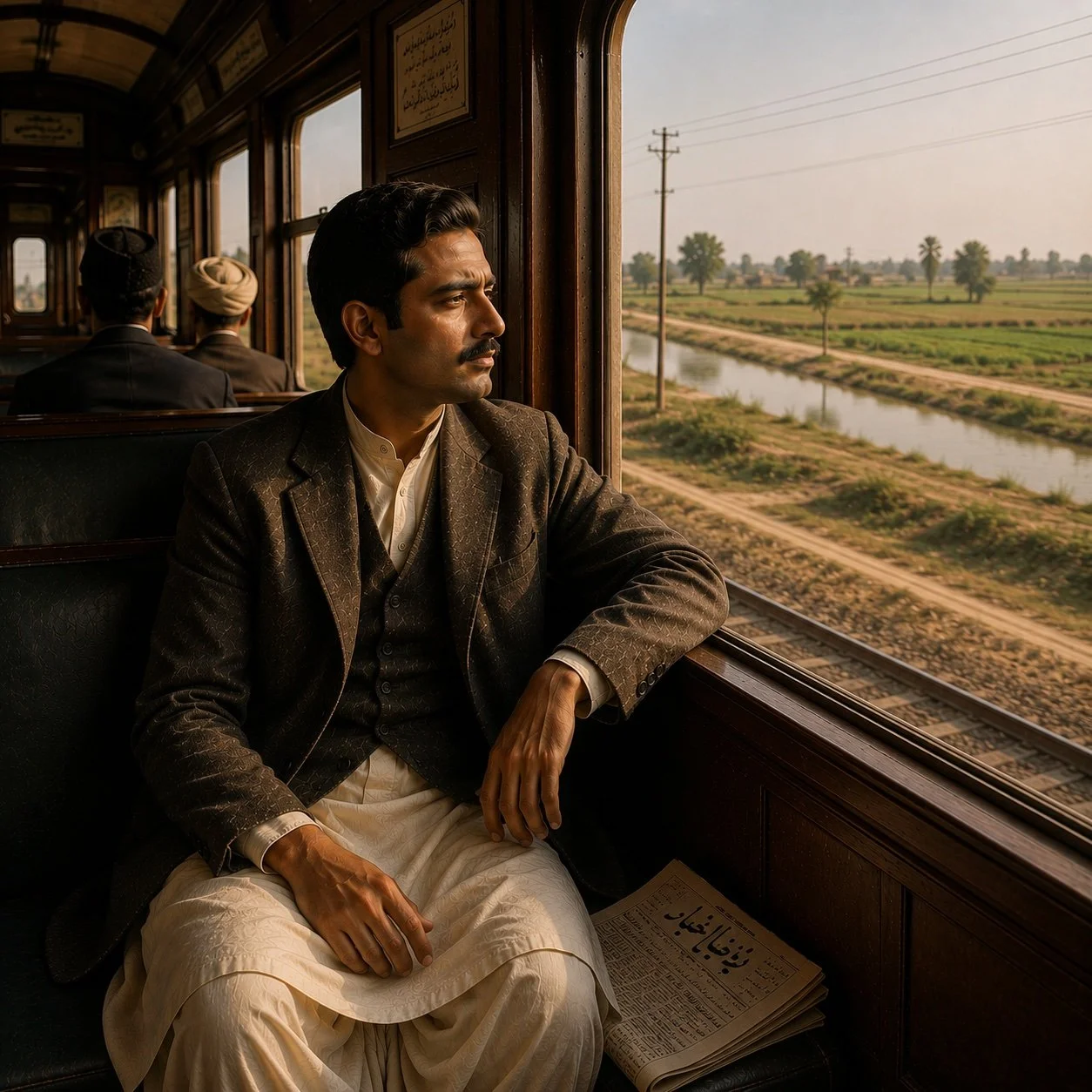
To those who believed Punjab needed a voice, and to those who challenged social norms
With respect, Trish Saab