The Punjabi Language
~
Punjabi Dialects
~
Writing Systems
~
The Punjabi Language ~ Punjabi Dialects ~ Writing Systems ~
Punjab speaks in many voices.
Across regions, rivers, empires, and borders.
Conversation. Song. Storytelling. Language evolved through movement, settlement, and everyday life.
Historical Languages
~
Punjabi Literature
~
Partition & Language
~
Historical Languages ~ Punjabi Literature ~ Partition & Language ~
Punjab’s languages developed across rivers, plains, hills and travelling communities.
They changed as people migrated, kingdoms expanded and borders divided regions that had once remained closely connected. Even the standard Punjabi grew into many distinct forms, shaped by the places and people who spoke it.
This page explores the languages of Punjab and the dialects within Punjabi: how they developed, where they are spoken, writing systems, language and literature across history, and what they reveal about the region.
Dialects of The Punjabi Language
-
![]()
Majhi
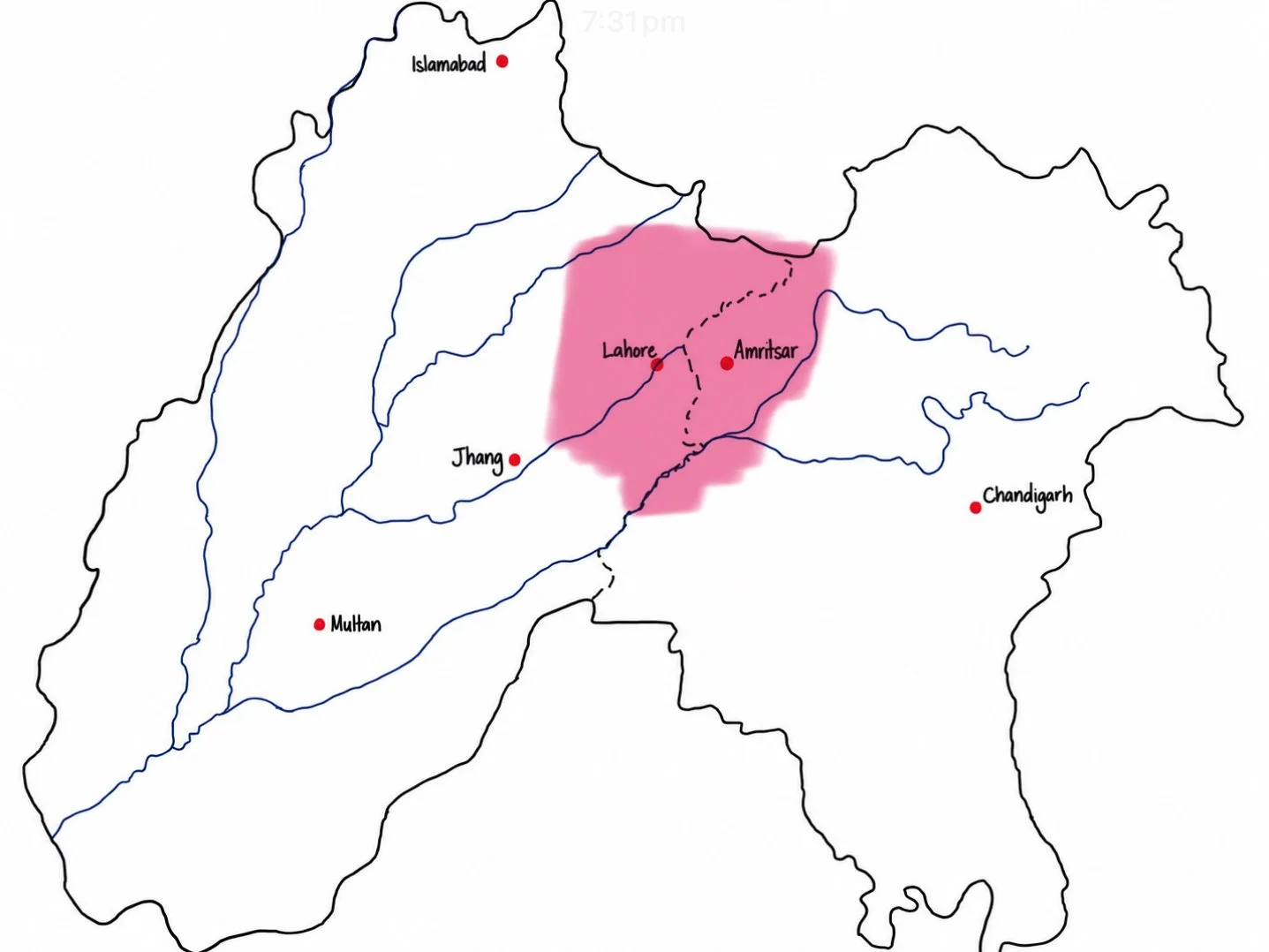
Spoken across the Majha region surrounding Lahore, Amritsar and Gurdaspur, Majhi provided the foundation for standard Punjabi and is widely used in writing, education and formal media.
-
![]()
Doabi
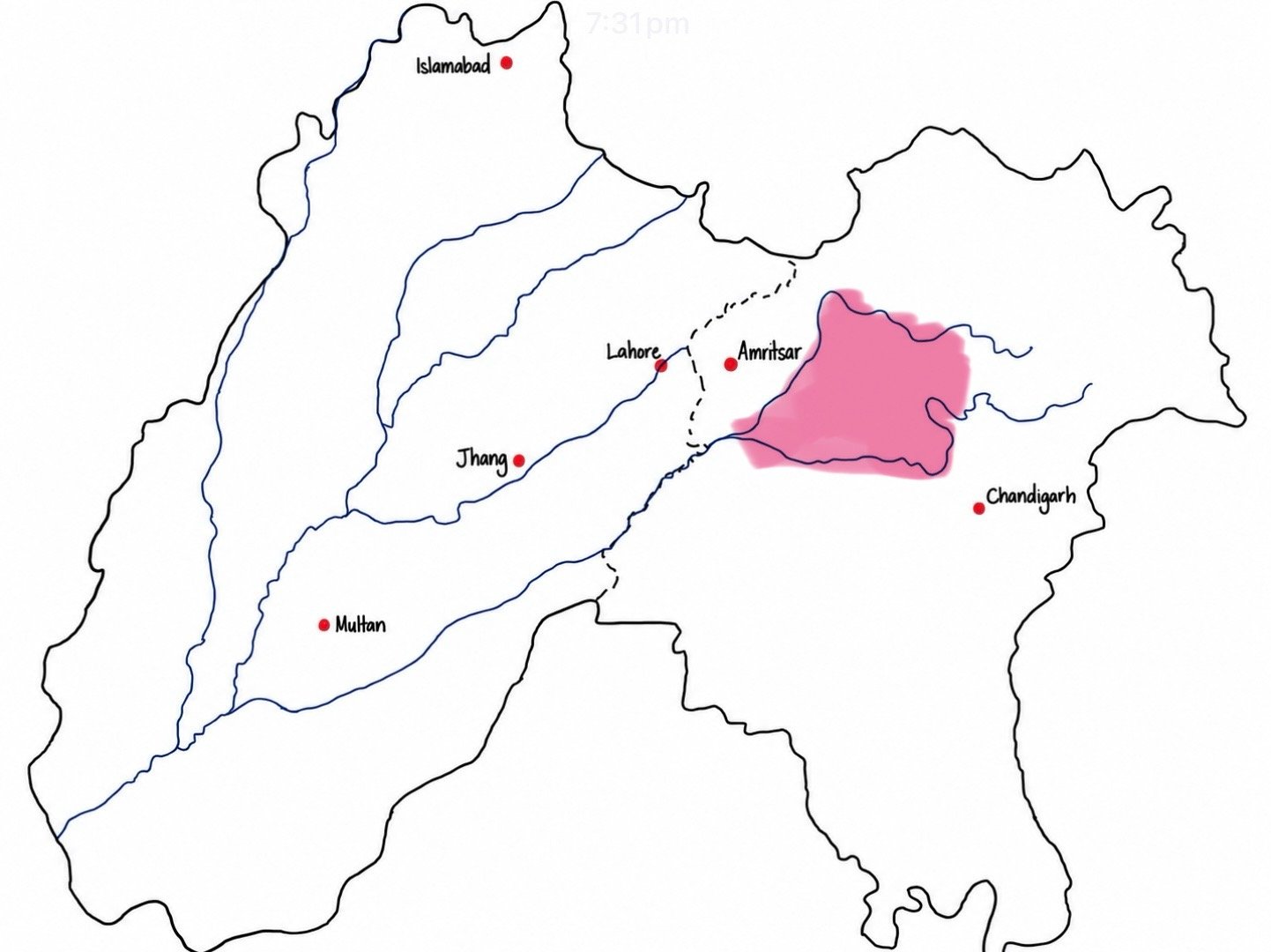
Spoken between the Beas and Sutlej rivers, Doabi differs from Majhi through changes in pronunciation, shortened sounds and regional vocabulary developed around Jalandhar, Hoshiarpur and Kapurthala.
-
![]()
Potohari
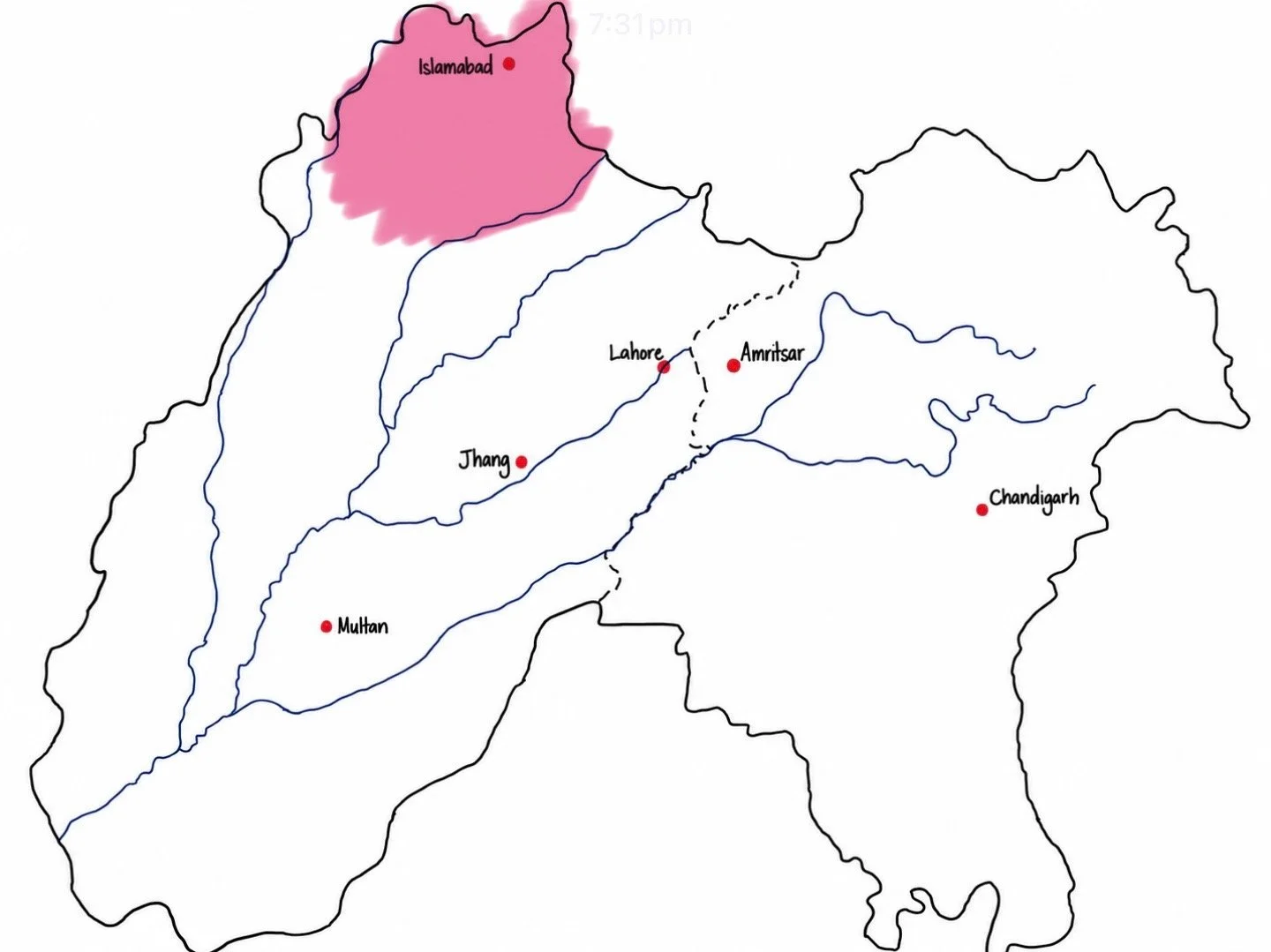
Spoken across the Pothohar Plateau around Rawalpindi and Jhelum, Potohari uses distinctive verb forms, pronouns and vocabulary and gradually merges into the related Pahari varieties of Azad Kashmir.
-
![]()
Malwai
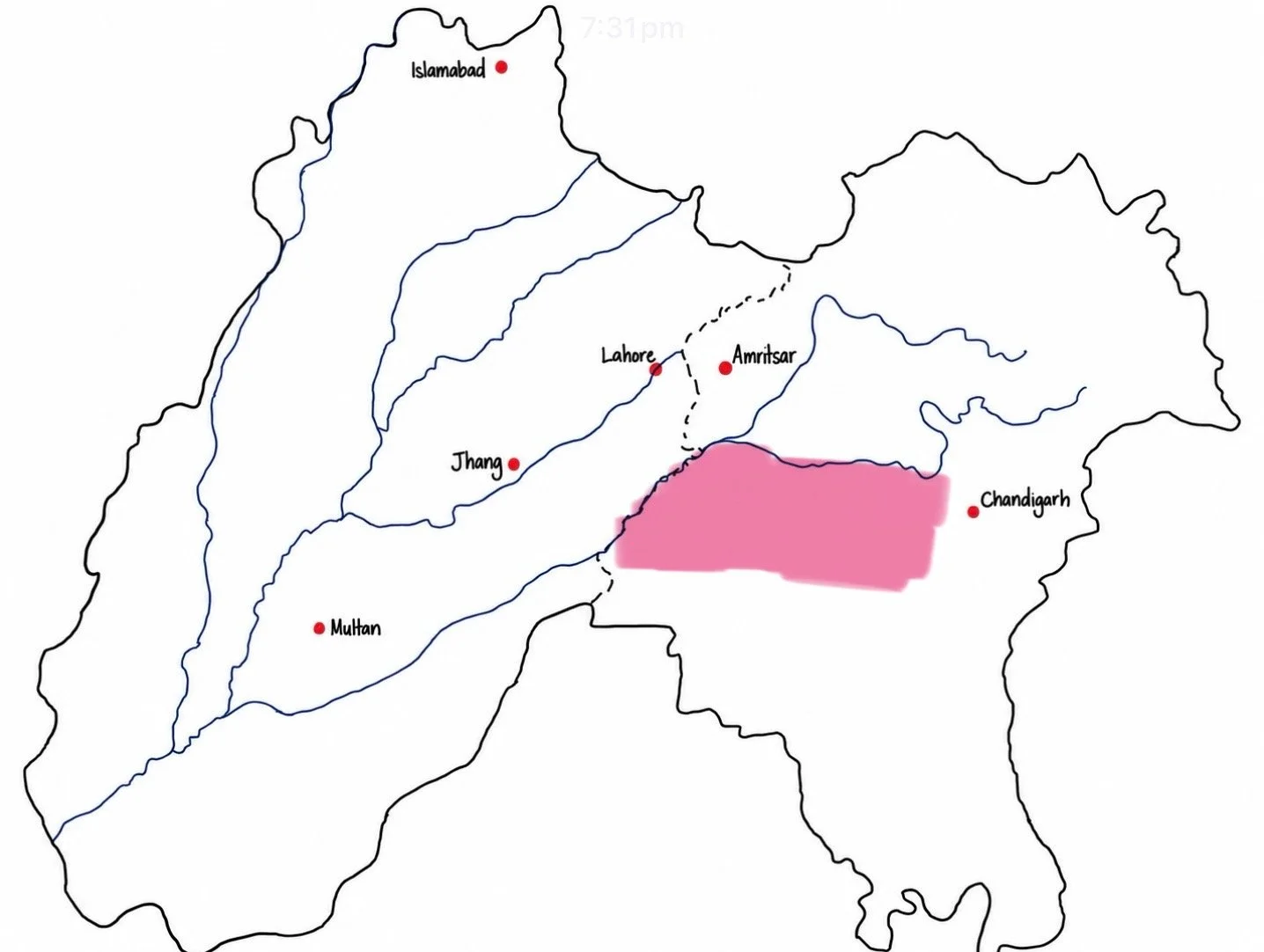
Spoken across the large Malwa region of eastern Punjab, Malwai has its own vocabulary and verb endings creating a recognisable rhythm.
-
![]()
Puadhi
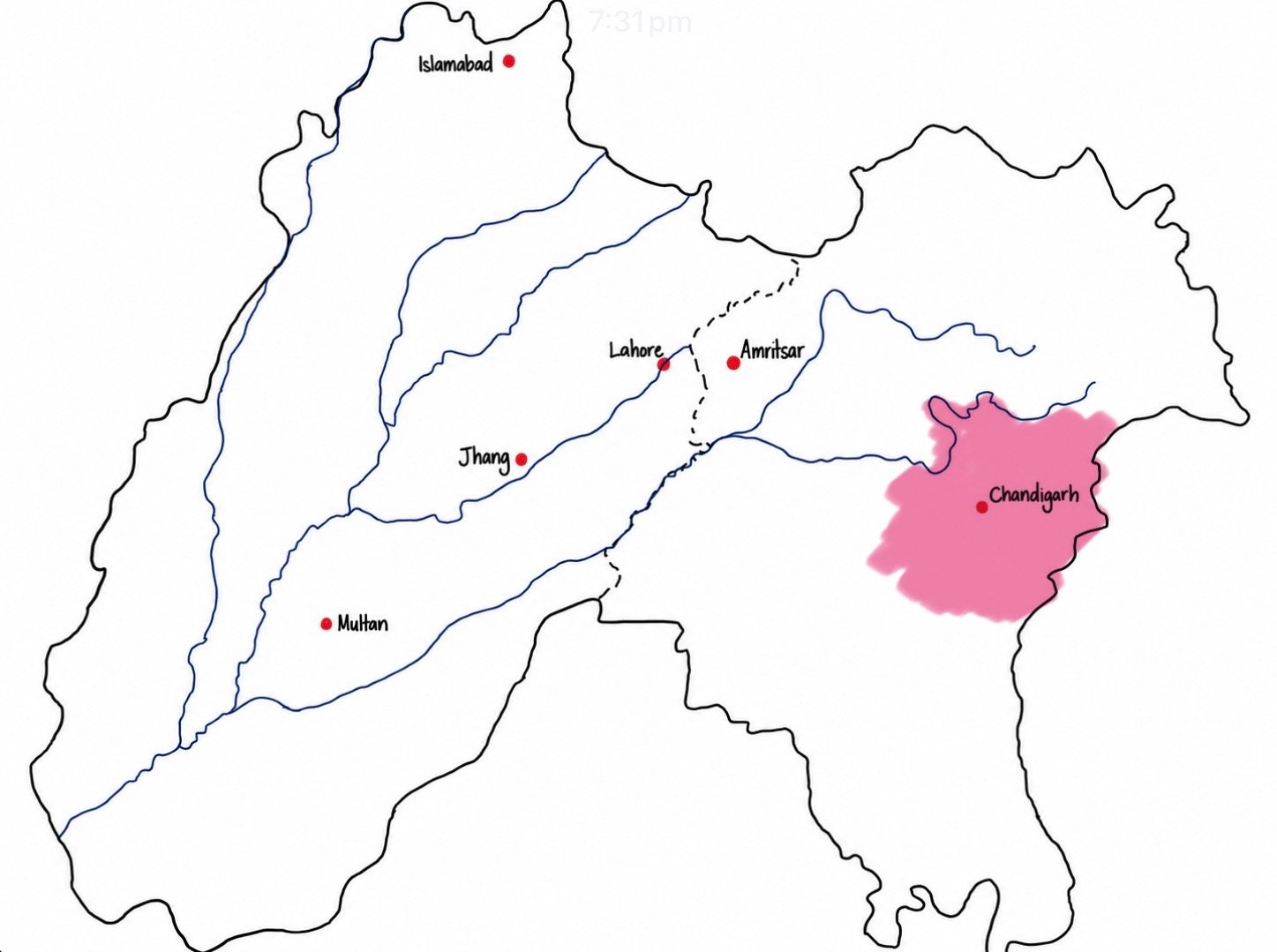
Spoken between the Sutlej and Ghaggar rivers, Puadhi developed along Punjab’s southeastern edge and shares vocabulary and grammar with the neighbouring languages of Haryana.
-
![]()
Jangvi
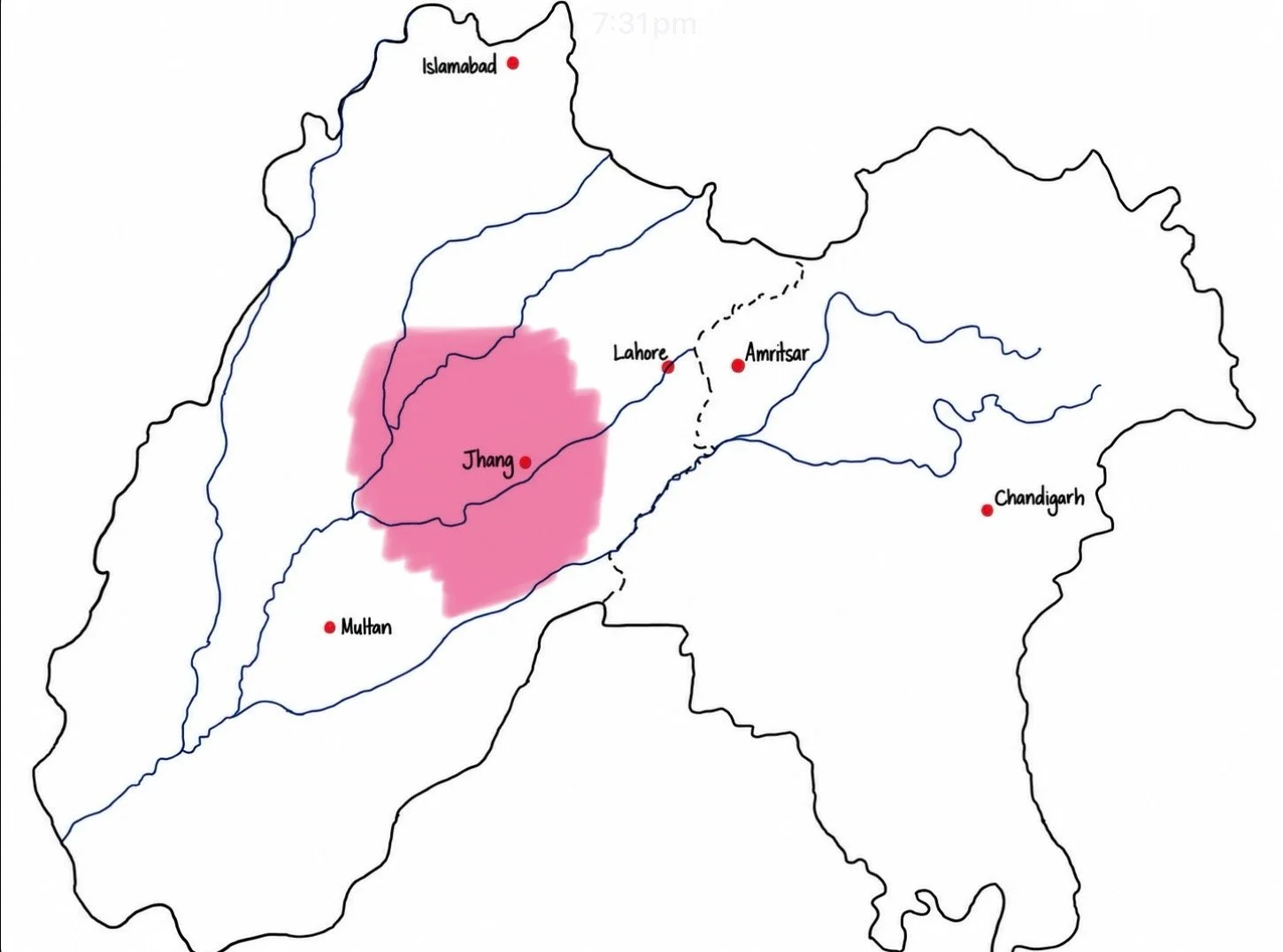
Also called Jhangochi or Jatki, Jhangvi developed among the agricultural and pastoral communities of the Bar region and combines features associated with both central Punjabi and the western varieties spoken toward southern Punjab.
-
![]()
Seraiki
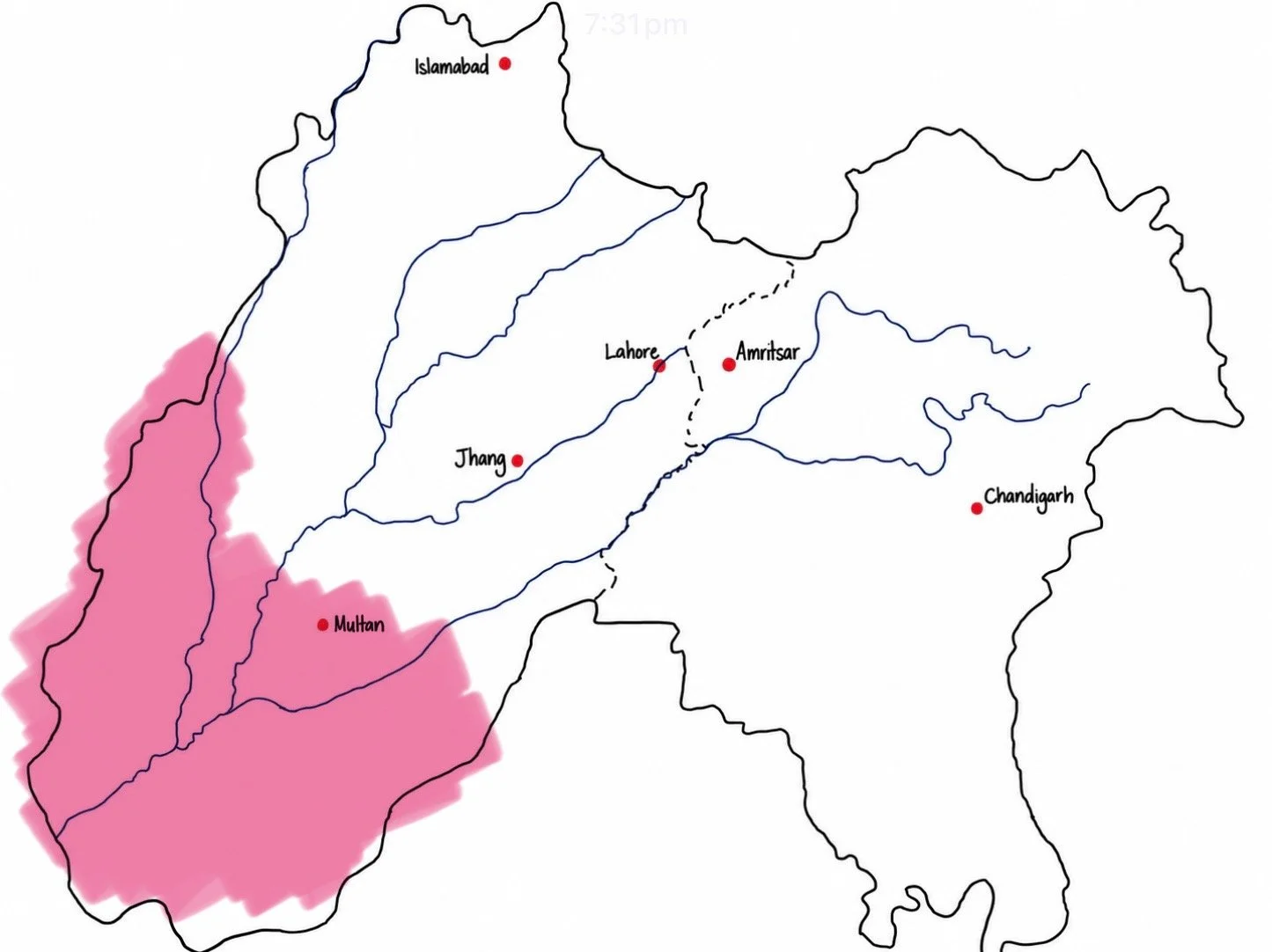
Spoken across southern Punjab, Seraiki is distinguished by its broader sound system, and regional vocabulary; although historically grouped with Punjabi, it is also widely recognised as a separate language.
-
![]()
Hindko
Hindko refers to several closely related varieties spoken across northern Punjab, Hazara and parts of Khyber Pakhtunkhwa, combining Punjabi-like tones and vocabulary with influences from the other languages of the northwestern frontier.
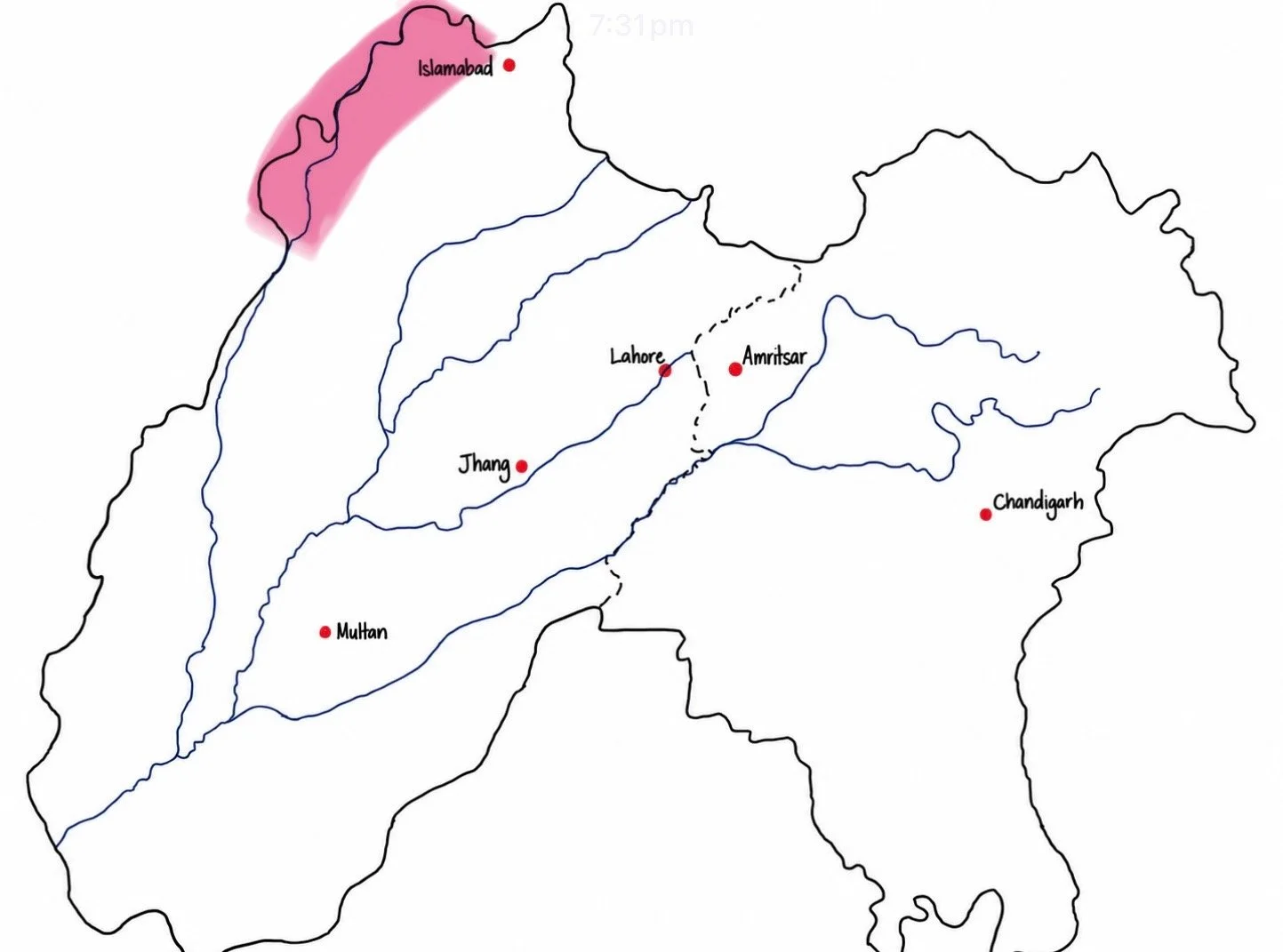
Punjabi is an Indo-Aryan language that developed in the Punjab region. It is spoken across both Indian and Pakistani Punjab, as well as neighbouring parts of Haryana, Rajasthan, Himachal Pradesh, Jammu and Kashmir, Islamabad and northern Sindh. Migration also resulted in international punjabi speaking communities.
The language developed gradually from the older Indo-Aryan speech of northwestern South Asia. Spoken languages changed through regional Prakrits - groups of Middle Indo-Aryan languages spoken from the 5th Century BCE to 12th Century CE and later Apabhramsha- langauages spoken in North India prior to the rise of modern forms, eventually producing Punjabi and other modern Indo-Aryan languages. Punjabi is commonly connected with Shauraseni Prakrit, although its development was also shaped by Punjab’s own regional speech and contact with neighbouring cultures. By the medieval period, it had emerged as a recognisable language.
Punjabi belongs to the same broad language family as Saraiki, Hindko, Sindhi, Dogri, Hindi, Urdu, Gujarati, Marathi and Bengali. Its closest relationships are found among the languages and speech varieties of northwestern South Asia. However, these boundaries are not always clear. Punjabi, Saraiki, Hindko and Pothohari can merge gradually across regions, and speakers may identify the same form of speech differently depending on their location and community.
Punjabi is not a dialect of Hindi or Urdu. All three share older Indo-Aryan roots and have exchanged vocabulary over centuries, but Punjabi developed its own grammar, sounds and regional forms. Persian and Arabic contributed heavily to its vocabulary, particularly in western Punjab, while Sanskrit, Hindi, Urdu and English influenced later usage. Punjabi is also one of the few major Indo-Aryan languages to use tone - meaning that a change in pitch can help change the meaning of a word.
The number of Punjabi speakers depends on which regional varieties are included. Pakistan’s 2023 census recorded approximately 89 million native Punjabi speakers, while India’s 2011 census recorded more than 33 million. Together with Punjabi communities elsewhere, Punjabi is the first language of over 120 million people worldwide.
Writing Systems of The Punjabi Language
-
Shahmukhi
The right-to-left Perso-Arabic script used for Punjabi primarily in Pakistan.
-
Gurmukhi
The left-to-right script standardised by Guru Angad and now used officially for Punjabi in India.
-
Devanagari
Historically used by some Hindu Punjabi communities, although it is less common today.
-
Takri
A related regional script used across the northern hill states of the wider Punjab region, especially for Western Pahari languages.
-
Landa/ Multani
A family of abbreviated scripts used by Punjabi merchants for accounts, letters and commercial records. The Multani script is a regional Landa-derived script used around Multan for Seraiki, Punjabi and commercial writing.
-
Roman Punjabi
Punjabi written in the Latin alphabet. It has no standard spelling but is common among diaspora communities, in text messages, and across social media.
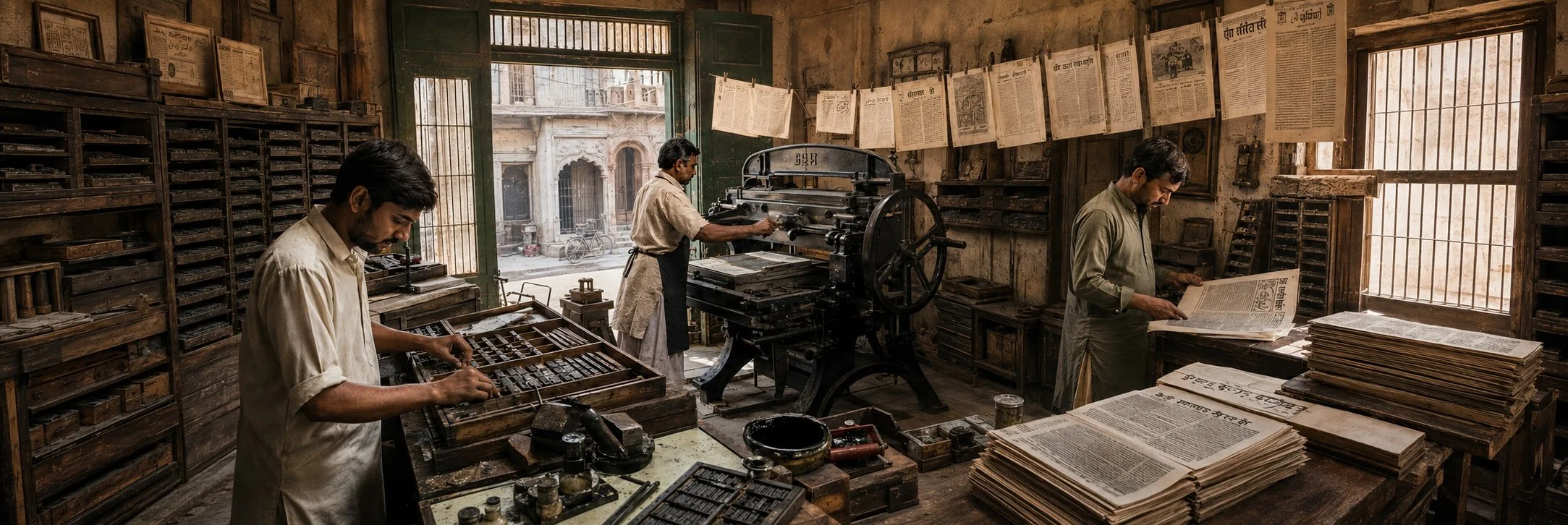
Punjabi was spoken long before it was regularly written down.
Songs, stories, sayings and ballads passed directly between people, changing as they were shared between villages and generations. Because everyday speech left few historical records, literature shares the clearest evidence of how Punjabi developed, how it differed between regions and how people expressed their understanding of the world.
Early poetry brought spoken Punjabi into literary and spiritual settings.
Familiar words were used to communicate faith, morality, separation, devotion and criticism, showing that the Punjabi language could carry ideas previously associated with formal languages such as Sanskrit and Persian. Literature gave greater authority to the language of ordinary people without removing its regional character.
Different literary forms expanded Punjabi in different ways.
Devotional poetry developed its spiritual and philosophical vocabulary. Sufi genres used simple images from love, farming, weaving and village life to express more complex meanings.
Heroic genres created a language of courage, conflict and collective memory, while romantic genres preserved dialogue, humour, insults, occupations, relationships and social customs.
These works did not use one fixed or standard Punjabi. Their vocabulary, grammar and pronunciation reflected different dialects, locations and communities. They also brought Punjabi into contact with Sanskrit, Persian and Arabic vocabulary. Literature therefore preserved the variation within Punjabi while allowing the language to grow beyond everyday conversation.
Manuscripts and later printing gave Punjabi more permanent written forms. Gurmukhi became the main literary script in eastern Punjab, while Shahmukhi carried Punjabi poetry and prose in the west. Both sides and all scripts preserved the same wider language.
Modern poetry, novels, newspapers and diasporic writing continue to introduce language for politics, cities, migration, technology and changing identities. Punjabi literature does not just preserve the language as it once existed. It records how Punjabi has changed while continually growing in new words and new ways.
Partition transformed the way Punjabi was spoken, written and recognised.
In 1947, Punjab was divided between India and Pakistan and millions of people were forced to move across the new border. Muslim communities travelled west, while Sikh and Hindu communities travelled east. They carried their dialects, expressions, songs and storytelling traditions into places where those forms of Punjabi had not previously been dominant.
This movement disrupted older language regions. Punjabi had developed gradually across connected towns, villages and districts, with speech changing rather than stopping at a fixed boundary. Partition placed an international border through this linguistic landscape. Dialects once connected through travel, trade and neighbouring communities were now divided between two countries.
Refugees also changed the speech of the places where they settled. Punjabis from Lahore, Rawalpindi, Sialkot, Gujranwala, Multan and other western districts established communities across eastern Punjab, Delhi and northern India.
At the same time, Muslims leaving Amritsar, Jalandhar, Ludhiana and surrounding areas carried eastern vocabulary and pronunciation into Pakistan. Punjabi therefore survived beyond its original districts, but many local varieties became mixed with those spoken in new places.
Partition did not create the division between Gurmukhi and Shahmukhi.
Both scripts were already in use, alongside Devanagari, Landa-derived scripts and other regional forms of writing. However, the creation of India and Pakistan strengthened the separation between them. Gurmukhi became increasingly connected with Indian Punjab, while Shahmukhi remained the main script used for Punjabi in Pakistan.
In India, the reorganisation of Punjab in 1966 created a smaller Punjabi-majority state, where Punjabi written in Gurmukhi received official recognition and became established in education, government and public signage. Hindi remained influential among some communities and in neighbouring areas that had once formed part of the larger Punjab.
In Pakistan, Urdu was promoted as the national language and became dominant in education, administration and formal media. Punjabi remained the most widely spoken first language in the country, but it was used mainly within homes, villages, music, theatre and informal conversation. Shahmukhi continued to support Punjabi poetry, literature and publishing, although many Punjabi speakers learned to read and write in Urdu or English.
Script also became more closely associated with religion and nationality. Gurmukhi came to be viewed primarily as a Sikh or Indian script, while Shahmukhi became associated with Muslims and Pakistan. Devanagari became connected with Hindu Punjabi communities. These associations can hide Punjab’s more complicated history, in which Punjabi belonged to Muslims, Sikhs, Hindus and other communities and was never limited to one faith or one form of writing.
The border also separated Punjabi literature, publishing and education. A reader trained only in Gurmukhi may be unable to read Punjabi written in Shahmukhi, even when the spoken words are familiar. The same work may therefore need to be transliterated from one script into another before it can reach readers across the border. Books, newspapers and historical records can appear foreign to people who already understand their language when it is spoken.
Despite this separation, Punjabi continued to travel through migration, music, film, poetry and family memory. Later generations of the diaspora carried the language to other parts of the world, where different dialects met again within the same communities. Roman Punjabi also became increasingly common online, allowing speakers from both sides to communicate without first learning one another’s script.
Partition divided the institutions surrounding Punjabi, but it did not divide the language completely. Pronunciation, vocabulary and writing developed differently on either side, yet songs, conversations and oral traditions remain widely understood across the border.