
Prehistory
~
The First Farmers
~
The Rise of the First Cities
~
The Indus Valley Civilisation
~
The End of An Age
~
A Changing Punjab
~
Prehistory ~ The First Farmers ~ The Rise of the First Cities ~ The Indus Valley Civilisation ~ The End of An Age ~ A Changing Punjab ~
Before the great empires.
A land shaped by rivers.
A people shaped by the land.
The earliest history of Punjab.
The Vedic Age
~
Punjab and the Persian Empire
~
Alexander and kiNG porus
~
The Crossroads of Asia
~
Medieval Punjab
~
The Last Kingdoms of Ancient Punjab
~
The Vedic Age ~ Punjab and the Persian Empire ~ Alexander and kiNG porus ~ The Crossroads of Asia ~ Medieval Punjab ~ The Last Kingdoms of Ancient Punjab ~
An Introduction
Long before Punjab became a province, a kingdom, or even a name, the land of its five rivers was already shaping human history.
Its rivers created fertile plains, sustained early communities and connected the mountains of Central Asia with the wider Indian subcontinent. Stone Age communities moved through its landscape before farming encouraged people to settle permanently. Villages grew, crafts became specialised and trade networks expanded. Over thousands of years, these developments contributed to the rise of one of humanity’s earliest urban civilisations.
At its height, the Indus Valley Civilisation supported carefully planned cities, sophisticated drainage systems, skilled industries and trade stretching far beyond South Asia. Harappa became one of its greatest urban centres - but much about the people who lived there remains unknown. Their writing has never been conclusively deciphered, and the beliefs, languages and political structures behind their cities continue to be debated.
When the great Indus cities declined, Punjab did not disappear.
Communities moved, settlements changed and new technologies, languages and customs gradually emerged. During the Vedic Age, the land of the seven rivers became an important setting for early Vedic society. Later, parts of Punjab were incorporated into the Achaemenid Persian Empire, bringing the region into recorded imperial history.
Alexander arrived from the west. The Mauryans followed. Indo-Greeks, Indo-Scythians, Indo-Parthians and Kushans each ruled or influenced parts of the region. Under these successive powers, Punjab became one of the great crossroads of the ancient world - a meeting place for merchants, armies, pilgrims, languages, religions and artistic traditions travelling between South Asia, Persia and Central Asia.
The ancient world did not end at a single moment. Empires weakened, new kingdoms emerged and Punjab gradually entered the medieval period. The rise of Lahore, the arrival and expansion of Islam, and the struggles between regional kingdoms and invading dynasties transformed its political and cultural landscape once again. By the early sixteenth century, Punjab had become the gateway through which Babur entered the subcontinent and founded the Mughal Empire.
This 12-post series traces Punjab’s story from its prehistoric landscape and earliest communities to the final kingdoms preceding Mughal rule. It explores the settlements, civilisations, migrations, empires and exchanges that shaped the region across thousands of years.
Not the story of one people or one uninterrupted civilisation;
but of a land continually settled, transformed and connected to the wider world.
A land shaped by rivers.
A history shaped by those who crossed them.
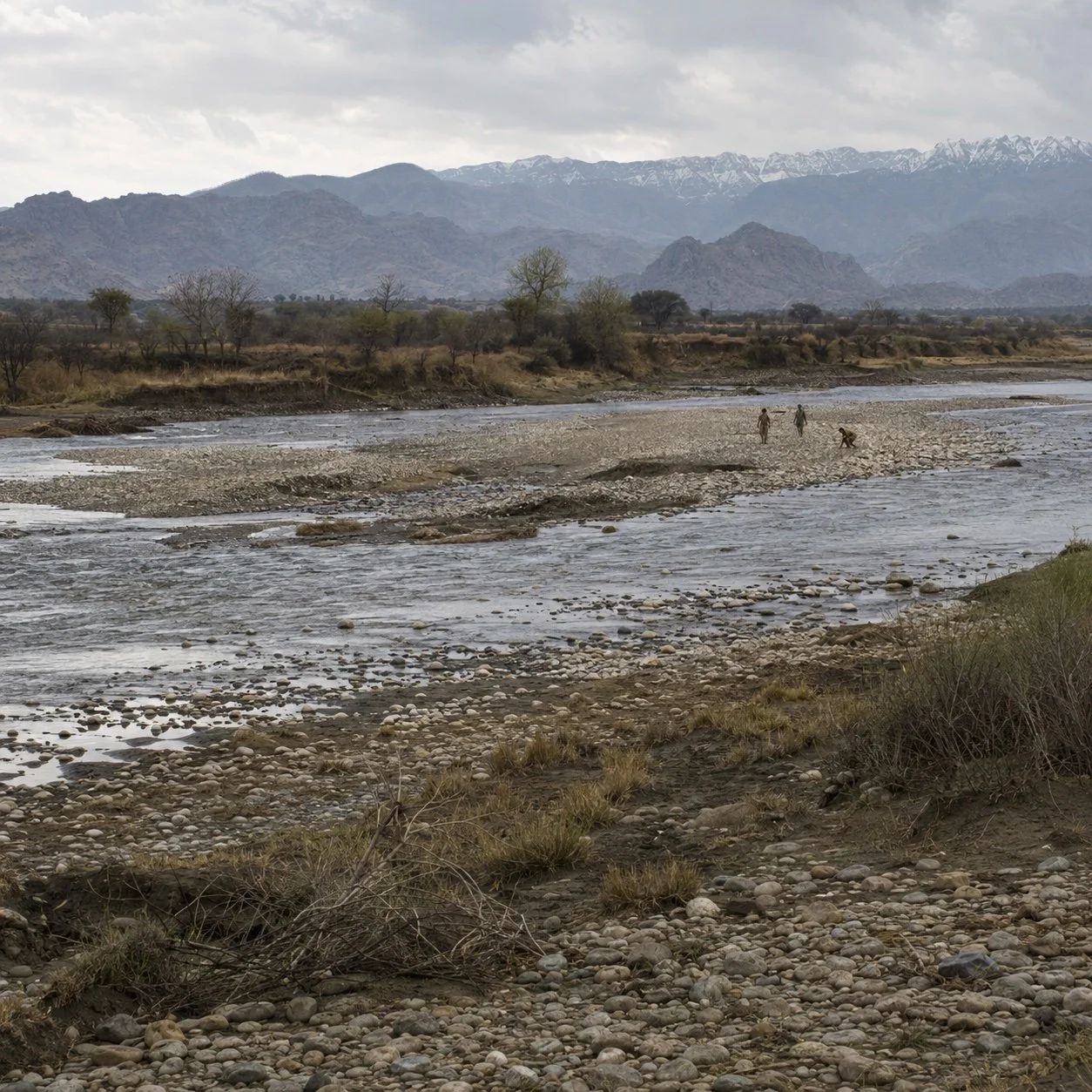
PreHistory - C. 2,000,000–7,000 BCE
Before Punjab became a land of cities, farms and empires, its rivers, plains and earliest human communities were already taking shape.
This post explores Punjab’s Ice Age environment, its first inhabitants and the Stone Age lives that preceded permanent settlement.
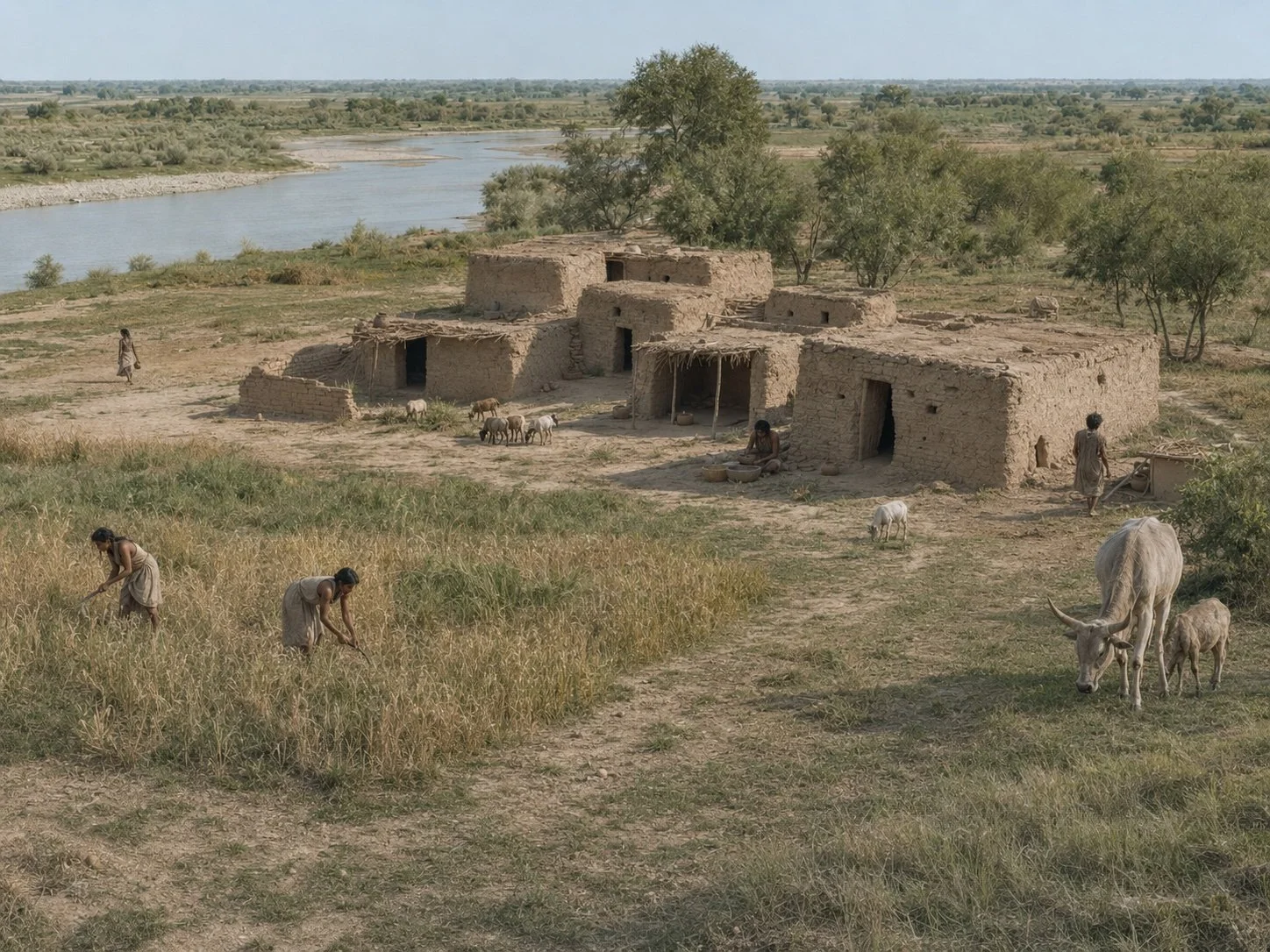
The First Farmers c. 7000–3300 BCE
The first great transformation in Punjab’s human history began when people stopped relying entirely on hunting and gathering.
At settlements such as Mehrgarh, farming, animal domestication and permanent village life laid the foundations for everything that followed.
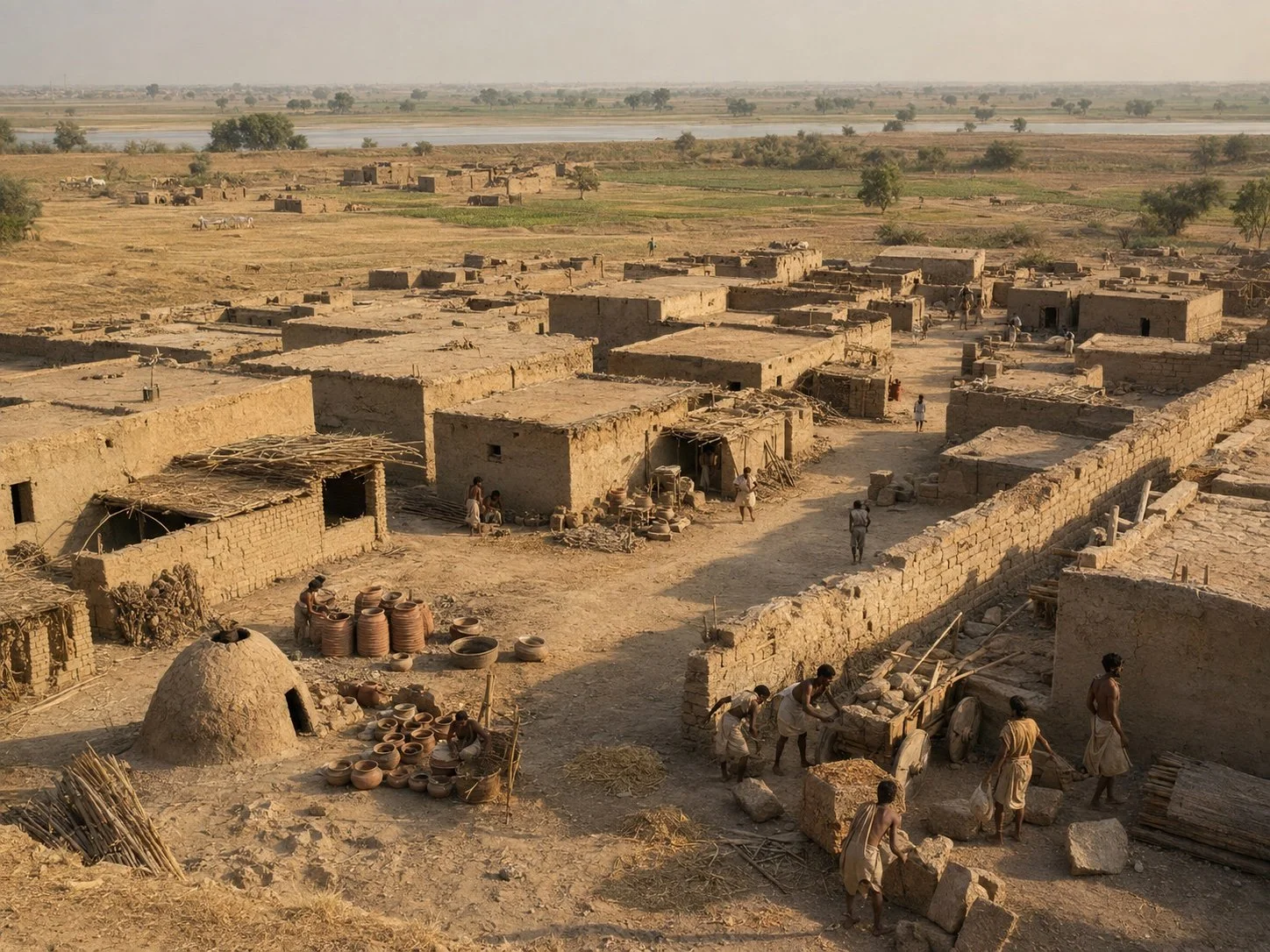
The Rise of The First Cities c. 3300–2600 BCE
Across the northwestern subcontinent, small farming communities were growing larger, wealthier and more organised.
Expanding trade, specialised crafts and planned settlements reveal Punjab’s gradual journey towards urban civilisation.
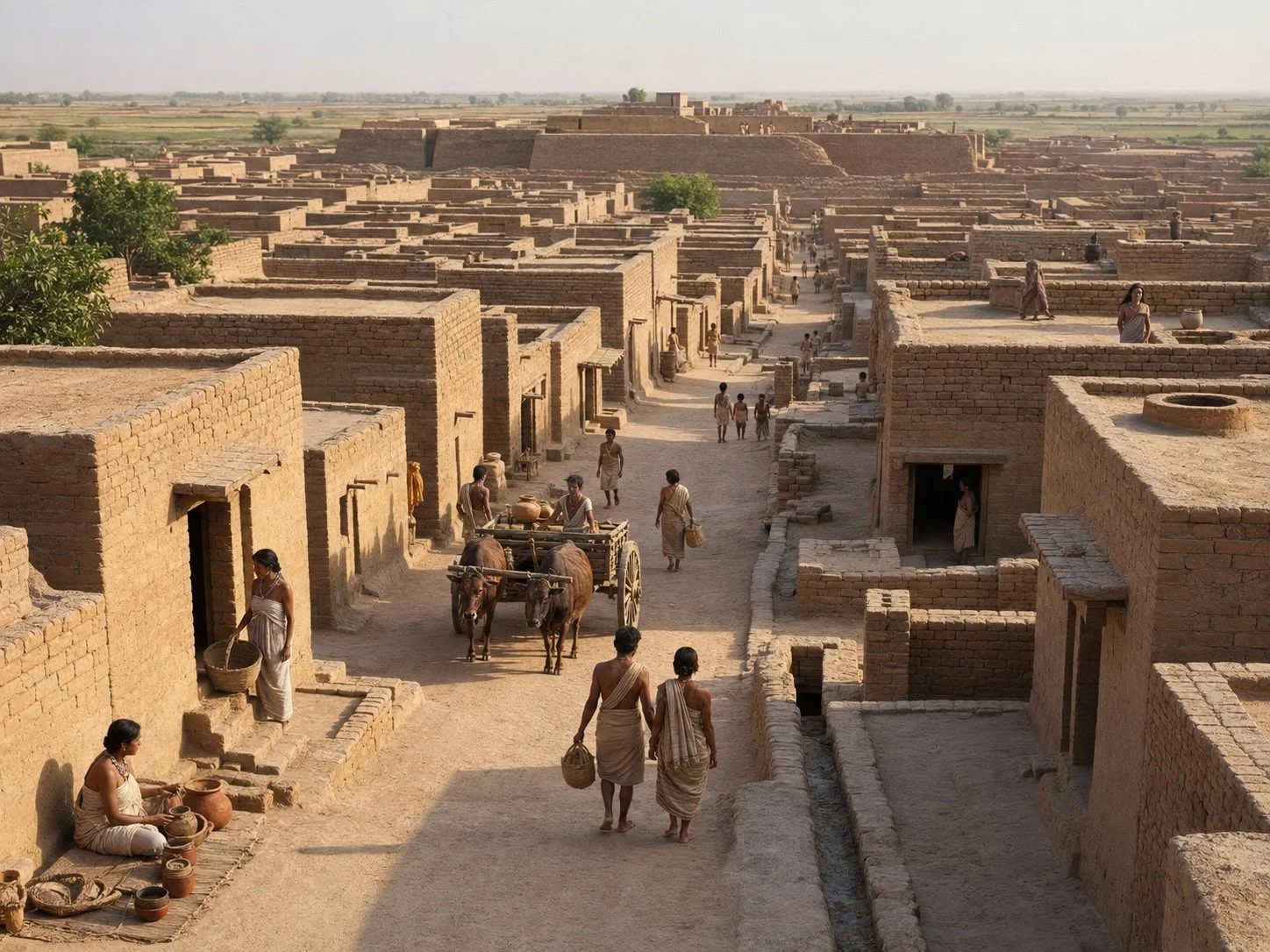
The Indus Valley Civilisation c. 2600–1900 BCE
At its height, the Indus Valley Civilisation supported vast cities, skilled industries and trade networks stretching far beyond South Asia.
Punjab stood at the heart of this urban world - although much about its people remains undeciphered.
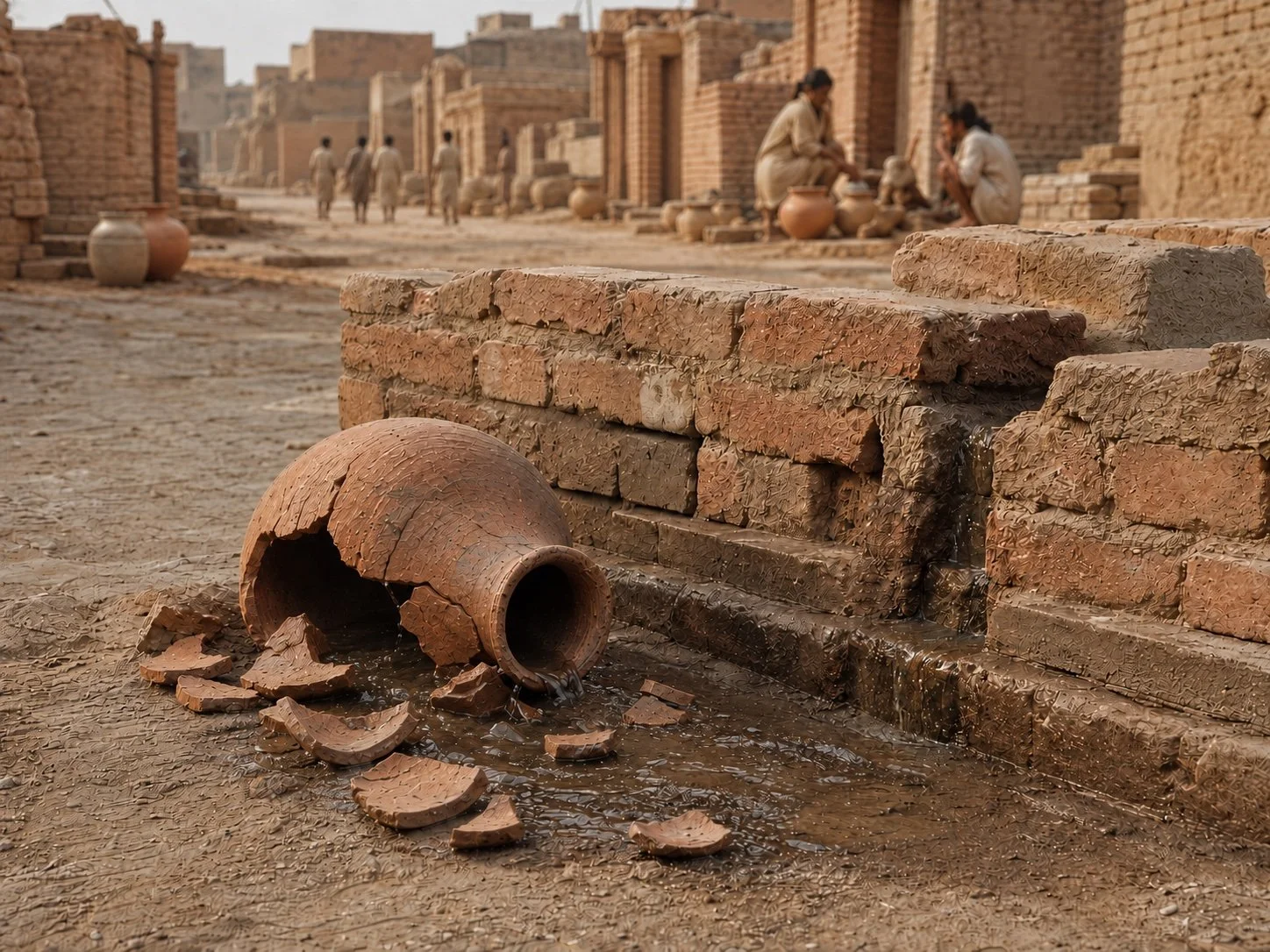
The End of an Age c.1900–1500 BCE
Punjab’s ancient cities were not destroyed in one sudden catastrophe; over generations, they were gradually abandoned or transformed.
Changing rivers, weakening trade and population movement brought the great Indus urban age to an end, but not the communities themselves.
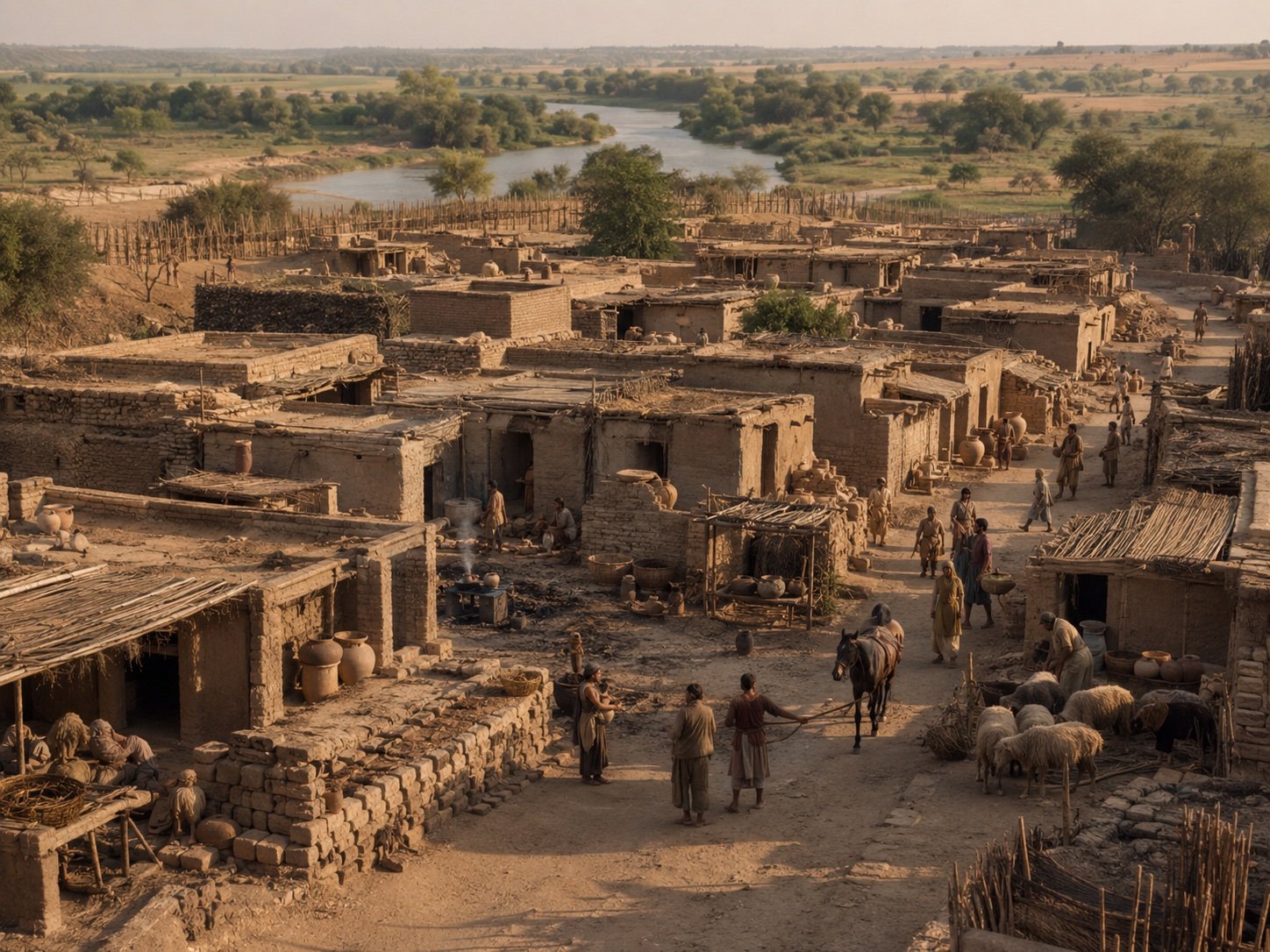
A Changing Punjab c. 1900–600 BCE
After the decline of the Indus cities, Punjab entered a period of extended transformation.
New settlements, burial customs, migrations and technologies reveal a region changing rather than disappearing.
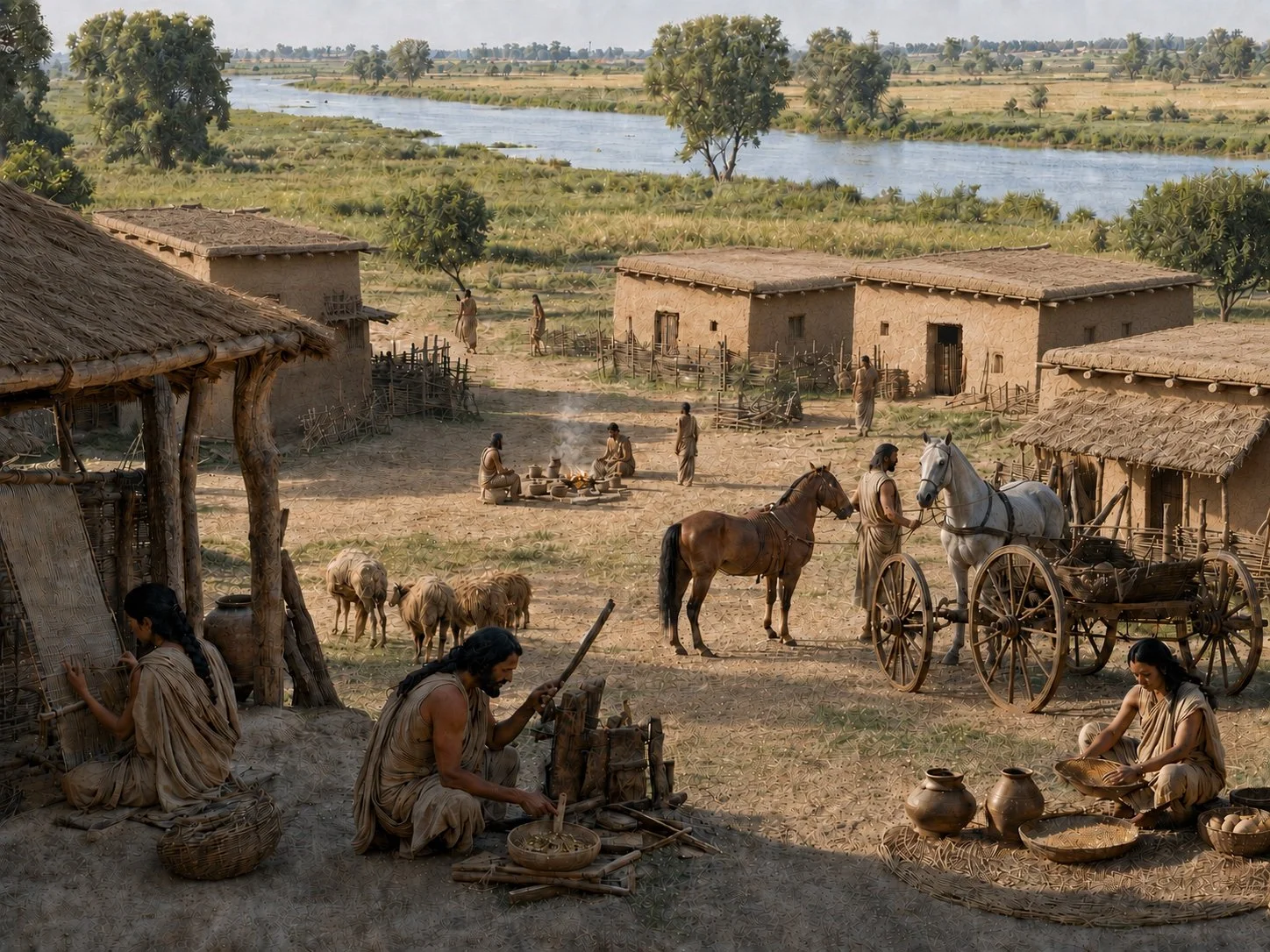
The Vedic Age c. 1500–600 BCE
A land of rivers, cattle, rival tribes and sacred ritual. Known as Sapta Sindhu, Punjab became one of the principal settings in which early Vedic society took shape.
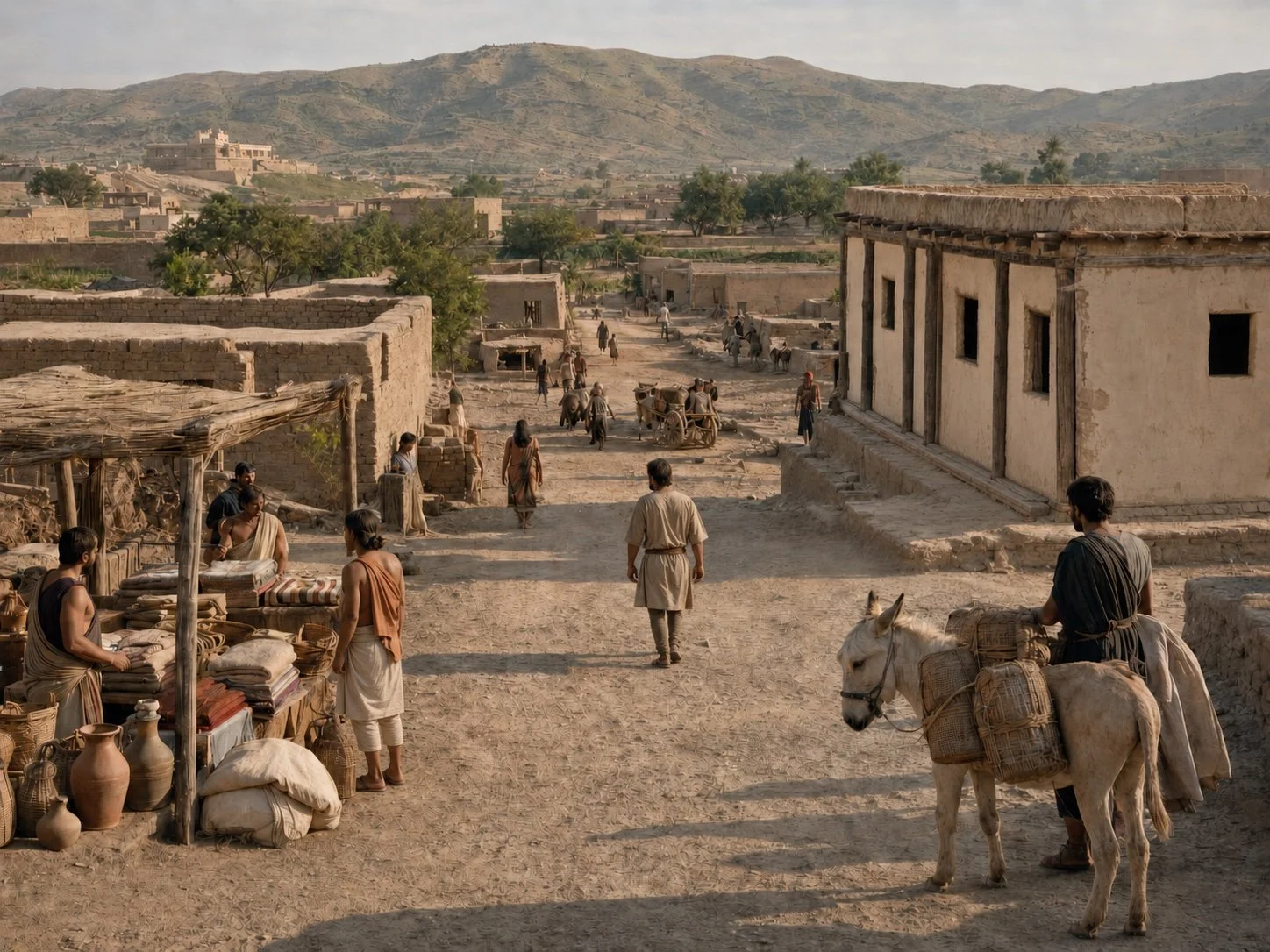
Punjab and The Persian Empire c. 518–326 BCE
In the sixth century BCE, parts of Punjab were absorbed into the Achaemenid Persian Empire, connecting the region to an imperial world stretching across three continents.
Persian administration, taxation, coinage and trade brought Punjab firmly into recorded political history.
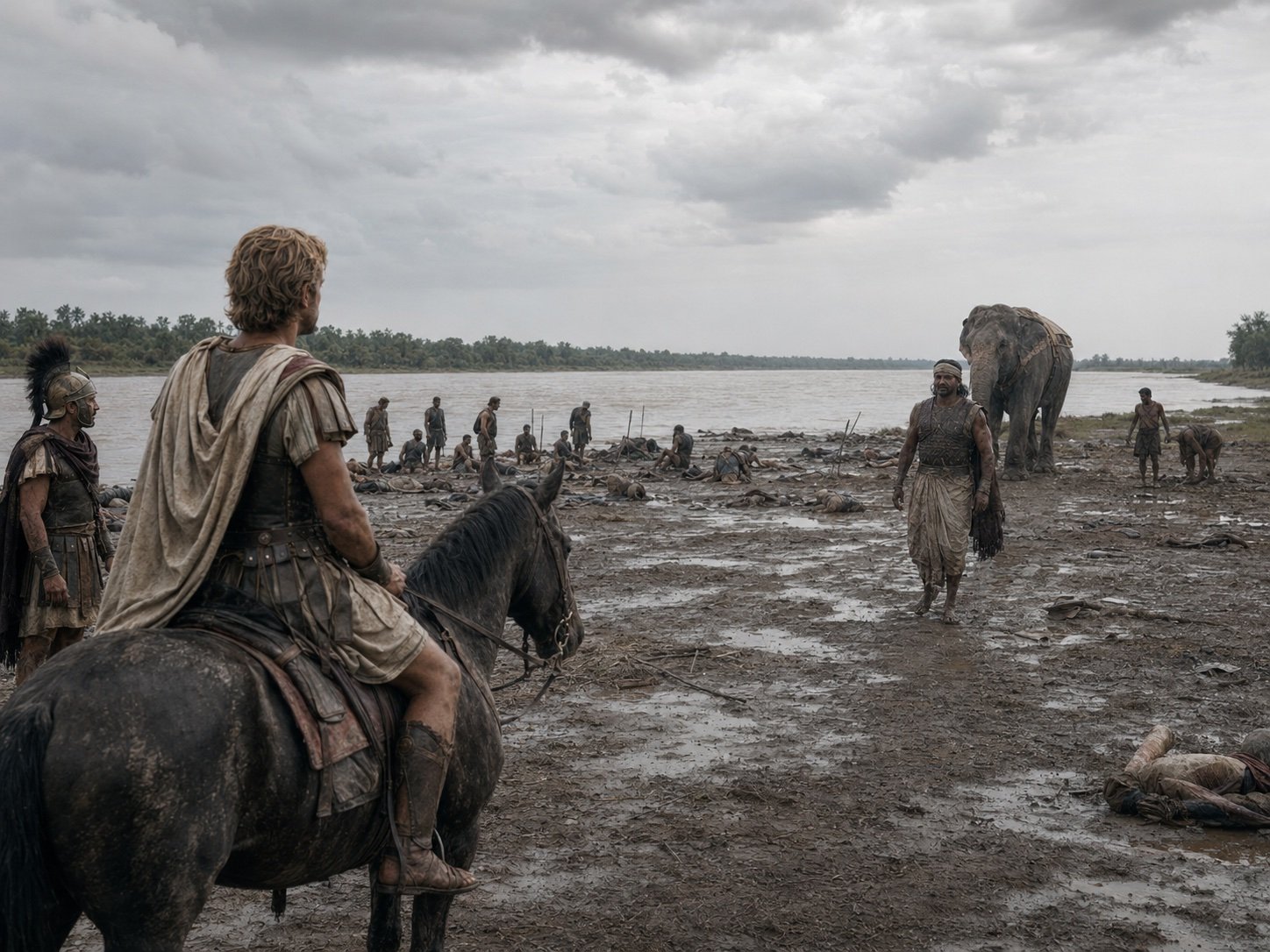
Alexander and King Porus c. 327–325 BCE
Alexander’s conquests carried him across Persia and Central Asia - but in Punjab, his eastward campaign reached its limit. His alliance with Taxila, battle against King Porus and army’s refusal to cross the Hyphasis made the region a decisive chapter in his story.
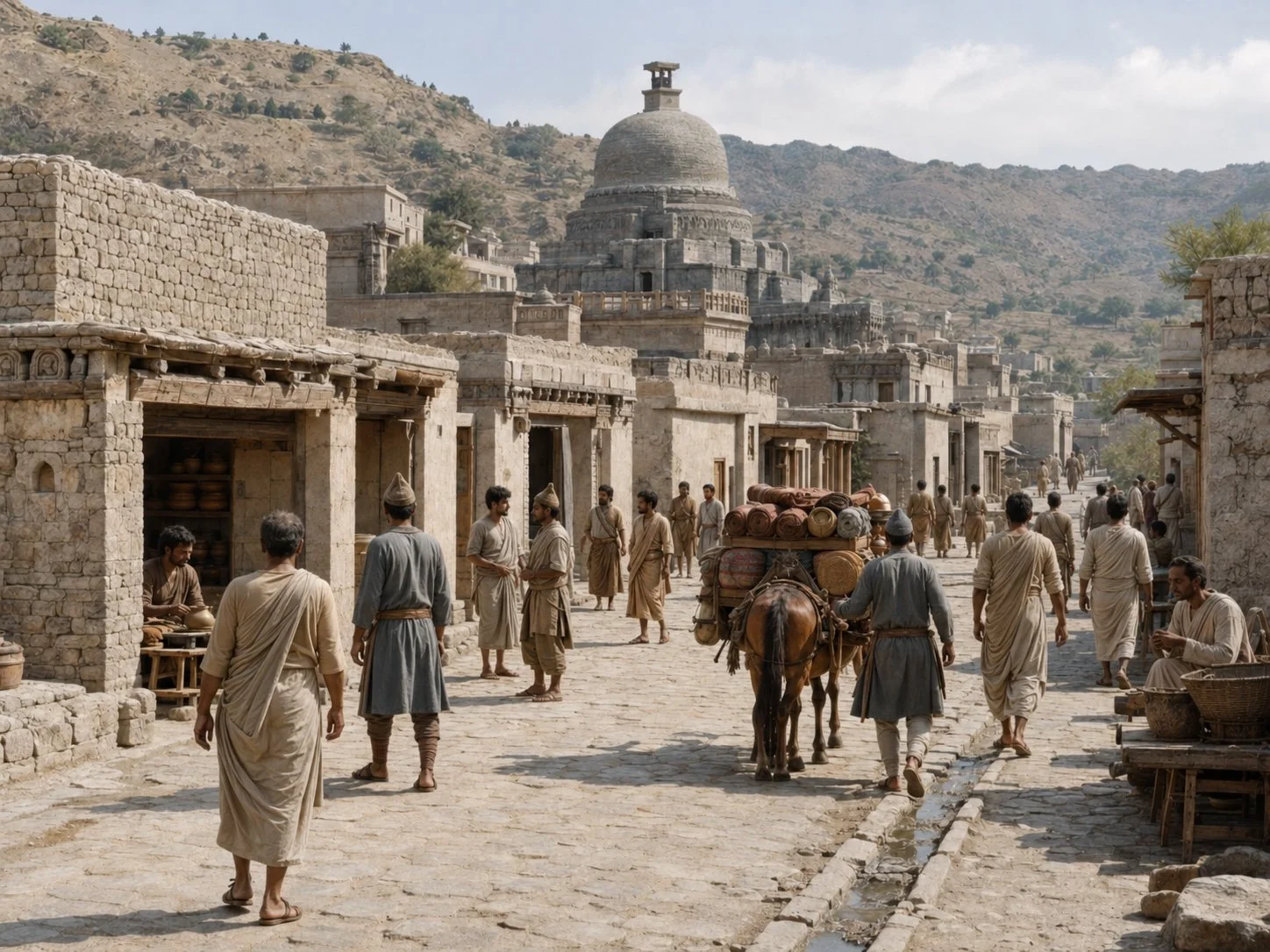
The Crossroads of Asia c. 322 BCE–300 CE
For centuries, Punjab passed between Mauryan, Indo-Greek, Indo-Scythian, Indo-Parthian and Kushan rule.
Rather than belonging to a single world, it became a meeting place where peoples, goods, religions and artistic traditions crossed the boundaries of Asia.
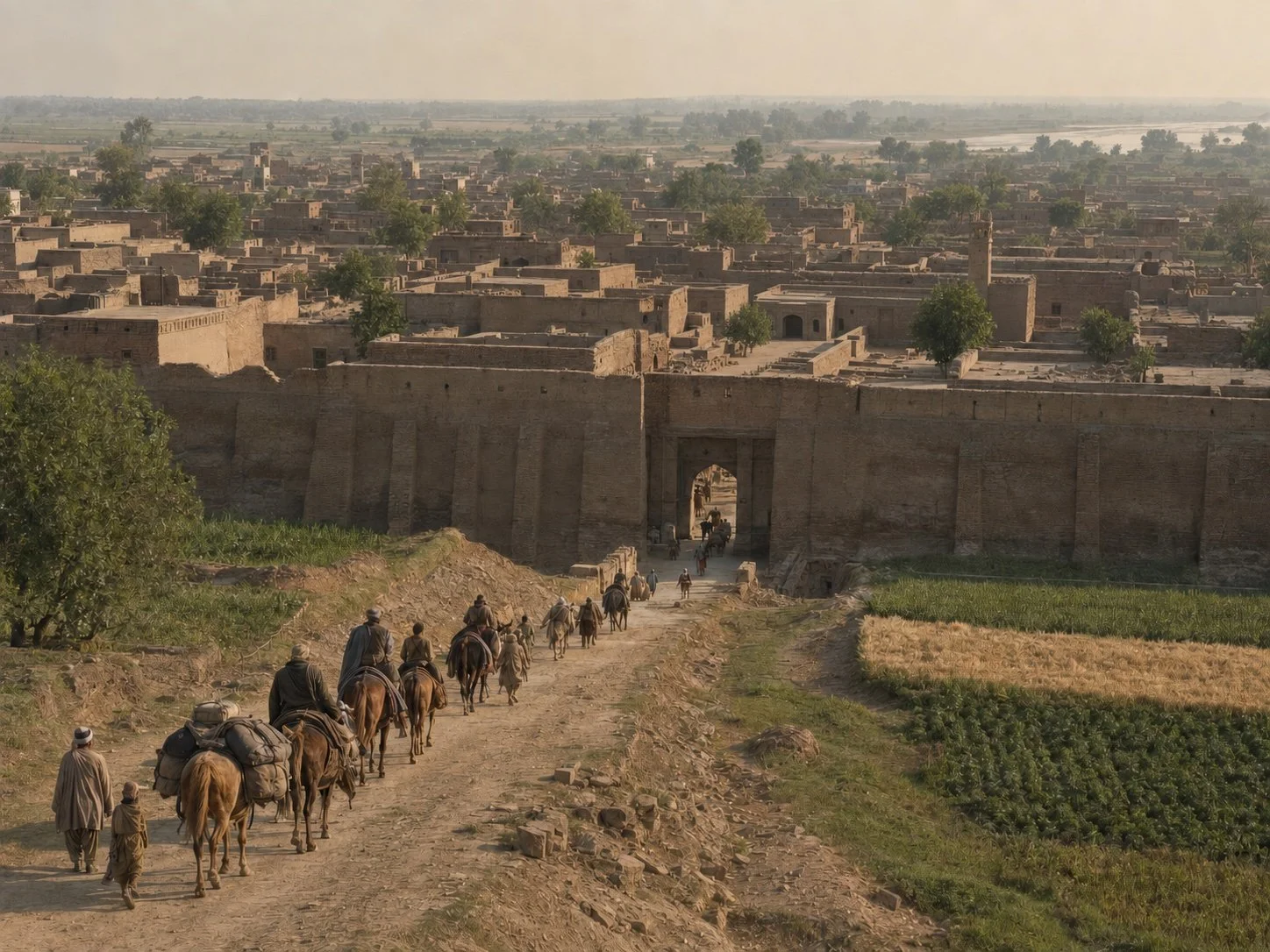
Medieval Punjab c. 300–1206 CE
Between the decline of ancient empires and the rise of the Delhi Sultanate, Punjab was shaped by competing kingdoms, invasions and shifting frontiers.
During these centuries, Lahore rose in importance and the political, religious and cultural landscape of medieval Punjab began to emerge.
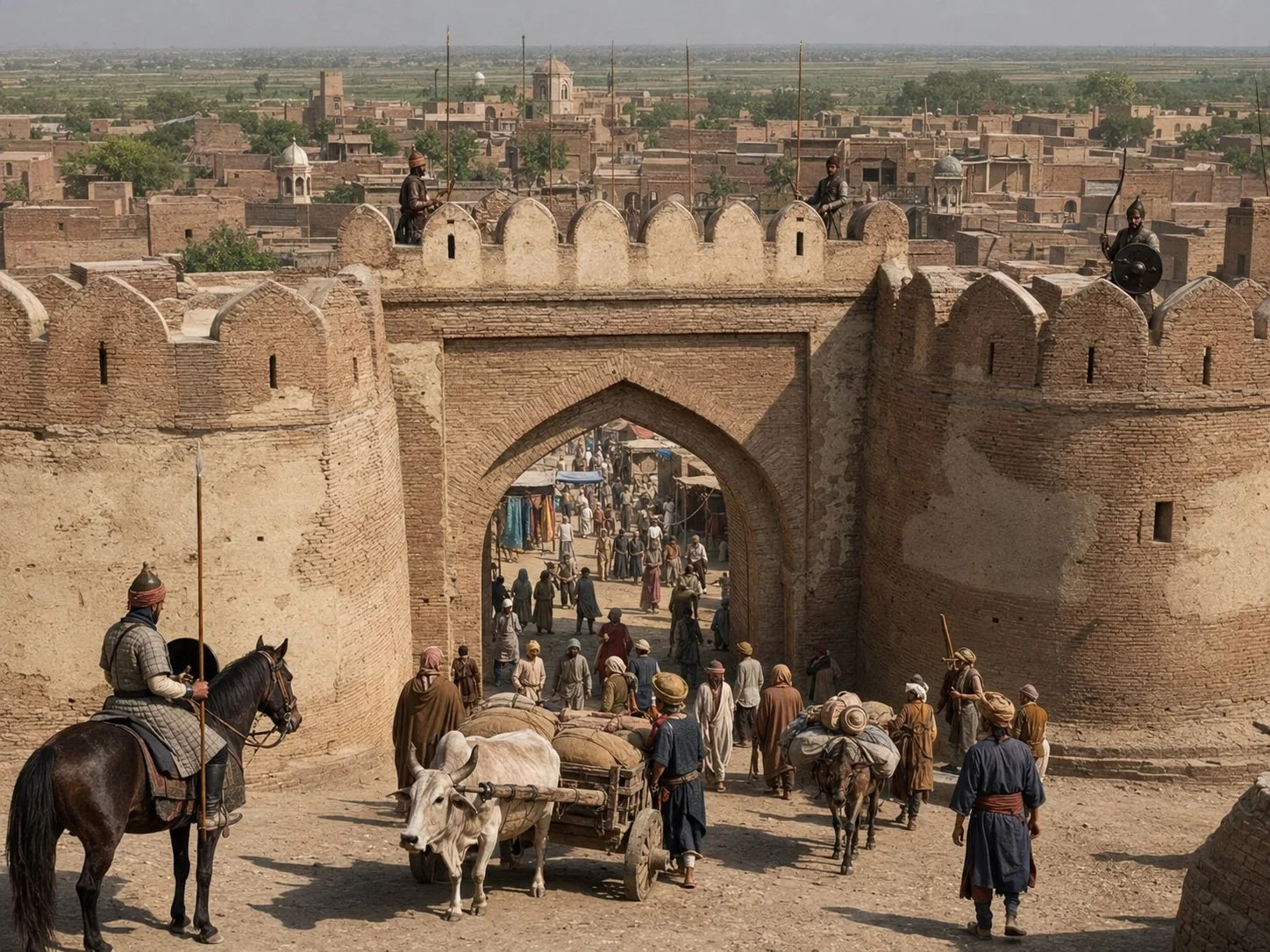
Punjab in the Age of Sultans c. 1206–1526 CE
For more than three centuries, Punjab stood on the frontier of the Delhi Sultanate, exposed to Mongol invasions and struggles between regional rulers.
Its position as the gateway to northern India would ultimately draw Babur across its rivers and open the age of the Mughal Empire.
Disclaimer: This series explores the ancient and medieval history of the wider Punjab region. Historical Punjab did not follow modern borders, and its political and cultural boundaries changed repeatedly over time.
Much of Punjab’s earliest history is reconstructed through archaeology rather than written records. Dates are therefore approximate, interpretations may change as new evidence is discovered, and some details remain unresolved. Ancient communities are described within the context of their own periods; modern national, ethnic and religious identities should not be applied to them without clear historical evidence.
The visuals in this series use symbolic settings, and expressions to convey Punjab over time. These are interpretive representations, not accurate historical depictions.
The purpose of this series is not to claim ancient peoples or civilisations for any modern community, but to explain their place in the long and shared history of Punjab.