
Pari
Jalpari
Jashtan
Naag
Halmasti
Deo
Balaa
Chumur Dekhi
Pichhal Peri
Banbudda
Pari Jalpari Jashtan Naag Halmasti Deo Balaa Chumur Dekhi Pichhal Peri Banbudda
Beyond history books lies another world
of myth and mystery.
Where fairies dance in hidden forests, serpents guard ancient treasures, and heroes battle giants in distant lands.
From shape-shifting spirits to enchanted wells, these are the stories whispered throughout time - stories that shaped villages and inspired generations.
Stories that still live in the hearts of those who believe.
Raja Rasalu - The Prince of Legends
Puran Bhagat - The Sage of Divine Justice
Saif ul Maluk & Badr ul Jamal
Darya-e-Chenab: The River of Love
Darya-e-Sutlej: The River of Seekers
The Meeting place of Fairies
The Whispering Wells
The Tree of Wishes
Raja Rasalu - The Prince of Legends Puran Bhagat - The Sage of Divine Justice Saif ul Maluk & Badr ul Jamal Darya-e-Chenab: The River of Love Darya-e-Sutlej: The River of Seekers The Meeting place of Fairies The Whispering Wells The Tree of Wishes
The Mythology of Punjab
Punjab is a land where time bends, and stories breathe - a place where the natural and supernatural intertwine. The Mythology of Punjab page explores this world, where unseen creatures roam and stories are passed from one generation to the next.
The first half journeys through forgotten corners of Punjab - home to beings no eye has witnessed, but whose presence still lingers in whispers. The second half steps into the mythological tales that shaped Punjab’s cultural heart; stories that are mirrors of Punjab’s identity, carrying its fears, hopes, and wisdom.
While deeply rooted in Punjab, many of these tales originate from places like Persia, Chitral, and Kashmir. They’ve travelled across borders and settled into Punjabi soil through centuries of oral tradition - reshaped, retold, and reclaimed.
This folklore lives on - in festivals, rituals, lullabies, and quiet beliefs. The creatures, the stories, and their meanings continue to guide those who turn to the land for strength, wonder, and connection. This page is an invitation to step into that enchanted world - to look a little closer, listen a little deeper, and rediscover the magic that’s always been there.
Disclaimer: This page is not intended for children and discusses themes that some readers may find uncomfortable; discretion is advised.
Folklore varies considerably across regions and storytellers, so the stories shared here should not be treated as definitive or universally accepted versions. The AI-generated visuals use symbolic settings, details and expressions to convey these traditions; they are interpretive representations, not accurate depictions.
The Pari
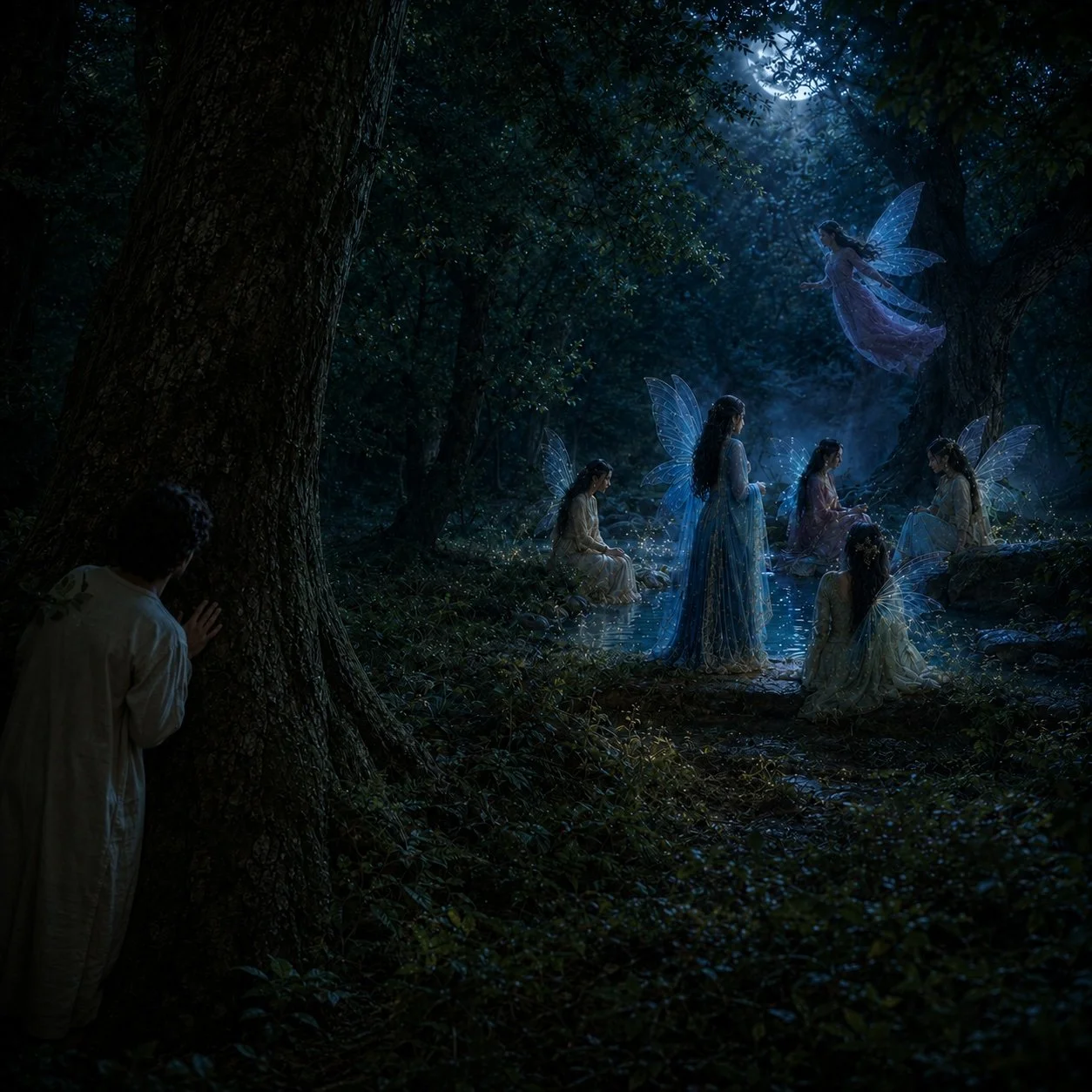
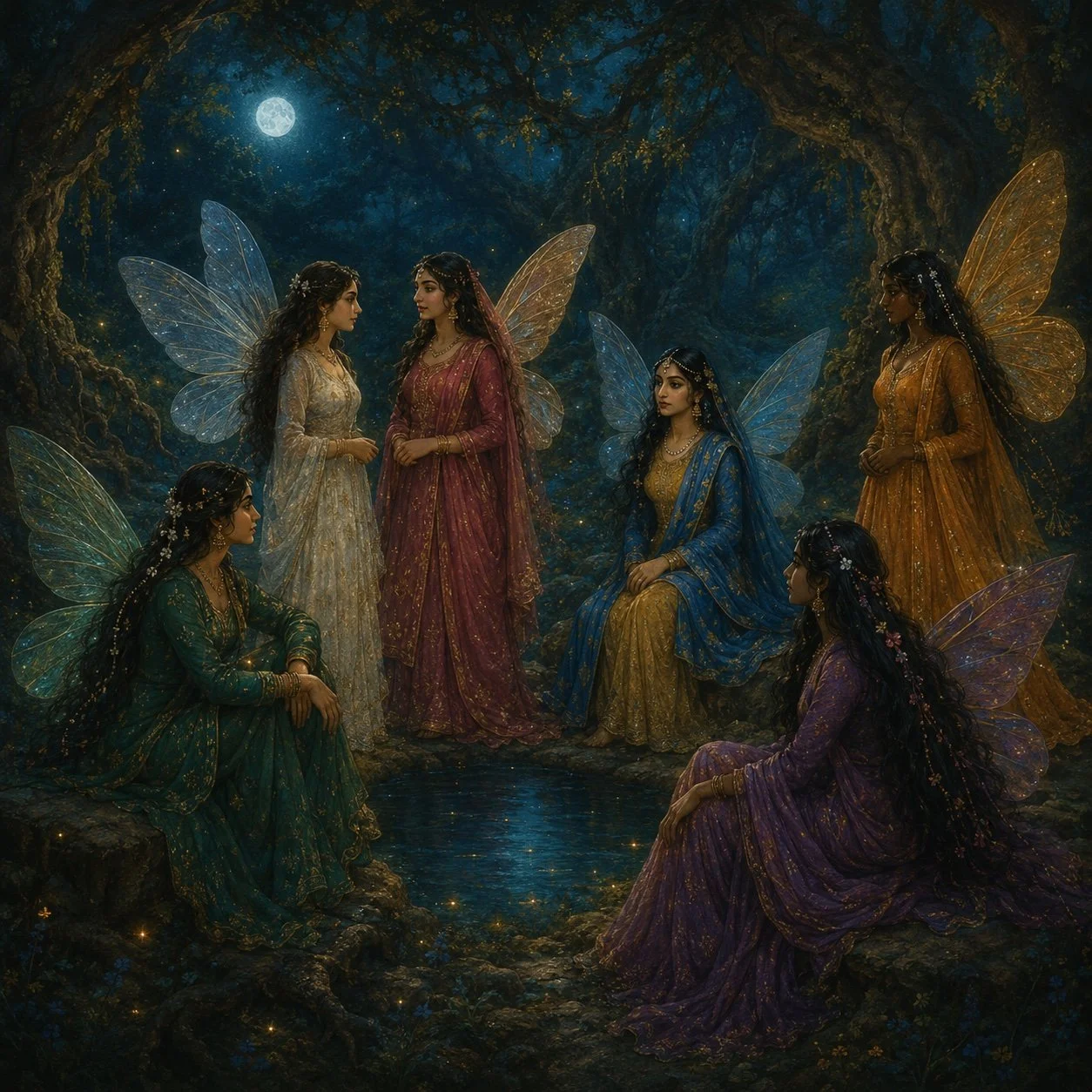
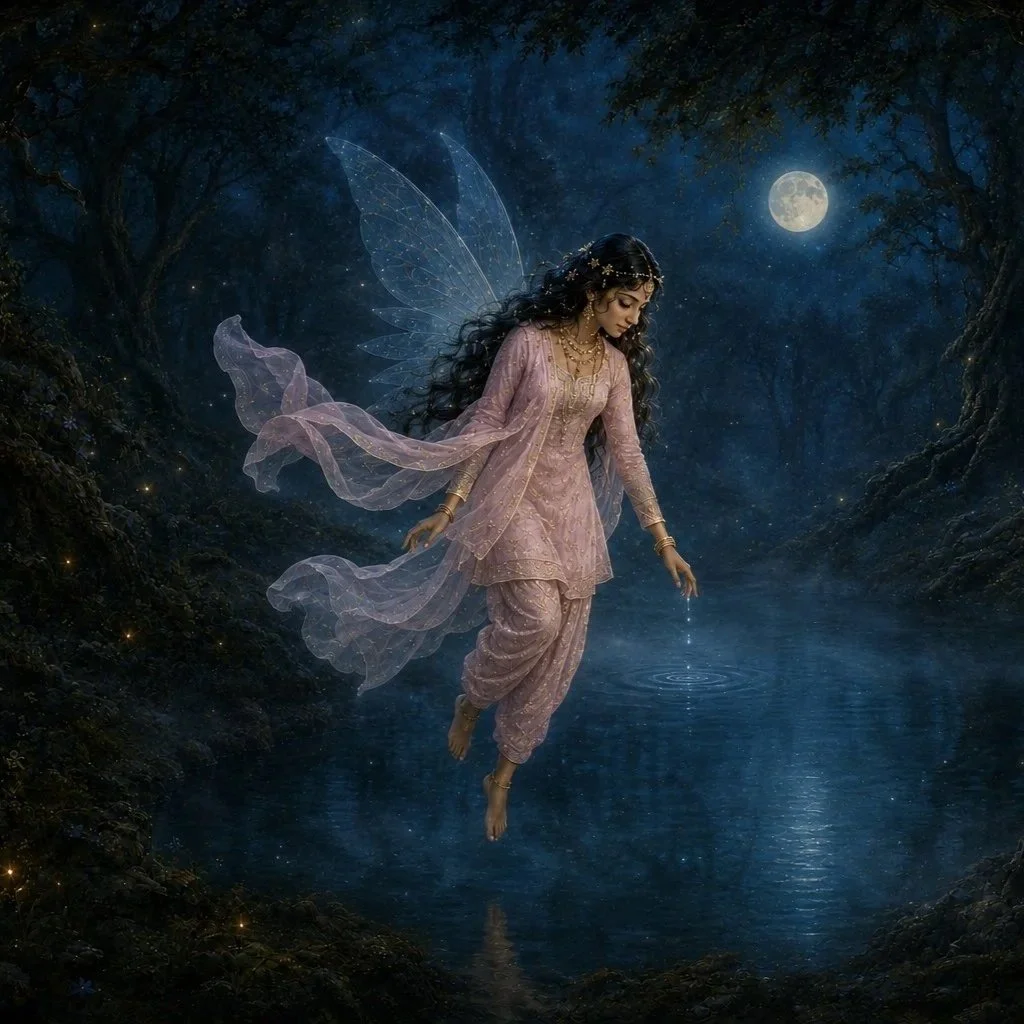
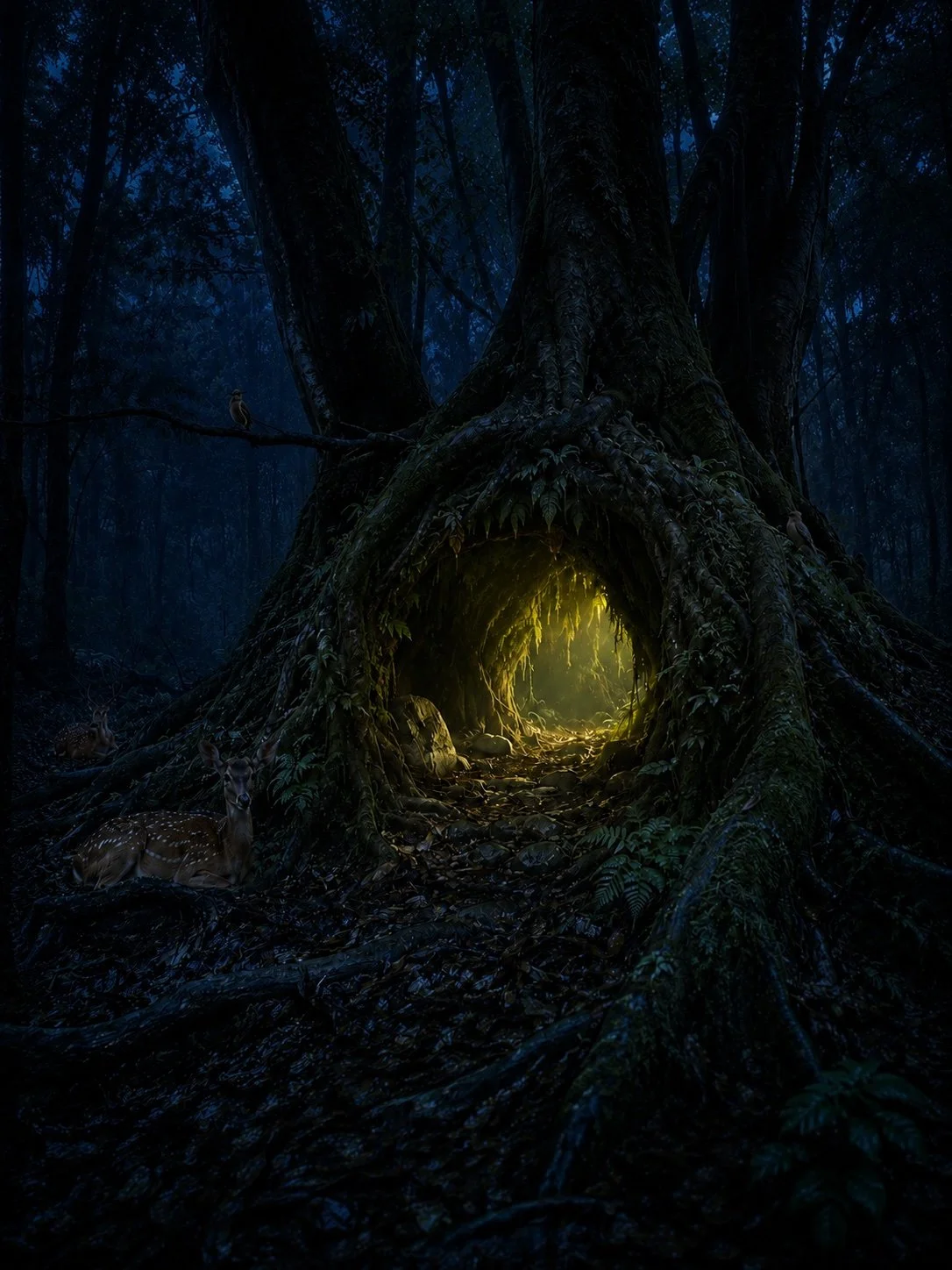
A pari belongs to a world that exists just beyond our own - beneath moonlit skies, beside quiet rivers, or within gardens hidden from human eyes. In Punjabi folklore, she appears as an otherworldly woman of beauty, with luminous features, flowing clothes and an ethereal presence. Some paris are said to have wings, while others move between worlds without them - vanishing at will, changing their form, or casting enchantments. They gather after nightfall to wander through fields and plains while the human world sleeps. A traveller who discovers them may be blessed, bewitched or overcome by emotions that can never fully belong to the mortal world; for although the pari is rarely portrayed as openly monstrous, disturbing her hidden life can still carry a price.
Her story began far beyond Punjab, in the ancient mythology of Persia, where an earlier and more dangerous supernatural figure gradually transformed into the graceful, mysterious being remembered today.
Carried across mountains, languages and kingdoms, the pari entered the stories of South and Central Asia and found a lasting place in Punjab’s imagination. Though often translated simply as a fairy, she is not the tiny, playful creature of European folklore. A pari is powerful, elusive and almost human in appearance, yet forever separated from humanity by the realm to which she belongs. She embodies beauty that cannot be possessed, wonder that cannot be explained and the quiet danger of wandering too close to a world that was never meant to be seen.
The Jalpari
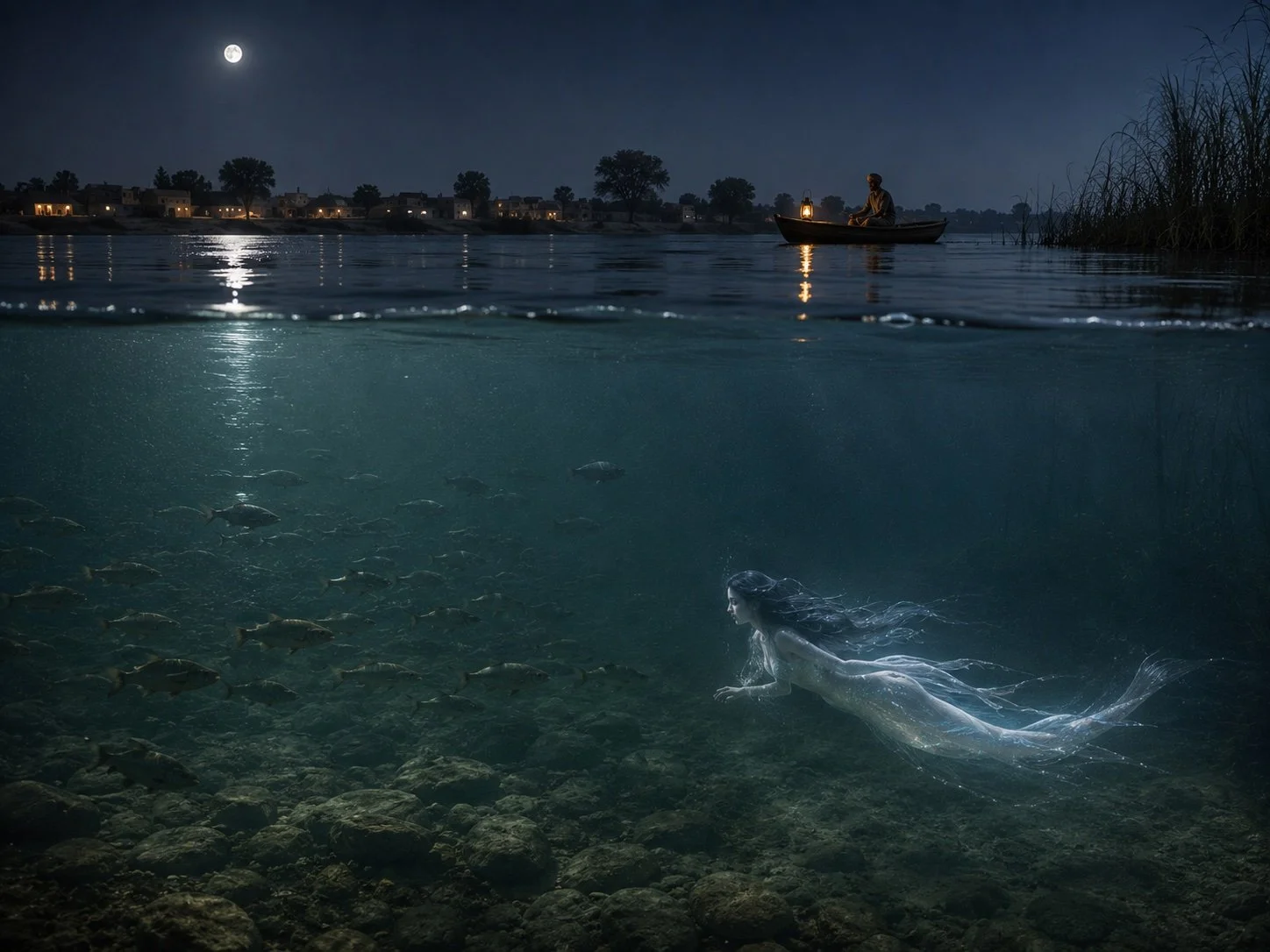
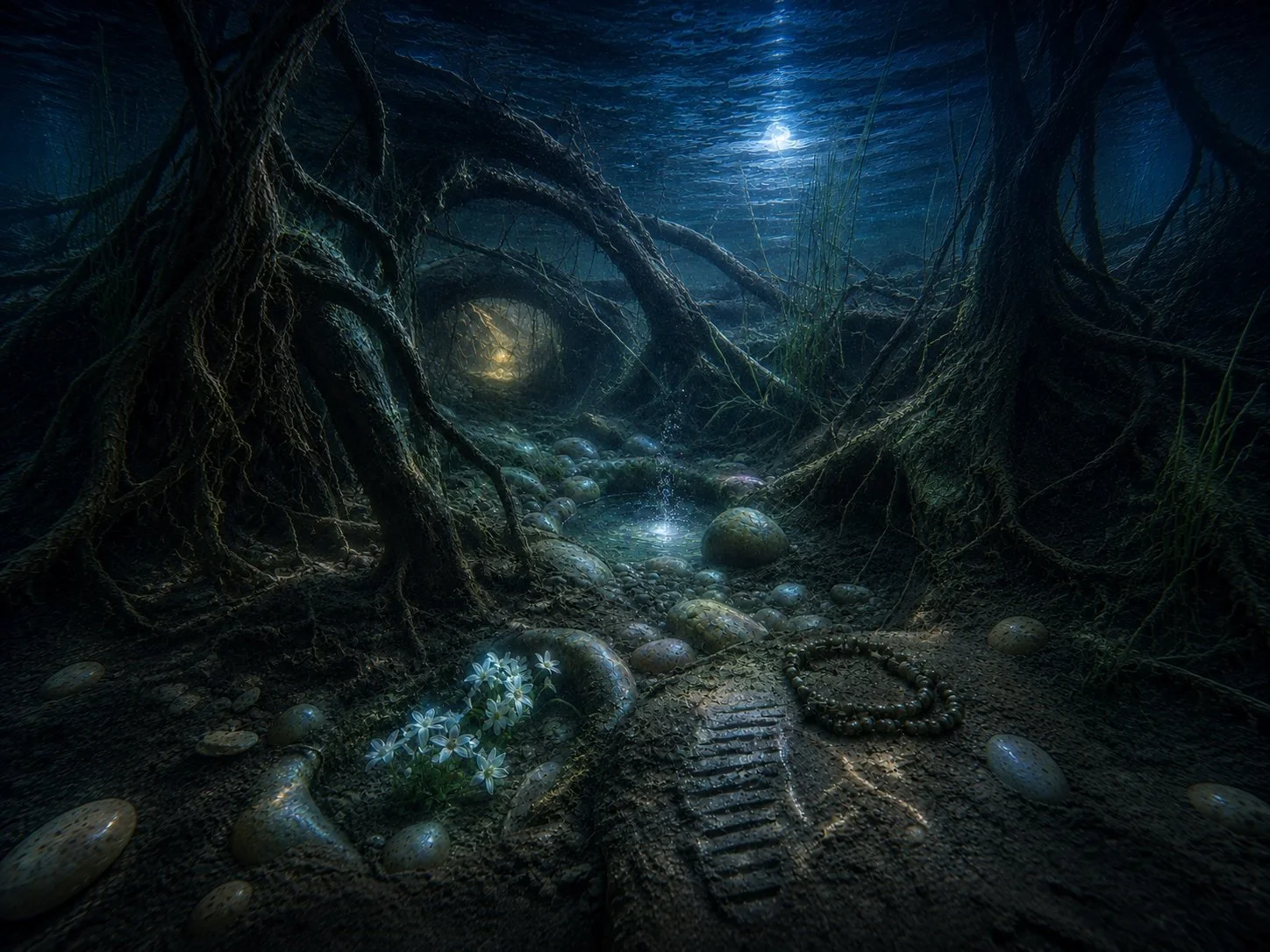
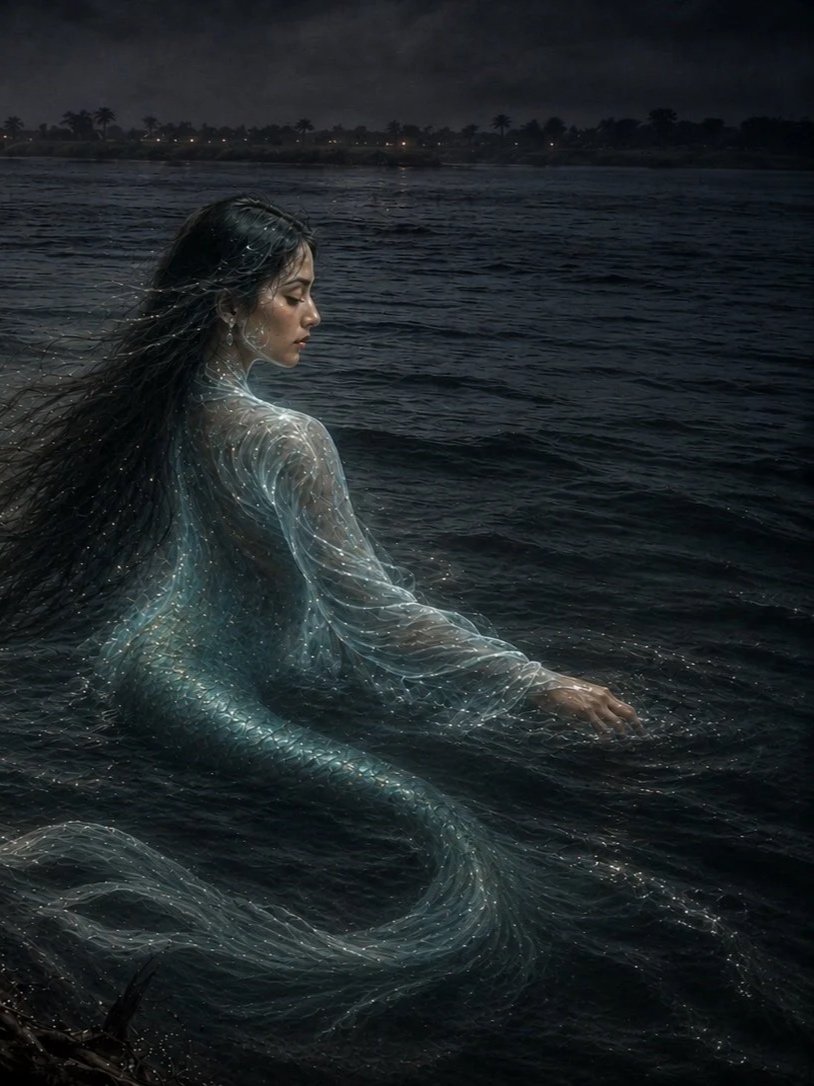
A jalpari belongs to the hidden world beneath Punjab’s waters -
within flowing rivers and quiet streams whose depths could never be fully seen. In Punjabi folklore, she appears as a mysterious water spirit, although she is now aligned with a mermaid, older traditions gave her no single form. She might appear as an enchanting woman beside the water, a shifting figure beneath its surface, or simply an unseen presence within the current. Yet the Jalpari was never entirely harmless - said to capture men, draw them into a supernatural union and, in darker tellings, take their lives. Flowers - and, in some accounts, a lamb - were left beside the water to appease her.
Her name carries the story of how she came to Punjab. Jal is an ancient Indo-Aryan word for water, while pari is the Persian name for a supernatural female being. Her legend most likely formed gradually as Persian stories of the pari travelled into Punjab through language, literature and centuries of cultural exchange. There, they encountered older local beliefs that rivers, streams and wells were inhabited by sacred or dangerous beings. The pari was given a new home within Punjab’s waters and became the jalpari.
For those who lived beside Punjab’s rivers, belief in the jalpari reflected dangers that were real, even when their causes remained unseen. A peaceful surface could conceal deep channels, submerged roots and powerful currents capable of taking someone without warning. The jalpari gave this invisible danger a face, explaining mysterious drownings while warning children, travellers and those walking alone not to approach the water carelessly or after dark. The jalpari was not imagined simply because people misunderstood the water, but because they understood its power.
The Deo
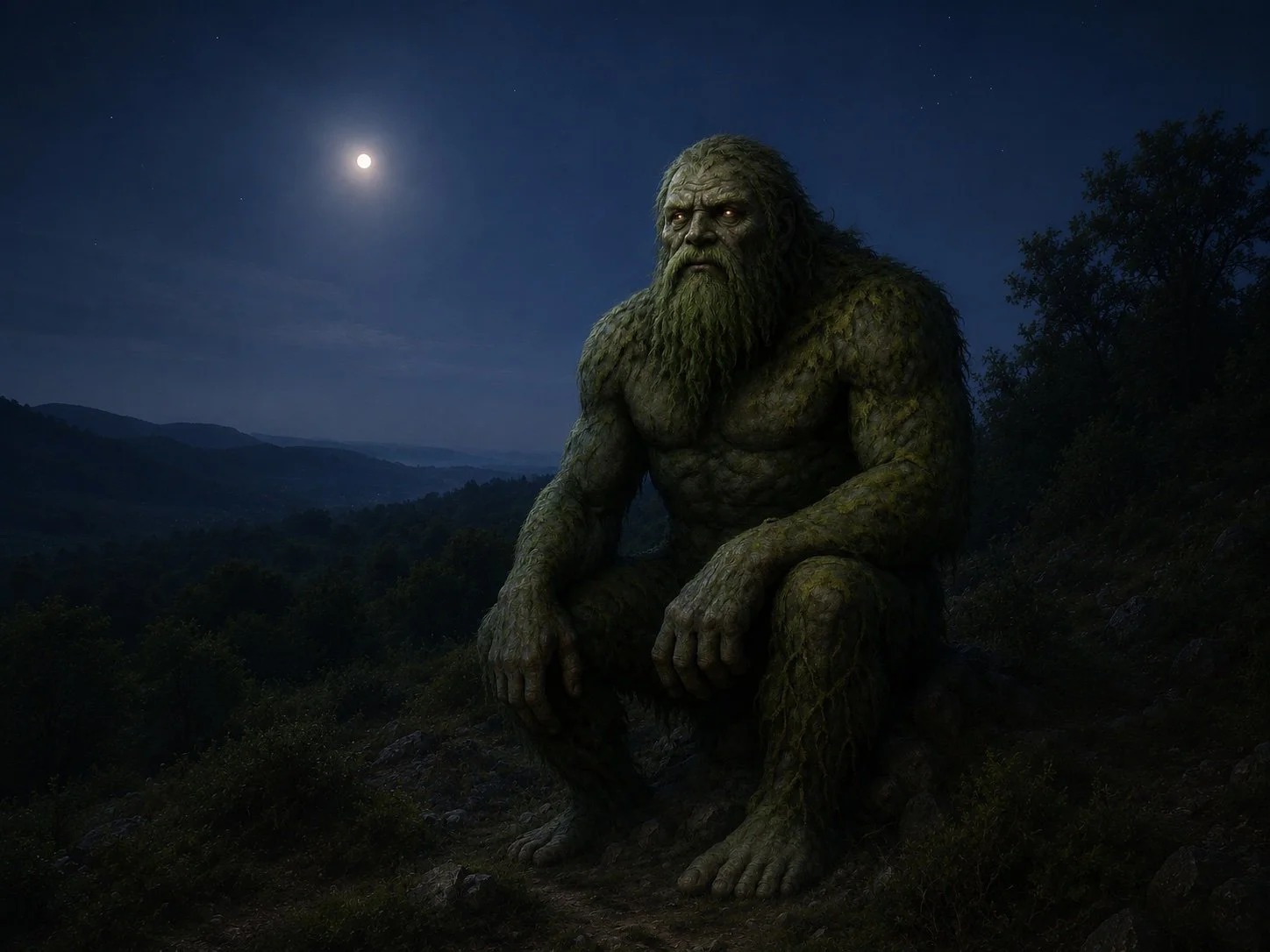
A deo belongs to the untamed places beyond the familiar world.
Distant mountains. Shadowed forests. Bygone kingdoms.
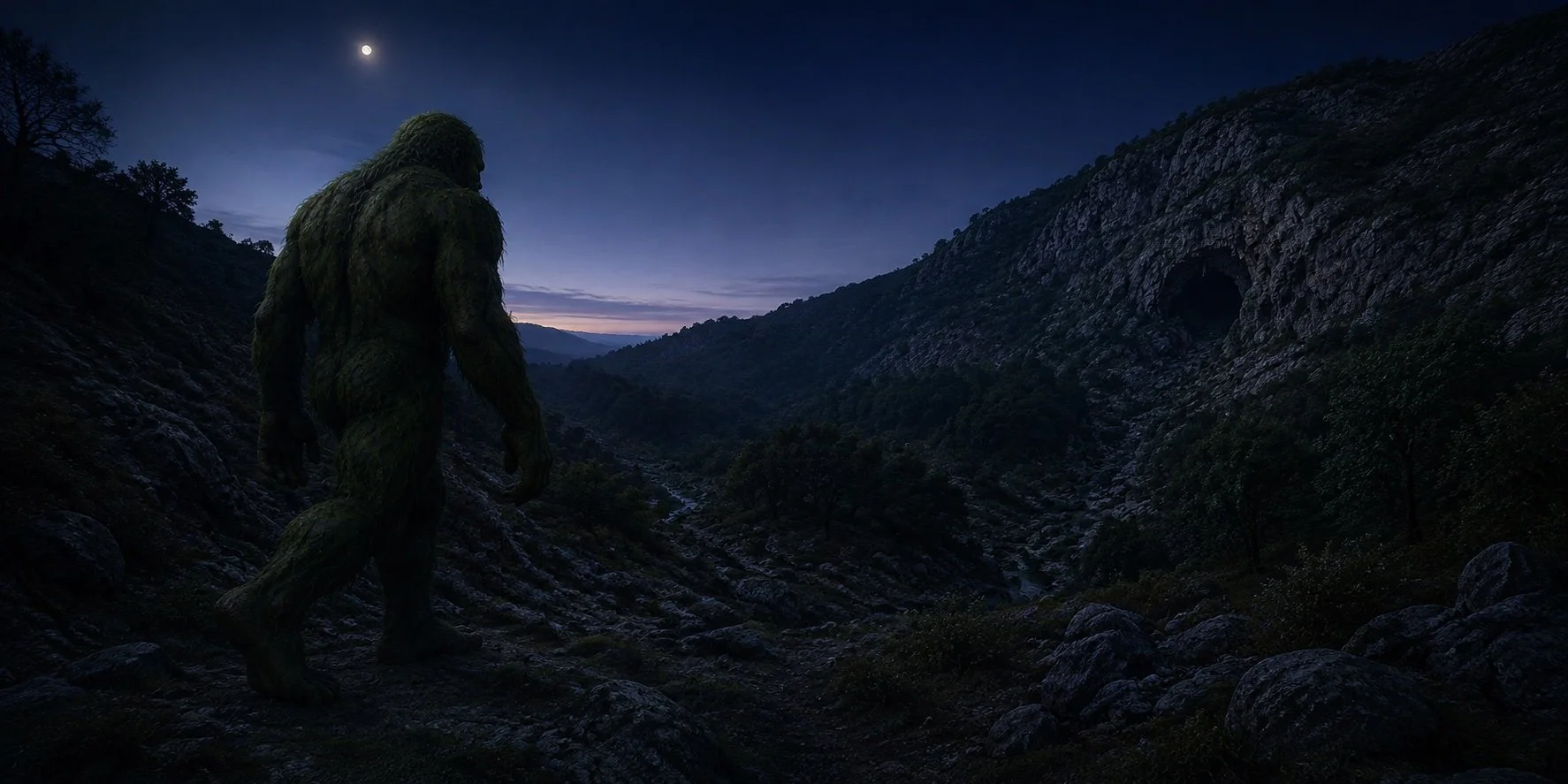
In Punjabi folklore, he appears as an ancient, immensely powerful being, similar to a giant. Some deos inhabit caves or enchanted palaces filled with riches; others rule over hidden realms known collectively as Deostan - a land where years may pass differently, mountains move farther away as travellers approach, and ordinary laws no longer hold. They may possess magical objects, assume other forms, travel impossible distances or appear the moment a charm connected to them is burned.
In some Punjabi tales, he is cruel, hungry and dangerous, lying in wait for someone to enter his domain. In others, he is solemn, intelligent and capable of loyalty - remembering an act of kindness, honouring a debt or guiding a worthy traveller through dangers no human could survive alone. His power must be approached with caution, it can protect as fiercely as it can destroy.
The deo’s story reaches Punjab through the ancient mythologies of Persia, where the div was a powerful supernatural adversary associated with darkness, wilderness and forces beyond human control. As these stories travelled across empires and languages, the creature entered Punjabi oral tradition and took on a life of his own - sometimes blending with the giant, the ogre and the spirit, yet never belonging completely to any one of them. The deo stands at the threshold between danger and protection: an immense presence from another realm, feared because no human can ever be certain what such power will choose to do.
The Jashtan
A Jashtan belongs to the hidden corners of an ordinary home.
Cracks in the walls. Shadowed ceilings. Spaces left undisturbed.
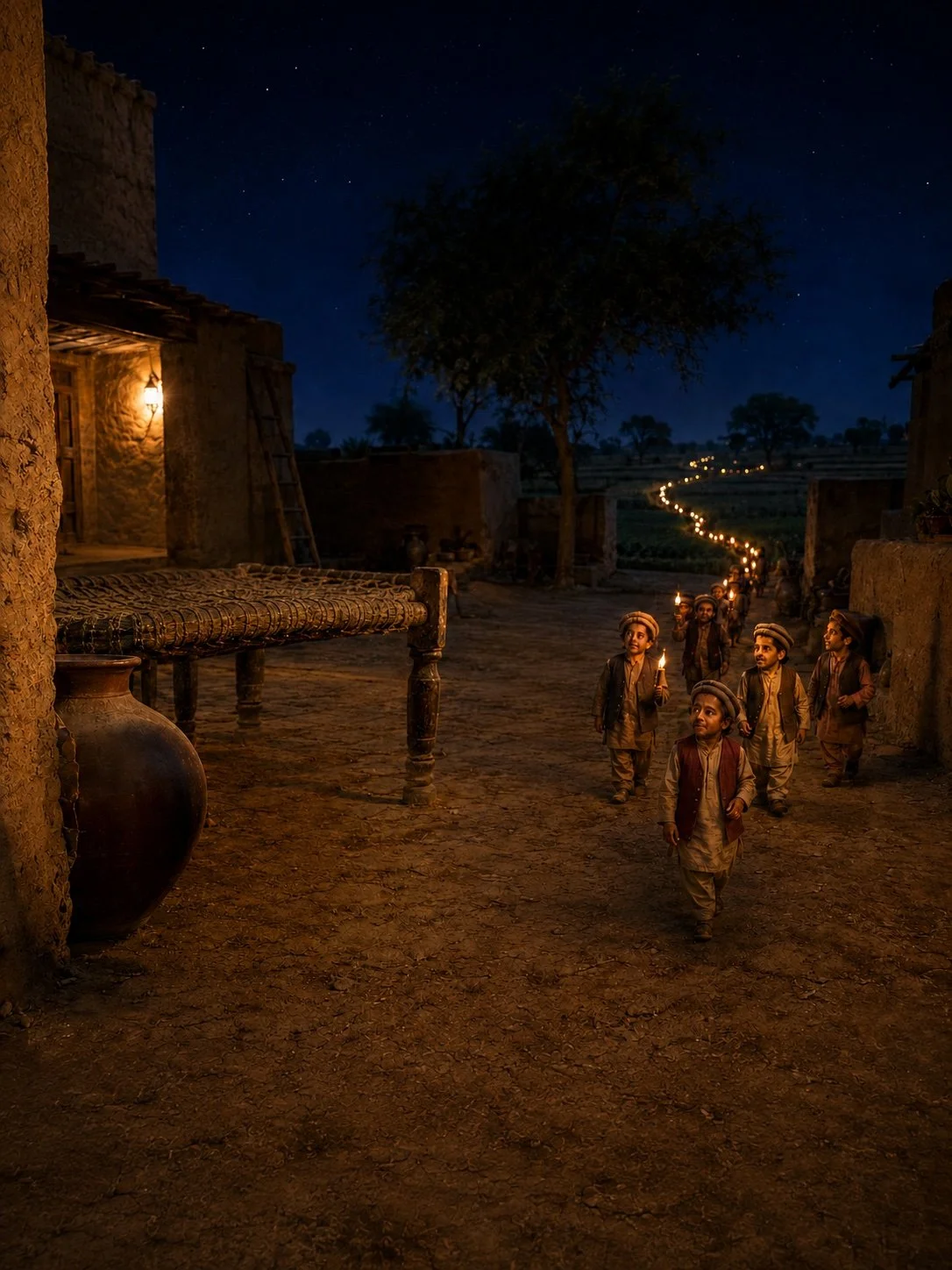
In Chitrali folklore, Jashtans are tiny, elusive beings believed to enter homes while families worked in the fields, and live secretly alongside their inhabitants. Some possessed magical hats containing their power; anyone who captured one could compel the Jashtan to obey.
Jashtans were thought of as temporary visitors and sent away before the harsh Chitrali winter. Each autumn, families swept every corner with a thorny branch, gathering and directing the Jashtan south towards warmer lands. Bread was left beside the roads for their journey, while lines of tiny lights seen crossing the mountains after dark were believed to be the torches of the departing Jashtans.
The legend comes from Chitral rather than Punjab itself. Although stories and beliefs travelled between the mountains and the Punjabi plains, there is little evidence that the Jashtan became widely known across Punjab. The Jashtan reminds us that the supernatural was not always imagined in distant forests or enchanted kingdoms; sometimes, it had been living quietly inside the house all along.
The Halmasti
A Halmasti belongs to the darkness that descends over Chitral’s mountains after nightfall.
Thunder overhead. An isolated road. Fire moving through the dark.
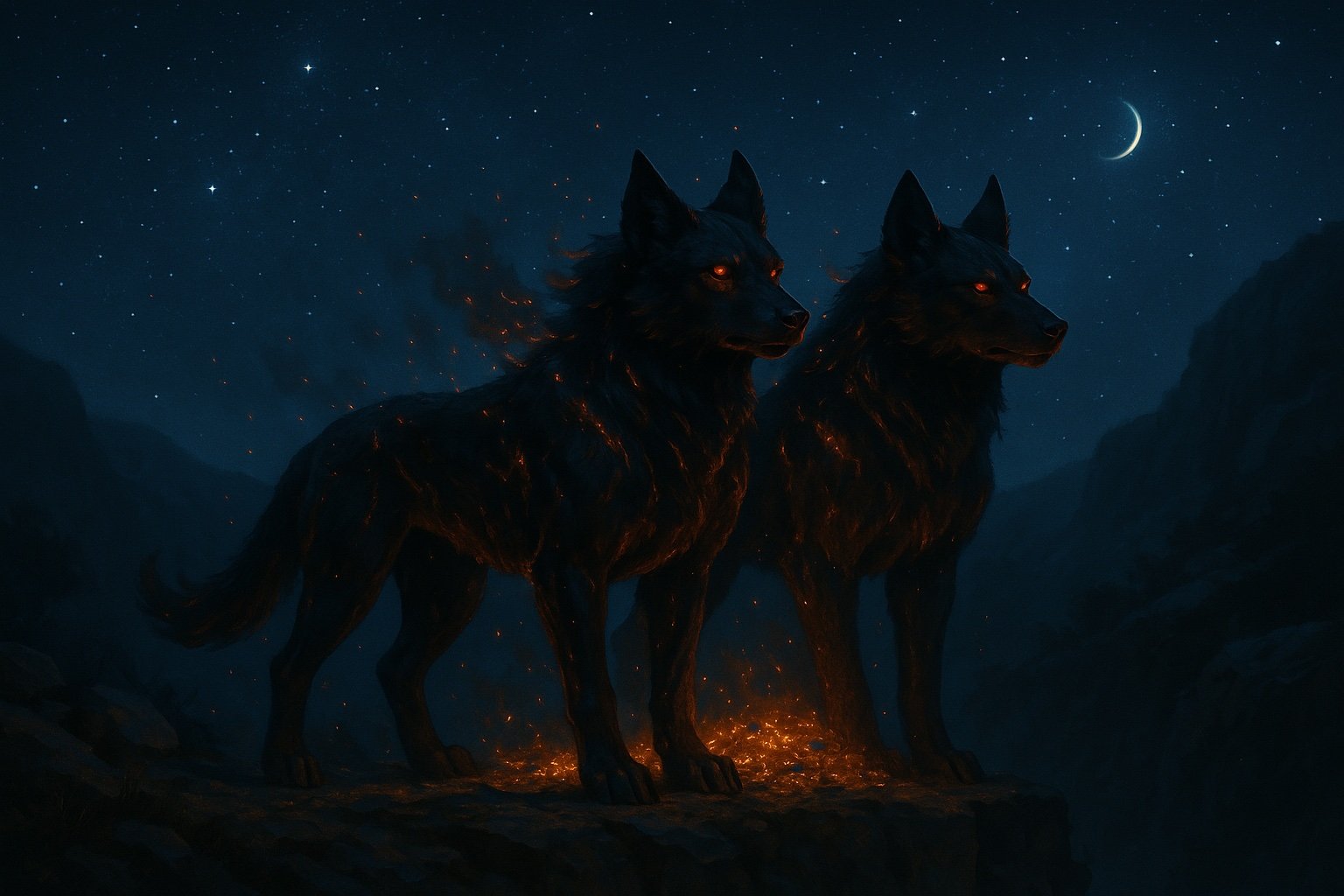
In Chitrali folklore, it appears as an enormous supernatural hound, resembling a wolf - sometimes as large as a horse, with a heavy muzzle and fire burning within its mouth. Some accounts give it dark-red fur, some black, while others leave its colour uncertain; its defining feature is not a body made from flame, but the unnatural fire it carries. Its name is also used for destructive lightning, connecting the creature with thunder, sudden chaos and danger descending without warning.
To encounter a Halmasti was considered an omen of approaching misfortune, but it was feared most around the thresholds of birth and death. It was believed to approach homes where a child had recently been born and places where someone had recently passed. For seven days and nights, the vulnerable were guarded: families remained close to newborns, prayers were recited, and an item made of iron was often placed beneath a baby’s pillow to prevent the creature from drawing near. The Halmasti could not be hunted or reasoned with; protection depended upon vigilance, prayer and the ancient power attributed to iron.
The Halmasti’s precise origins are uncertain. It has been compared with the Al or Albasti spirits found across Iranian and Central Asian tradition, although the Chitrali creature has developed a distinct form of its own. It embodies the unseen danger surrounding moments when the boundary between worlds is believed to weaken.
The Dain, Churail & Pichhal Peri
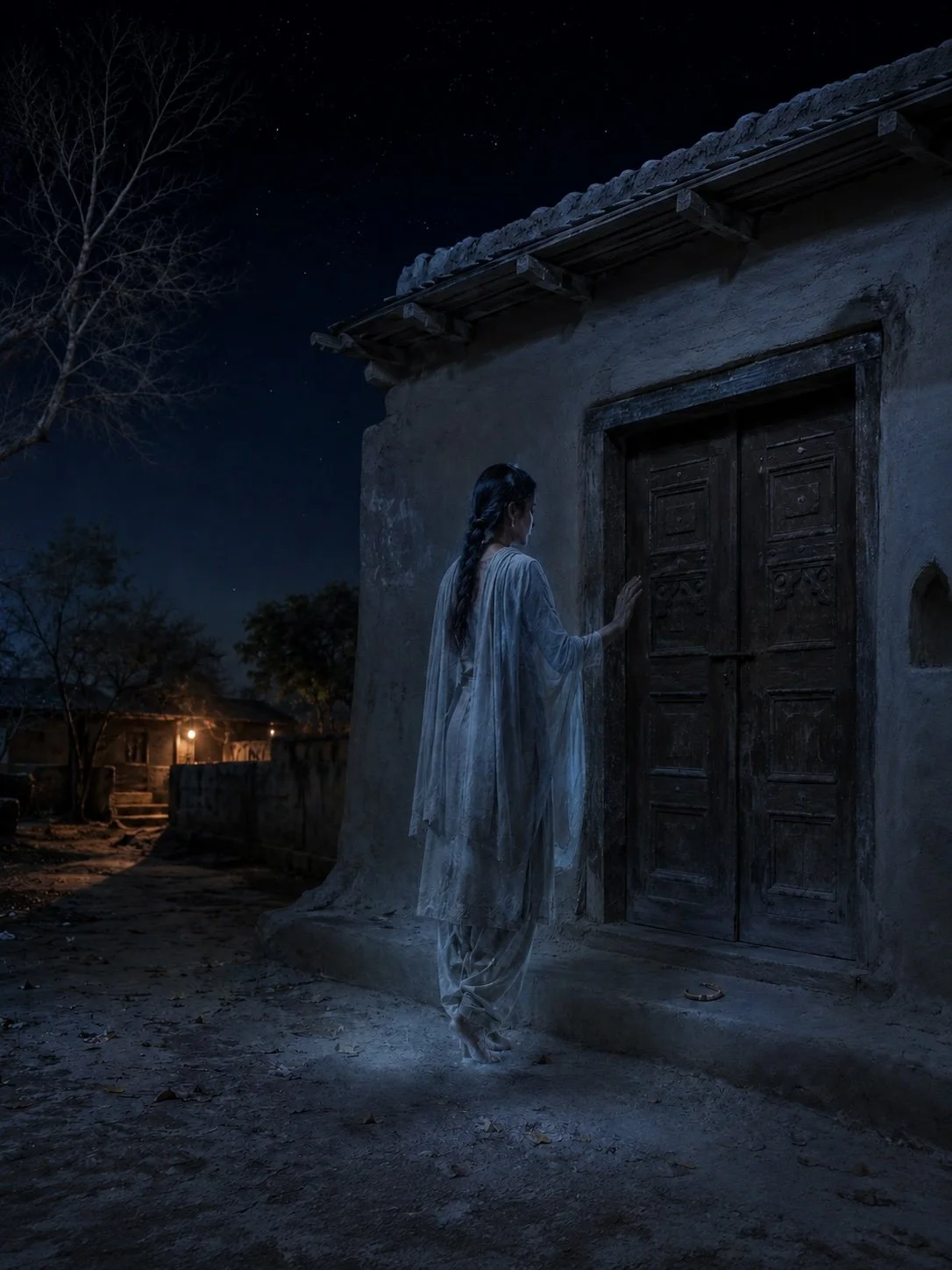
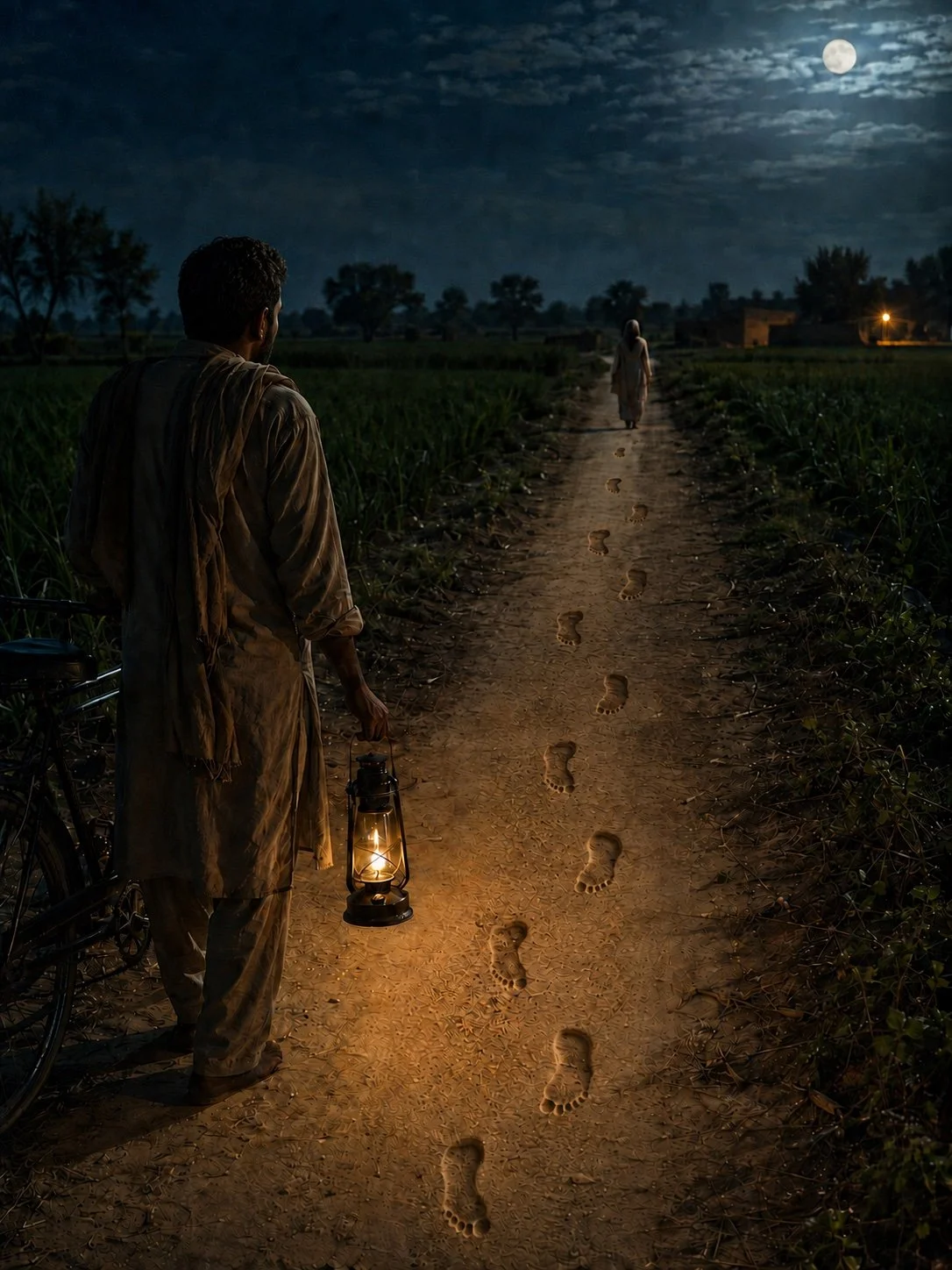
A dain, churail or pichhal pairi belongs to the places where the familiar world begins to feel uncertain.
Lonely roads. Old wells. The fields beyond the village after dark.
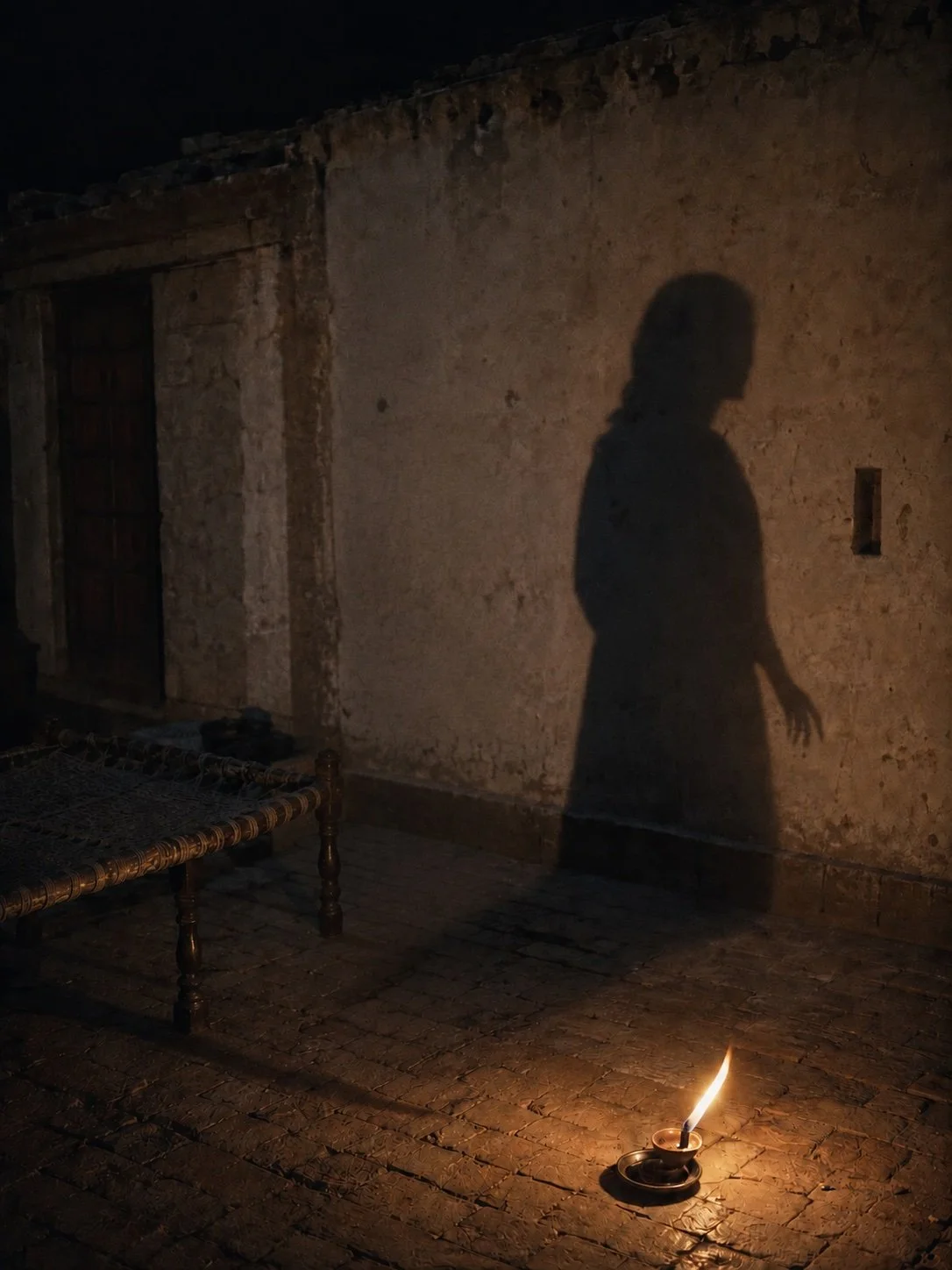
Punjabi folklore does not always draw a clear boundary between these three figures. A dain is usually a living woman believed to possess dangerous knowledge or practise harmful magic, while a churail is the restless spirit of a woman who died by mistreatment or lived an unfulfilled life. The pichhal peri -backward-footed one may resemble an ordinary or unusually beautiful young woman, but her reversed feet show she no longer belongs completely to the human world.
She is most often encountered by a traveller moving alone after nightfall. She may wait beneath an old tree, beside a well or cemetery, along a deserted road or at the edge of a village, calling softly, asking for directions or persuading him to follow her. Those who do may be led deep into the wilderness, drained of their strength or returned years later believing that only a few hours have passed. In other tales, the churail does not hunt strangers without reason, but returns to punish those whose cruelty caused her death.
These legends are found across South Asia, where the same spirit appears under different names and in many different forms. Within Punjab, however, the dain, churail and pichhal peri became deeply rooted in a shared oral tradition. Their stories grew from fears that were painfully real: the dangers and suffering without protection, illnesses that seemed to have no explanation and the hazards waiting beyond the village after sunset. Yet the legend also carries a warning about injustice. A woman oppressed while alive could return with power no one could control. Together, the dain, churail and pichhal peri stand at the threshold between the woman who is feared, the woman who was wronged and the retribution of her spirit - a presence avoided not only because she is dangerous, but because her anger may have begun in the human world.
The Naag
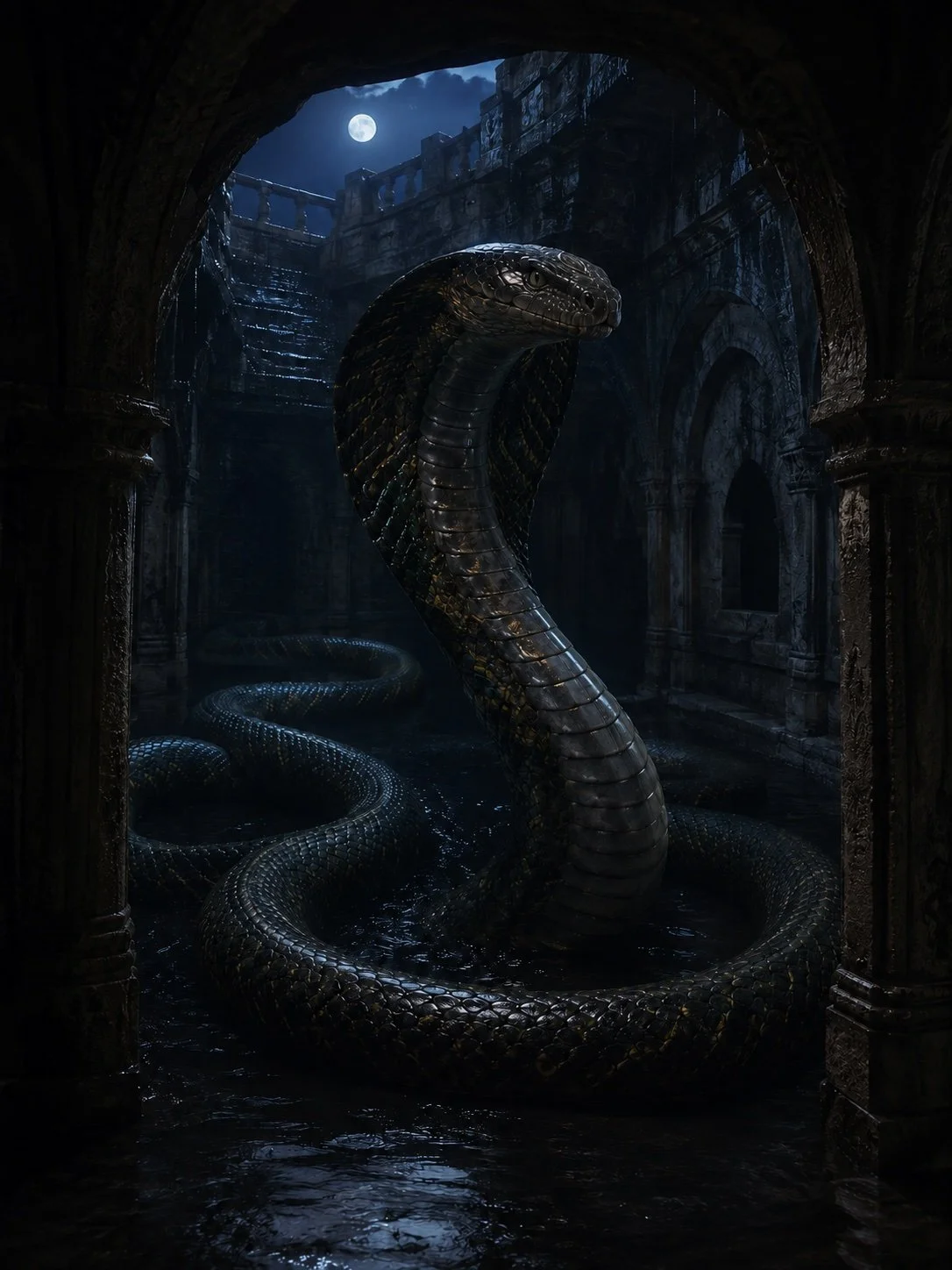
A naag belongs to a world concealed beneath the human one - below the surface of rivers, within snake-holes and in hidden kingdoms ruled by serpent kings. In Punjabi folklore, it may appear as a snake adorned with jewels, a supernatural being, or a member of an unseen serpent court with its own rulers, treasures and laws. It resembles an earthly snake, but possesses an intelligence and power the beyond the natural world.
Punjabi folktales discuss serpents rewarding those who rescue or honour them, sometimes with magical objects capable of granting wishes. Yet their gifts and promises are guarded carefully, and entering their world or claiming what belongs to them can be dangerous. Like the snake itself, the naag may protect, reward or strike - its response shaped by the conduct of the person who encounters it.
The figure belongs to a much wider mythology found across South Asia. The Sanskrit word naaga refers both to serpents and to divine or semi-divine serpent beings appearing throughout various traditions. They are commonly associated with water, subterranean realms, royal authority and concealed riches.
To encounter a naag is to glimpse a kingdom hidden beneath the ordinary world - and discover that the serpent before you may be far more than it appears.
The Balaa
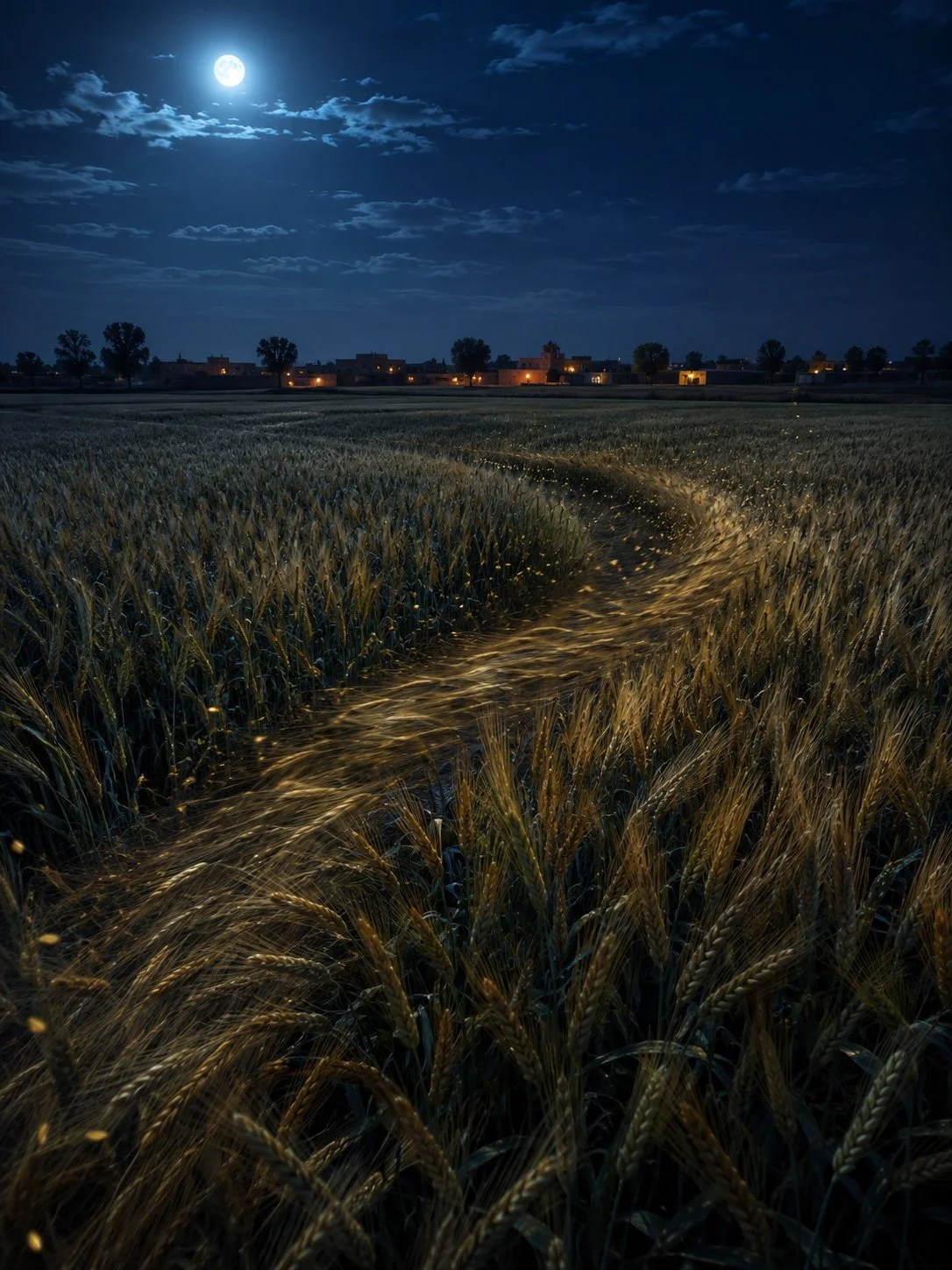
A balaa belongs to the part of Punjab’s supernatural world that has no recognisable face or form.
An unfamiliar sound. A shadow without a source.
The sense that something has entered the familiar world.
In Punjabi folklore, the word does not describe one clearly defined creature with a fixed appearance, gender or set of powers. A balaa may be an unknown presence, a spirit, an affliction or even a calamity itself - something visible or unseen, named only through the unfamiliar feelings and circumstances it brings.
Unlike other supernatural beings, it cannot be recognised by a particular feature or behaviour. No one can say whether it is human or animal, living or supernatural, because its identity changes from one warning and story to another. Although the balaa is often used to describe a negative or unwanted entity, it is not inherently harmful to humans, more unfamiliar and unknown.
The balaa’s power lies within that uncertainty. It embodies the fear of a danger that cannot be seen clearly, understood or given a familiar name. Rather than one creature with its own legend, the balaa is the name given to something unusual when no one can explain what has arrived.
The Banbudda
A Banbudda belongs to the hills where appearances cannot always be trusted.
An unfamiliar man. A borrowed face.
Something mischievous that changes its shape and disappears.
Found primarily in the oral folklore of Kashmir and the Potohar Plateau of northern Punjab, the Banbudda is a male supernatural being known for changing its form. It disguises itself to deceive, confuse and cause trouble, but is generally remembered as mischievous rather than harmful. In some local traditions, it is regarded as the male counterpart of the pichhal peri.
No one form reveals what the Banbudda truly is. It may appear human, animal-like or as something that cannot be clearly identified before it vanishes or changes again. Modern interpretations have imagined it as everything from a small rabbit-like creature to a hairy forest-dweller, but neither appearance is universal within the folklore.
The Banbudda’s power lies in disguise. It borrows familiar forms, creates confusion and disappears before its deception can be understood - leaving those who encounter it uncertain of whether they saw a stranger, an animal or something that had never possessed a true form at all.
The Chumur Dekhi
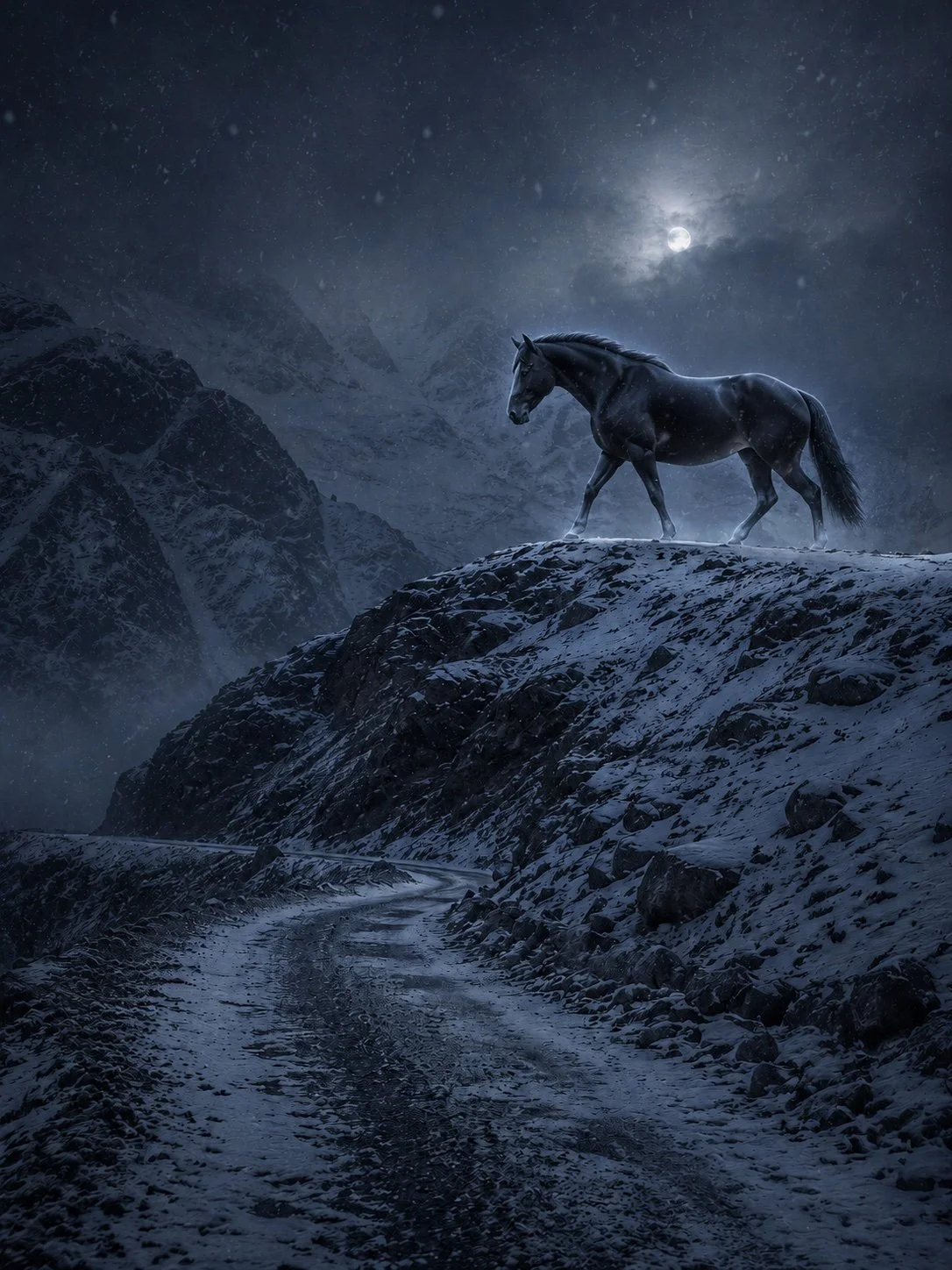
A Chumur Dekhi belongs to the mountain roads where winter makes every journey uncertain.
Falling snow. An isolated path.
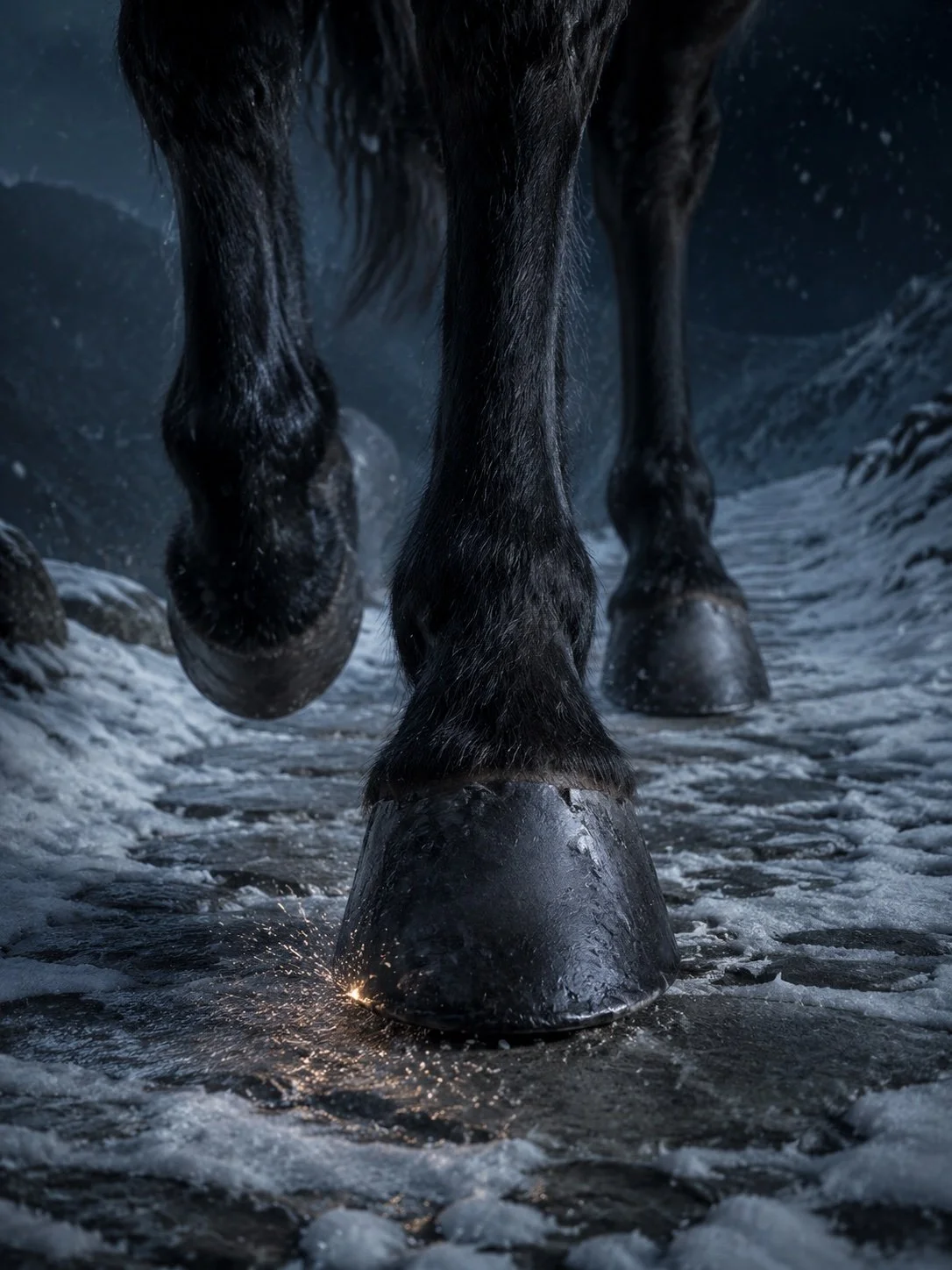
Iron striking against the frozen ground.
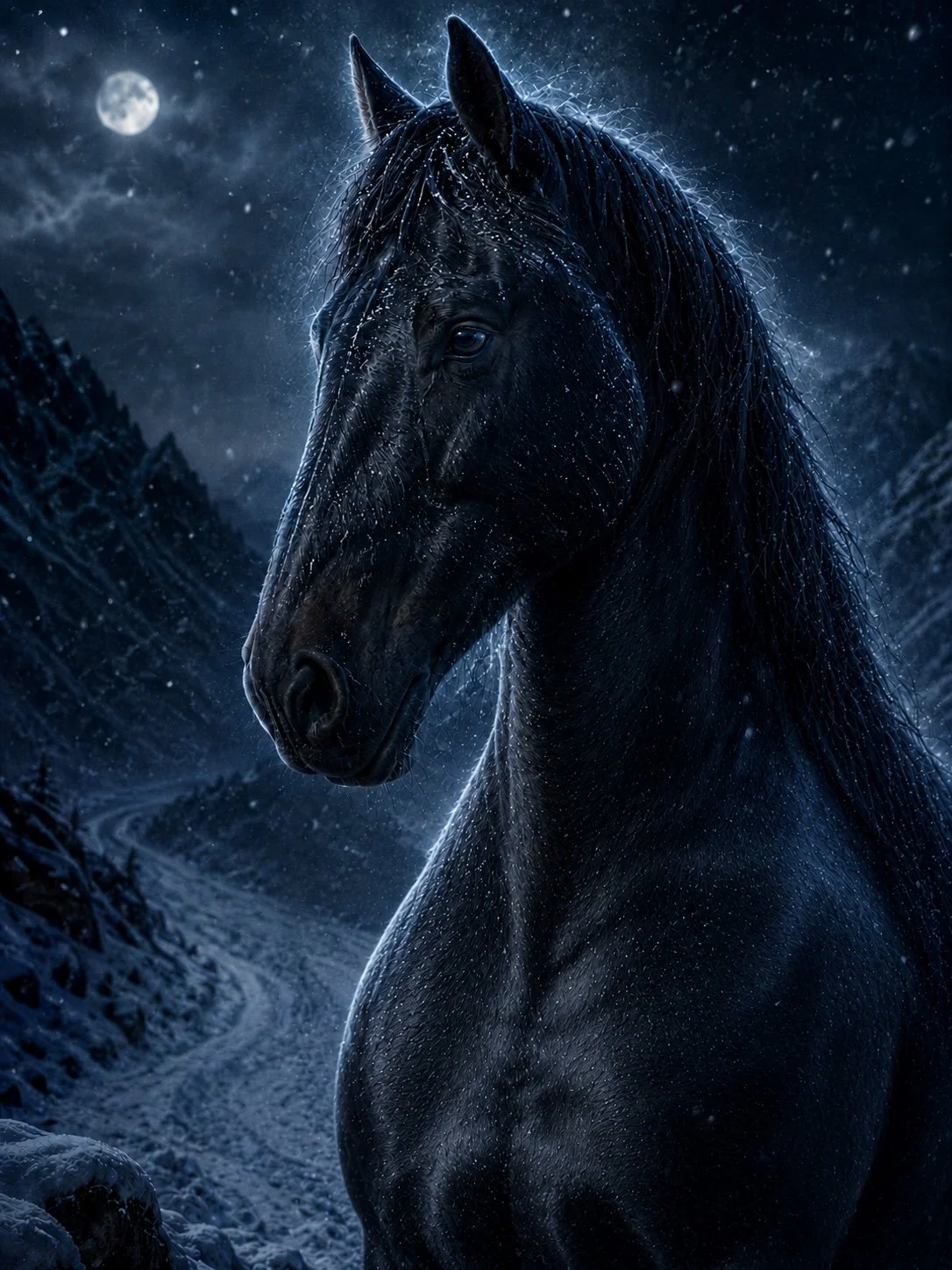
Found in the oral folklore of Chitral, the Chumur Dekhi is a supernatural horse said to appear along remote mountain routes on snowy winter nights. Its defining feature is its iron legs or hooves. To encounter it was regarded as an omen of approaching misfortune, particularly for travellers and caravans crossing the mountains after dark.
No single account describes the Chumur Dekhi in exactly the same way. Some traditions remember an extraordinarily swift horse capable of covering impossible distances, while others claim that it could leap across mountains or breathe fire.
The Chumur Dekhi’s power lies in its approach. It does not need to pursue or attack those who encounter it; the ringing of iron through an empty winter landscape is warning enough. Somewhere beyond the falling snow, an impossible horse is moving along the same road - and whatever follows its arrival may not be escaped.
Khwaja Khizr - Zinda Peer
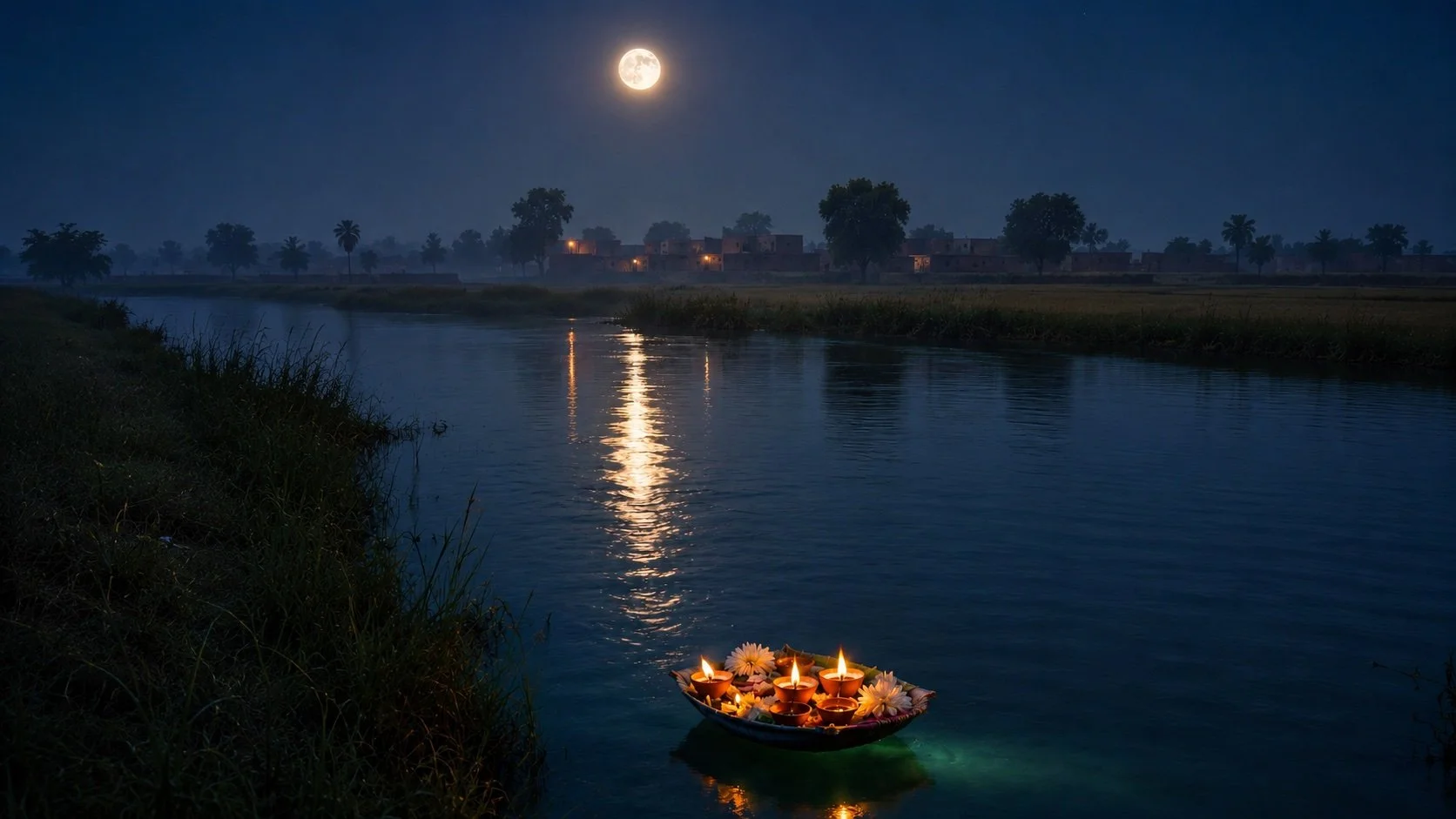
Khwaja Khizr belongs to the waters that carry travellers beyond familiar ground.
A moonlit river. A drifting lamp. A guide who never grows old.
In Punjabi folklore Khwaja Khizr, also known as Zinda Peer - the Living Saint, is an immortal guardian associated with rivers, wells and the hidden water of life. He was believed to watch over boatmen and travellers, appearing when someone had lost their way or when dangerous waters threatened to carry them beyond reach.
Small lamps were sometimes floated upon ponds and rivers in his honour, their light entrusted to the current as people prayed for protection and safe passage. Although remembered by different communities in different ways, throughout Punjab he became a shared symbol of water’s ability to sustain life, conceal danger and carry those who treated it with respect safely home.
Khwaja Khizr is not a mythological creature, but a sacred figure surrounded by centuries of folklore.
Wherever water flows and a traveller requires guidance, Khwaja Khizr is believed to remain - unseen, ever-living and watching from somewhere beyond the riverbank.
Darya-e-Chenab: The River of Love
The Chenab runs through some of Punjab’s most enduring love legends. Ranjha crosses it on his journey to Heer; Sohni enters its waters night after night to reach Mahiwal. For Sohni, the crossing becomes fatal when the clay pot keeping her afloat breaks apart. The river is the distance the lovers must overcome, but it is also a danger they cannot control.
This is how the Chenab became known as the River of Love: through stories in which reaching the person you love means risking everything between you and the opposite bank.
The river also took on a spiritual meaning in some Sufi interpretations of Sohni’s story. Sohni could represent a soul seeking the Divine Beloved, while the Chenab represented the difficult passage towards that love. Her unfired pot became a warning about relying on something too fragile to carry her across. This was an interpretation of the tale, rather than a separate legend about the river. It helps explain why the Chenab remained significant in Punjabi storytelling: the same crossing could be understood as Sohni’s journey to Mahiwal, or as a search for a love beyond the human world.
The Meeting Place of The Pari
The pari’s home is often called Paristan - the Land of the Fairies - a hidden realm associated with Koh-e-Qaf, the legendary mountain of Persian tradition. Stories describe a world with its own rulers, palaces and inhabitants, reached through extraordinary journeys rather than ordinary roads. These ideas travelled into South Asian storytelling, where the geography changes between tales. In Punjabi tales the pari live on an Emerald Mountain. Elsewhere, particularly in Chitral’s mountain traditions, actual peaks and remote lakes are believed to belong to fairies.
Yet a pari’s home and the place where a person encounters her need not be the same. Across these traditions, fairies may visit gardens, bathe beside mountain lakes or enter the human world in another form. The meeting place of the pari therefore has no single location and exists both within and beyond this world. Depending on the story, it may be a secluded place in nature, a hidden palace or a familiar home whose inhabitants have an unfamiliar identity.
The Trees of wishes
A tree covered in threads and strips of cloth may be a place where people leave their prayers. In some Punjabi folk traditions, devotees tie these offerings to its branches while asking for healing, protection, a child or relief from a difficult situation. This may accompany a mannat - a request made with a promise to give something or perform an act of devotion if it is fulfilled. The tree is usually connected with a shrine, a revered figure or a local belief about its sacred presence. The blessing may be understood as coming through that association, rather than from the tree itself.
The act of tying gives the request a lasting, visible form. A person leaves, but the thread remains at the place where they prayed. Depending on the custom, they may return when their wish is fulfilled to remove it, make an offering, distribute food or give thanks. Pieces of cloth can also have other meanings, including prayers for protection or the symbolic removal of illness, so every decorated tree does not represent exactly the same belief. These practices are passed through families and local communities, with the meaning of the tree shaped by the stories, vows and rituals attached to it.