
From Misls to a unified empire
~
Early challenges
~
The treaty of Amritsar (1809)
~
Military Expansion
~
The Punjabi Army
~
Golden Era of the Empire
~
The court and administration
~
Foreign officers
~
Trade & Economy
~
An Arcitectural and cultural legacy
~
From Misls to a unified empire ~ Early challenges ~ The treaty of Amritsar (1809) ~ Military Expansion ~ The Punjabi Army ~ Golden Era of the Empire ~ The court and administration ~ Foreign officers ~ Trade & Economy ~ An Arcitectural and cultural legacy ~
Punjab’s story under Maharaja Ranjit Singh, and the greater Sikh Empire.
Strength. Ambition. Transformation. Leadership that shaped the modern Punjab. One of its most pivotal eras.
The Maharaja's death
~
A succession struggle
~
Sher Singh's rule
~
The ROLE OF THE DOGRAS
~
The Treaty of Amritsar (1846)
~
The last Maharaja
~
The First Anglo-Sikh War (1845-1846)
~
The Second Anglo-Sikh War (1848-1849)
~
Remains of the Empire
~
Influence on Modern Punjab
~
Legacy
~
The Maharaja's death ~ A succession struggle ~ Sher Singh's rule ~ The ROLE OF THE DOGRAS ~ The Treaty of Amritsar (1846) ~ The last Maharaja ~ The First Anglo-Sikh War (1845-1846) ~ The Second Anglo-Sikh War (1848-1849) ~ Remains of the Empire ~ Influence on Modern Punjab ~ Legacy ~
An Introduction
The rise of the Sikh Empire is one of the most significant chapters in the history of Punjab. Emerging in the late 18th century, the empire marked the culmination of centuries of Sikh resistance against the Mughal Empire and the Afghan invasions. It is a story of unity, strength, and transformation - where a disparate group of warrior communities - the sikh misls, came together under the leadership of one man: Maharaja Ranjit Singh.
The Sikh Empire began with the unification of the Punjabi Confederacy who had independently defended Punjabi territories against Mughal and Afghan rulers for decades. By 1799, Ranjit Singh, a prominent leader from the Sukerchakia misl, capitalised on the weakening power of the Mughal Empire and the invasions from Ahmad Shah Durrani. Through skillful diplomacy, military brilliance, and a keen ability to unite diverse factions, Ranjit Singh captured Lahore, making it the heart of the new Sikh state.
This marked the foundation of the Sikh Empire, which would go on to become one of the most powerful entities in the Indian subcontinent.
The empire, known for its military prowess and progressive policies, stood in stark contrast to the declining Mughal Empire and the emerging British colonial rule.
Under Ranjit Singh, the Sikh Empire reached its zenith, spanning much of the Punjab region, and extending into parts of present-day Pakistan, India, and Afghanistan. It was characterised by a blend of military strength and cultural renaissance. The Sikh Army, led by generals like Sardar Hari Singh Nalwa, was known for its formidable presence, successfully resisting British expansion into Punjab for decades. At the same time, Ranjit Singh’s governance fostered religious tolerance, economic growth, and cultural development.
However, internal rivalries and succession struggles marred the empire's stability after Ranjit Singh’s death in 1839. The absence of a strong central authority eventually led to the disintegration of the empire and its fall to the British in 1849. Despite its relatively short life, the legacy of the Sikh Empire remains.
This series explores the rise, peak, internal challenges, and eventual downfall of the Sikh Empire. Each post explores the key moments, figures, and battles that shaped the empire's trajectory and its enduring legacy.
Shastran ke adheen hai raj - Jo na tare tis bigaare kaj
Sovereignty is protected by arms - The affairs of the one who allows injustice will fail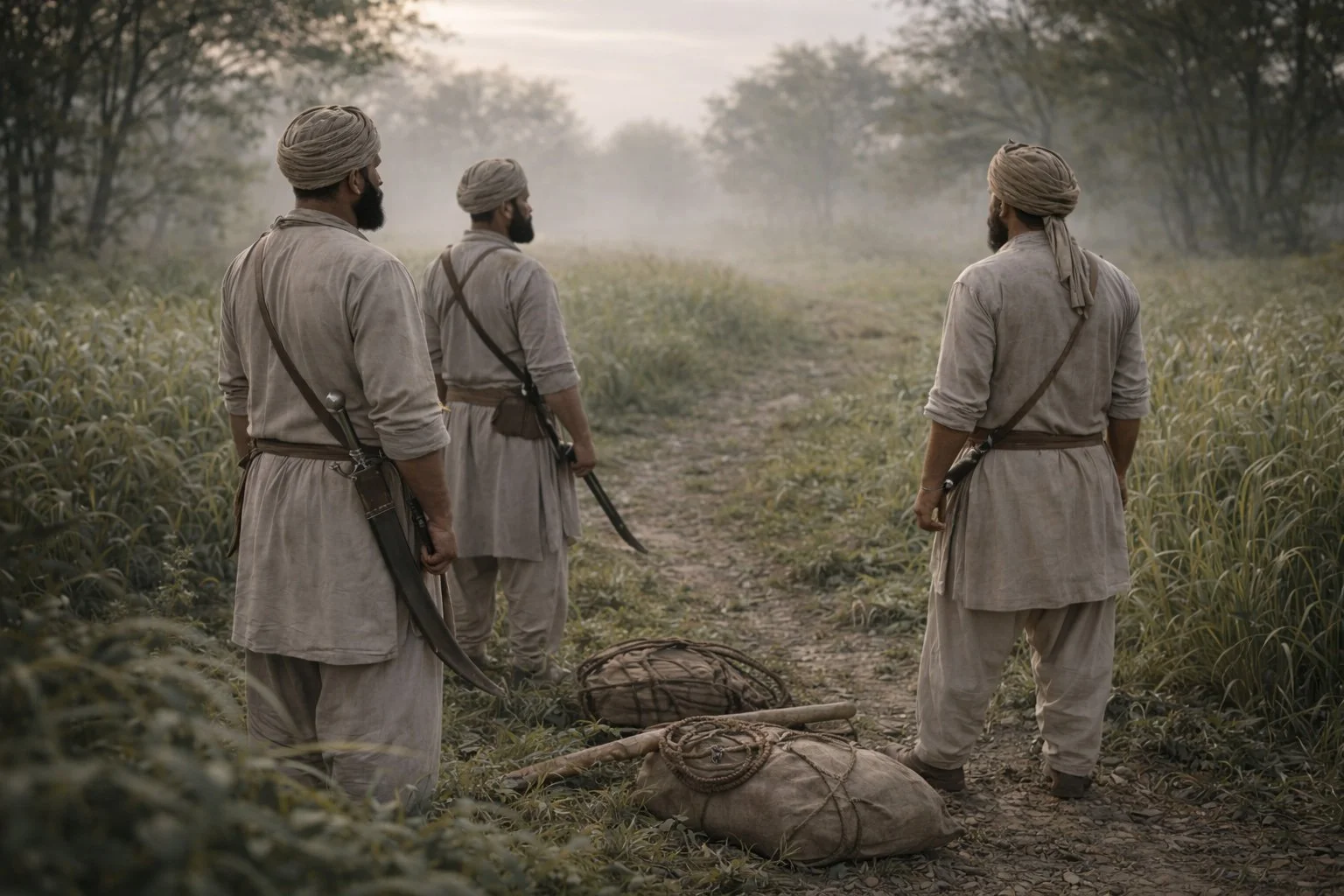
The Early Challenges of Establishing an Empire
An empire is not born in a palace. It is forged in hiding.
1708. Nanded.
The assassination of Guru Gobind Singh.
What followed was not immediate sovereignty; it was persecution.
Bounties. Executions. Displacement.
But the fire of Punjab didn’t flicker.
This is the story of how resistance survived long enough to become rule.
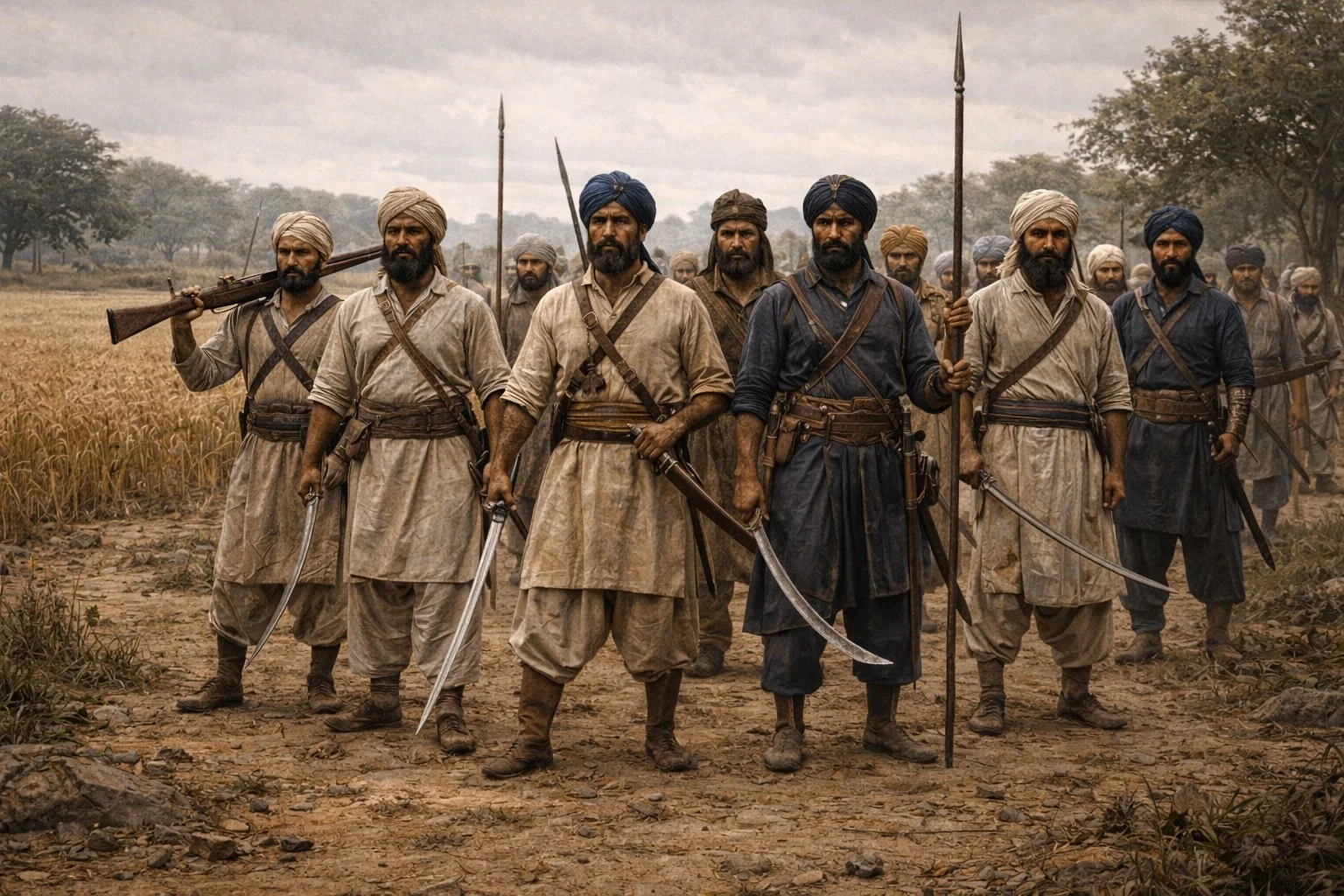
The Punjabi Army Before Modernisation
Before uniforms, there were farmers. Before drill formations, there was guerrilla warfare.
Punjab did not have a standing army.
Its farmers fought, and returned to their fields.
Mobility. Memory. Retaliation.
Born from persecution. Forged in survival.
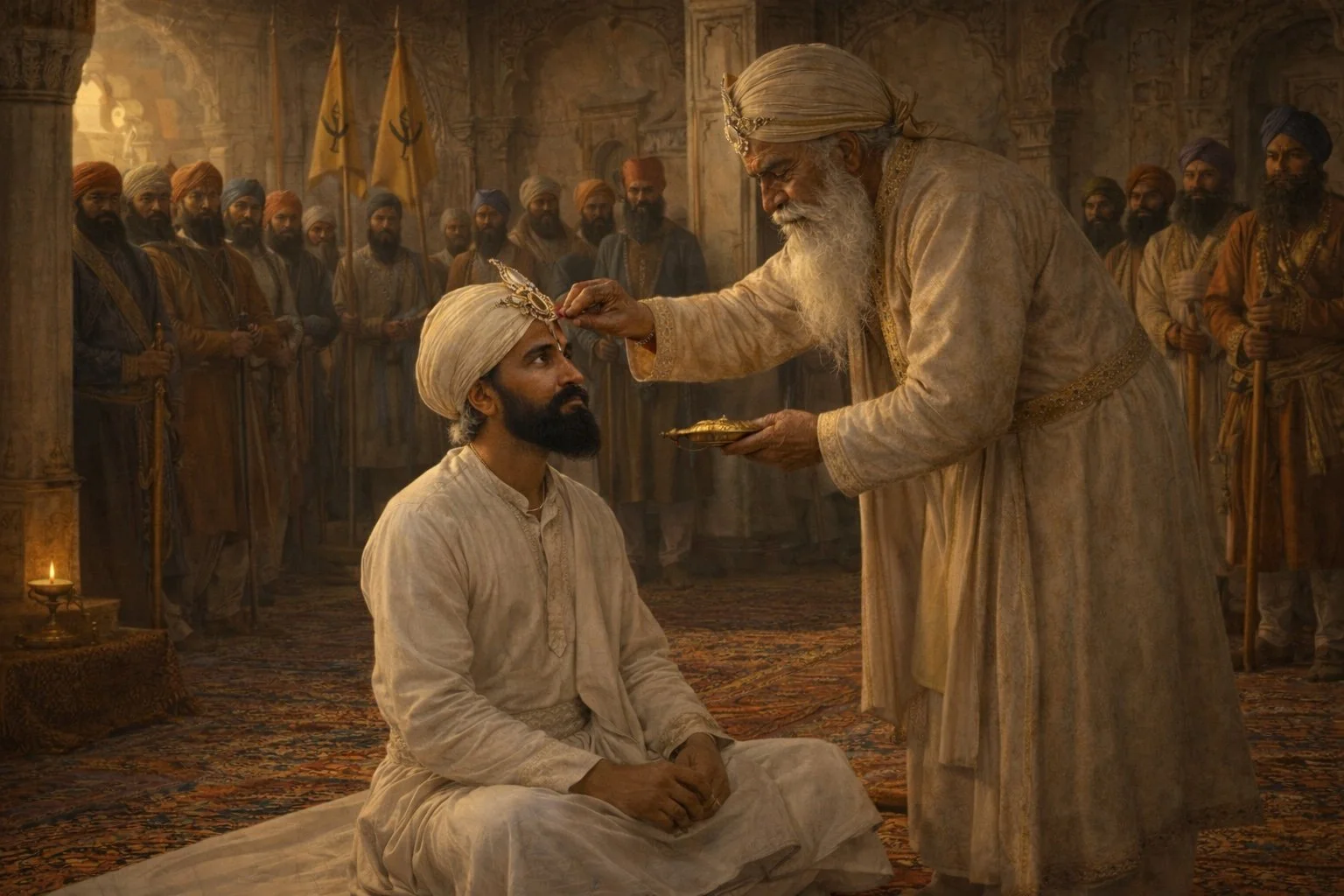
From Misls to a Unified Empire
Twelve banners. Twelve leaders. One land - divided.
The misls held Punjab through courage and rivalry.
Allies in faith. Competitors in power.
For decades, sovereignty was shared; but
never centralised.
Until one leader changed the equation.
Ranjit Singh. From confederacy to crown.
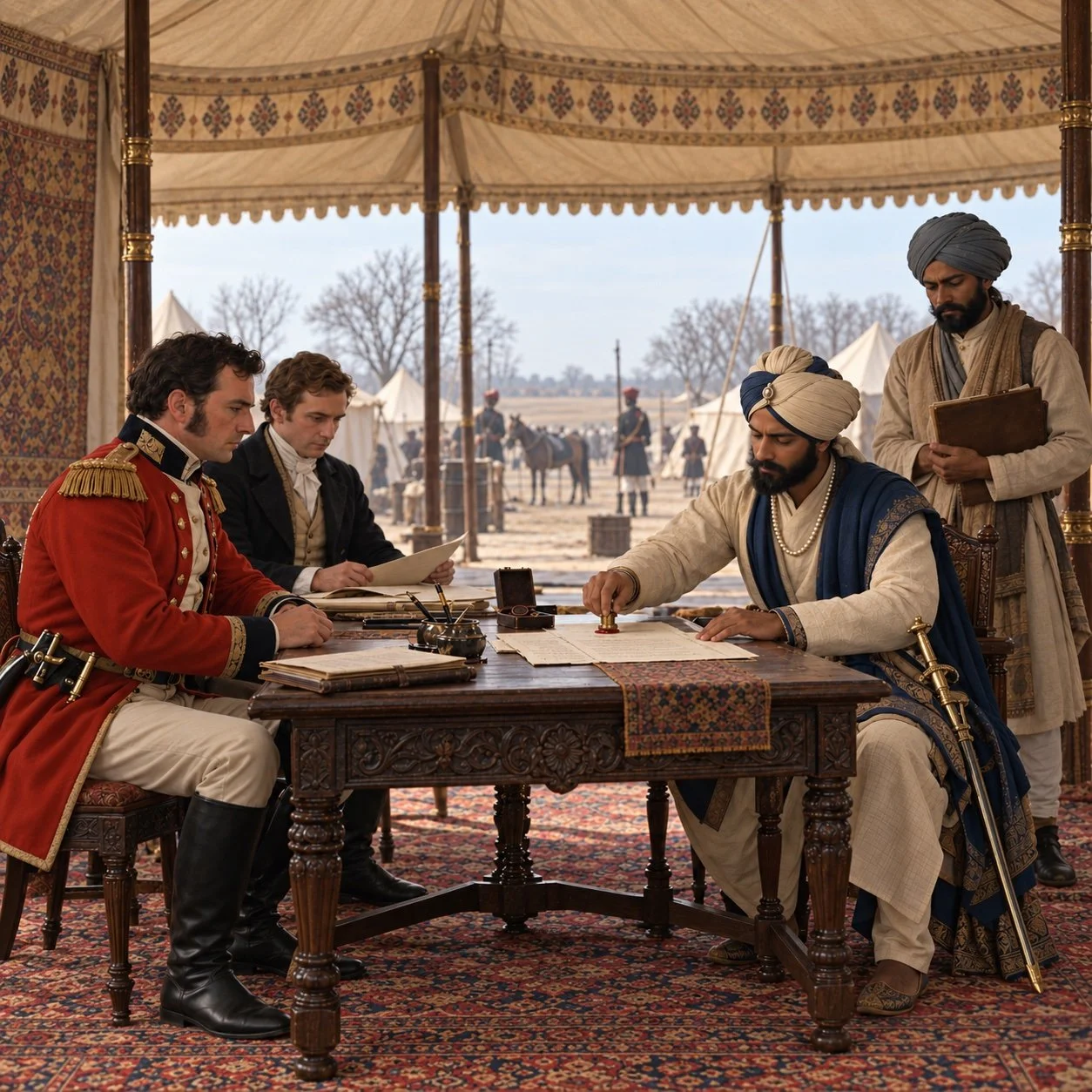
The Treaty Of Lahore (1806)
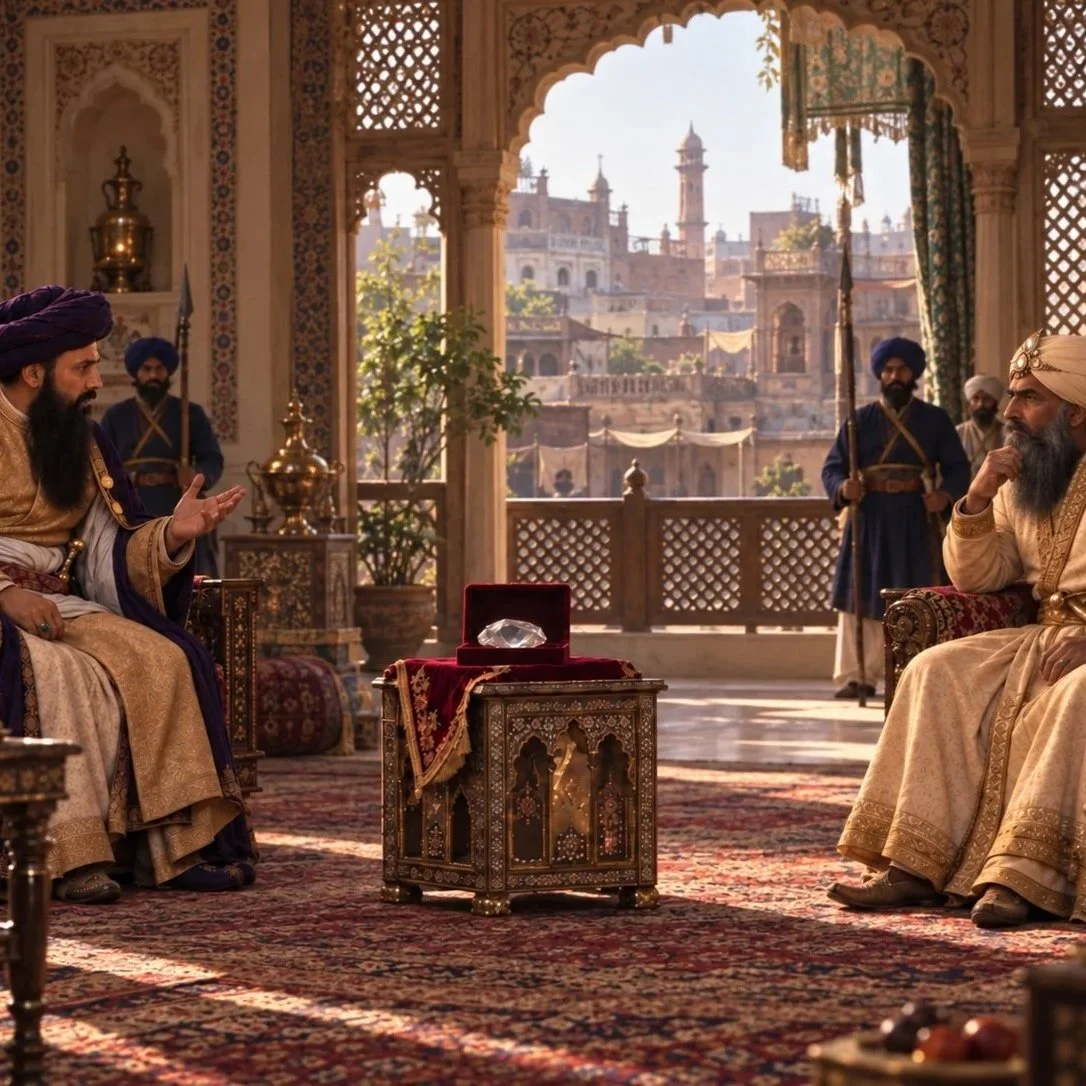
1806. The first negotiations of a new kingdom.
The Sikh Empire. The State of Kapurthala.
The Maratha Confederacy. The British East India Company.
Maharajas. Nawab. General. Lieutenant-Colonel.
The Treaty of Amritsar (1809)
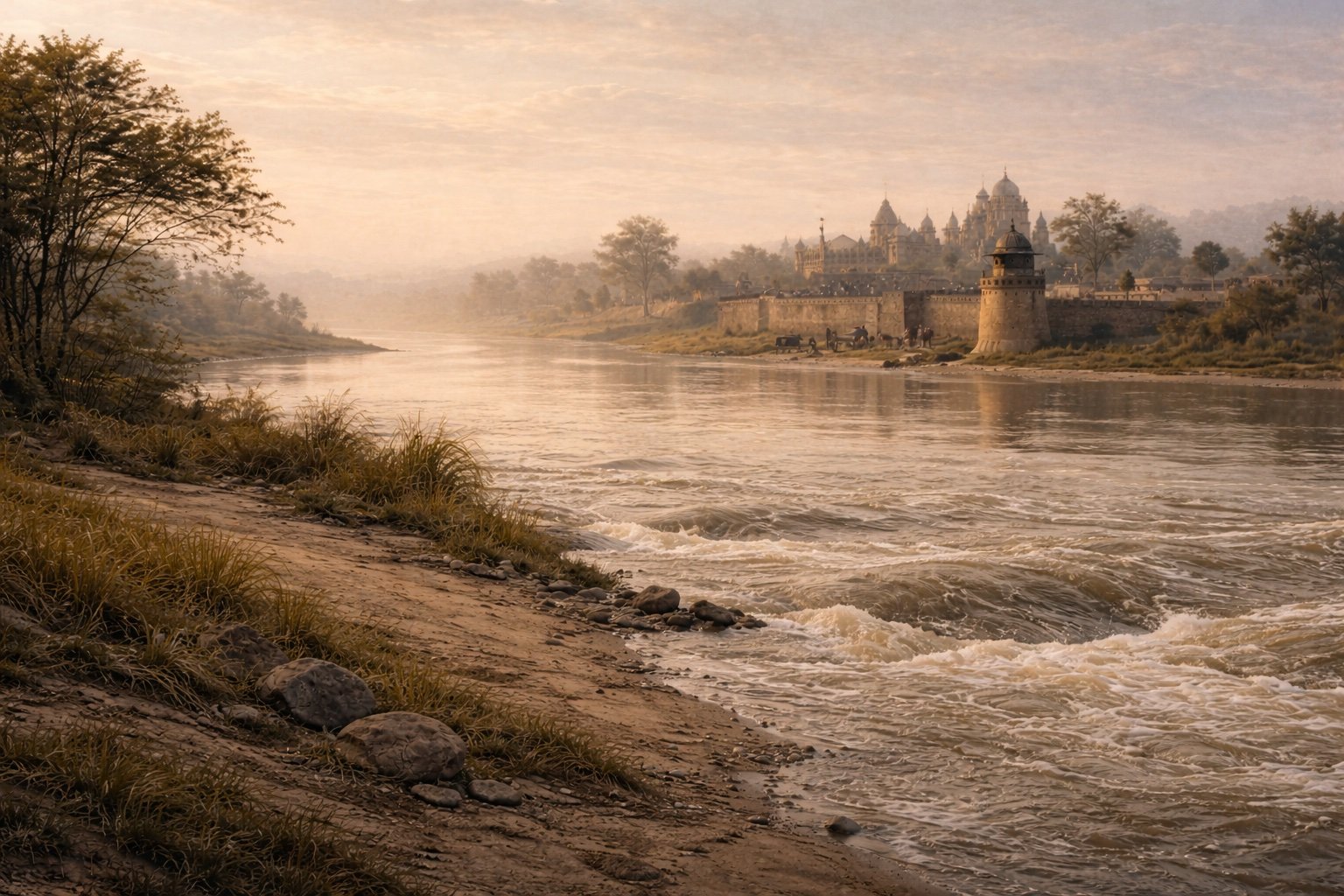
1809. A river. The Sutlej.
On one side - the rising Sikh Empire.
On the other - the British East India Company.
Expansion met empire. The leader negotiated. This is the treaty that drew the first formal border of the Sikh Empire.
The Army That Defended Punjab
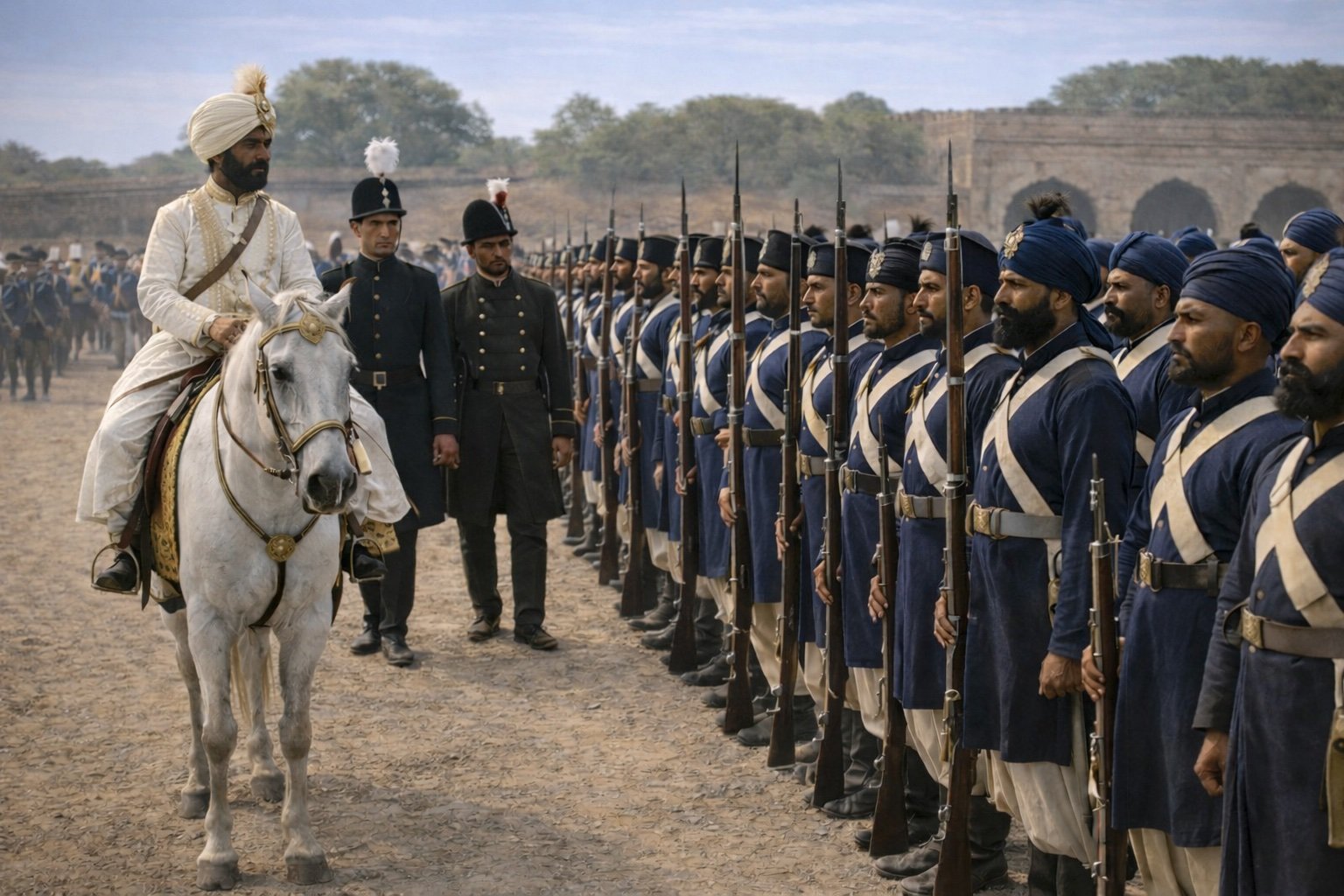
Survival built warriors. Strategy built an empire.
Exile taught resistance. Lahore would teach discipline.
Organised. Paid. Drilled.
Rebellion to armour.
Punjab was not fighting for sovereignty, it was defending it.
The Role of Foreign Officers
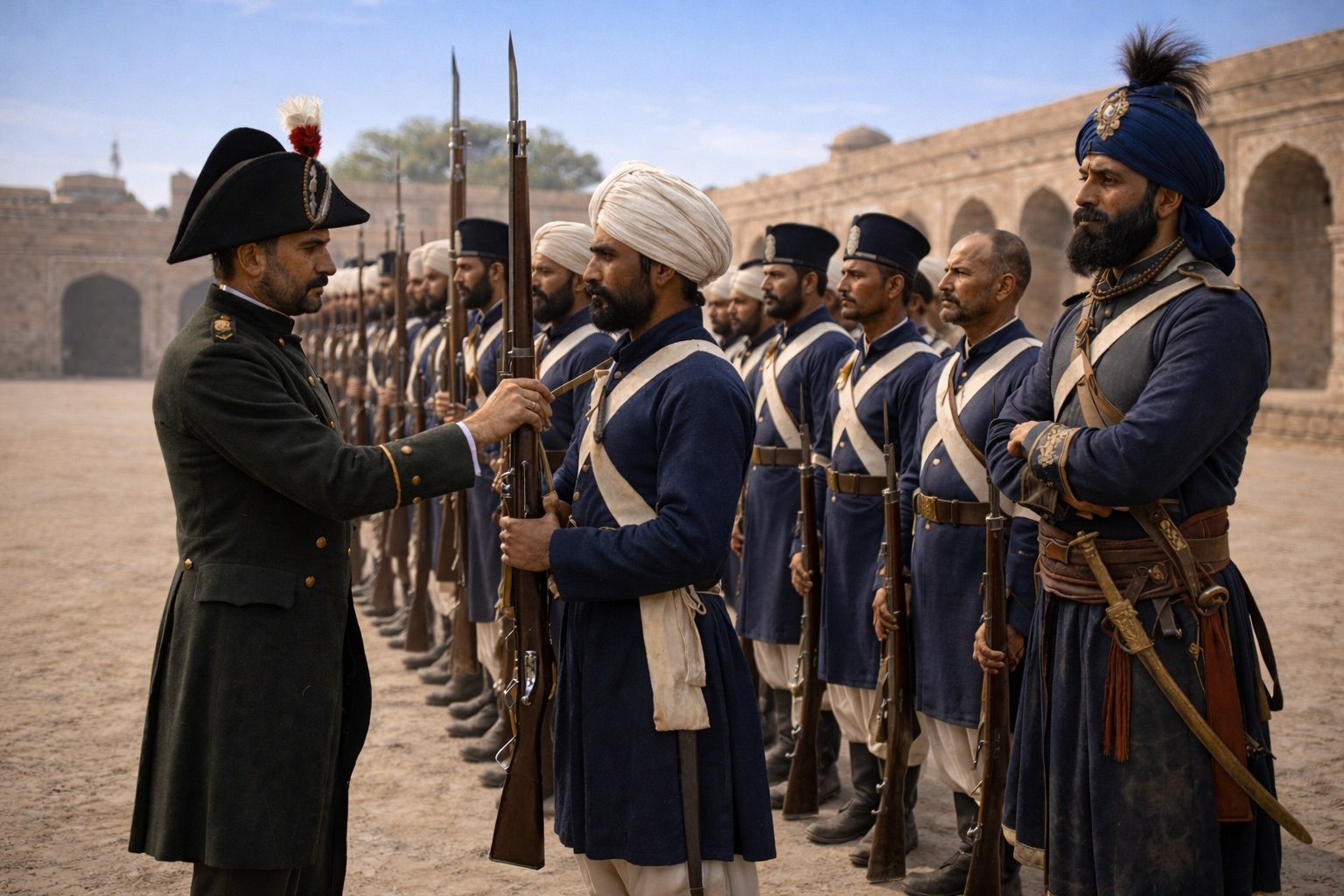
As modern armies reshaped warfare, the Maharaja took notice.
France. Italy. Europe.
Foreign officers trained regiments, modernised artillery, imposed discipline.
But command remained in the hands of Punjab.
The Sikh Empire & Afghanistan
Exile. Conquest. Rivalry.
From Lahore to the Khyber.
For generations, Afghan power had reached into Punjab. By the 1830s, Punjabi power rose and the balance had shifted.
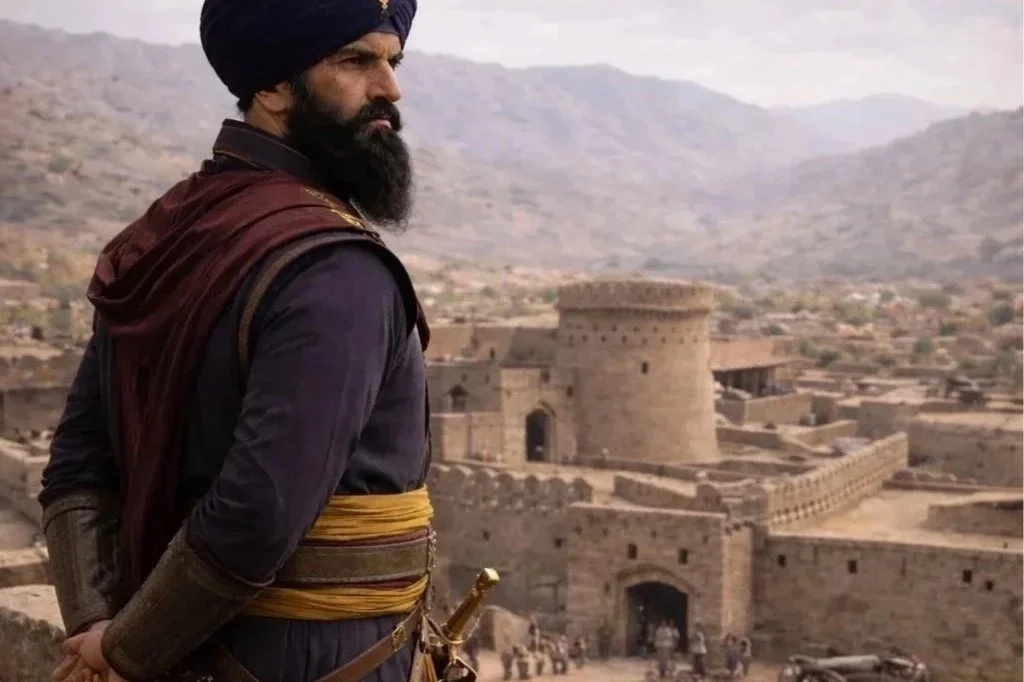
Jarnail Hari Singh Nalwa
Warrior. Governor. Administrator.
Commander of the western front.
When the Sikh Empire stood at its greatest territorial extent - his presence marked its edge.
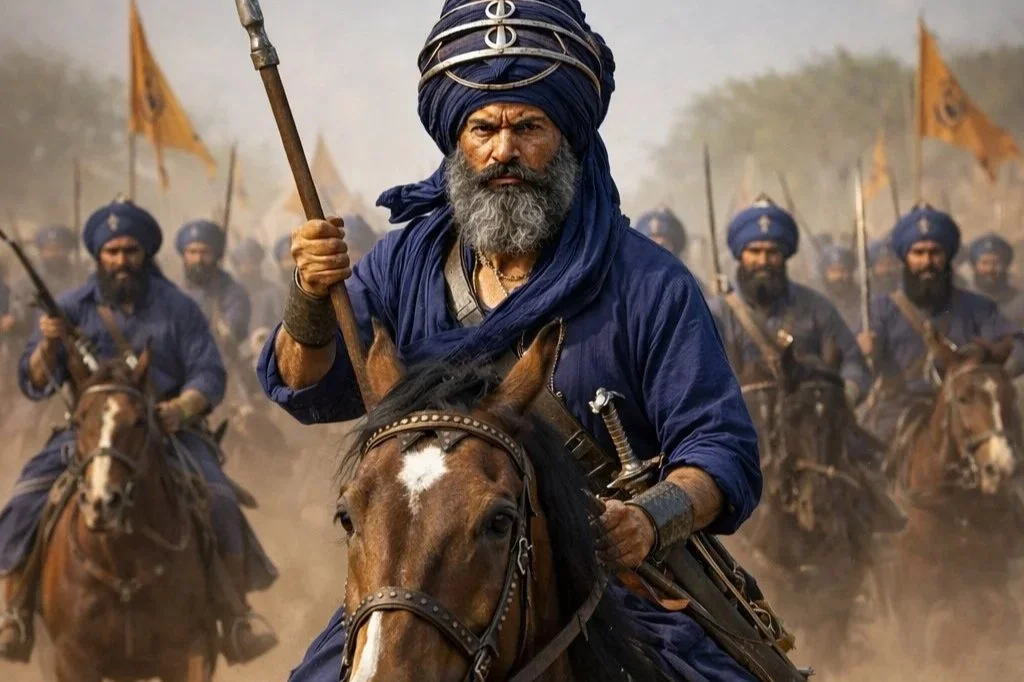
Akali Phula Singh
Circa 1760s - Sangrur, Punjab. The Phulkian Misl.
The Akal Takht. The Nihang Fauj.
Ultimate loyalty to the Khalsa
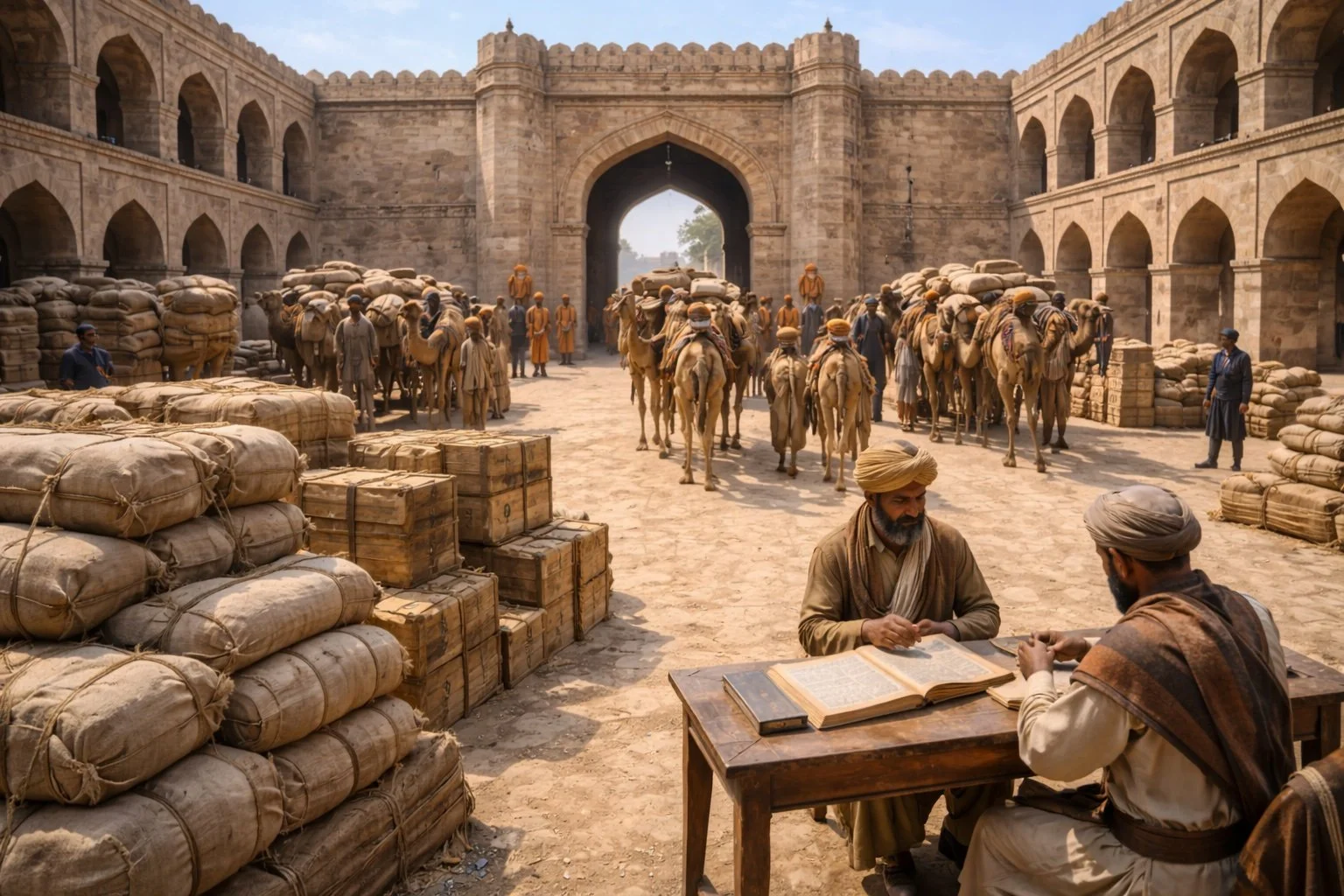
Trade and Economy
Farmer. Merchant. Nobleman.
Fields. Trade routes. Administration.
How trade and economy formed the strongest pillar of the empire.
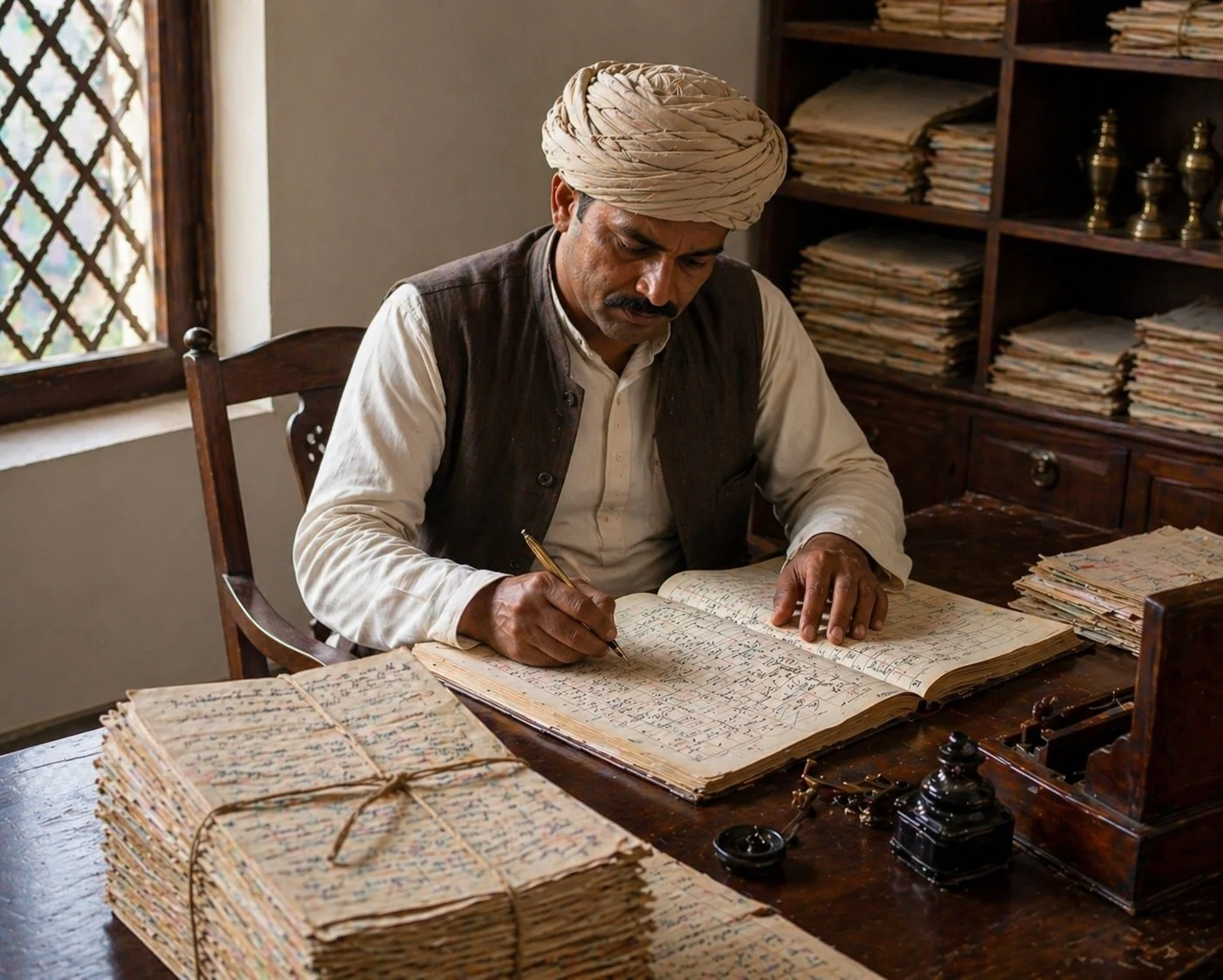
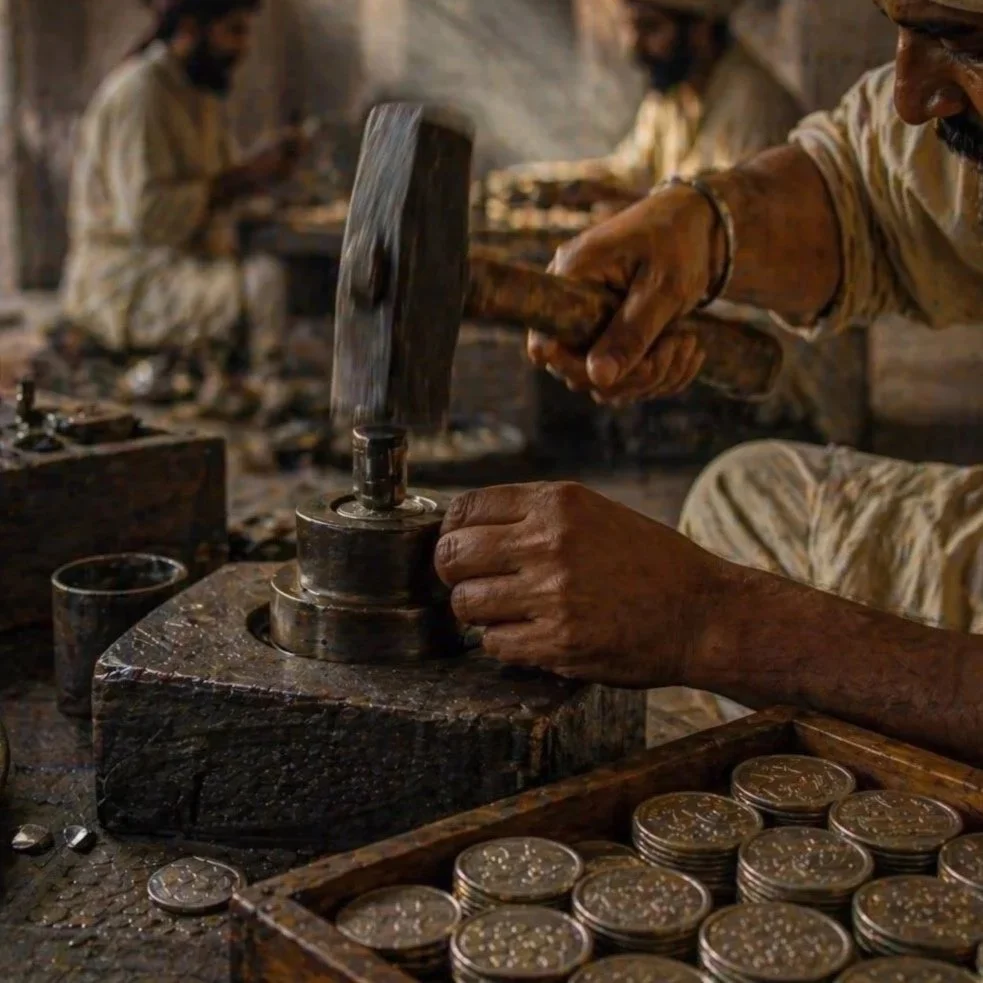
Currency of the Sikh Empire
Stamped. Measured. Circulated.
Gold. Silver. Copper.
Mohar. Rupee. Dhela.
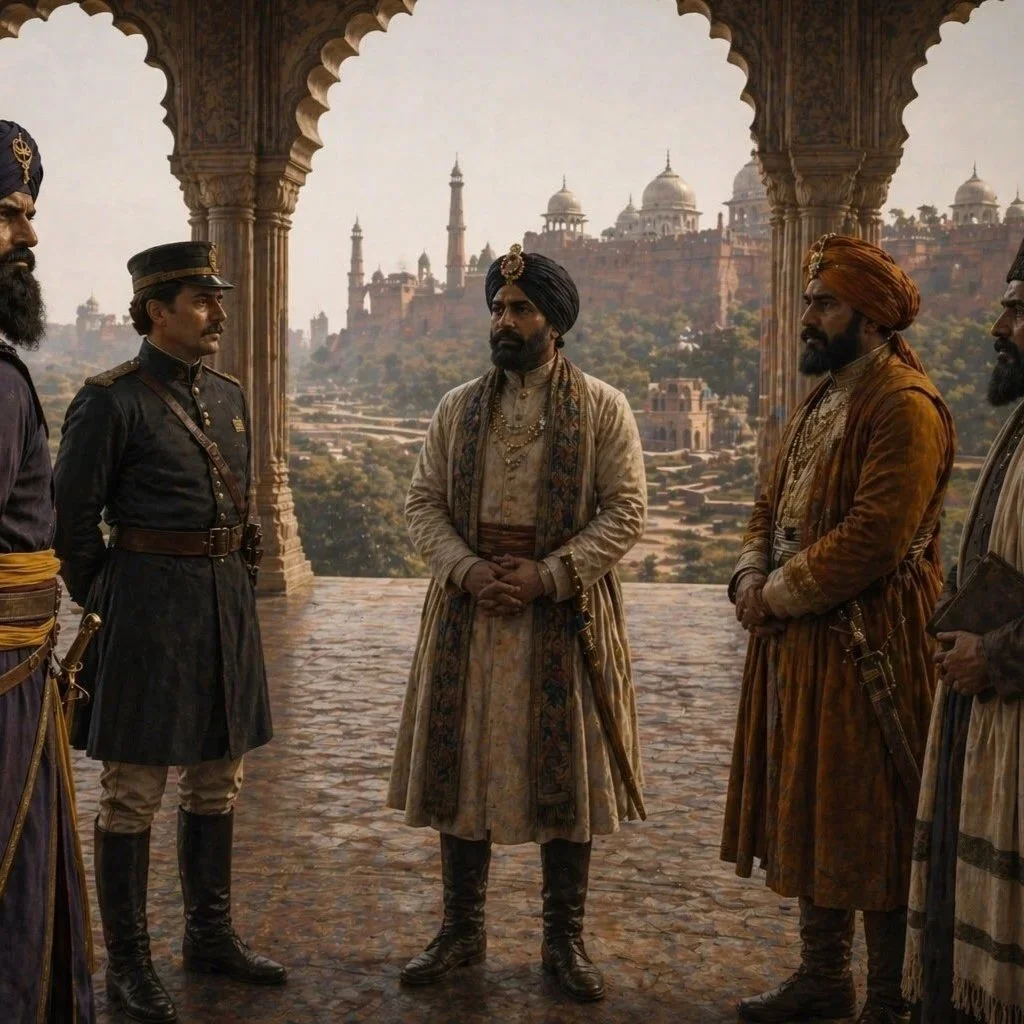
Officials of the Empire
Generals. Administrators. Diplomats. Courtiers.
Expansion. Governance. International Relations.
The officers who ran the empire.
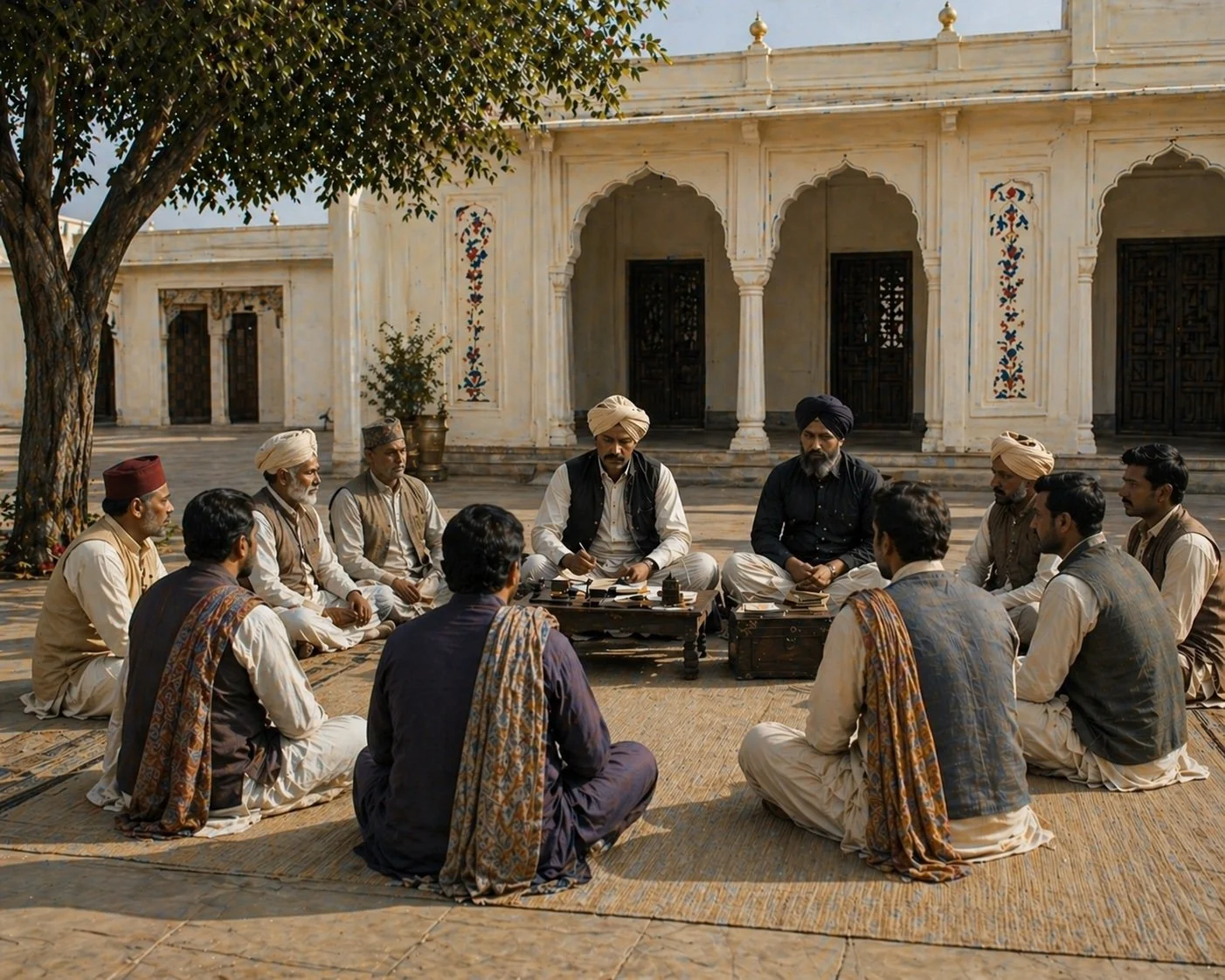
The Empire’s Justice System
Local autonomy. Central Oversight. Inherited administrative structures.
Panchayat. Kardar. Nazim.
The ultimate authority - The Lahore Durbar.
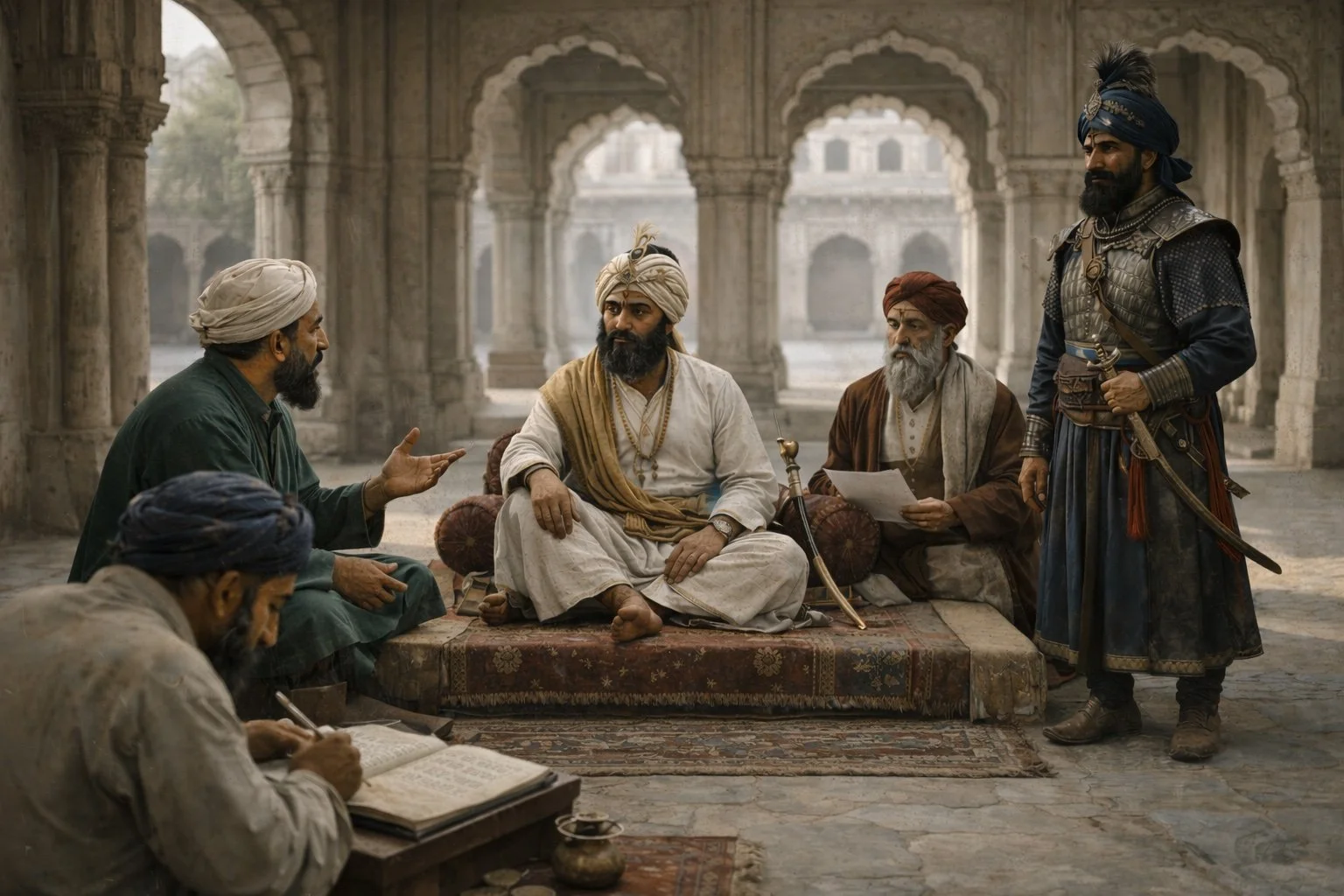
The Lahore Durbar & it’s Administration
Conquest expanded borders. Administration preserved them.
Lahore - the capital in both strength and structure.
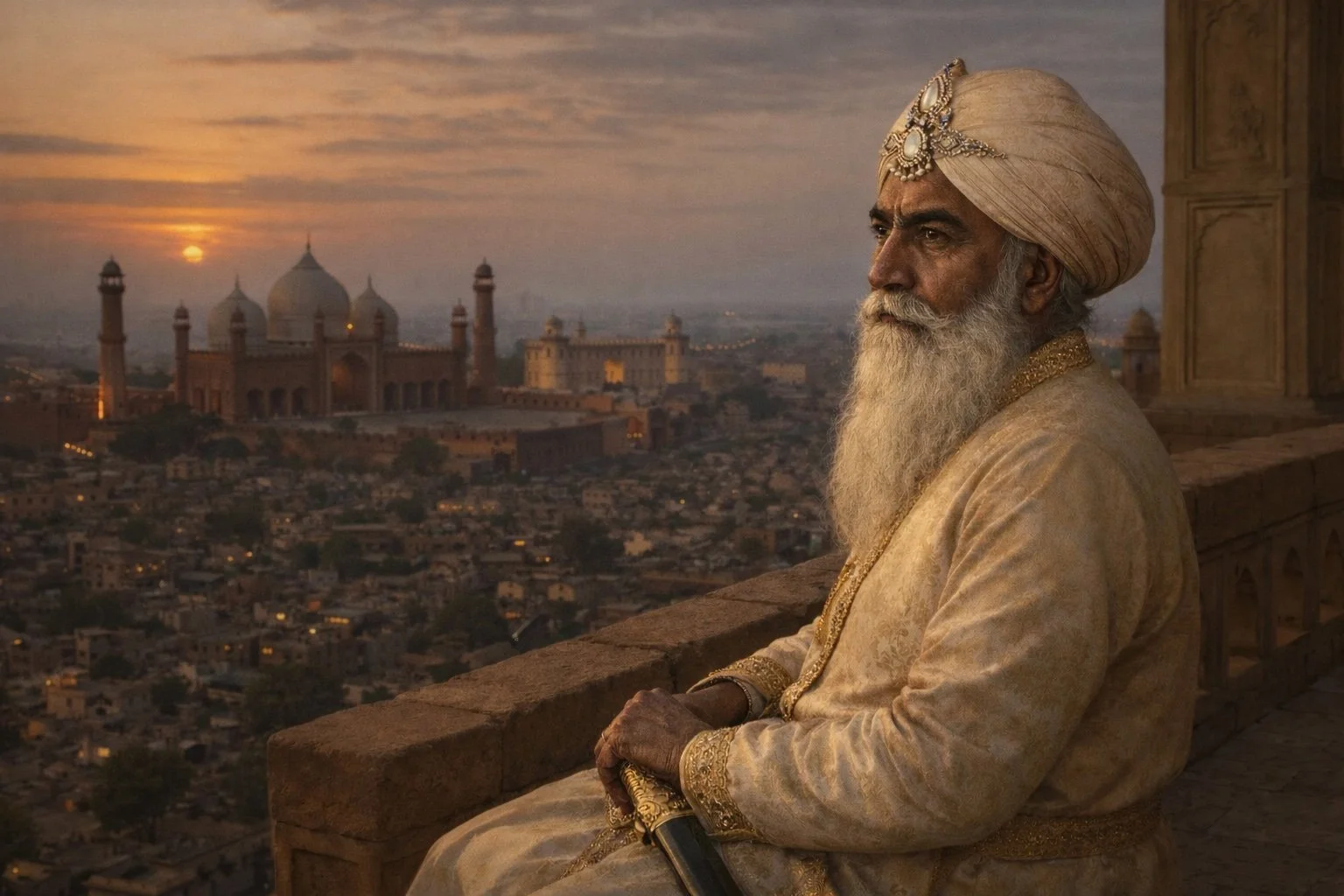
The Golden Era of the Empire
Under Maharaja Ranjit Singh,
Punjab entered its golden age.
Military strength. Economic growth. Religious pluralism.
Lahore was stabilised back into greatness. The zenith of the Sikh Empire.
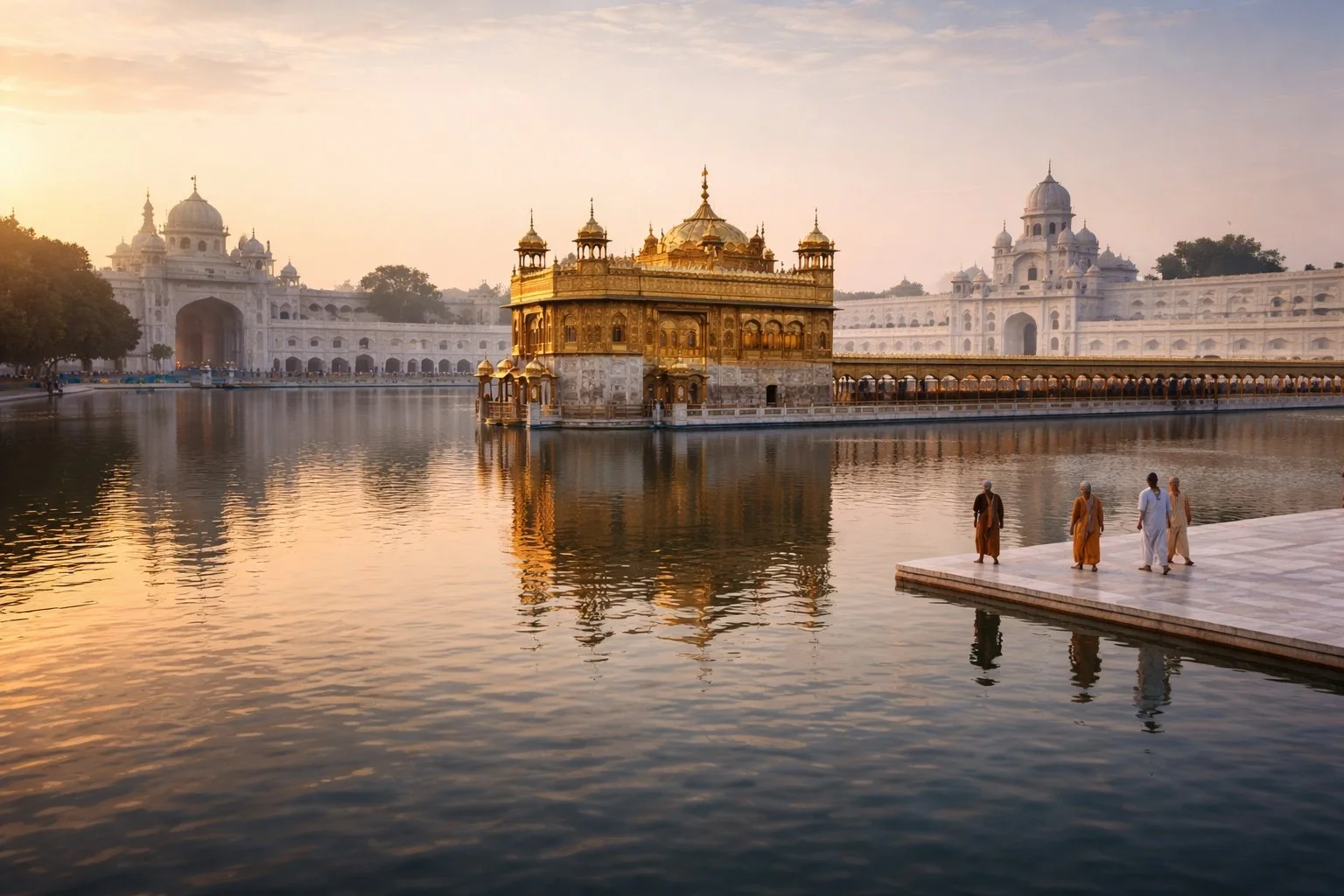
An Arcitectural & Cultural Legacy
Shrines. Cities. Art.
Repaired. Strengthened. Flourished.
Power through patronage.
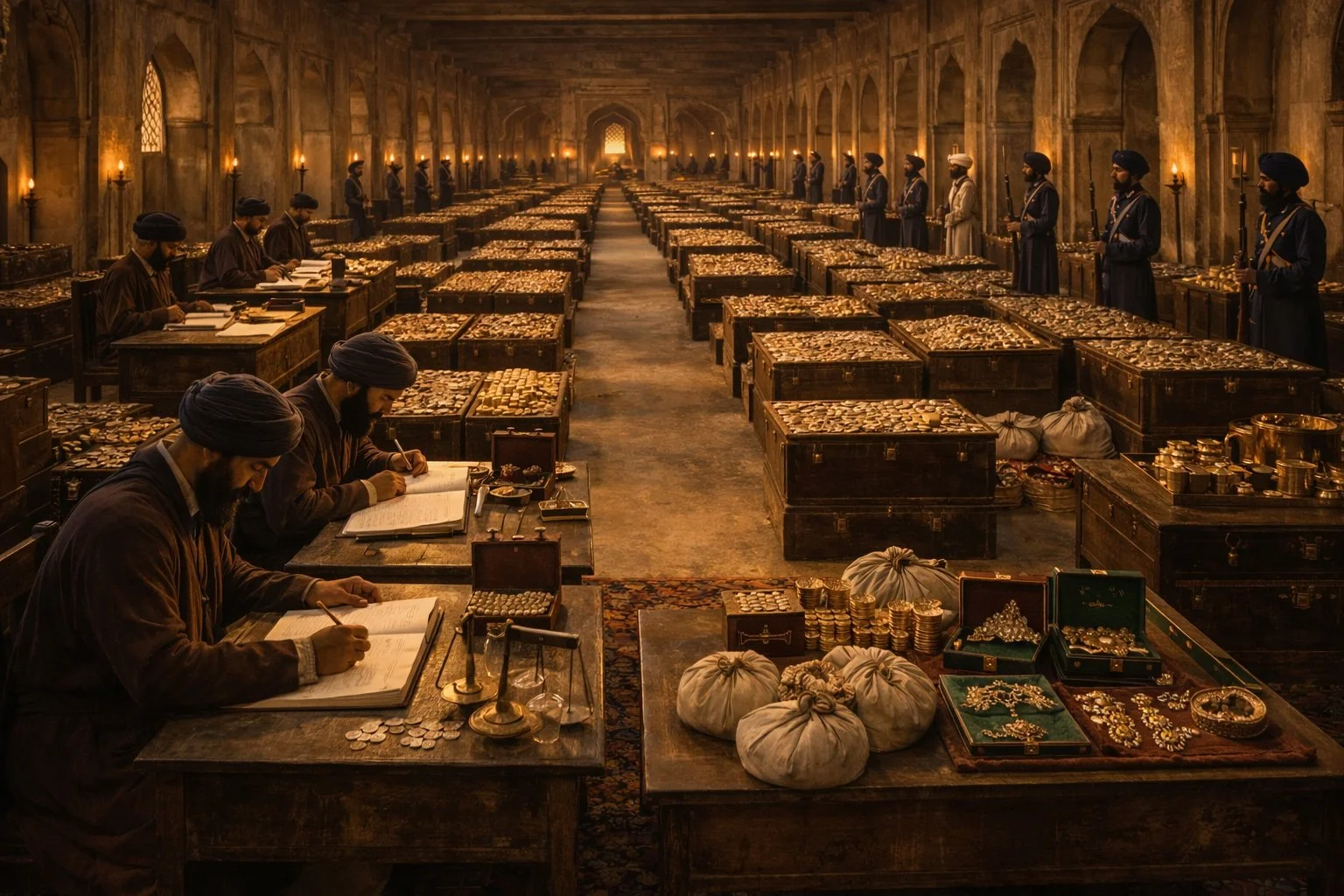
The Toshakhana - Treasury of the Empire
tosha - wealth, khana - store/ house/ room.
A paramount institution of the Punjabi state.
A symbol of sovereignty, diplomacy, and imperial authority.
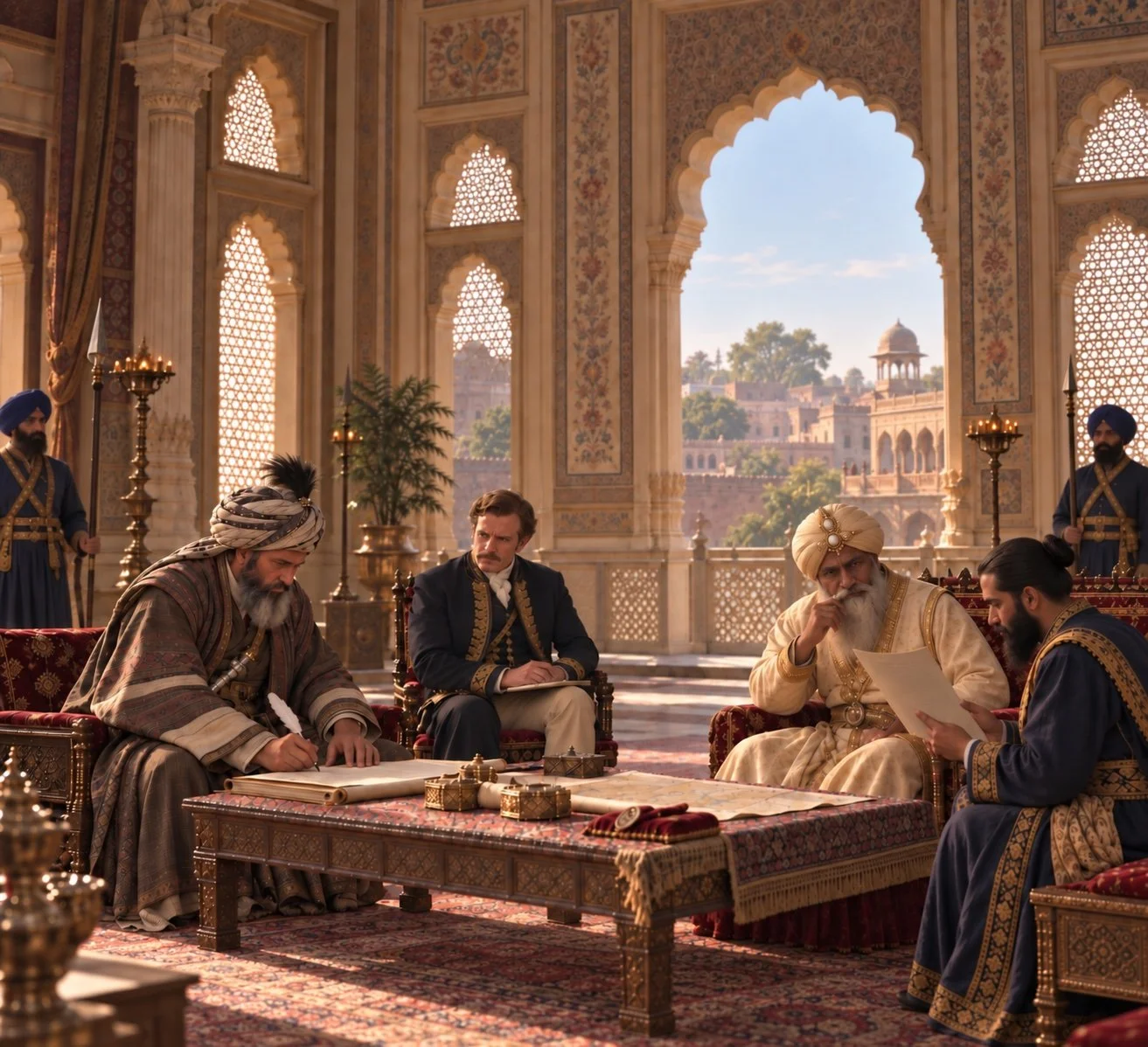
Lahore, Kabul & the Great Game
Treaty. Ambition. Intrigue.
Three powers. One Afghan throne.
By the final year of Ranjit Singh’s reign, the future of Kabul was being negotiated between Lahore, Shah Shuja and the British.
Disclaimer: The visuals in this series use symbolic settings, and expressions to convey the empire’s condition and its impact on Punjab. These are interpretive representations, not accurate historical depictions.
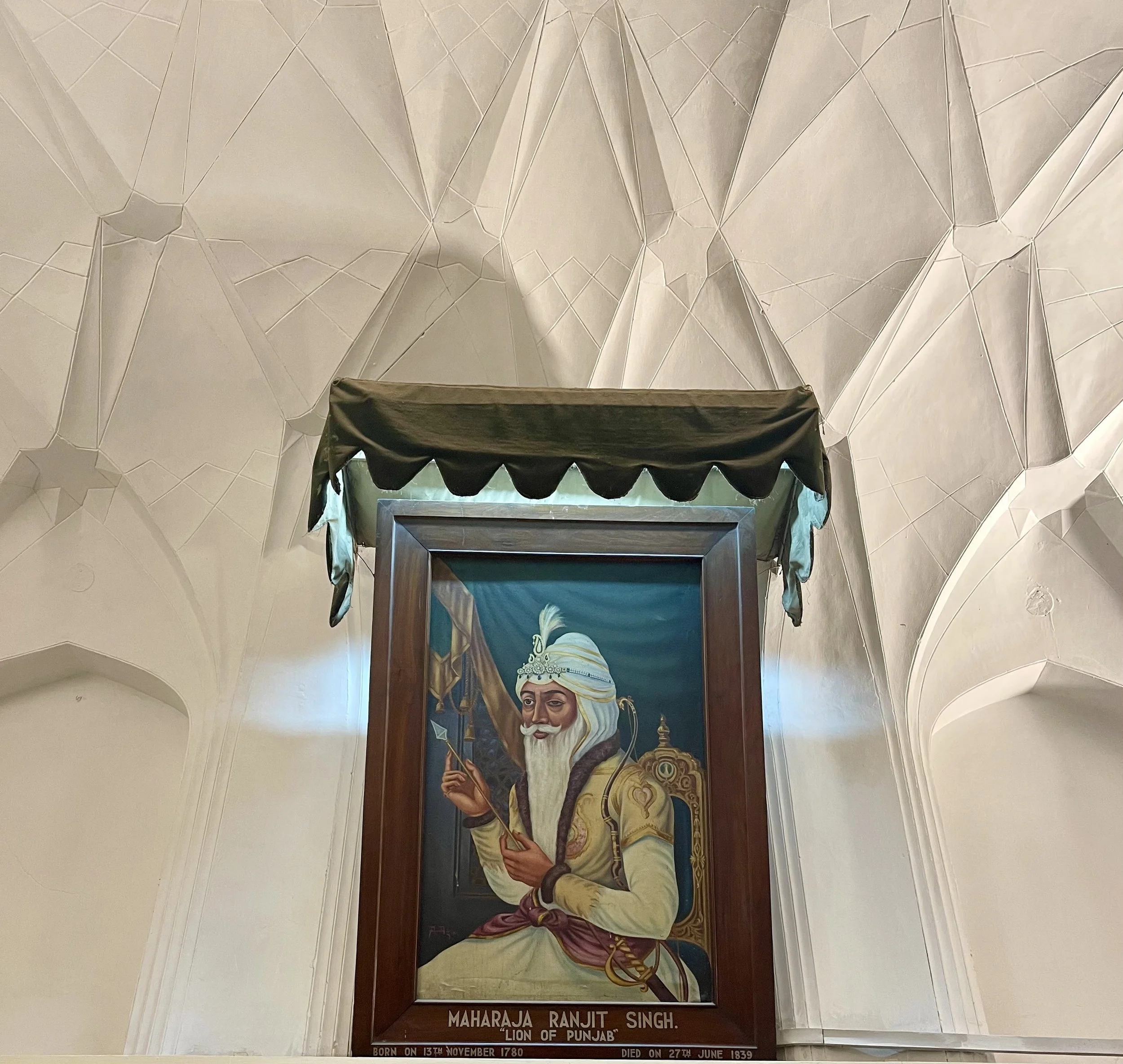
Portrait of Maharaja Ranjit Singh - Lahore, Punjab.