The faces of Punjab - Mosaics of history. Shaped over millennia.
Within each feature, the imprint of ancient civilisations and migrations. The experiences of those who came before us.
An unbroken link between past and present, heritage and identity.
Within each one of us, a testament to the strength and diversity of those who walked our land and carried our culture before us.
The Face of Punjab
~
The Face of Punjab ~
The Face of Punjab
~
The Face of Punjab ~
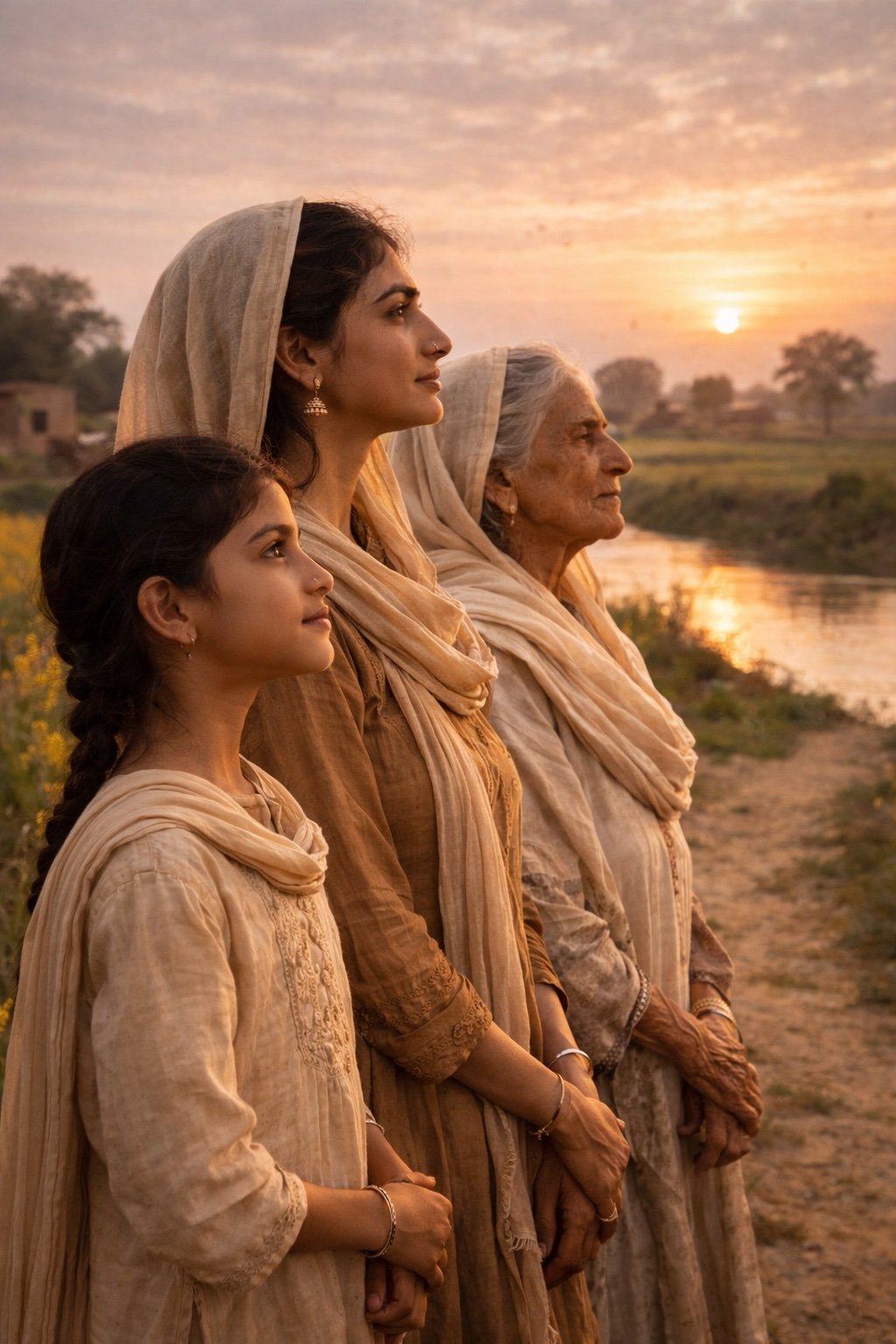
To the many faces of Punjab - May you recognise yourself, and be reogncised wherever you go.
With pride, TrishSaab

Human Evolution in the Punjab Region
Geography. Climate. Settlements. Travellers.
The Punjab region lies in the Indo-Gangetic plain of the Indian subcontinent, functioning as both a corridor for travellers, traders, and invasions, and as an area of habitation for long-term settlers. The climate and geography of the region favoured adaptability - communities that could endure fluctuations in climate, cultivate land, manage water, and recover from occasional disruptions were likely to survive and successfully inhabit the region.
Biological evolution in Punjab was shaped by physical labour, diets, exposure to heat and cold, migrations, trade, and conflicts.
This page explores the effects of genealogy and climate over time, and how they shaped the people of Punjab.
Indigenous Populations of Punjab
Non-Indigenous Populations of Punjab
Regional Variation Within Punjab
Punjab has never had a single appearance.
Shared ancestry connects its populations and communities, but geography subtly shapes how ancestry is expressed throughout Punjab.
Rivers. Soil. Climate.
Diet. Isolation. Interaction.
Over many generations, these influences led to the accumulation of small differences between groups that settled in various regions of Punjab. These are not rigid categories, and individuals and communities often show overlap. They describe recurring regional patterns observed across Punjab.
-
The Majha region sat at the centre of both settlement and movement. As a result, the populations experienced repeated cycles of migration, warfare, and urban developments.
Common features in this region include deep-set eyes and prominent eyebrows/ brow ridges.
-
The region between the Beas and Sutlej rivers functioned more as a gateway than a centre. Various groups travelled through Doaba, and intermixing/ intermarriage produced high variation in traits.
Features in this region often appear intermediate; blending traits seen in other regions and populations. -
Malwa is one of the most expansive regions in Punjab, historically containing more dispersed settlements and pastoral zones.
The populations in Malwa have sharper nasal profiles, and more variation in hair and eye colour than those in Majha, but less than the northern regions. -
The Potohar plateau is one of the northernmost regions of Punjab, and is in close proximity to both the Salt Range and Himalayan foothills. Communities from this region show lighter skin tone and narrow facial structures. They also have higher eye and hair colour variations.
-
The southern plains of Punjab form a transition zone between the river system and desert trade routes. Historically, populations within the Seraiki Belt interacted more with Sindh, Balochistan, and desert trade routes than with the Punjabi populations.
Common features here include softer jawlines and warm skin tones. The population overlaps with central Punjab and Indus Valley traits - reflecting its role as a meeting ground.
Disclaimer: This page explores commonly observed traits and features within Punjabi populations (and others) through the lens of geography and climate. It does not rank features, define identity, or imply uniformity. Variation exists across regions and sub-groups.