
Revenue & Land System
The administrative structure of the Sikh Empire retained the frameworks established by the earlier Mughal Empire. Under Maharaja Ranjit Singh, the system was centralised, closely supervised, and adapted to serve a sovereign Punjab.
While the structure was the same on the surface, its functions were more controlled - authority was not dispersed across competing nobles, but under the maharaja and Lahore Durbar.
Provincial Administration - the Nazim
At the provincial level, governance was controlled by the nazim - governor. Each nazim was directly appointed by the Maharaja and given control over a defined region.
The responsibilities of the nazim included:
Maintaining law and order
Supervising revenue collection
Ensuring stability within their province
Despite their authority, the nazims were not autonomous figures of authority. Their power relied entirely on royal reinforcements.
The KARDAR:
Beneath the nazim operated the kardar. Kardars were the direct representatives of the state at the local level. Their responsibilities included:
Revenue collection
Administrative management
Policing and enforcement
The kardar were often the most visible authority in everyday life. Specifically for rural populations as they experienced the state through kardars, rather than the figures of high authority in the Lahore Durbar.
Local Administration
Within a Pargana - group of villages, administration relied on established individuals who ensured continuity and record-keeping:
The Qanungo - maintained revenue records
The Chaudhry - oversaw groups of villages and acted as an intermediary
The Muqaddam - served as the village headman
The Patwari - maintained accounts at the village level
Note: These roles were inherited from the Mughal administrative system. While their functions remained consistent, titles and terminology could vary across regions and dialects.
This structure allowed for both local familiarity and administrative consistency, ensuring that both revenue and governance operated with a degree of precision across the empire.
Urban Administration and Law
Urban centres were overseen by the kotwal, who was responsible for maintaining order, regulating markets, and ensuring security within towns. Judicial authority remained with the Maharaja, who as the supreme authority, acted as the final judge and appointed adalatis at various levels to oversee legal matters across the empire.
Central Authority and Control
The key officials of the empire - nazims, sardars, kotwals, were directly appointed by the Maharaja. Their authority was not hereditary, nor was it fixed. Instead it depended on loyalty to the empire, performance, and continued royal approval.
This prevented the consolidation of independent power and ensured that all officials were answerable to the Lahore durbar.
Land, REvenue, The Jagir System
Revenue collection formed the backbone of the state, and land was its primary source.
Officials and servants of the state were compensated through Jagirs - land grants that provided income in return for their service. These grants had the following conditions:
Tied to duty and loyalty
Could be reassigned or withdrawn
Were not guaranteed as permanent hereditary holdings
Through this system the land of the Punjabi Sikh Empire functioned as a mechanism of control, allowing the maharaja to reward service and preventing long term independence of the empire’s officials.
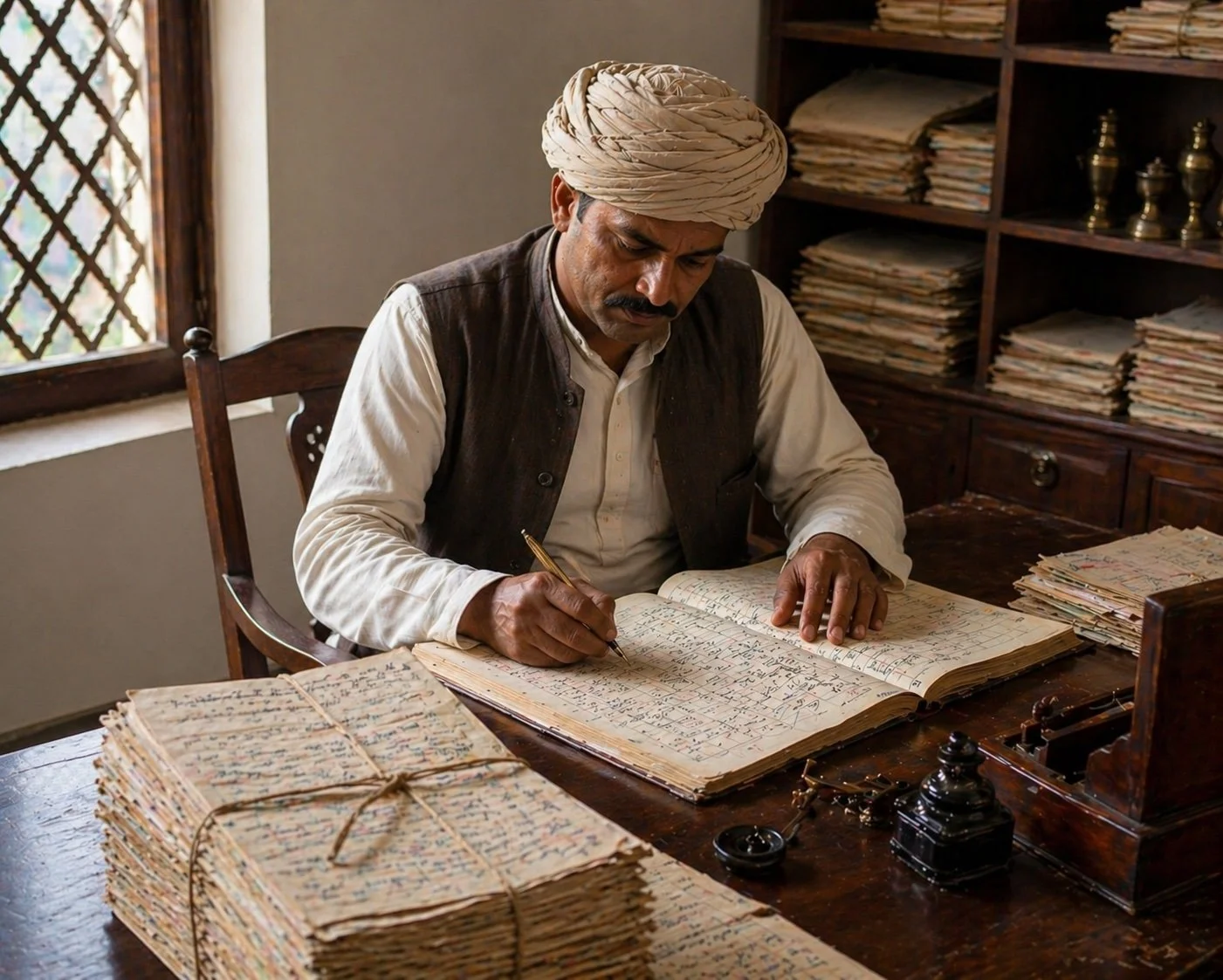
A depiction of a local kardar.
