
The Second Anglo-Sikh War (1848-1849)
The final stand. The final year. The last breath of a sovereign Punjab.
Unfinished Business
The Treaty of Lahore (1846) had only bought a pause to Punjab. Despite remaining nominally independent after the First Anglo Sikh war, the British East India Company had taken control of the court, the treasury, and the army. Maharaja Duleep Singh remained in power by name, but true control was in the hands of British Residents and allied Punjabi nobles - namely Gulab Singh Dogra, who controlled Kashmir.
The regent, Maharani Jind Kaur was removed from court, the Khalsa army had reduced significantly in power, and discontent brewed among the Punjabi population.
In 1848, it erupted.
The seige of Multan
In April 1848, two British officers were sent to Multan to install a new governor. Dewan Mulraj Chopra - the existing governor, refused to hand over power. The officers were attacked, and one killed. This local uprising quickly expanded, with Sikh soldiers and local leaders who were frustrated by external control and the erosion of native sovereignty, rallying to the cause.
Former commanders of the Khalsa Army - Sher Singh Attariwala and Chattar Singh Attariwala also joined the rebellion, turning a provincial dispute into a full scale war.
The war returns
The British responded with force, and between 1848 and 1849, they fought a series of decisive battles:
The Battle of Ramnagar
On the 22nd of November 1848, the first major clash between the British troops and the Punjabi forces, led by Sher Singh Attariwala occurred on the banks of the Chenab River. The Punjabi troops held strong defensive positions and used the both the river and their knowledge of the terrain to their advantage, as a result, the British cavalry charges were repeatedly stopped and the battle ended in a stalemate.
The battle of Sadulapur
On the 3rd of December, the British troops confronted Sher Singh again, attempting to wage an open battle. The Punjabi troops avoided direct confrontation and maintained their positions along the Chenab river, fighting back with artillery and skirmishes rather than a full battle.
This challenged the idea that the Khalsa army was disorganised after the first Anglo-Sikh war, but Sher Singh was deliberately delaying a second war and in the wait for the opponent to exhaust themselves, he used a strategy that would soon impact the Punjabi troops.
The battle of Chillianwala & The Fall of Multan
In January of 1849, Chillianwala marked the most violent battle of the war. It was fought in dense jungle with low visibility. This led to the British forces losing formation quickly. The Punjabi forces counterattacked fiercely.
The British held the field and fought with strength, but the battle of Chillianwala led to severe casualties. Resultantly, they lost both artillery and morale, proving that the Khalsa was still a formidable force.
It was at the same time that Dewan Mulraj surrendedred to British forces in Multan, ending the siege and officially giving Multan to the British. This gave British forces manpower and artillery they previously lacked, and the opportunity to focus on Sher Singh and his troops.
The battle of Gujrat
The British forces changed strategies, and chose to fire artillery before infantry. The Punjabi forces were overwhelmed, their Afghan allies soon withdrew, and they were forced to retreat. This battle was strategic and systematic.
The war was over and the British forces were successful.
The End of the Sikh Empire
On 29th March 1849, the British East India Company formally annexed the Punjab state into British India.
The Sikh Empire no longer existed.
Maharaja Duleep Singh was forced to abdicate.
The Koh-i-Noor diamond was officially handed to the British Crown.
The Khalsa Army was disbanded, and its weapons confiscated.
Punjab became a British Province - it was the largest kingdom to under company rule, and the one which showed the greatest resistance.
Why it Happened
The Sikh Empire collapsed under the weight of the following:
Internal factionalism after Maharaja Ranjit Singh’s death.
The rise of British political influence.
Loss of central authority.
Failure and inability to unite and follow a single resistance strategy.
The Second Anglo-Sikh War was a military, political, and administrative defeat for Punjab.
The Aftermath
In the years following, Maharani Jind Kaur was imprisoned and exiled, Maharaja Duleep Singh was sent to Britain, former Punjabi soldiers were absorbed into the British Indian Army or displaced, and Punjab as a British Indian state was modernised - but its sovereignty was gone.
The second Anglo Sikh War marked the end of Indigenous rule in Punjab.
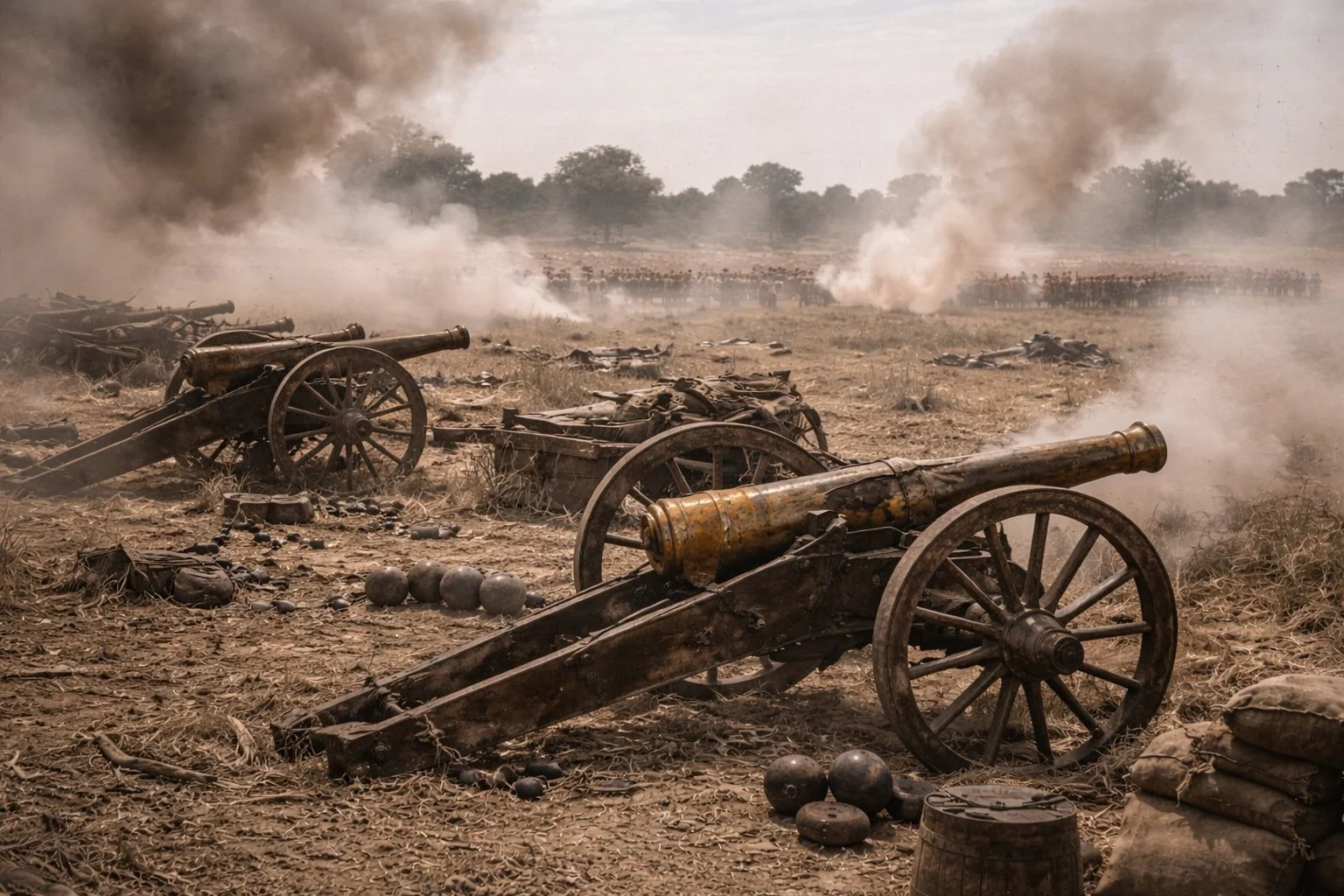
To the final battles, the final breath, and the land that still remembers.
With reverence, TrishSaab. 