
The Battlefield of Punjab
~
Warfare before the Khalsa
~
Guru Hargobind & the rise of militarisation
~
Guru Gobind Singh's military revolution
~
The Battlefield of Punjab ~ Warfare before the Khalsa ~ Guru Hargobind & the rise of militarisation ~ Guru Gobind Singh's military revolution ~
Punjab's story of warfare, survival, and adaptation.
Mobility. Resilience. Transformation.The military traditions that shaped Punjab long before the rise of empire.
Banda Singh Bahadur
~
The Age of Survival
~
The Dal Khalsa and the Misls
~
From guerrilla to empire
~
Banda Singh Bahadur ~ The Age of Survival ~ The Dal Khalsa and the Misls ~ From guerrilla to empire ~
An Introduction
Punjab’s military history was shaped by rivers, forests and open plains.
Over time, older Punjabi martial traditions were transformed by the campaigns of Banda Singh Bahadur and the brutal struggle for survival that followed.
Forces scattered by persecution learned to disappear, regroup and return - before the Dal Khalsa and the misls turned mobile bands of fighters into an organised military confederacy.
This series traces that transformation: the battlefield geography of Punjab and its earliest warrior traditions, the age of guerrilla warfare and, ultimately, their transformation into a modern standing army.
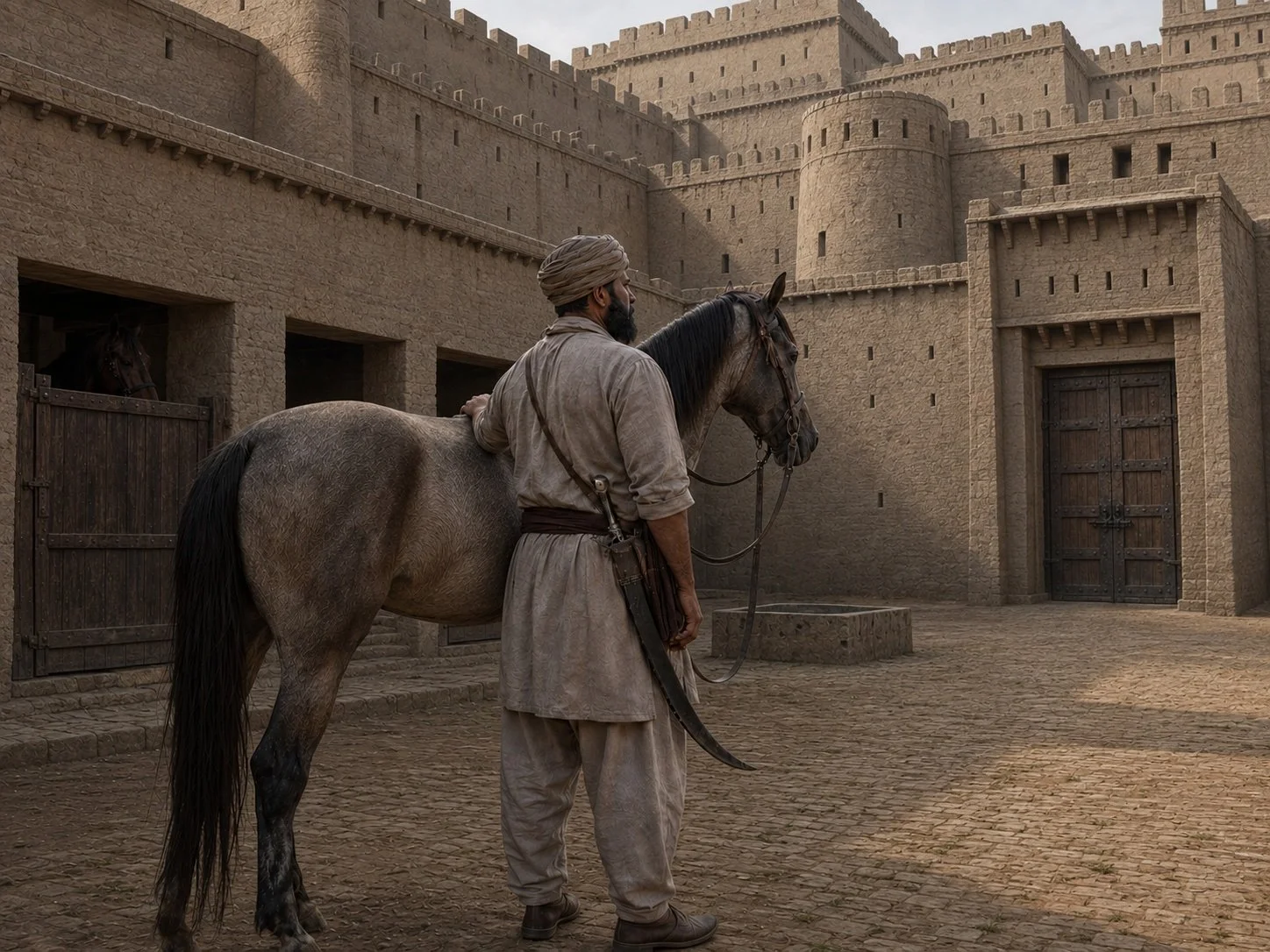
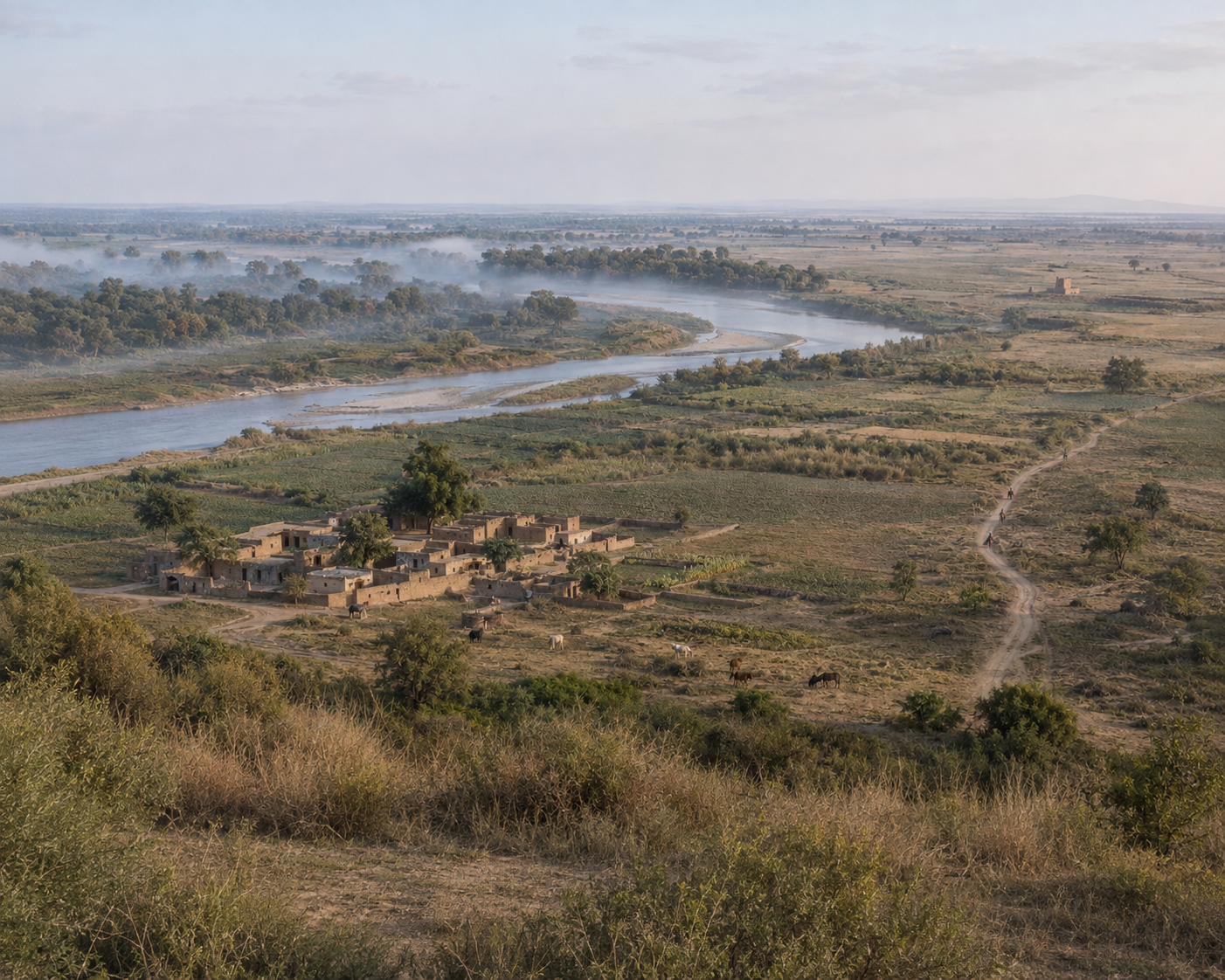
The Battlefield of Punjab
Before Punjab’s armies, comes the Punjabi landscape.
Five rivers, shifting crossings, vanished forests and vast open plains shaped where soldiers travelled, where they disappeared and how they fought.
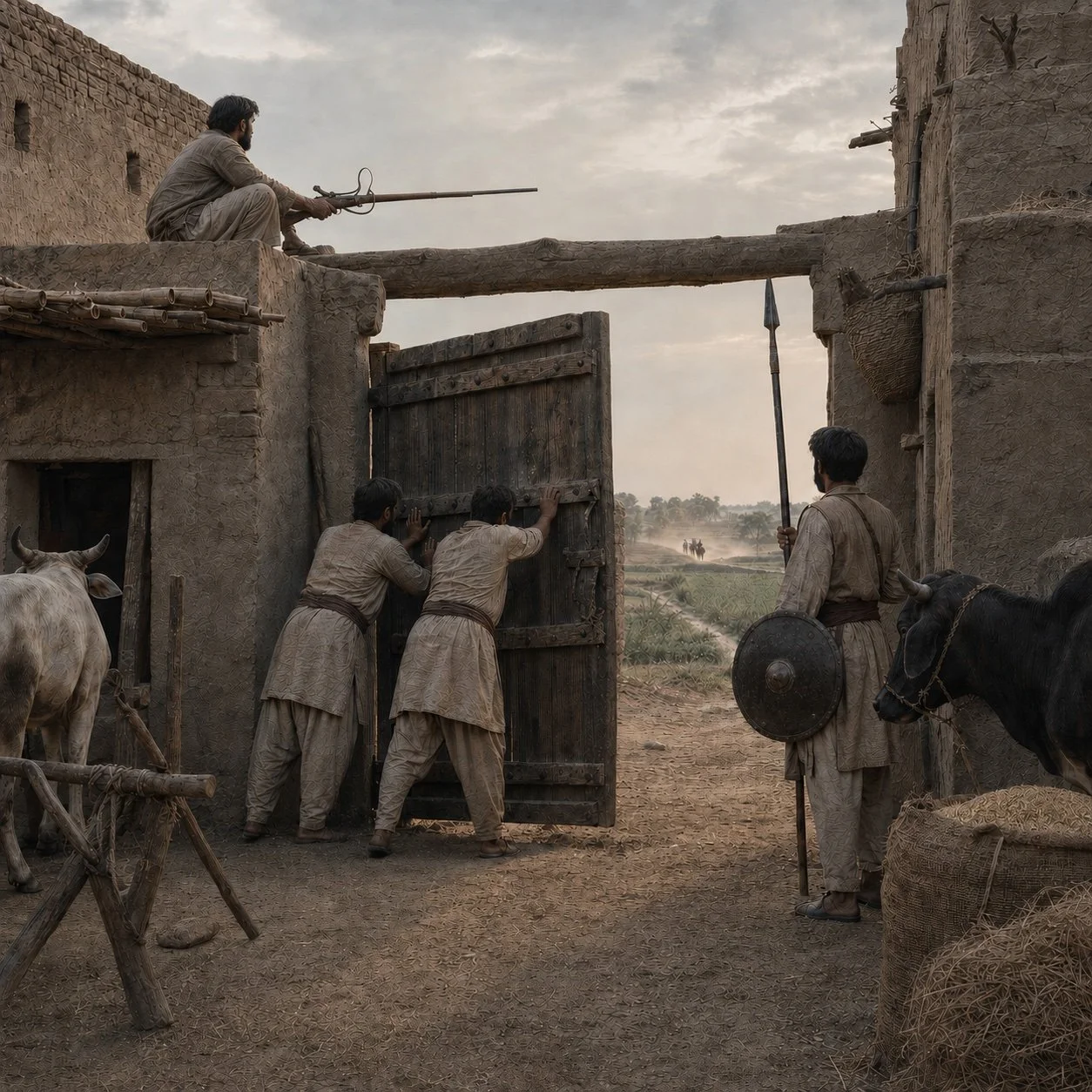
Warfare Before the Khalsa
Long before the Sikh Khalsa, Punjab was already an armed society.
Local chiefs, fortified clans, village defenders and imperial soldiers created a military culture rooted in land, loyalty and the constant need to protect both.
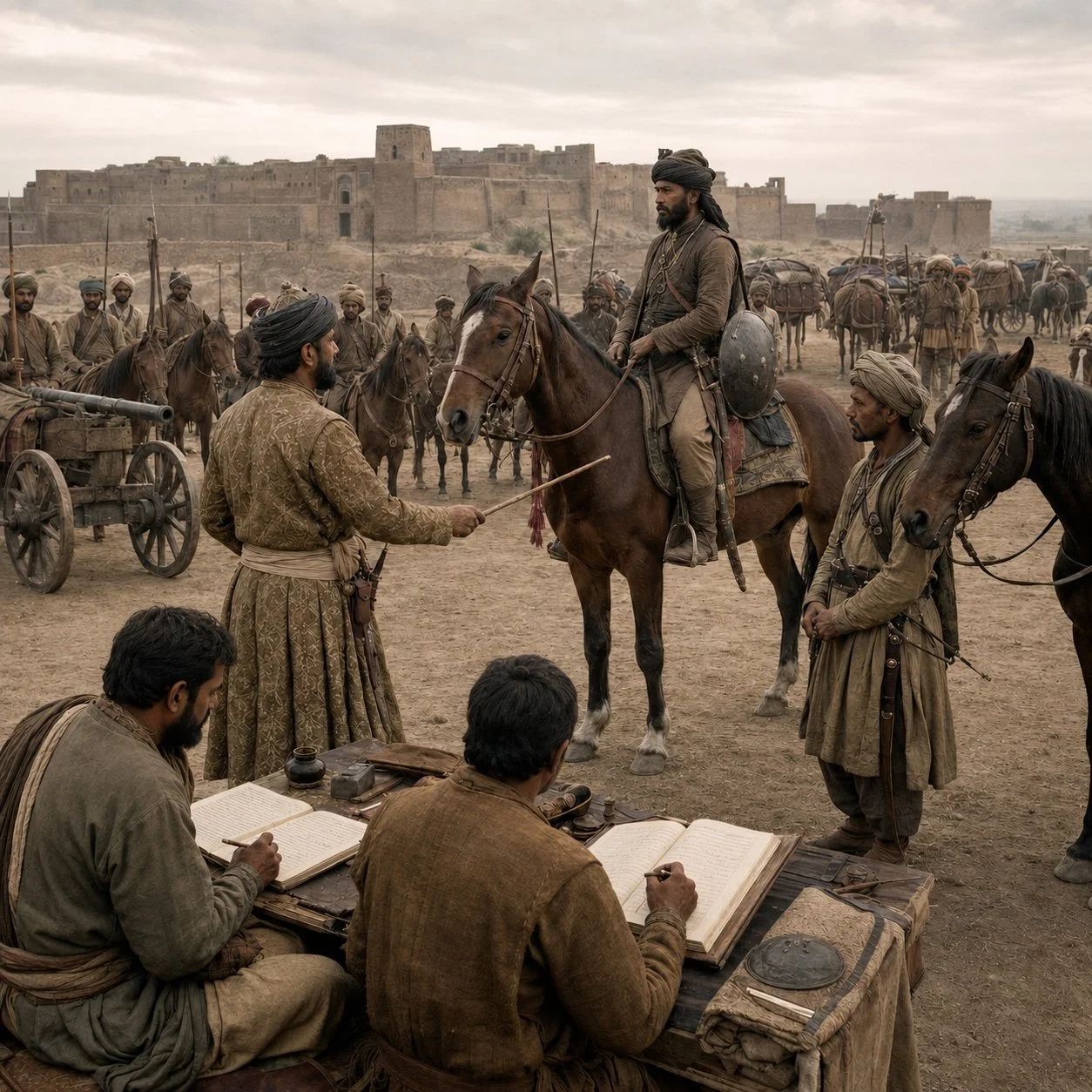
Punjab Under Mughal Arms
Mughal power in Punjab relied on more than imperial armies. Governors, cavalrymen, garrisons and local landholders formed an extensive military system sustained by Punjabi roads, harvests, horses and recruits.
Guru Hargobind and The Rise of Militarisation
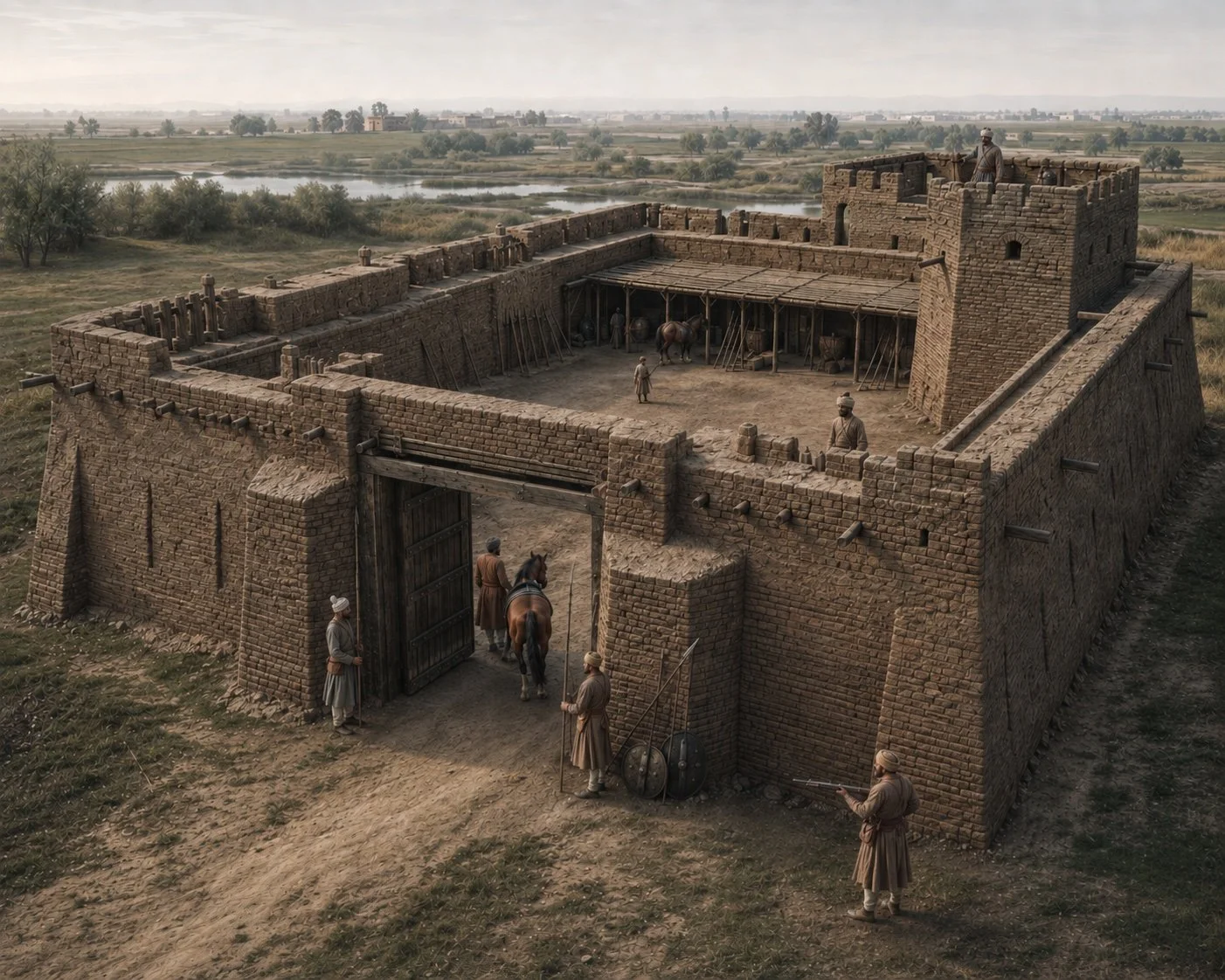
Under Guru Hargobind, the existing military skills across Punjab were organised around a new centre of authority. Horses, armed retainers and defensive strongholds transformed Punjabi military culture into a community prepared to defend itself.
Guru Gobind Singh’s Military Revolution
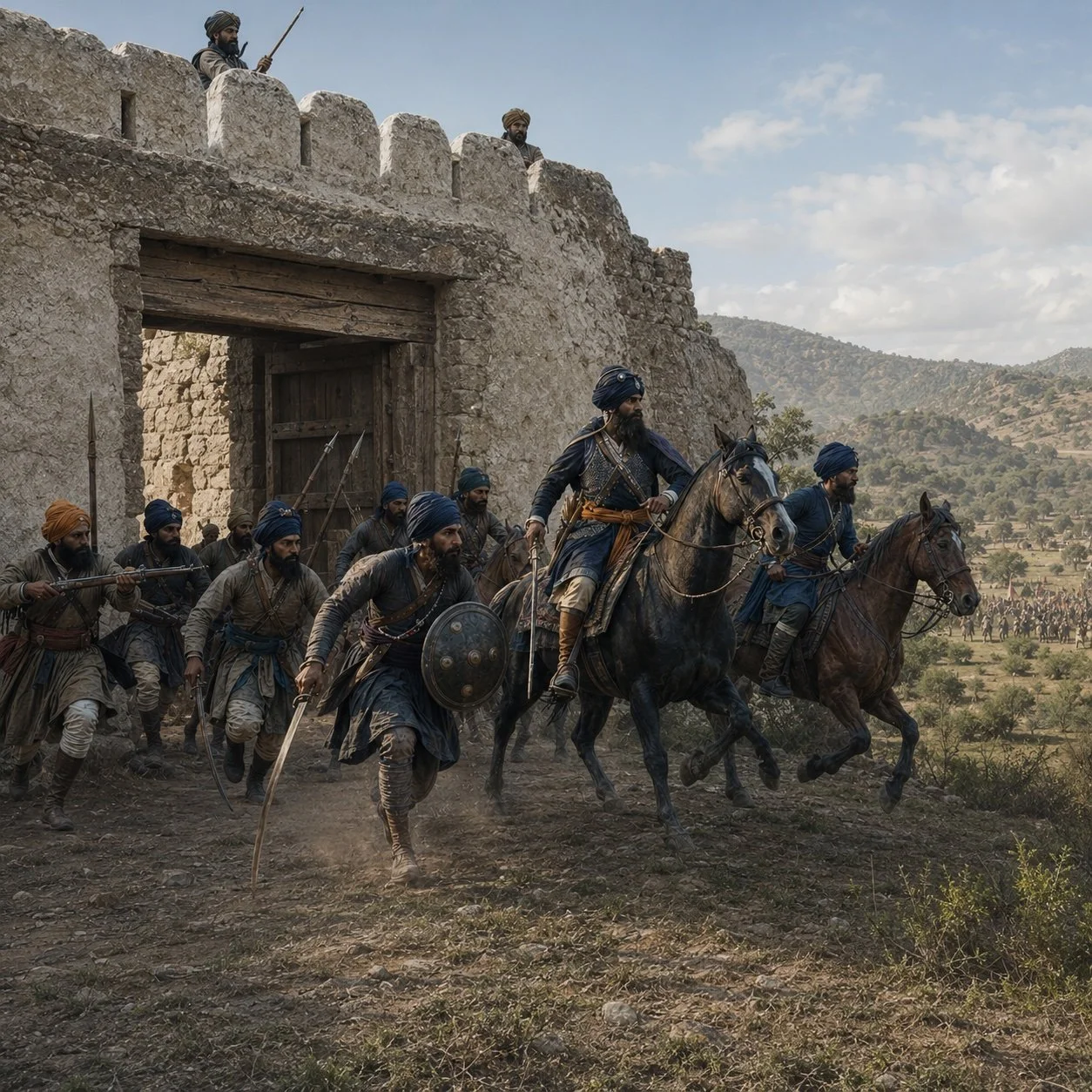
Guru Gobind Singh carried Punjabi militarisation - particularly Sikh, beyond the court and into the community itself. Through the Khalsa, ordinary men could be united by shared discipline, collective identity and the responsibility to bear arms.
Banda Singh Bahadur’s Military Contributions
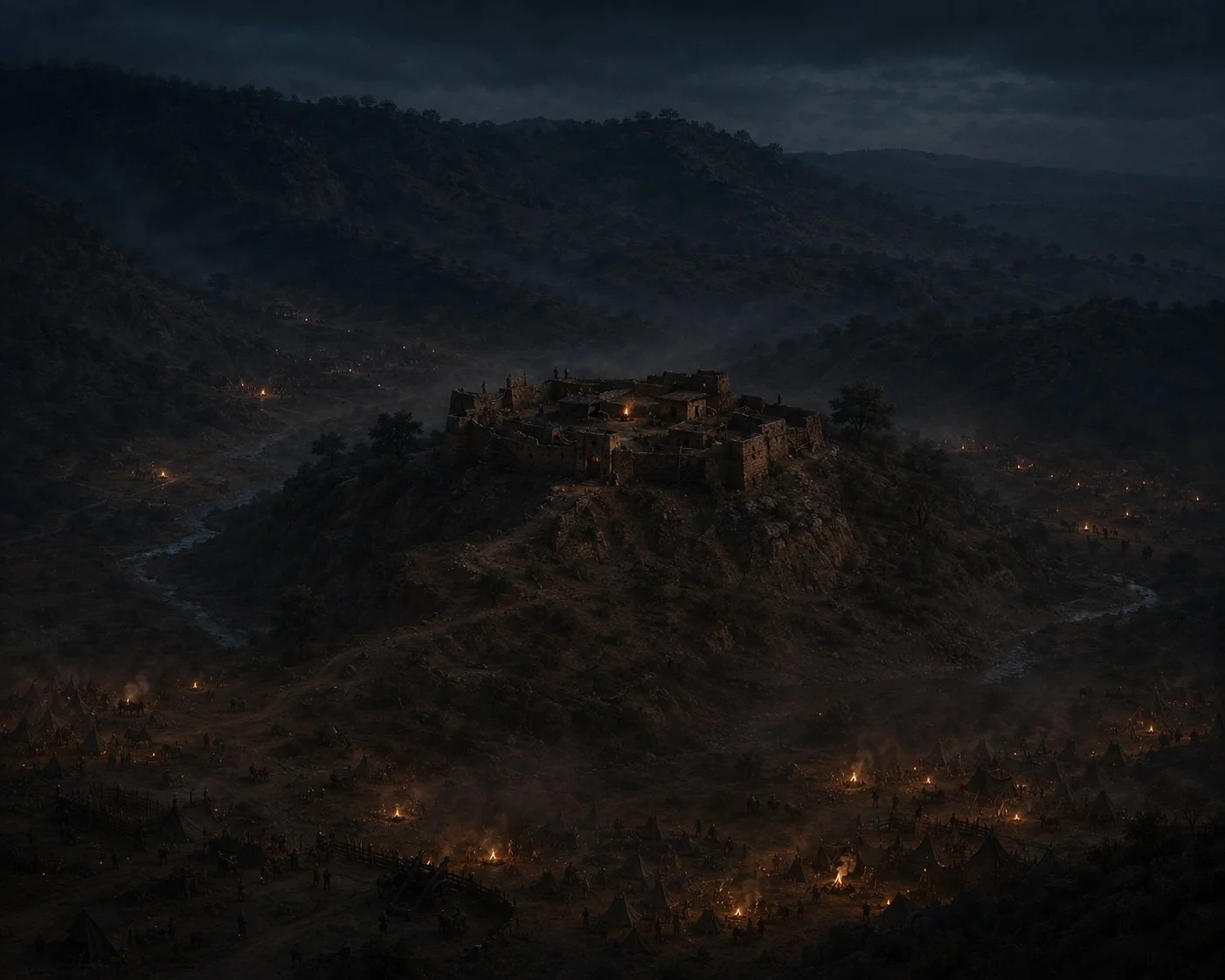
Banda Singh Bahadur entered Punjab without a kingdom, treasury or conventional royal army.
From experienced Khalsa warriors and mass rural support, he built a rebellion capable of capturing cities, defeating imperial forces and attempting to govern.
The Age of Survival
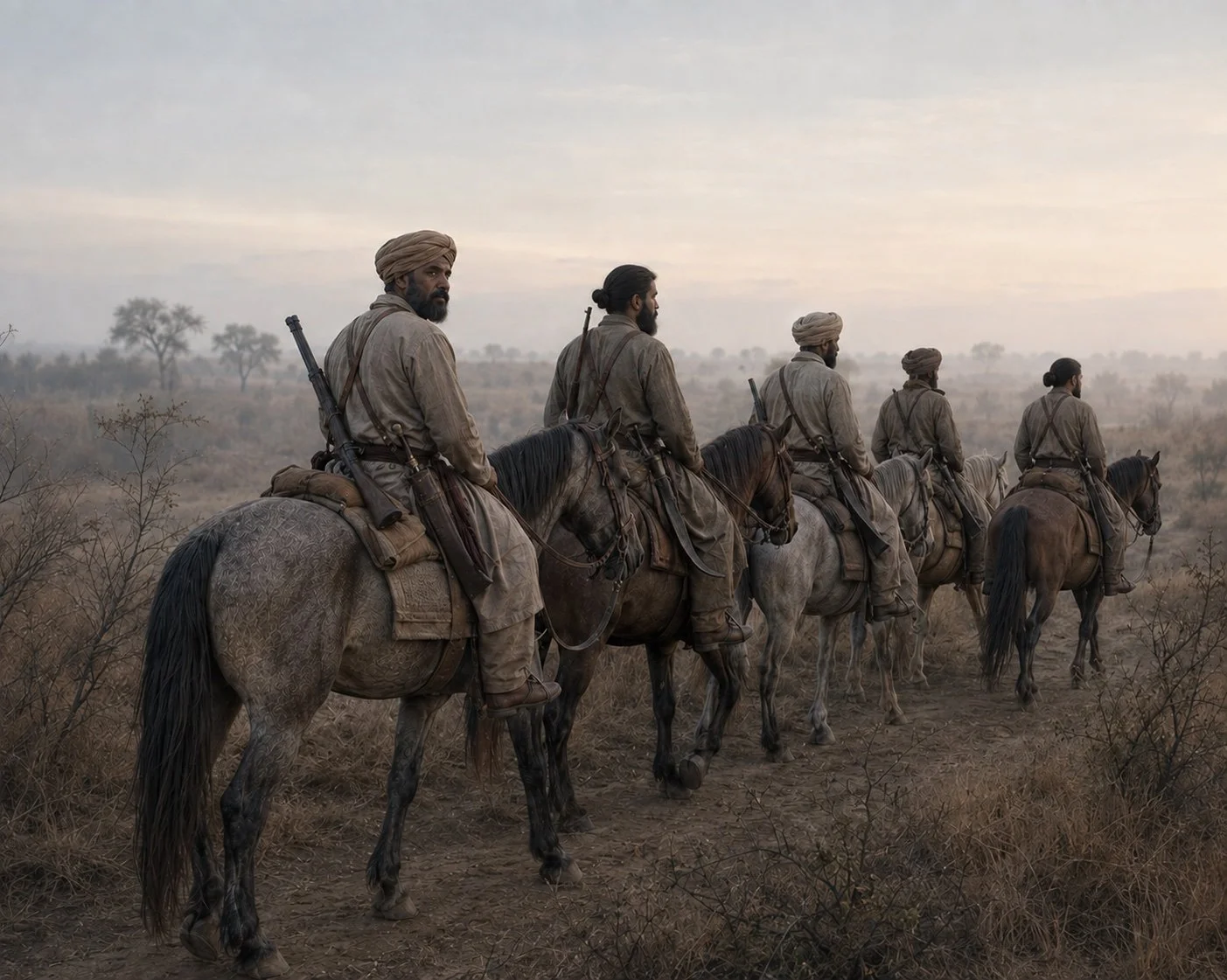
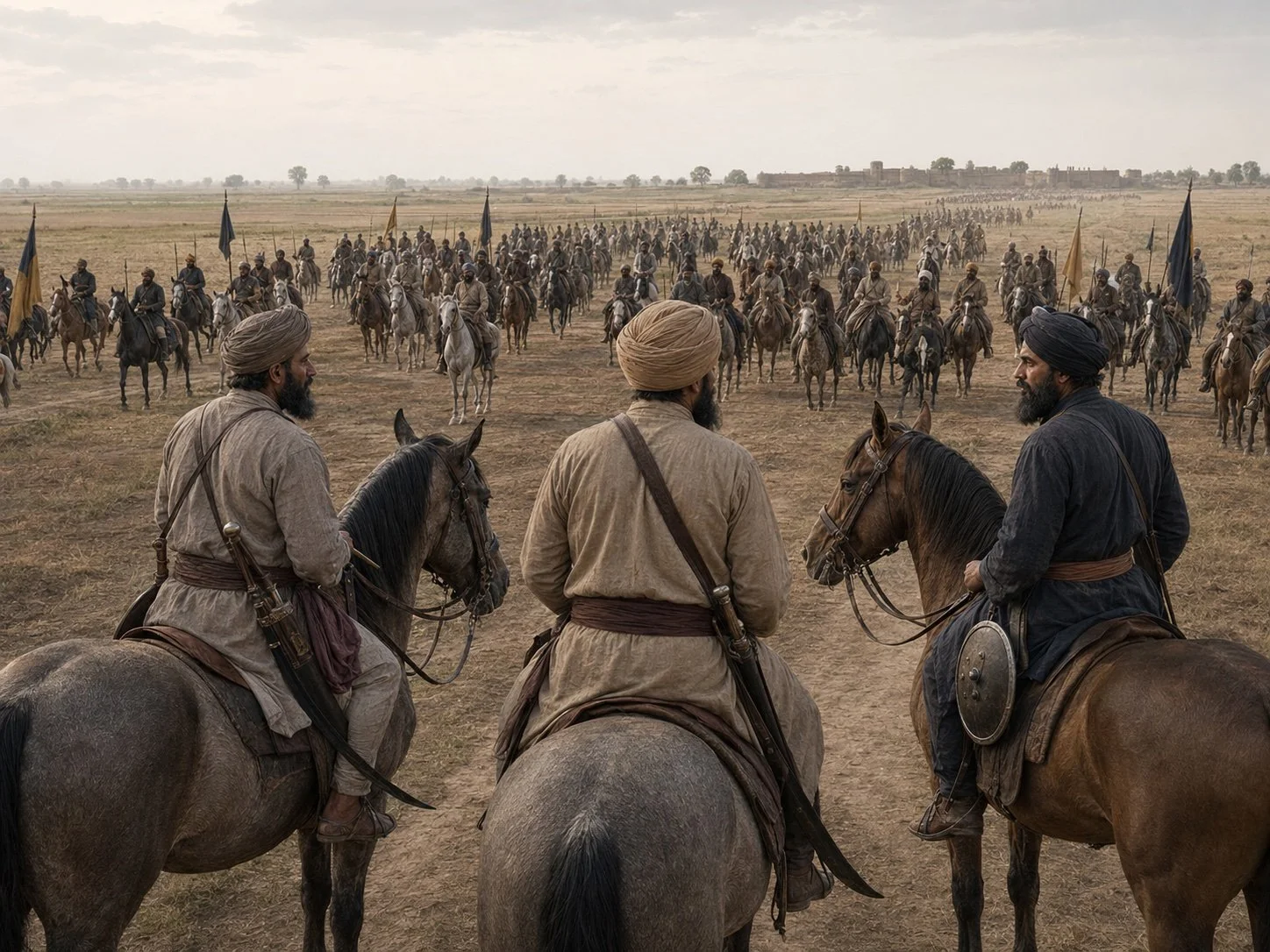
With no capital to capture and no permanent army to destroy, Punjabi forces learned to survive through movement.
They retreated into forests and deserts, relied upon hidden networks and returned whenever persecution began to weaken.
The Dal Khalsa & The Misls
The forces that had once fought to survive began controlling parts of Punjab.
Through the Dal Khalsa and the misls, scattered bands became a decentralised military confederacy capable of collecting revenue, holding territory and challenging invading armies.
From Guerrilla To Organised Warfare
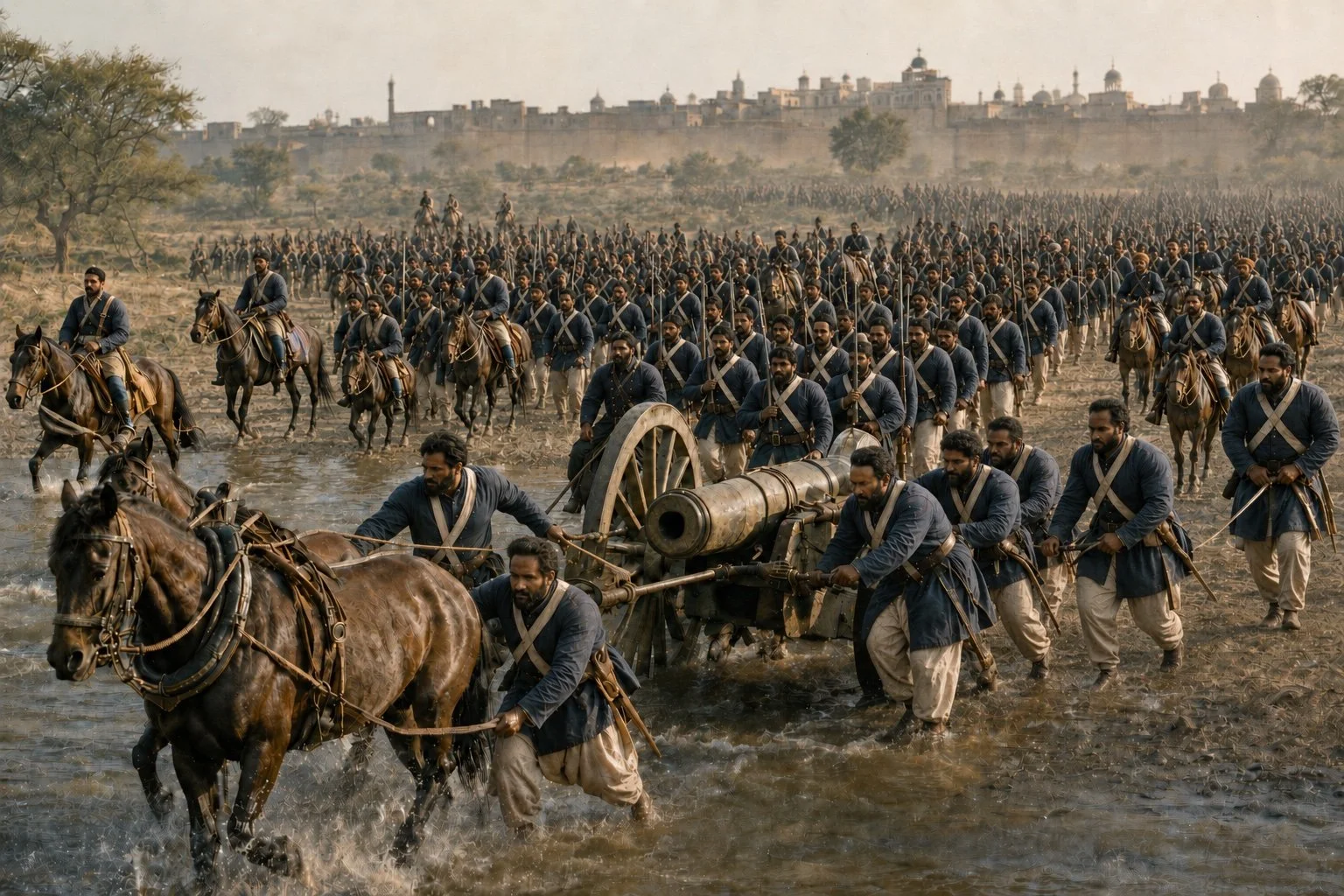
The warfare of the misls had conquered territory, but governing an empire demanded something more permanent.
Under Maharaja Ranjit Singh, mobile cavalry was joined by drilled infantry, organised artillery and a standing army maintained by the Lahore Durbar.