
The basic Punjabi Outfit
~
Headwear
~
Textiles & Embroidery
~
The basic Punjabi Outfit ~ Headwear ~ Textiles & Embroidery ~
Punjab’s story of identity, status, and transformation.
Draped. Stitched. Adorned.What Punjabis wore - and everything their clothing revealed before they spoke.
Jewellery & Adornment
~
Footwear
~
Regional Variations
~
Jewellery & Adornment ~ Footwear ~ Regional Variations ~
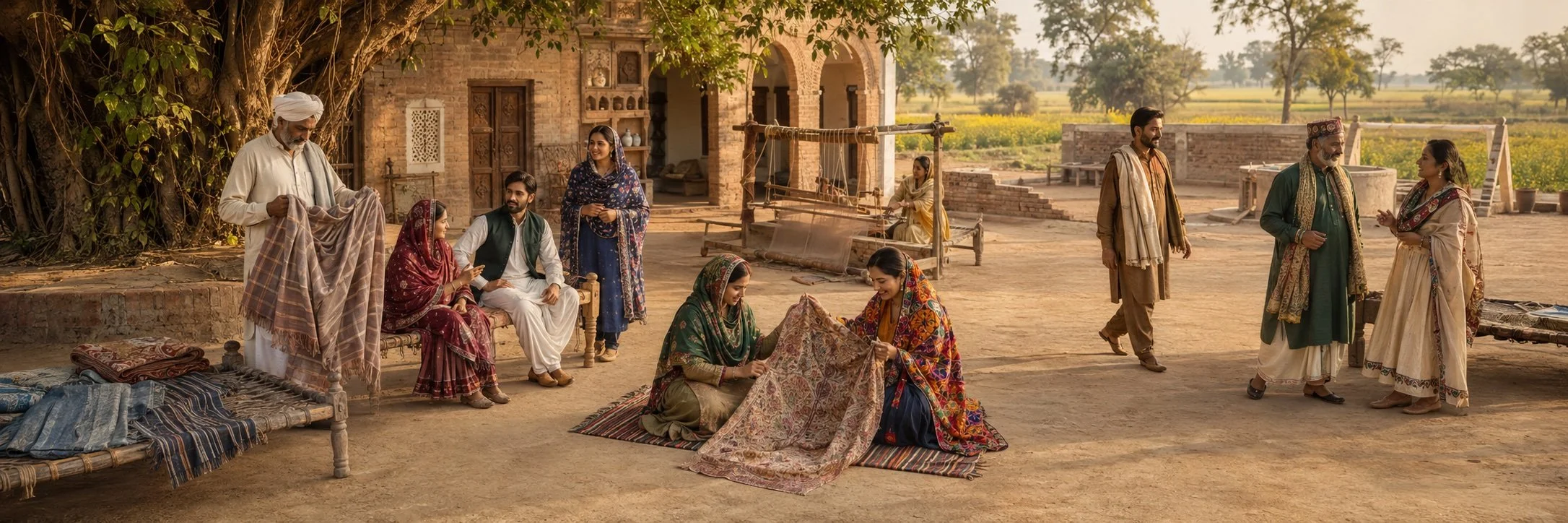
Punjabi dress was never a single outfit.
What people wore changed across regions, religions, communities and social classes. Fabrics shifted with the weather and the wearer’s means, while embroidery, jewellery and colour could reveal where someone came from, what they could afford and whether the occasion was ordinary or ceremonial.
Still, a recognisable Punjabi silhouette grew over centuries from older wrapped garments, locally made tunics, and Punjab’s contact with neighbouring regions. The result was clothing particularly suited to Punjabi life: loose enough for movement, breathable through summer, easy to layer in winter and practical for work performed in the home, on the ground or across fields.
For men, this generally meant a long, straight kurta worn over a tehmat, lacha, dhoti, suthan, salwar or later pyjama. Women wore a kurti or kameez with trousers such as the suthan and salwar, or in some regions, a full ghagra. A dupatta, chadar or another draped cloth completed the outfit.
The garments changed, but the broader shape remained recognisable: a loose upper layer, a gathered or wrapped lower garment and fabric that fell naturally around the body.
This page breaks that silhouette down piece by piece - beginning with men’s and women’s clothing before exploring headwear, textiles and embroidery, jewellery and adornment, shoes and footwear, and the regional variations found across Punjab.
The Turban & Other Headwear
-
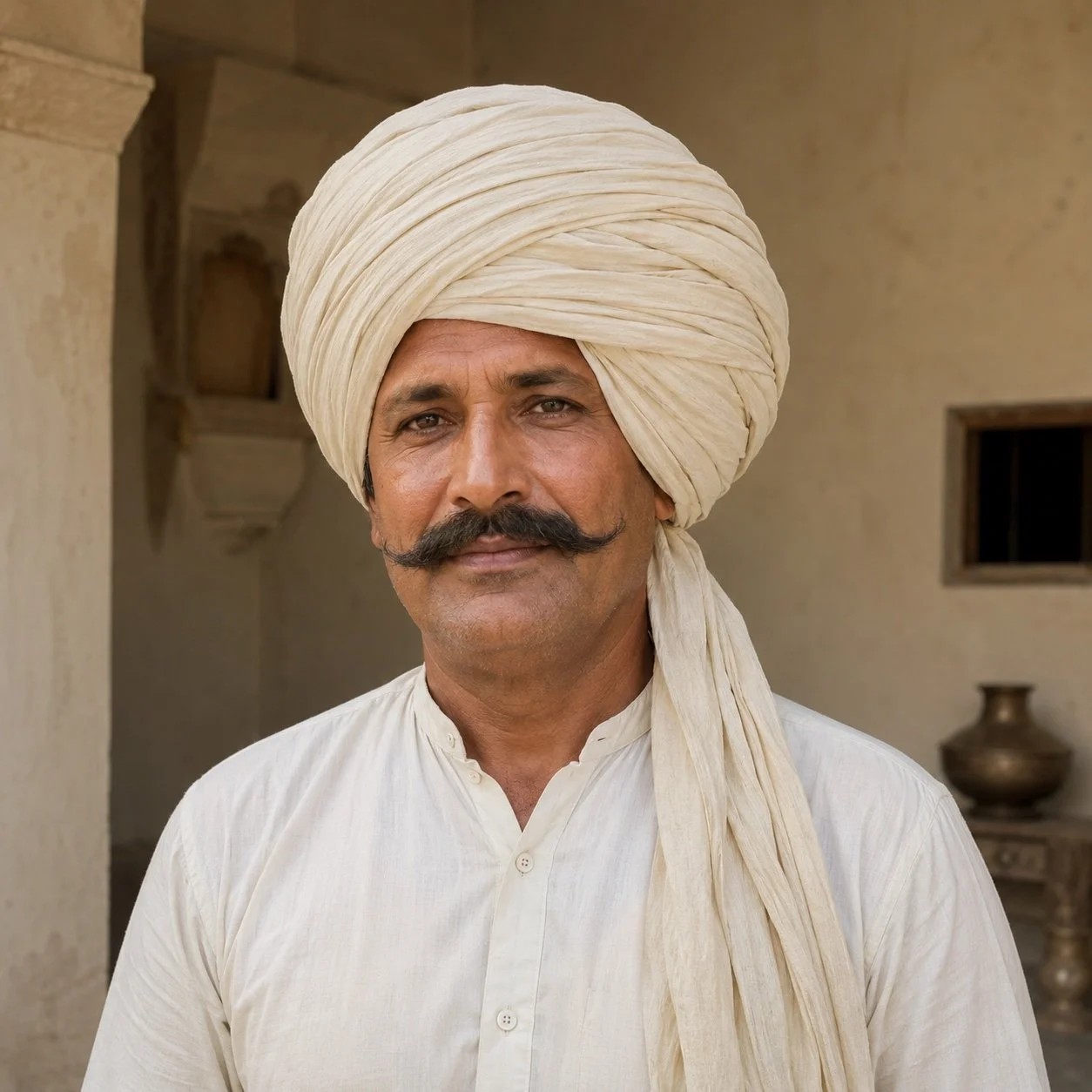
Pagg, Pagri, Dastar
The broad Punjabi turban tradition shared historically across communities.
-
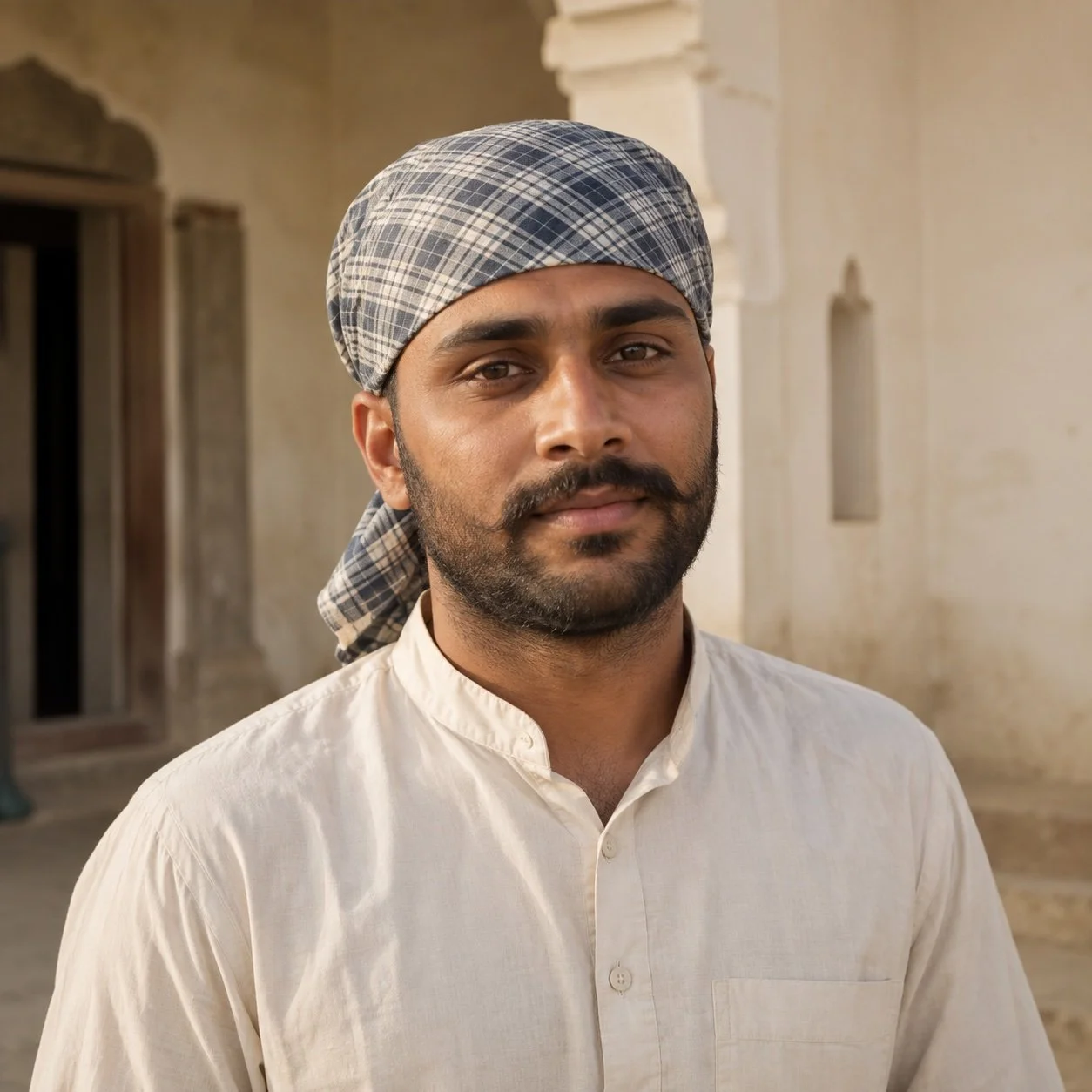
Parna
A shorter, more informal cloth wrap used during work and ordinary life.
-
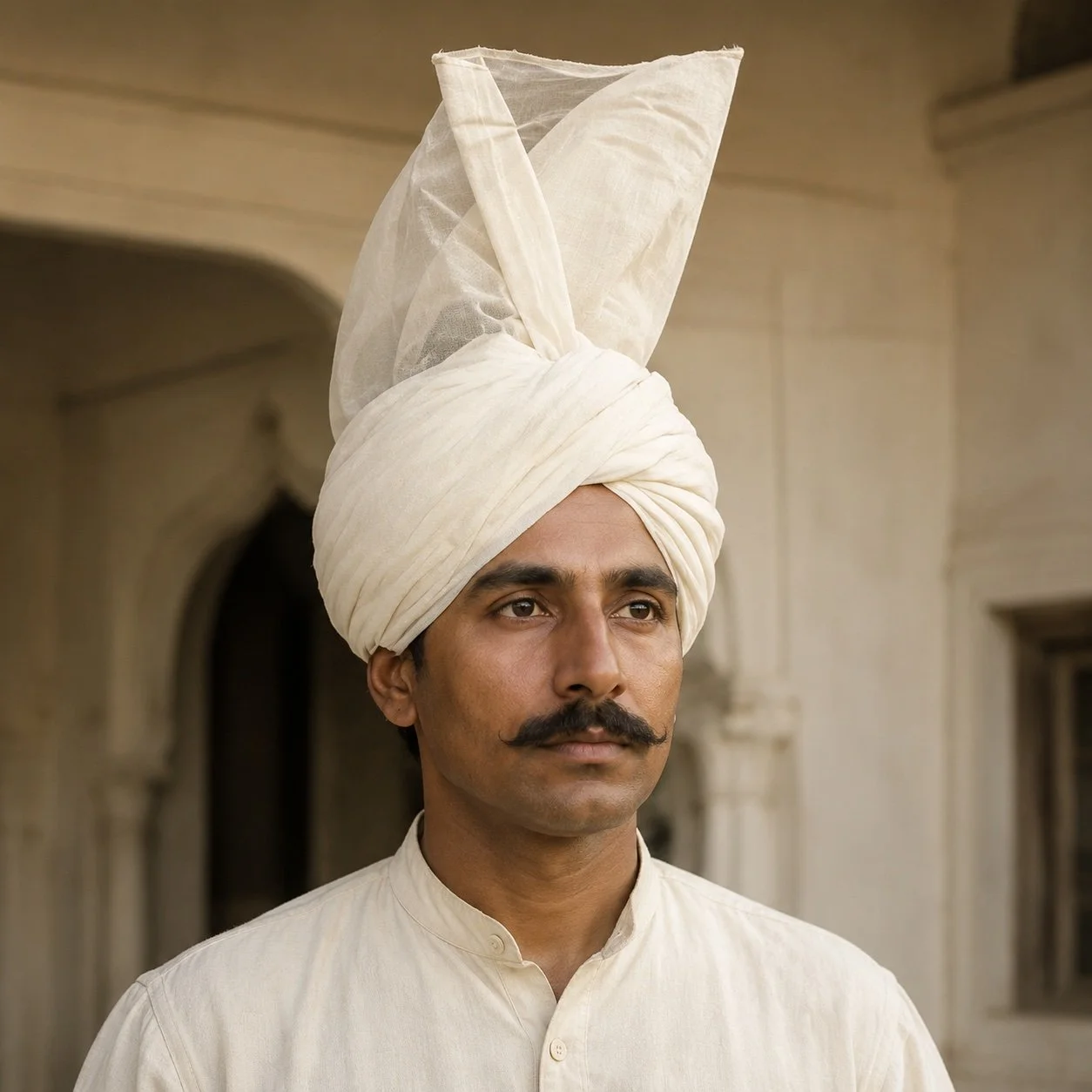
Kullah
A historic Western Punjabi arrangement in which the turban was wrapped around a raised cap.
-
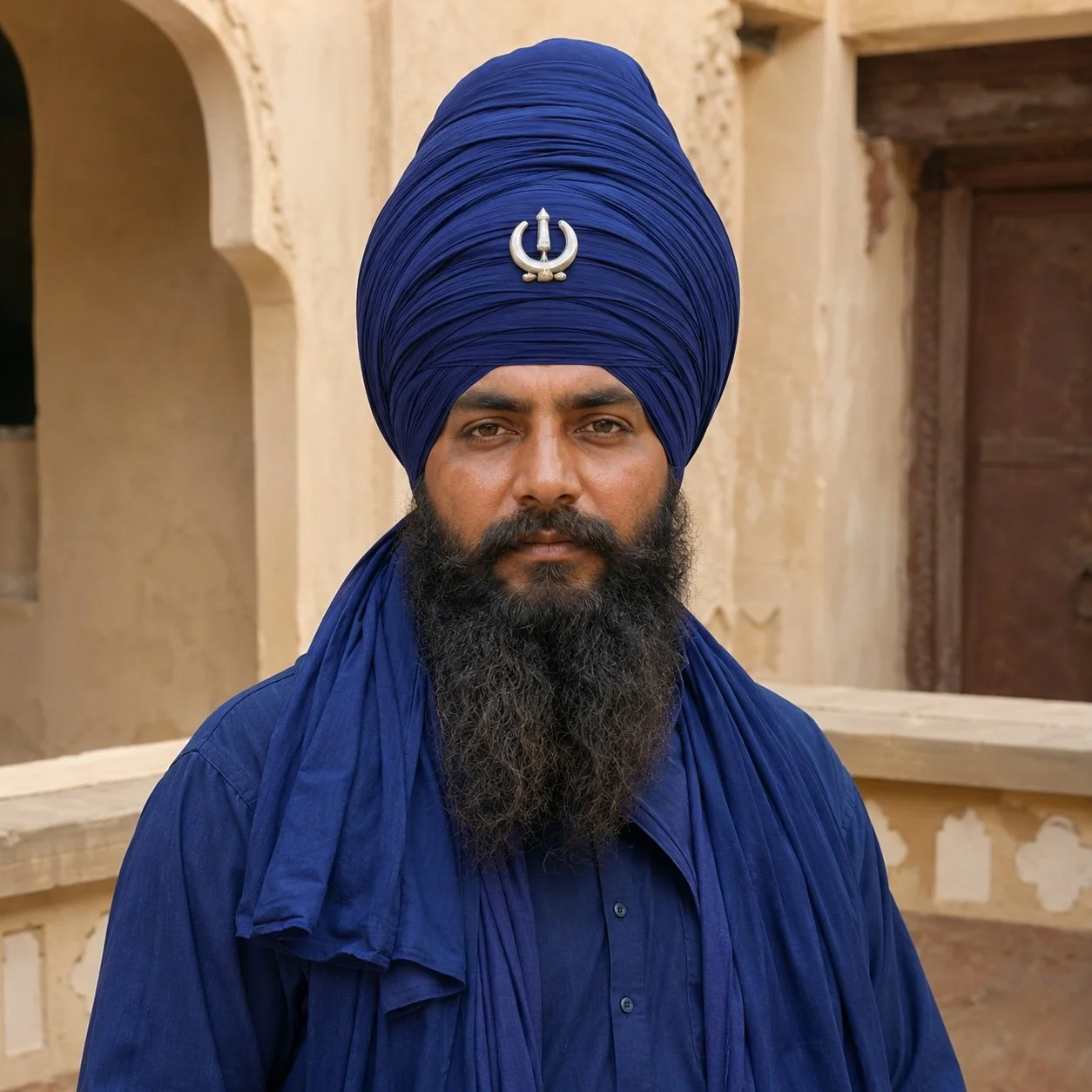
Dumalla
The taller, rounded Sikh turban associated particularly with Khalsa and Nihang traditions.
-
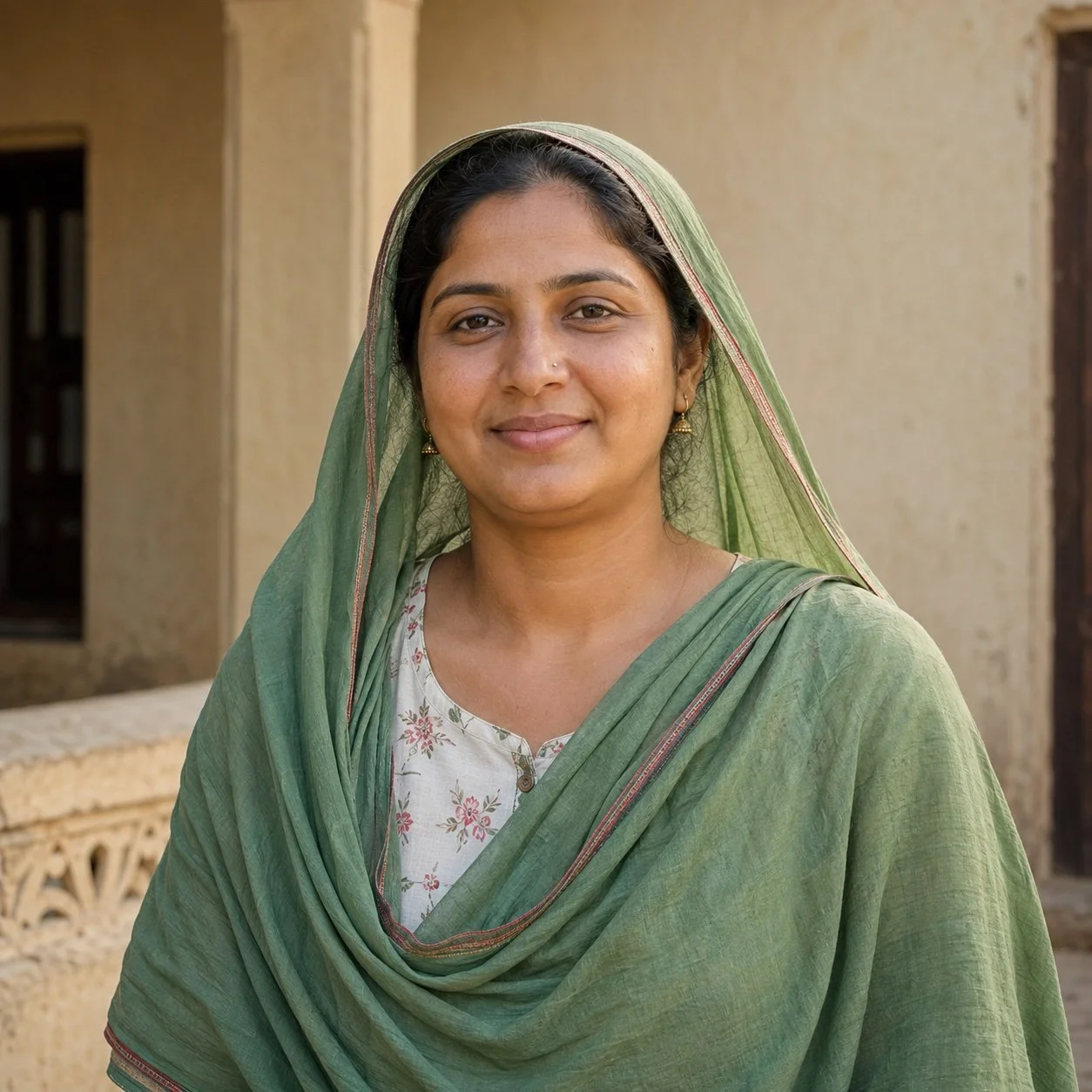
Dupatta/ Chunni
The everyday scarf worn over the hair, shoulders or upper body.
-
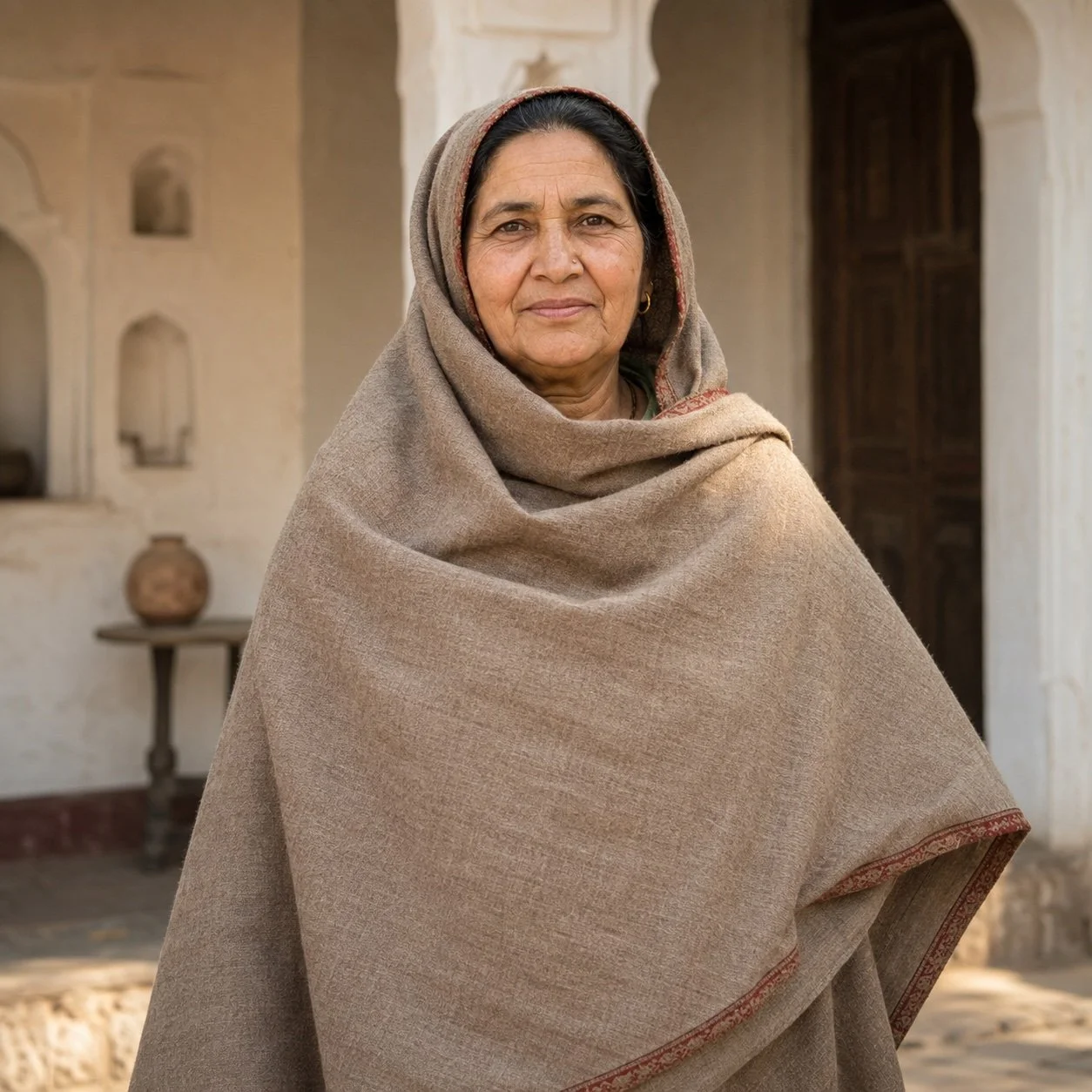
Chadar
A larger outer cloth offering more coverage and warmth.
-
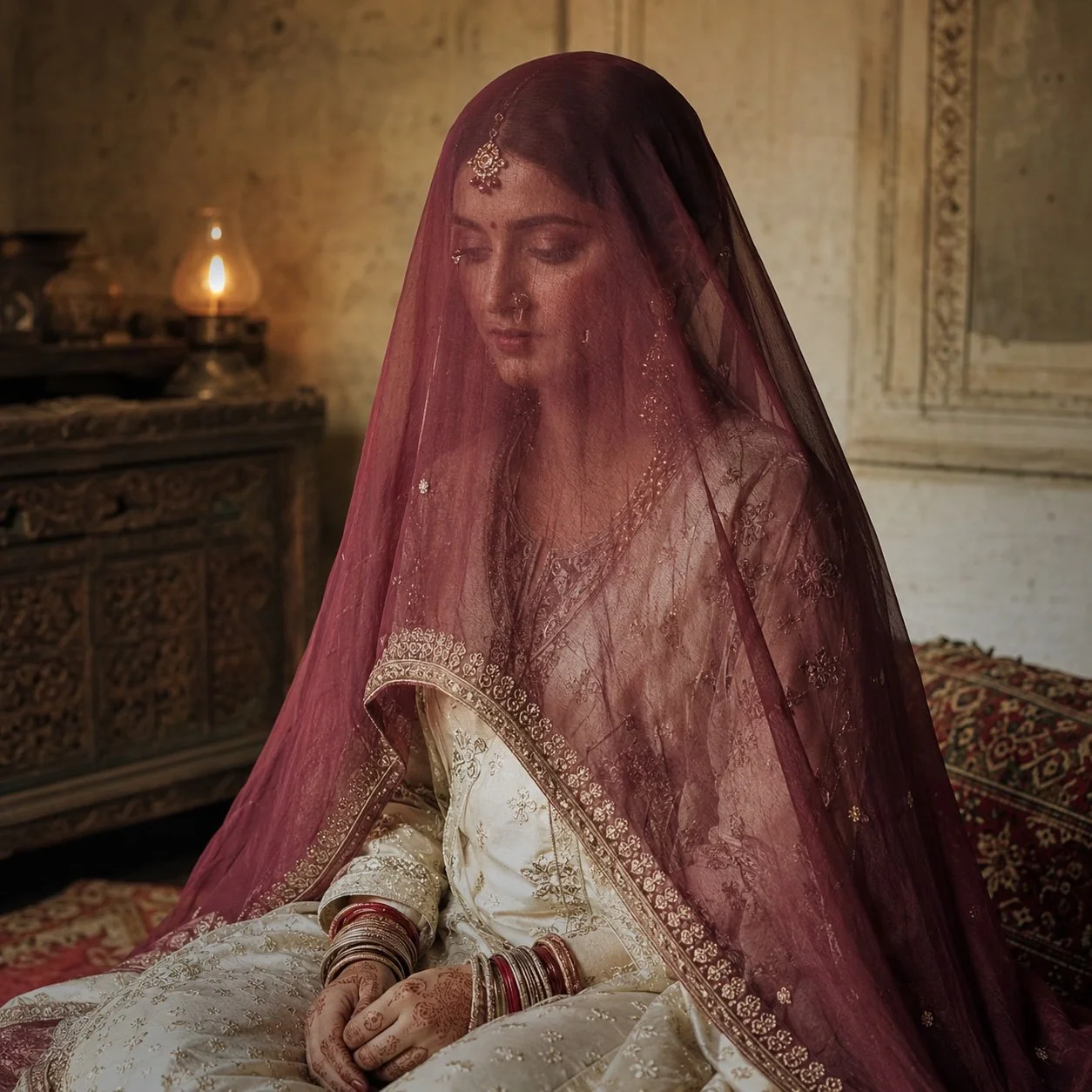
Ghund/ Gungat
The practice of drawing a dupatta or chadar forward over the face.
-
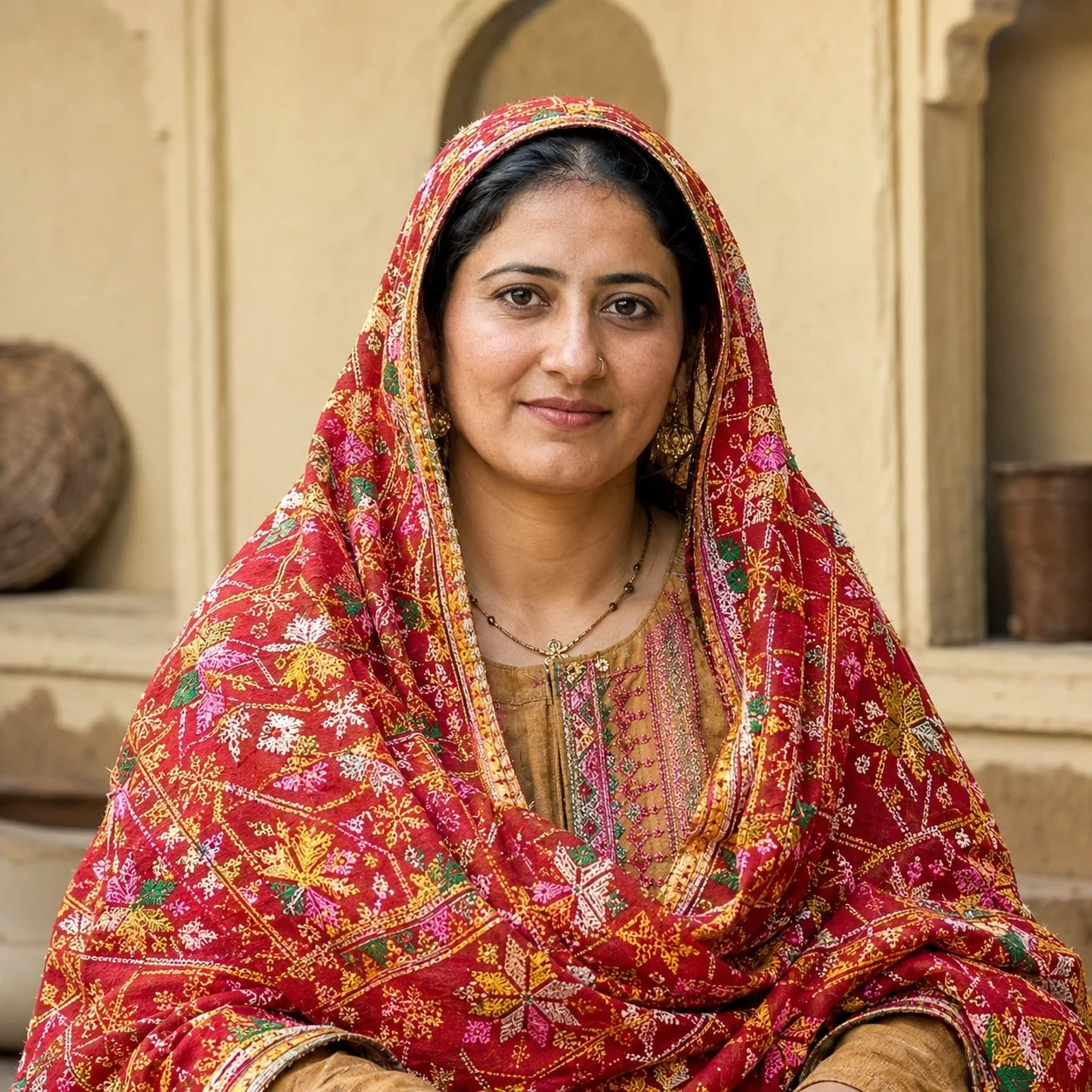
Phulkari/ Bagh Veil
An embroidered covering worn especially for ceremonies and important occasions.
Punjabi headwear began before it belonged to any one religion.
Its exact beginning cannot be dated. Cloth was wrapped around the head across South Asia long before the Sikh faith developed, and Punjab reshaped those wider traditions around its own environment and society. A covering protected the head from sun, dust and cold; held long hair away from the face; and could be adjusted for work, travel or ceremony.
Over time, practicality became identity. The turban came to represent dignity, adulthood, responsibility and family honour. Its material and shape could reflect region, occupation, wealth or occasion, while ceremonies surrounding the pagg marked marriage, succession and the passing of responsibility between generations. Not every Punjabi covered their head constantly, and not every community tied cloth in the same way. Religion gave these coverings additional meanings without creating all of them. For Sikhs, the dastar developed into a visible commitment to the faith. Punjabi Muslims also wore regional paggs, parnas and kullahs, although these could exist alongside wider Islamic forms such as prayer caps, turbans and women’s veiling. Hindu Punjabis historically wore paggs and women’s dupattas too, with the ghund formed when the cloth was drawn across the face.
The difference lies mainly in meaning. A Punjabi head covering may express region, weather, family or custom; a religious covering expresses a particular obligation or spiritual identity.
Shirts & Upper Garments
-
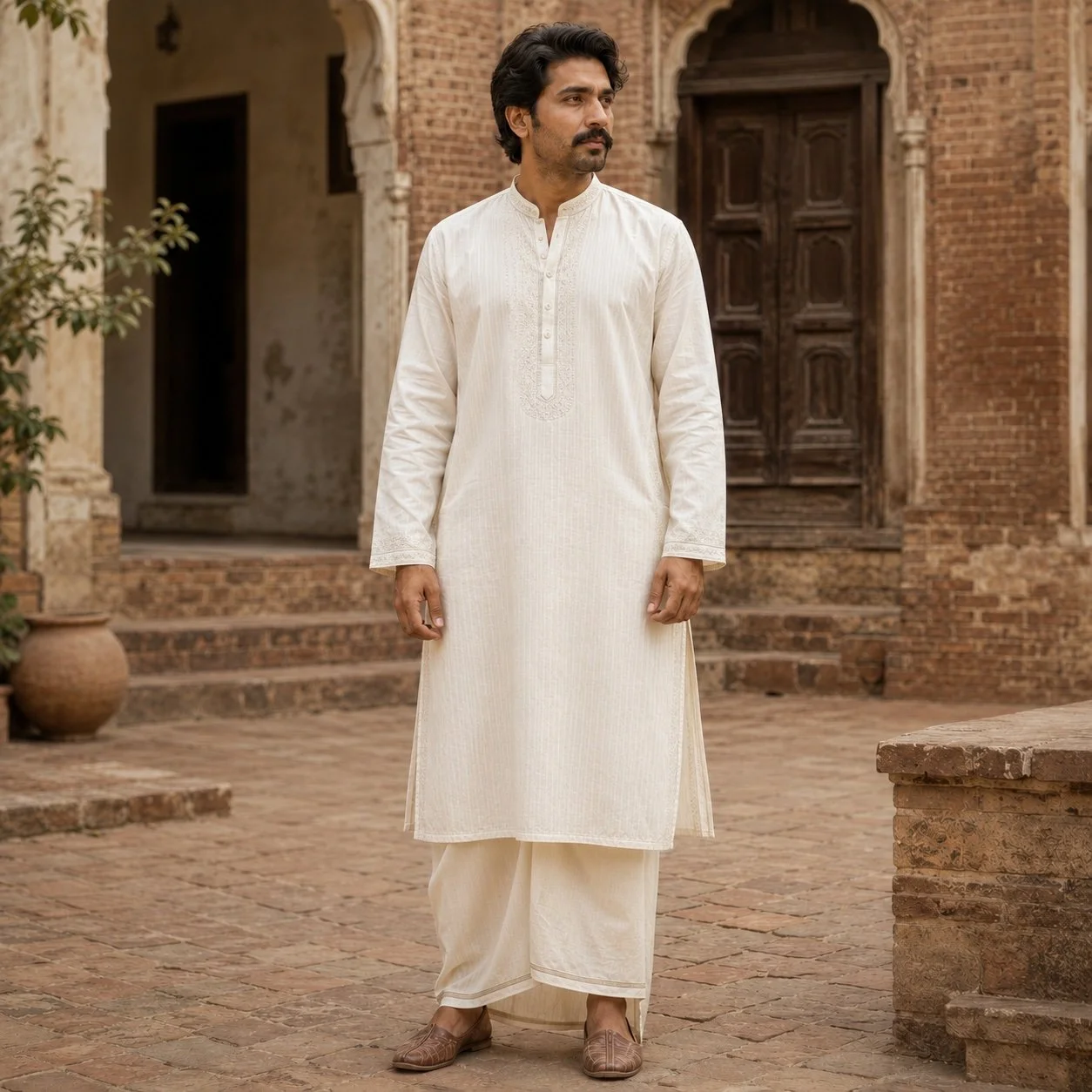
Kurta
A long, loose shirt worn by both men and women, with straight panels and side openings.
-
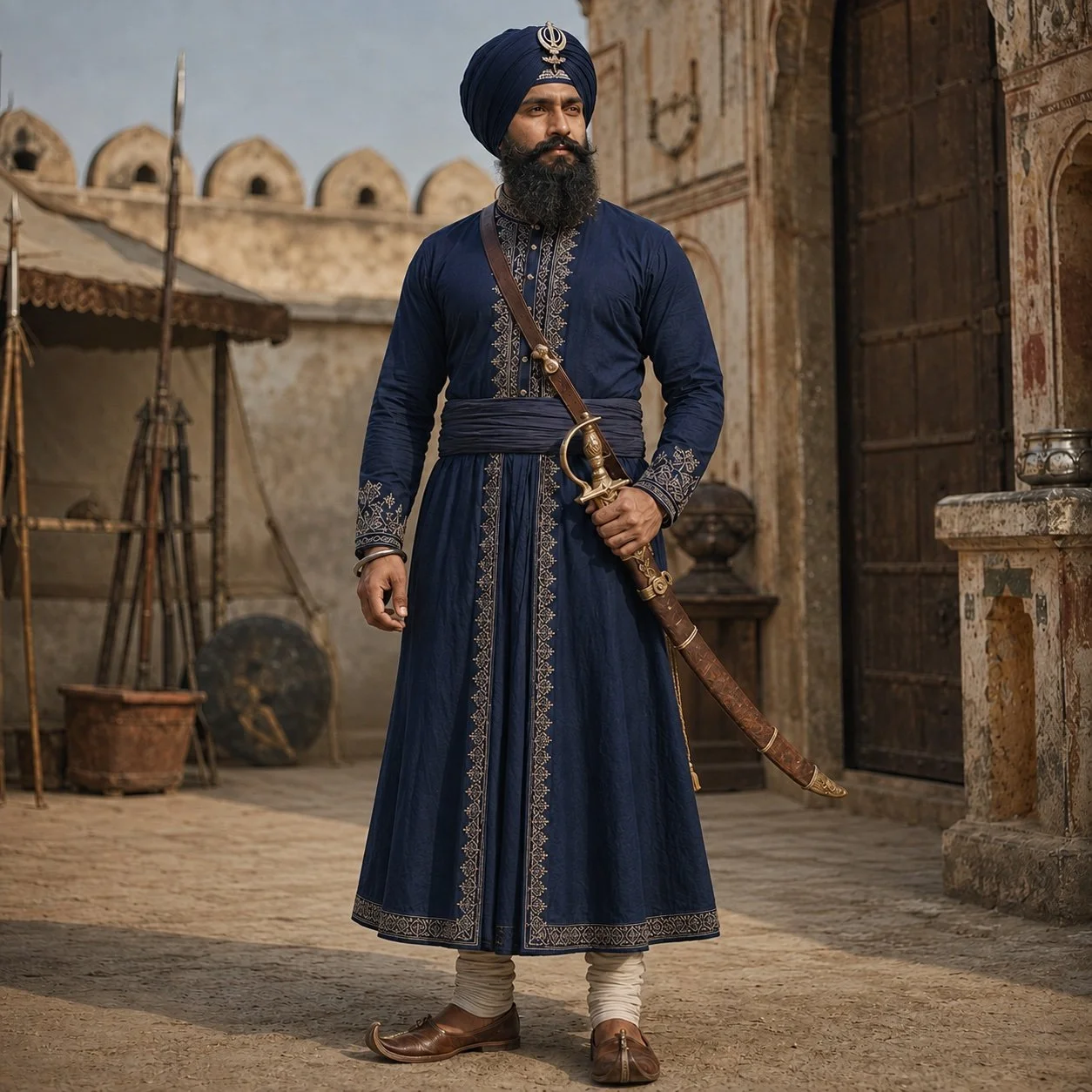
Chola
A long, loose garment with a full lower shape, worn in several Punjabi traditions and adapted as martial clothing by Sikh warriors.
-
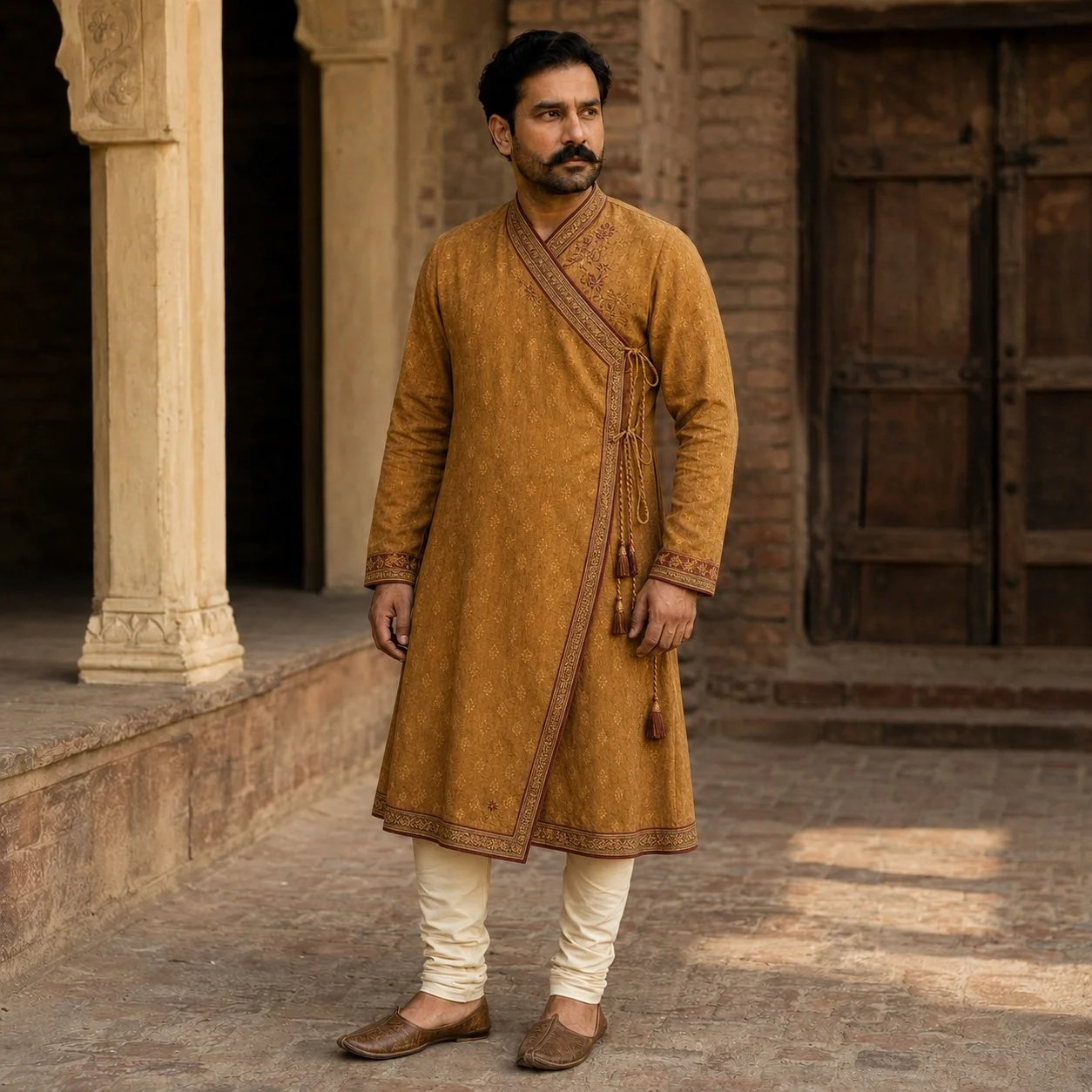
Anga/ Angarkha
An older overlapping robe or coat that fastened toward one side and was gradually displaced by the kurta.
-
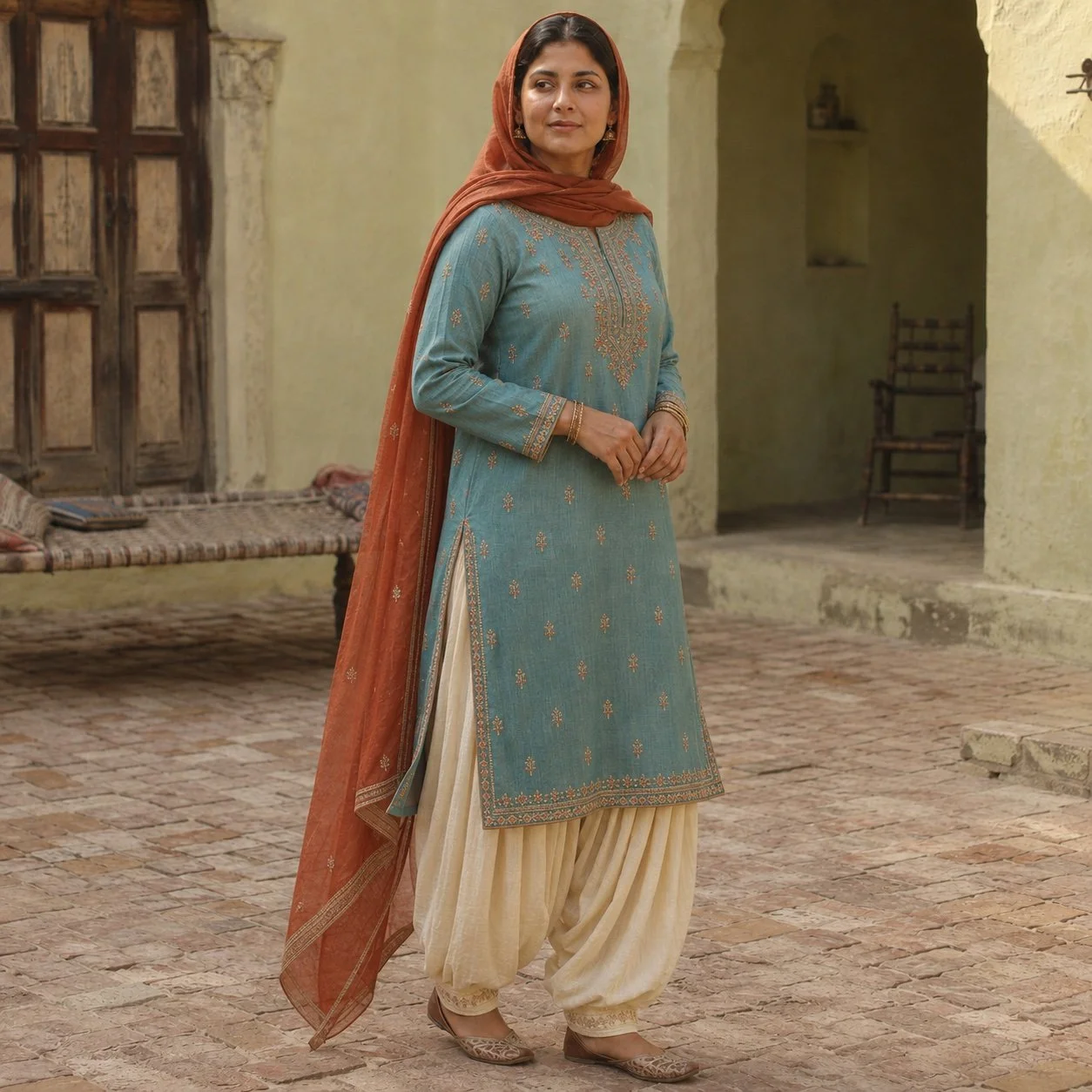
Kameez/ Jhagga
A straight-cut shirt; jhagga is an older Punjabi name associated with the Punjabi suit.
-
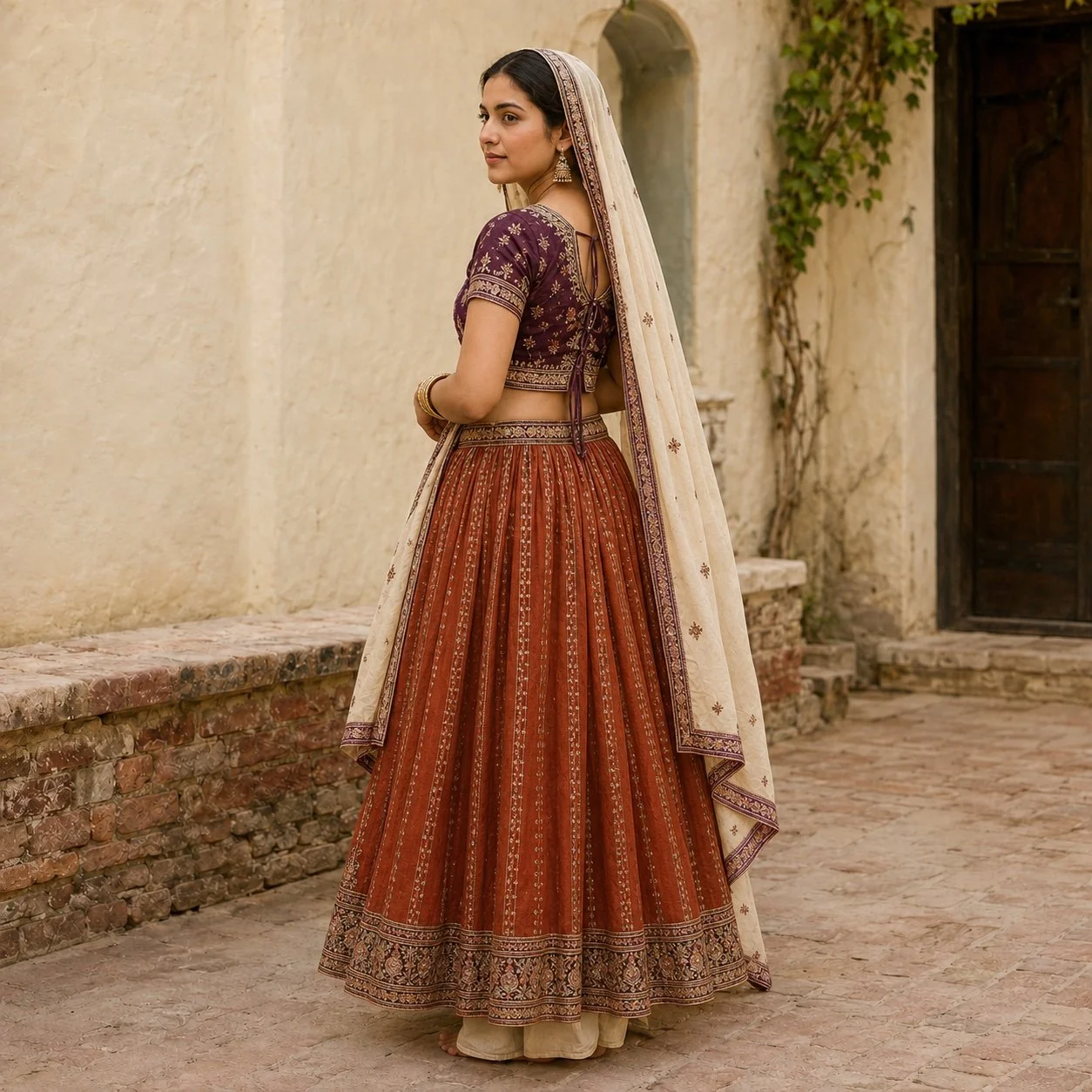
Choli/ Angi
A shorter fitted bodice traditionally worn by women.
-
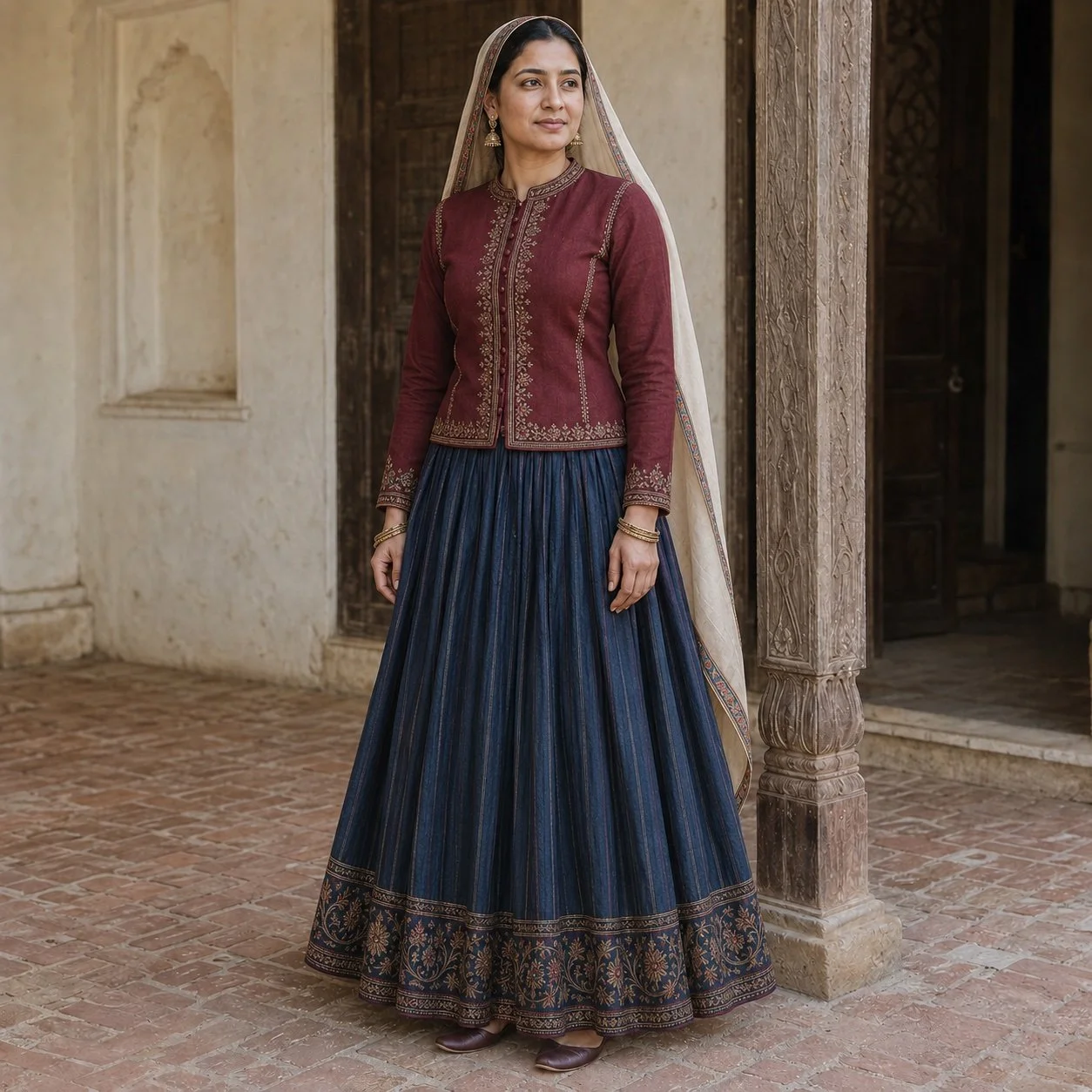
Kurti
A short fitted coat or tunic, often worn by Punjabi women.
Shirts, tunics and wrapped robes were worn across South and Central Asia for centuries, while Punjab adapted these wider forms around its own climate, materials and everyday life.
Loose cuts allowed air to move during summer. Side openings made it easier to walk, ride, sit and work, while straight fabric panels could be cut with little cloth wasted.
Over time, different shapes developed around the body and the garments worn beneath them. The kurta remained long and loose, while the kameez was commonly paired with the Punjabi salwar. Women also wore shorter kurtis and fitted cholis with ghagras or suthans. The anga or angarkha crossed over the body and fastened at one side, while the chola used additional cloth to create a longer and fuller shape.
Practical clothing could still be elaborate. Everyday garments were often made from cotton and other locally available cloth, while silk, finer weaves, embroidery and decorative borders appeared in wealthier households or on special occasions. Length, fabric and ornament could reflect gender, region, occupation, season or status. Not every Punjabi wore every garment, and their names and meanings changed between communities and generations.
Many of these garments were also worn outside Punjab. Their Punjabi character came from how they were cut, decorated and combined - with other regional clothing.
Pants & Lower Garments
-
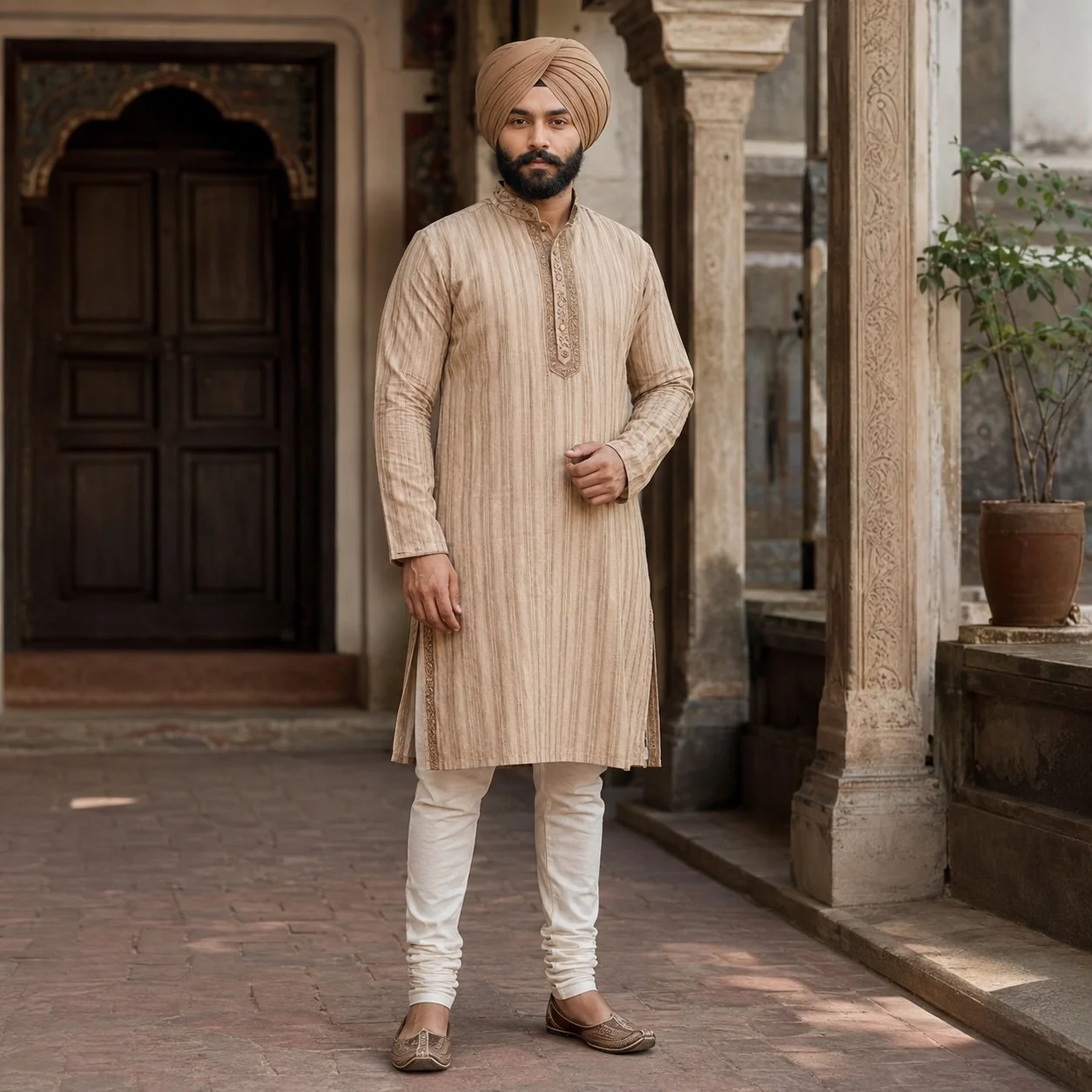
Churidar / Ghuttana
Close-fitting trousers made slightly longer than the leg, creating folds around the ankles; shorter ghuttanas could end around the calf.
-
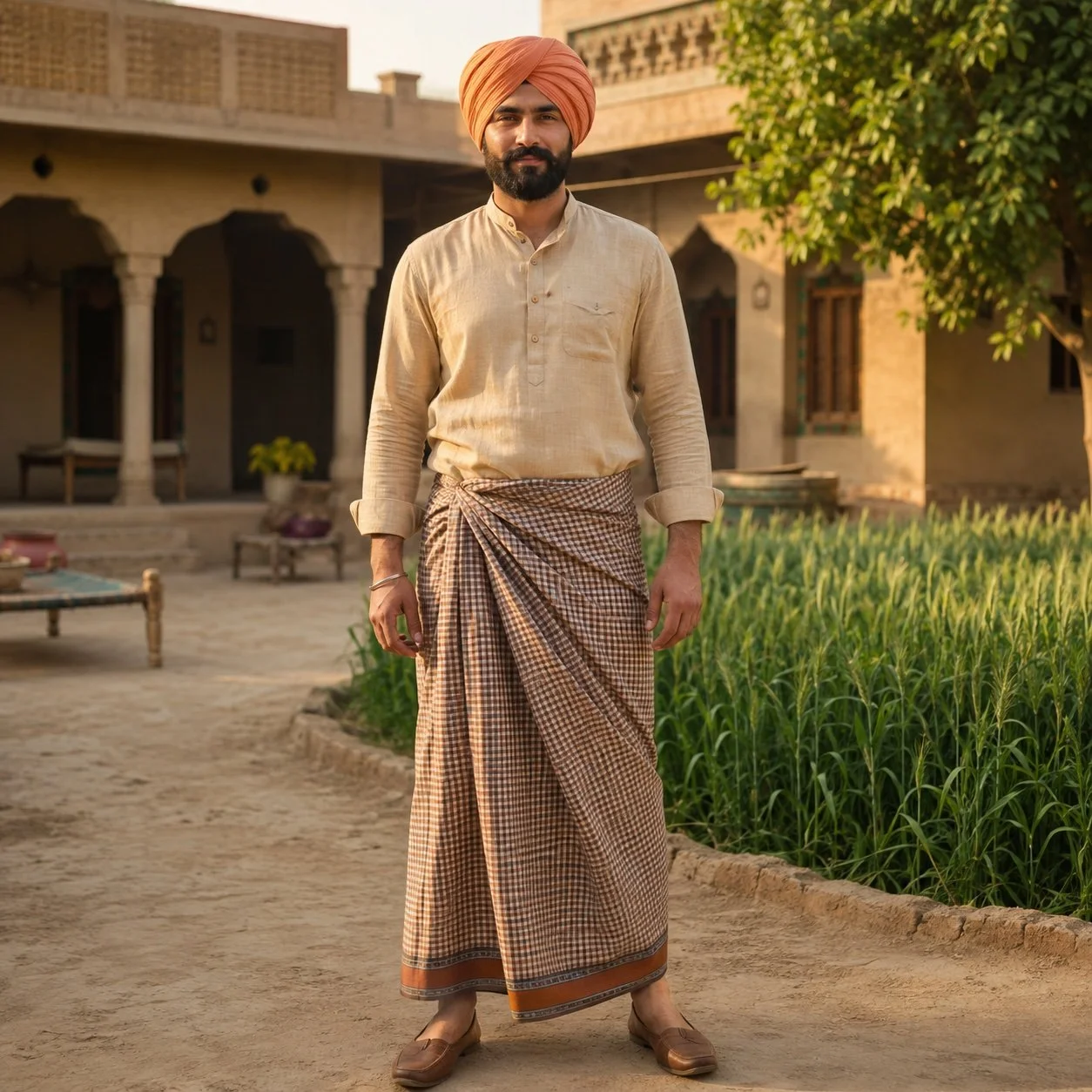
Tehmat / Tamba / Lacha
A length of cloth wrapped around the waist and worn mainly by men, particularly for everyday and rural life.
-
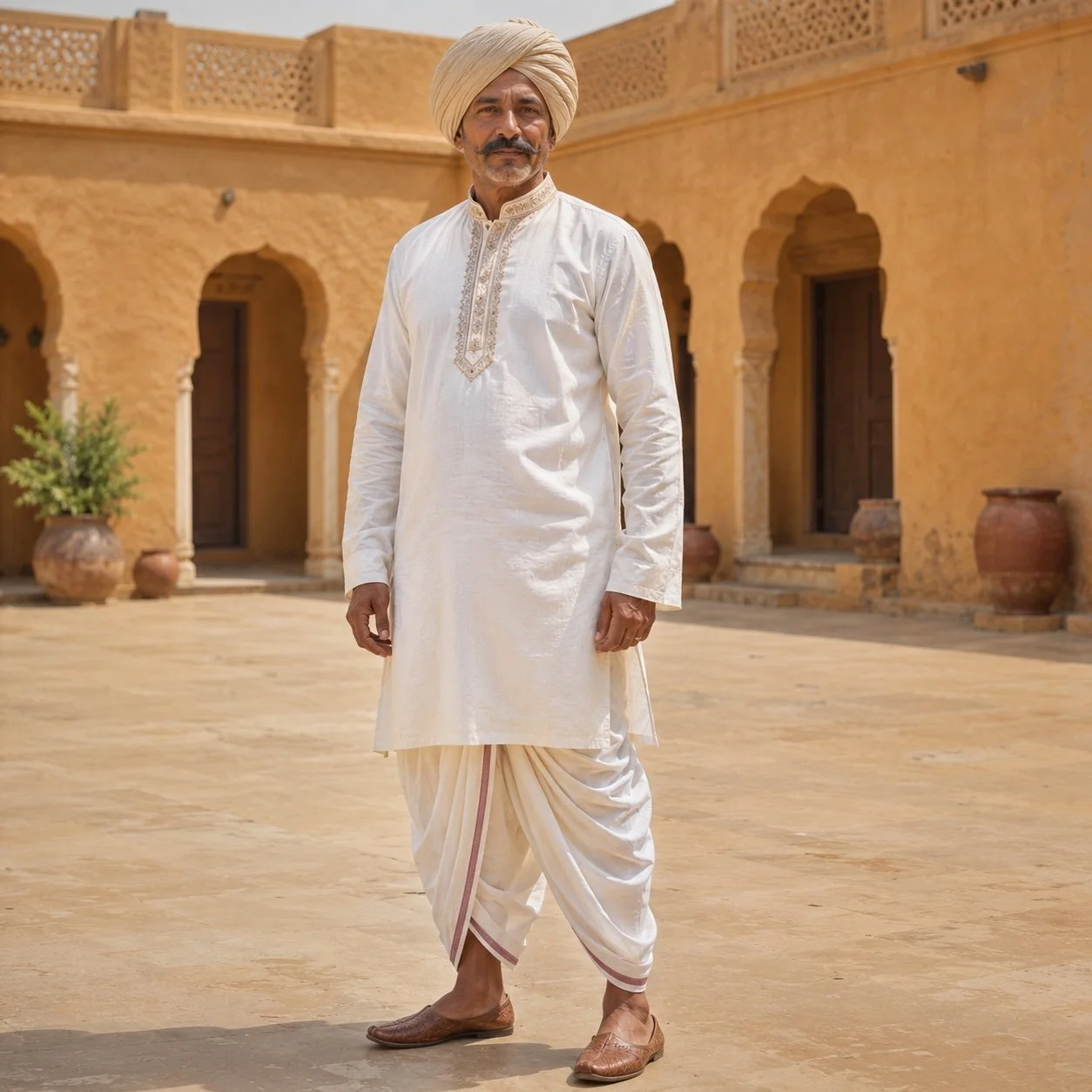
Dhoti
An unstitched lower garment wrapped around the waist and passed between or arranged around the legs.
-
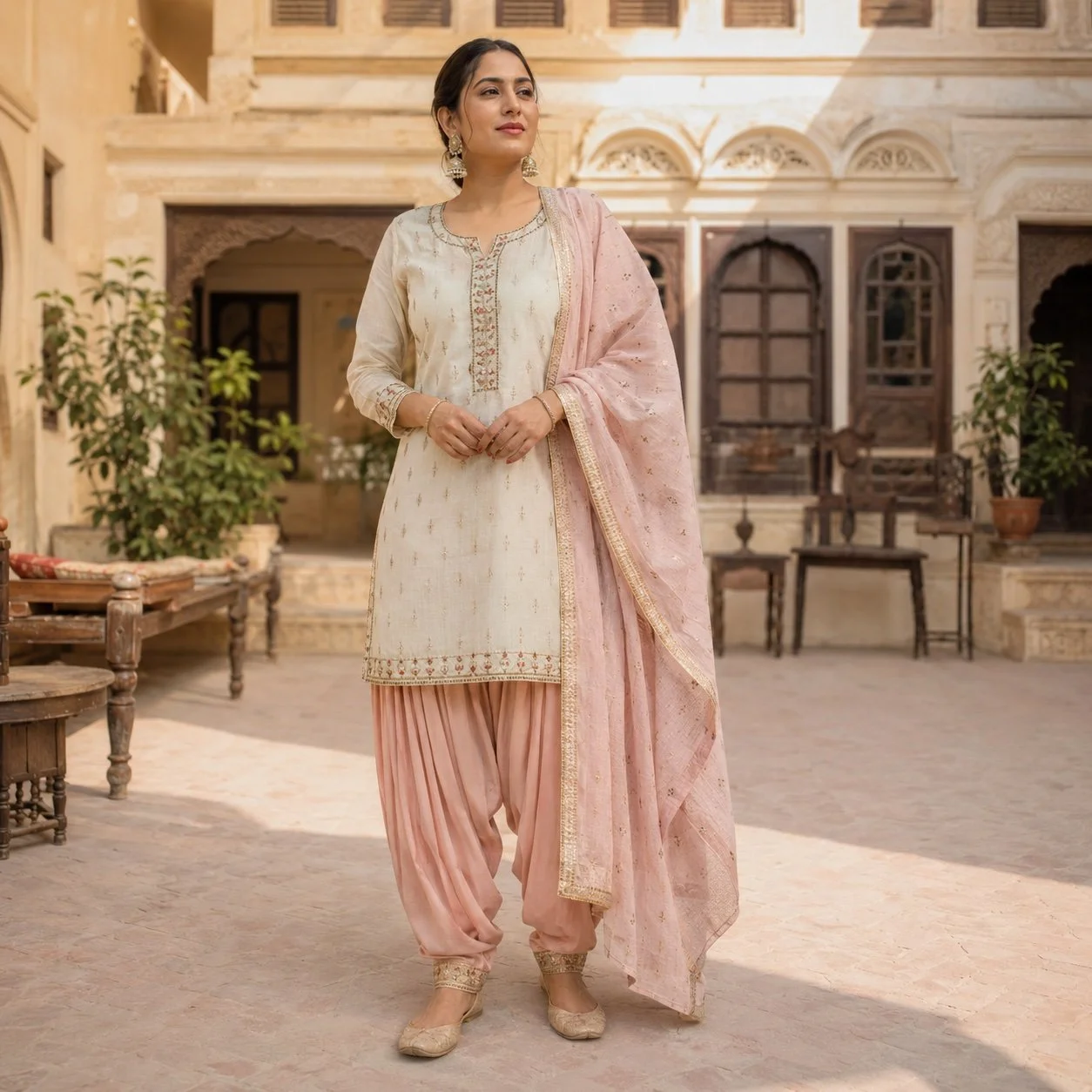
Salwar
Loose trousers gathered at the waist and narrowed around the ankles
-
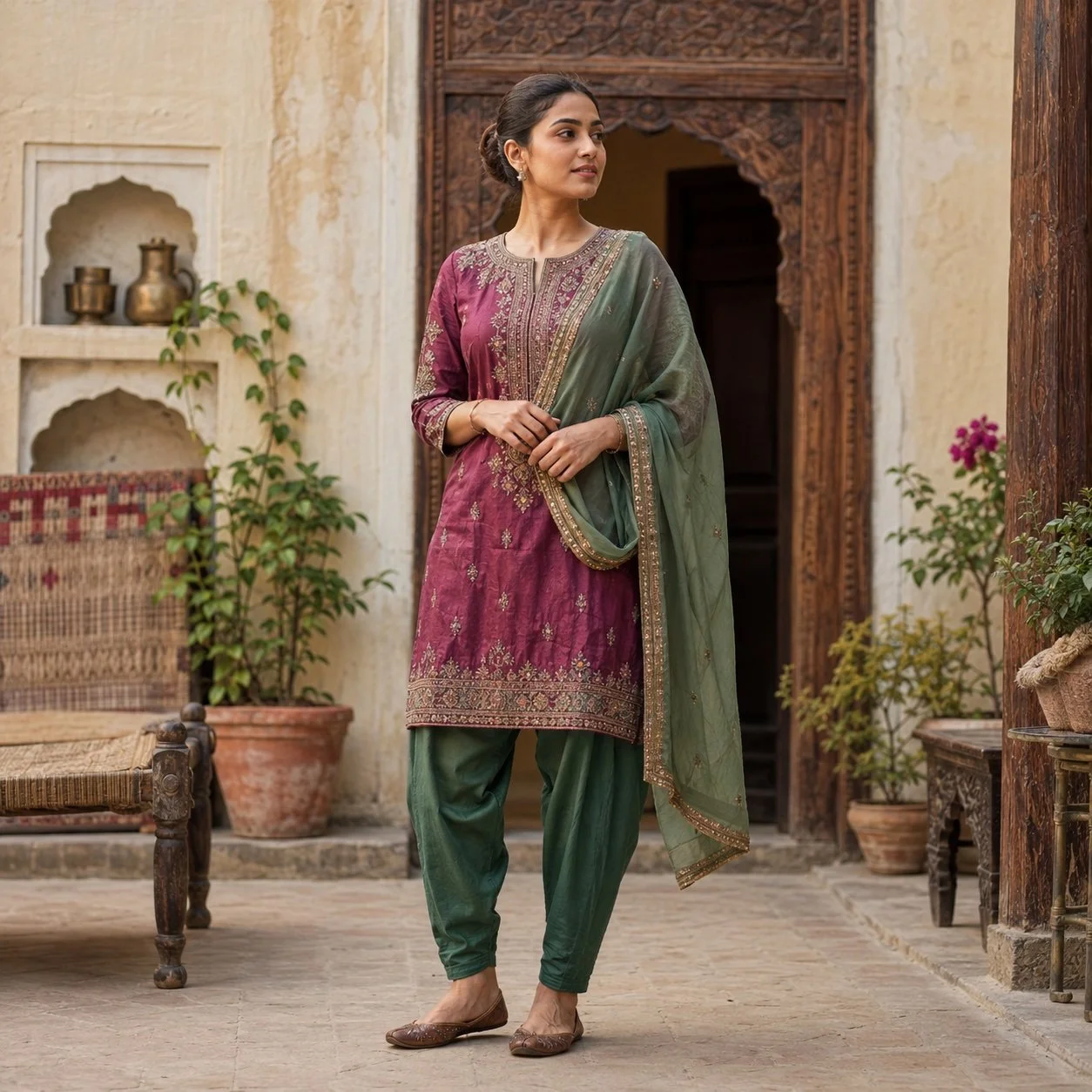
Suthan
An older Punjabi trouser, loose around the hips or knees and closely fitted along the lower leg.
-
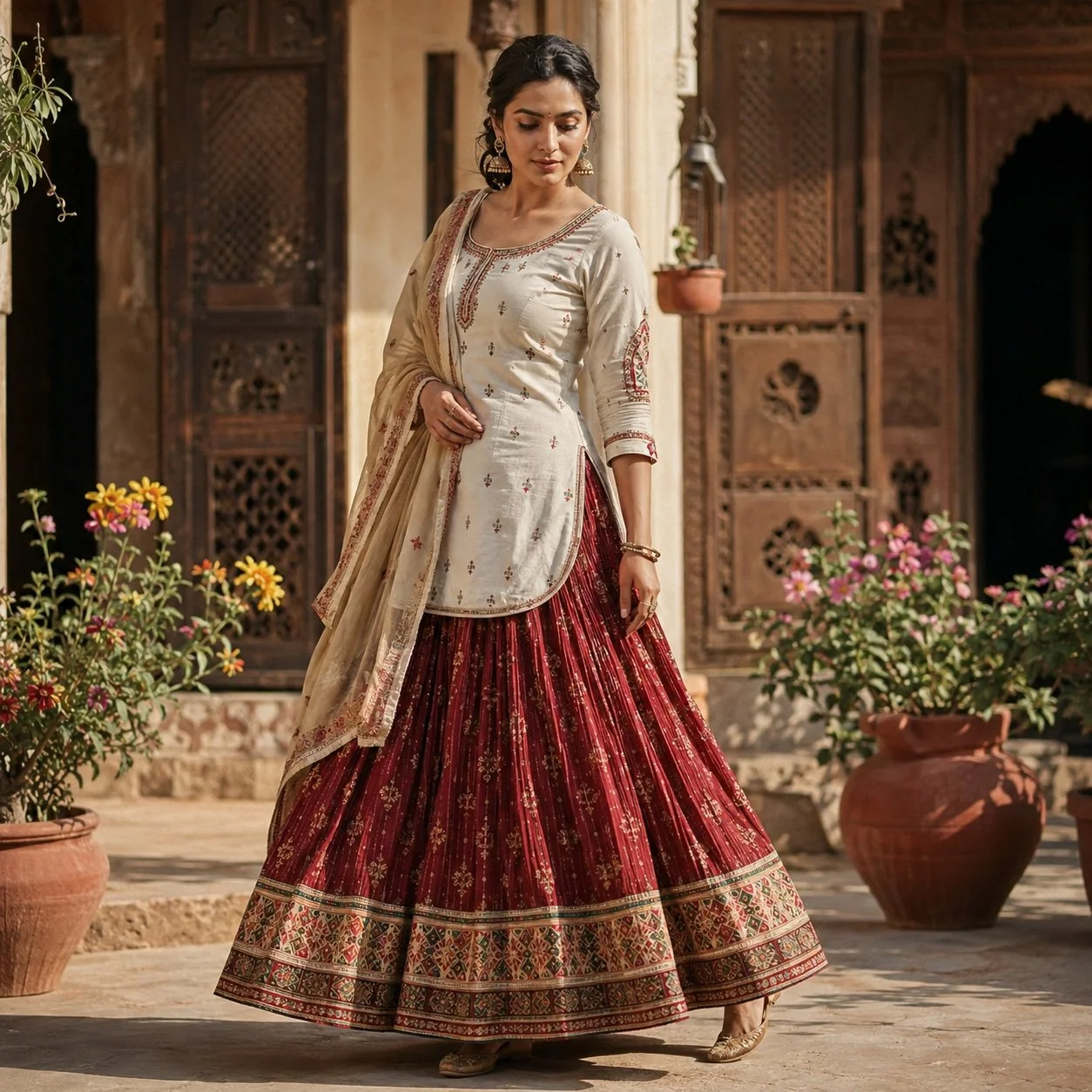
Ghagra
A long, full skirt.
Punjab did not develop one standard lower garment.
Its clothing included stitched trousers, wrapped cloth and full skirts, each controlling fabric in a different way. Some gathered large amounts of cloth at the waist, some fitted closely around the lower leg, and others remained completely unstitched. This variety allowed clothing to change with the weather, the work being completed and the amount of movement required.
The salwar became the most recognisable Punjabi form, but even this was not one fixed shape. Patiala, Pothohari, Multani and Bahawalpuri salwars differed in their width, length, pleating and the way they narrowed around the leg. The older suthan was generally closer around the lower legs, while the churidar used extra length to form folds above the ankles. These differences may appear small, but they changed the entire outline of the Punjabi suit.
Not every garment was stitched. The tehmat, tamba or lacha was wrapped around the waist and allowed to fall loosely, making it practical for rural work and warmer weather. The dhoti used a longer arrangement of cloth that could be passed between the legs, while the ghagra created width through a gathered or pleated skirt. Wrapped clothing could be loosened, shortened or retied throughout the day without altering the garment itself.
Most Punjabi lower garments were worn by both men and women. Their gender was often communicated through the shirt, dupatta, fabric, colour or embroidery worn with them rather than through the trousers alone. A man’s and woman’s suthan could share the same basic construction while forming part of visibly different outfits. The main exceptions in this section are the ghagra, traditionally worn by women, and the tehmat, traditionally worn by men.
Footwear
-
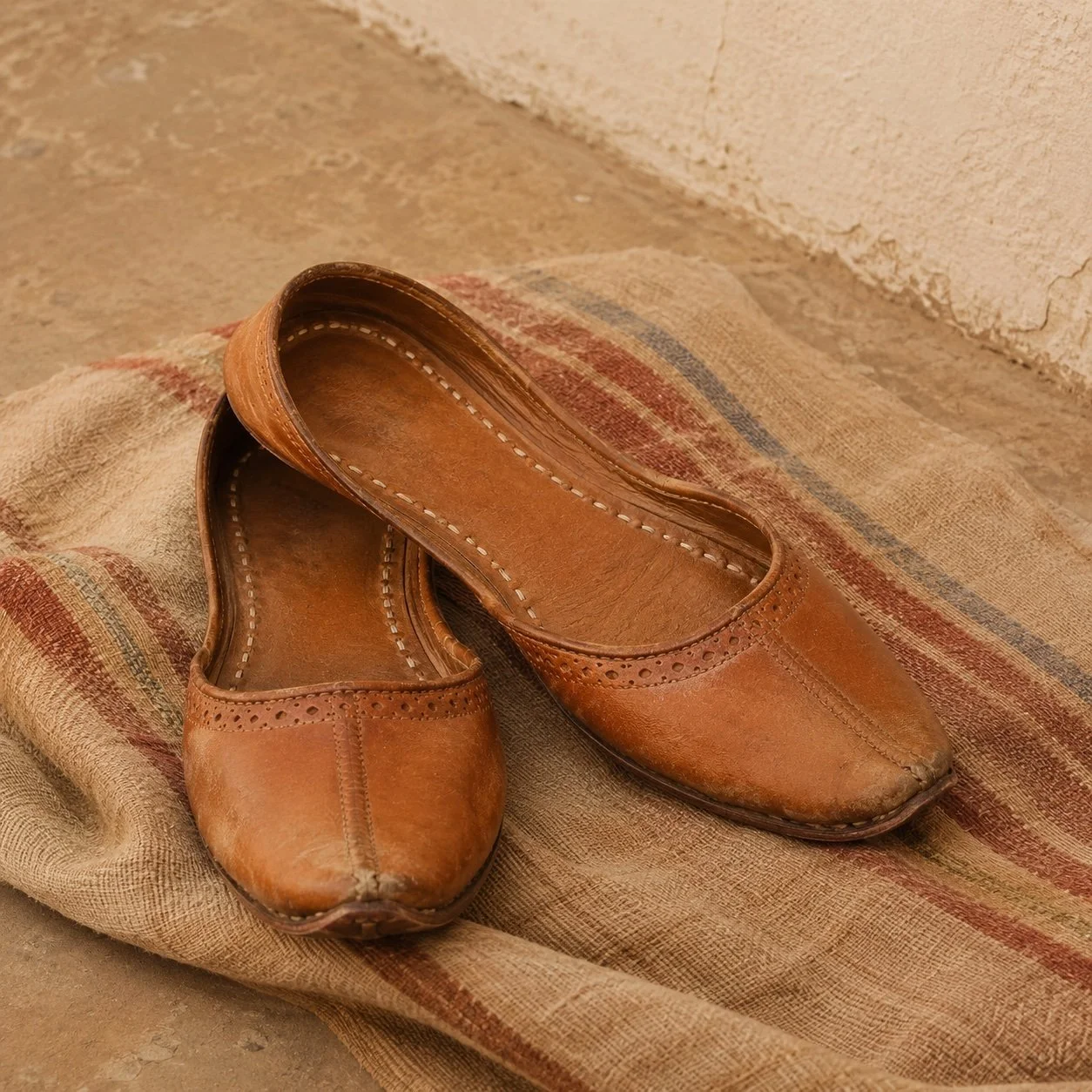
Punjabi Jutti
The general closed-toe, backless leather shoe worn across Punjab.
-
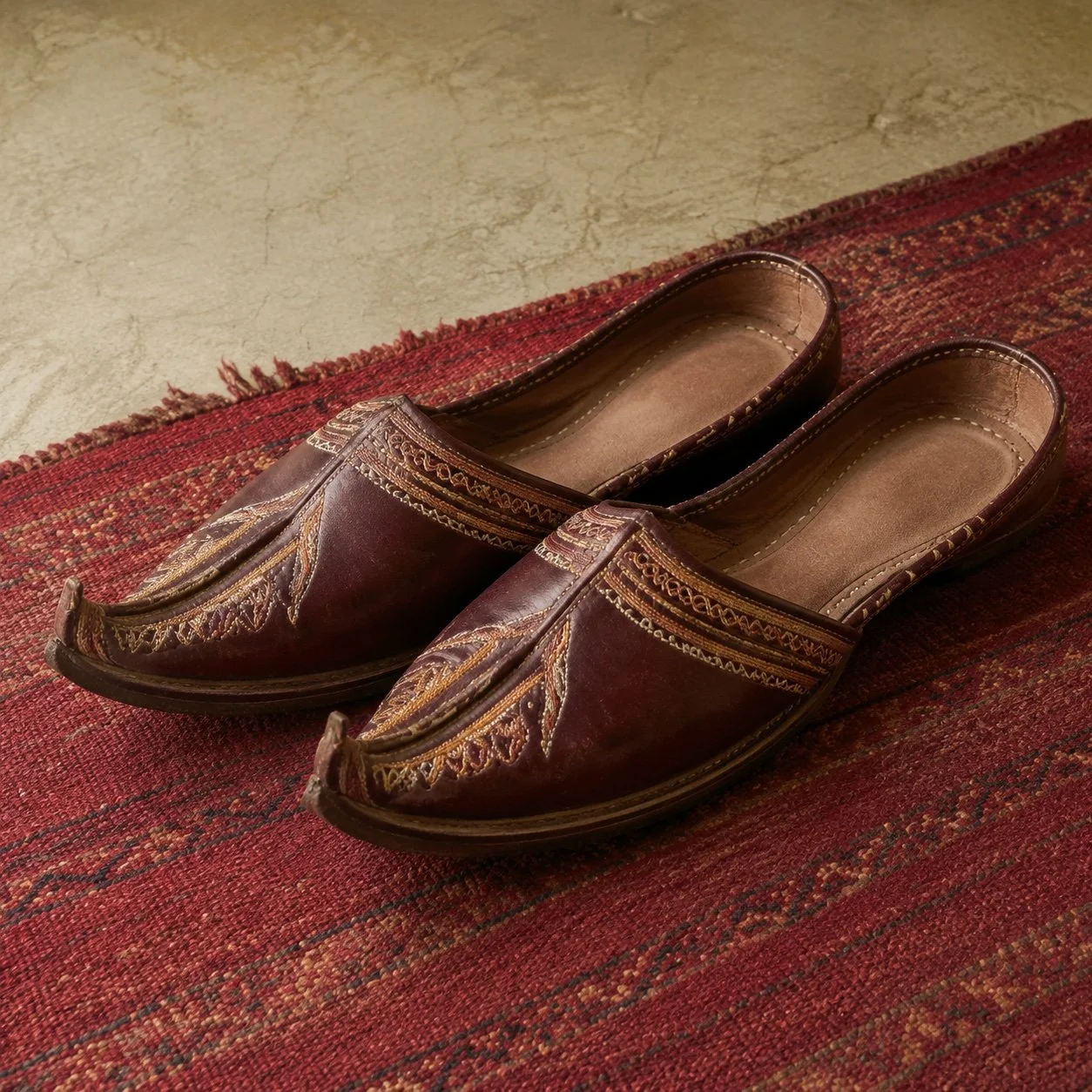
Khussa
Similar to the jutti - with a more pointed or curled toe.
-
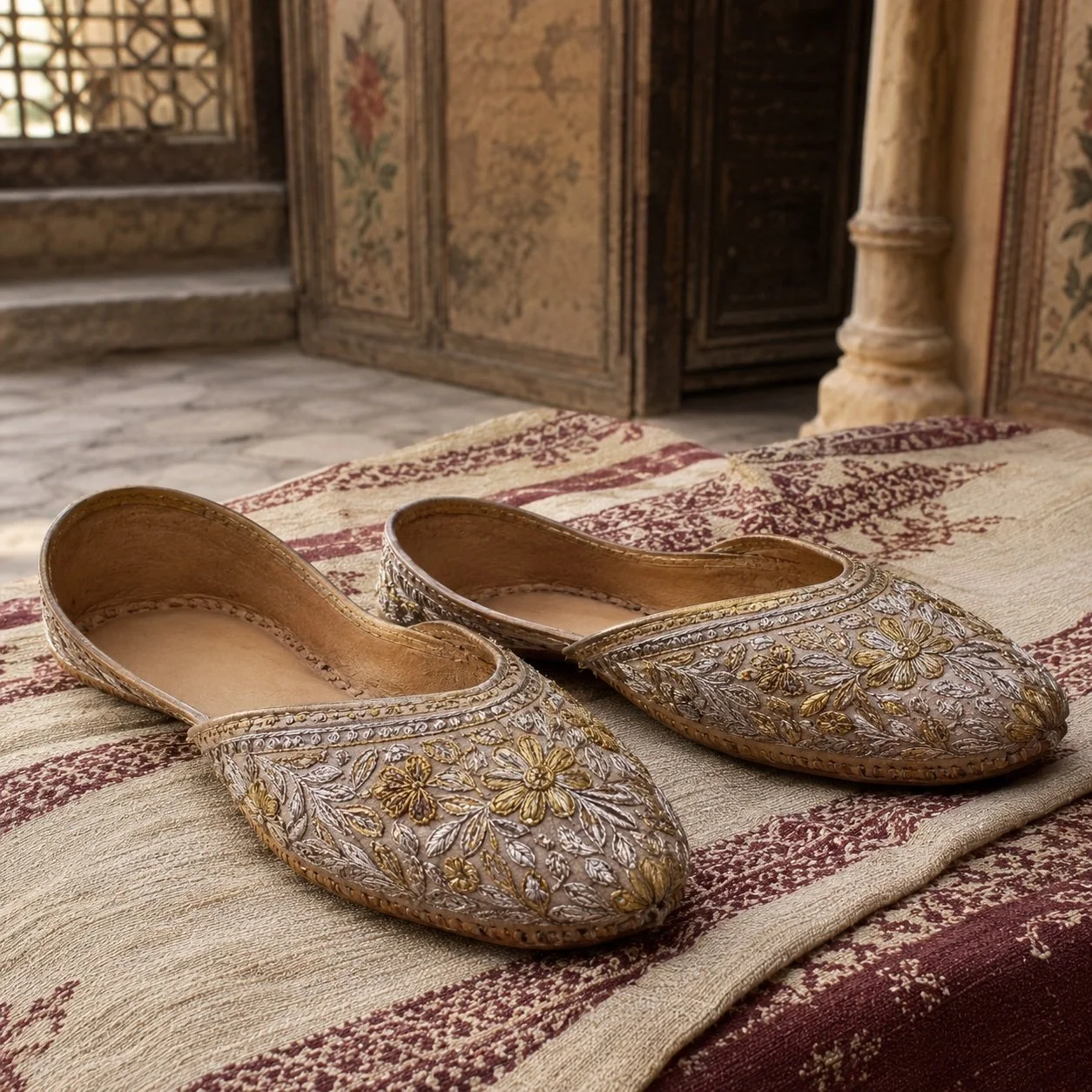
Tilla Jutti
Shoes decorated with gold or silver-coloured thread for weddings and celebrations.
-
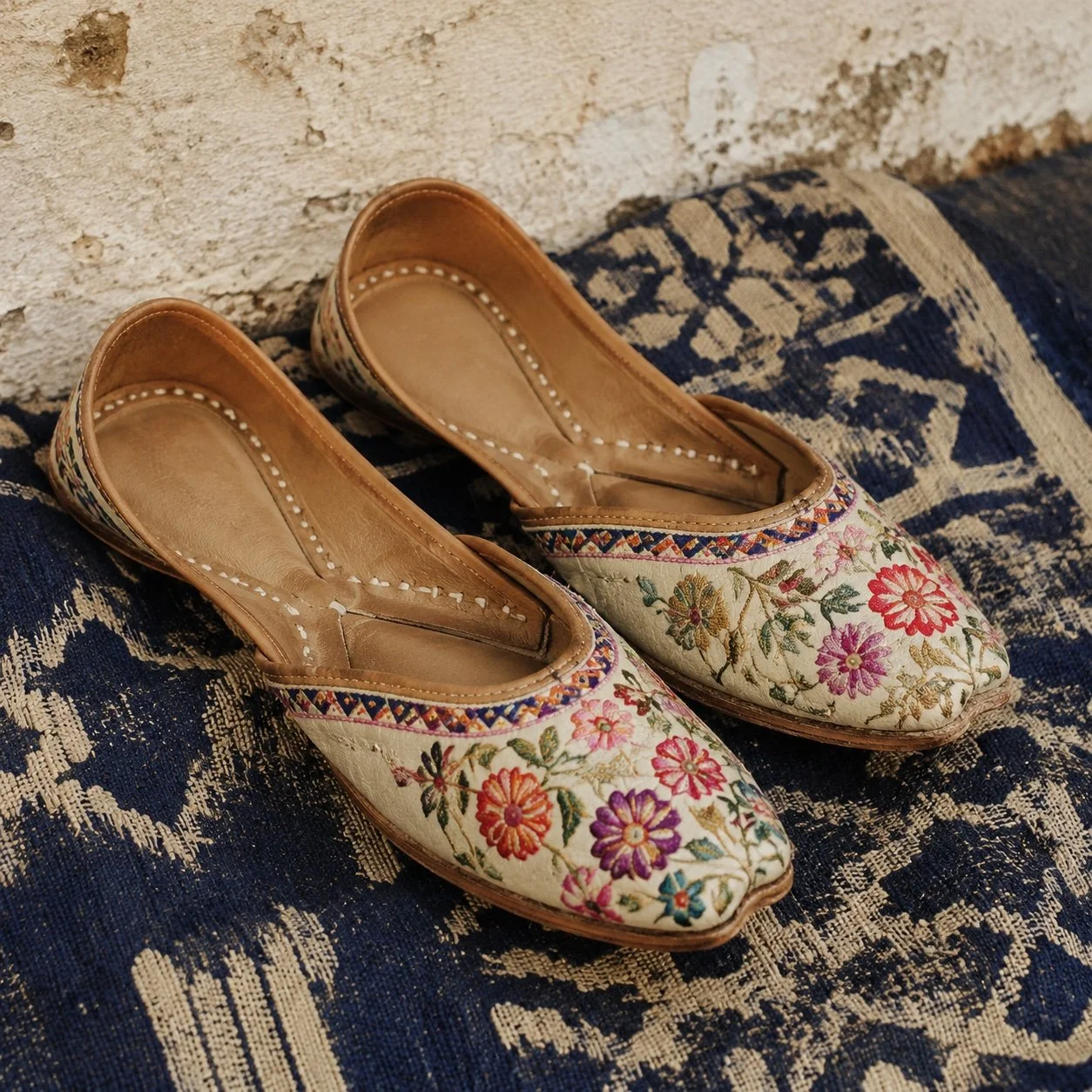
Kasuri Jutti
The finely embroidered jutti associated with Kasur.
-
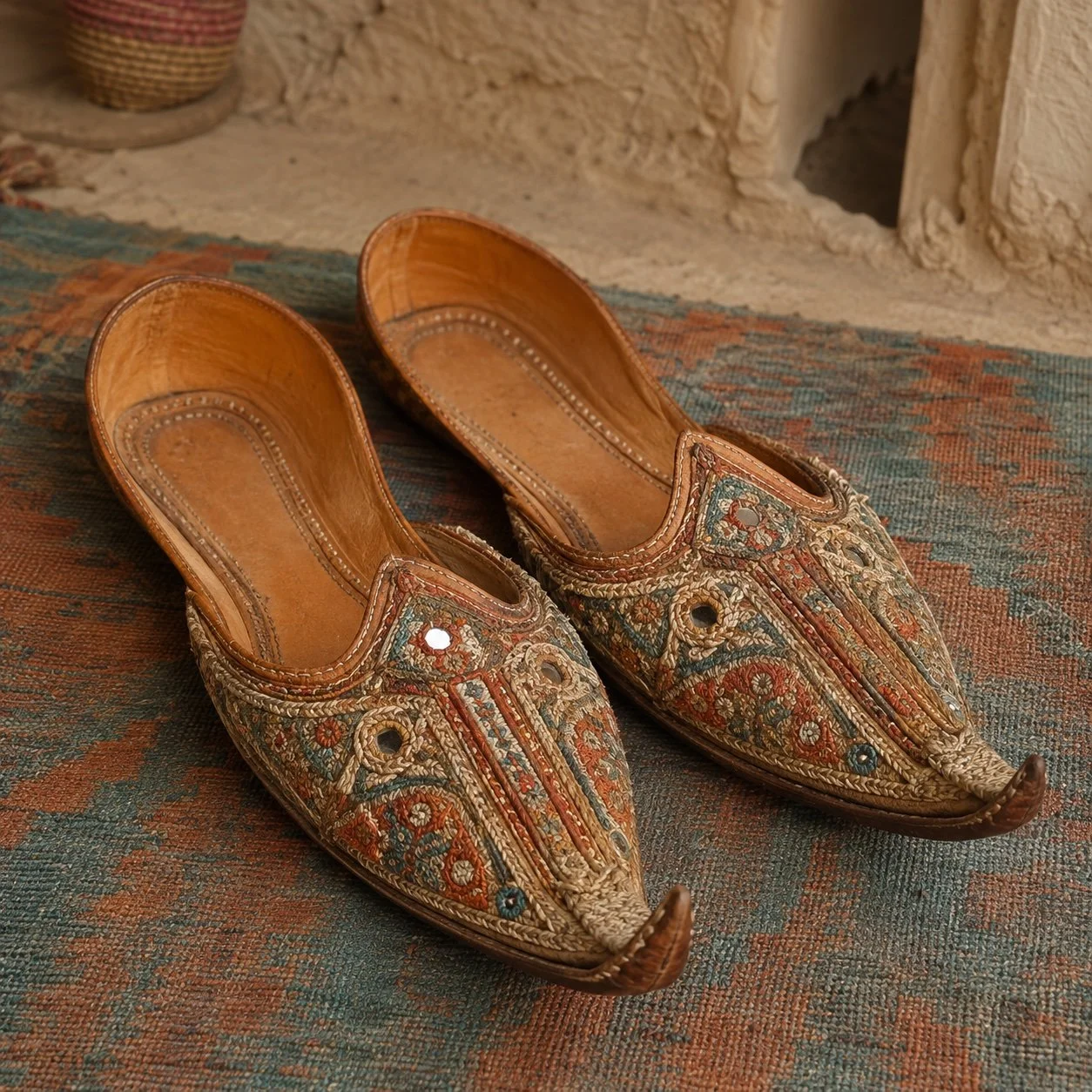
Multani Khussa
A South Punjabi form known for coloured leather, threadwork and decorative embellishment.
-
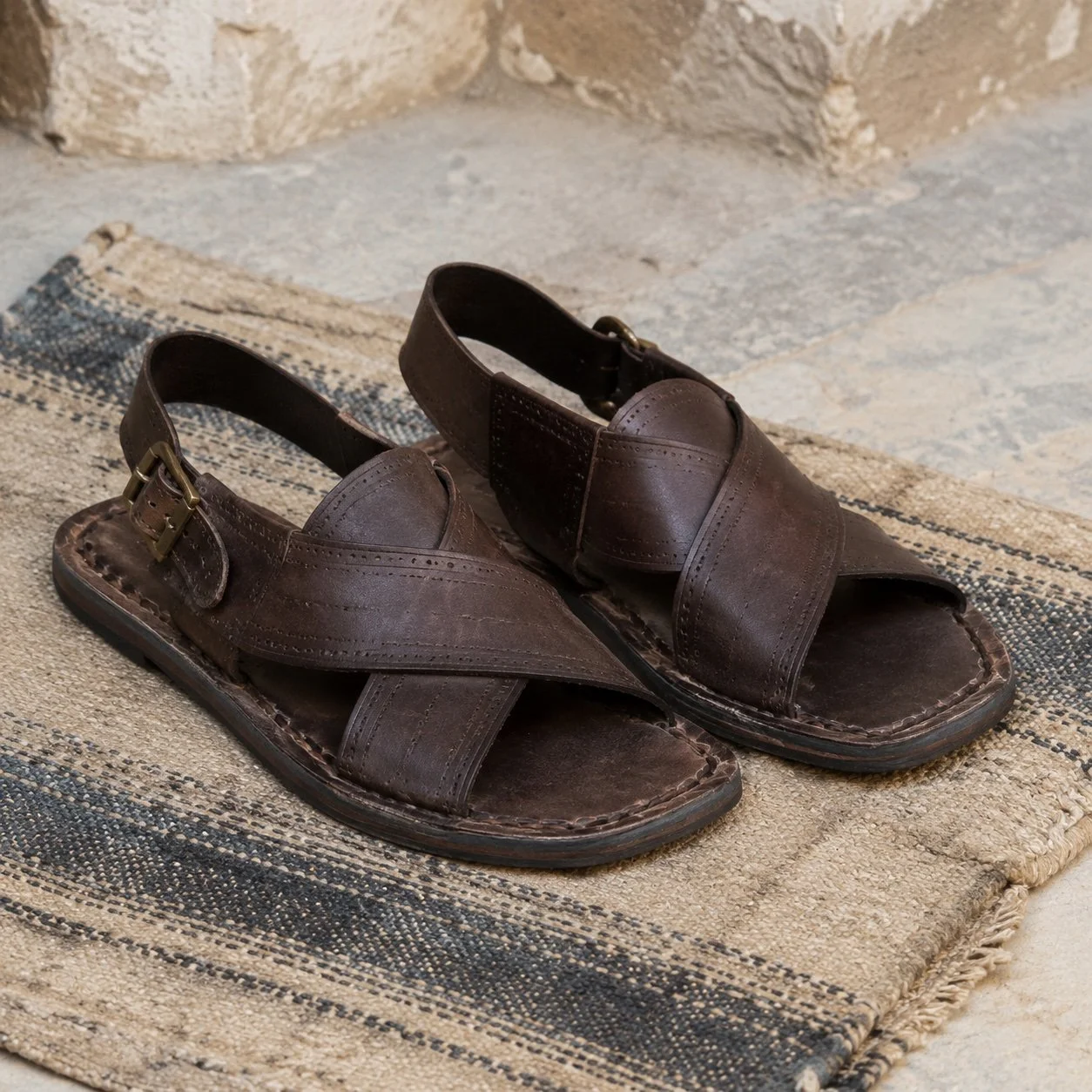
Kheri
A sturdier, open leather shoe traditionally worn by men in Northern and Western Punjab.
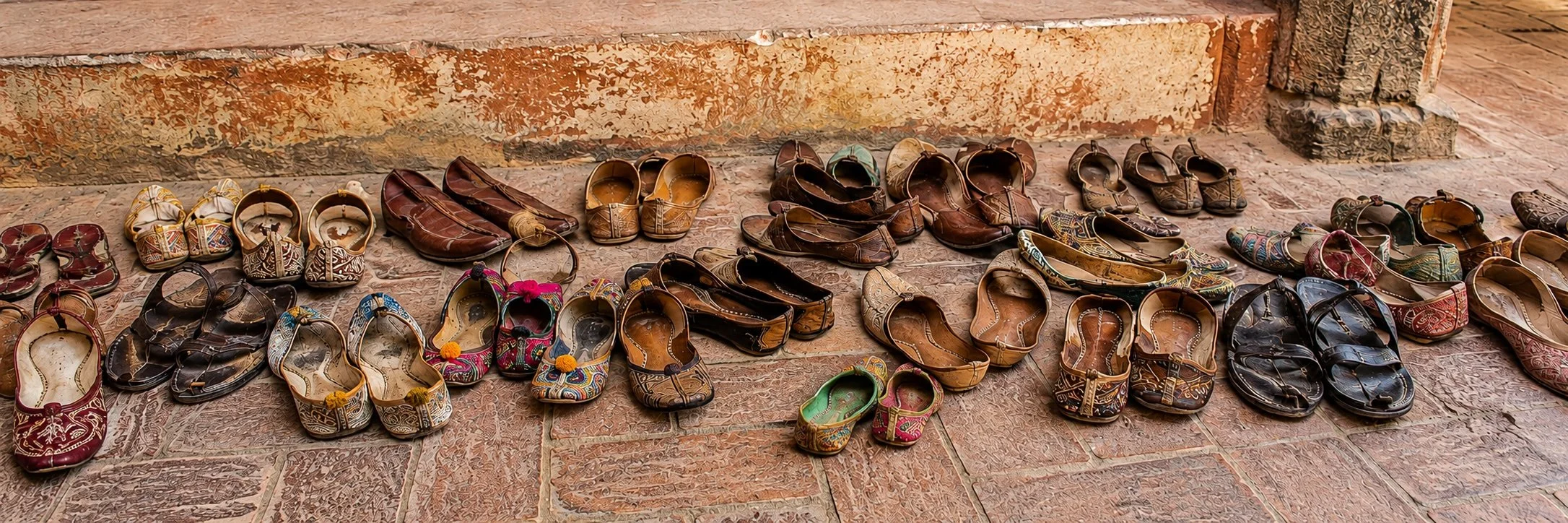
Traditional Punjabi footwear was cut from leather and stitched by hand onto a flat sole. Plain pairs were made for everyday walking and work, while formal shoes were decorated with coloured thread, beads, mirrors or tilla - metallic embroidery. Many were not permanently shaped into left and right shoes; the leather softened around the wearer’s feet with use. The kheri offered a more open alternative, using broad leather straps and a stronger sole suited to Northern and Western Punjab.
Juttis and khussas were worn by both men and women. Gender was usually communicated through colour and decoration rather than construction: men’s pairs were often darker or simpler, while women’s could be brighter and more heavily embroidered.
The kheri was the main exception in this section, being traditionally worn by men.
Jewellery & Adornment
-
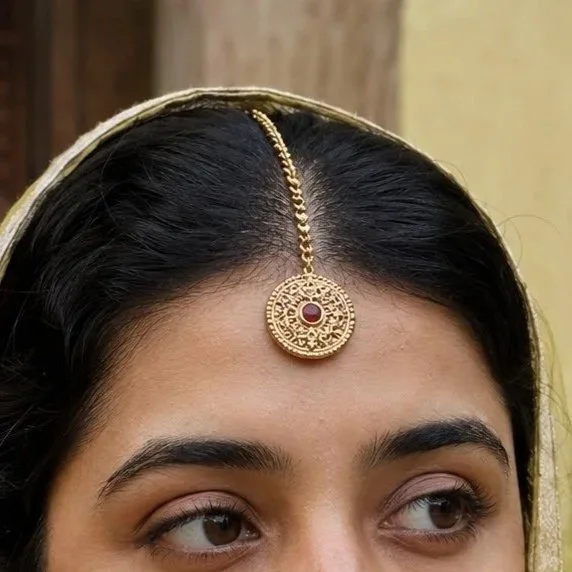
Tikka
A pendant suspended from the centre parting of the hair onto the forehead.
-
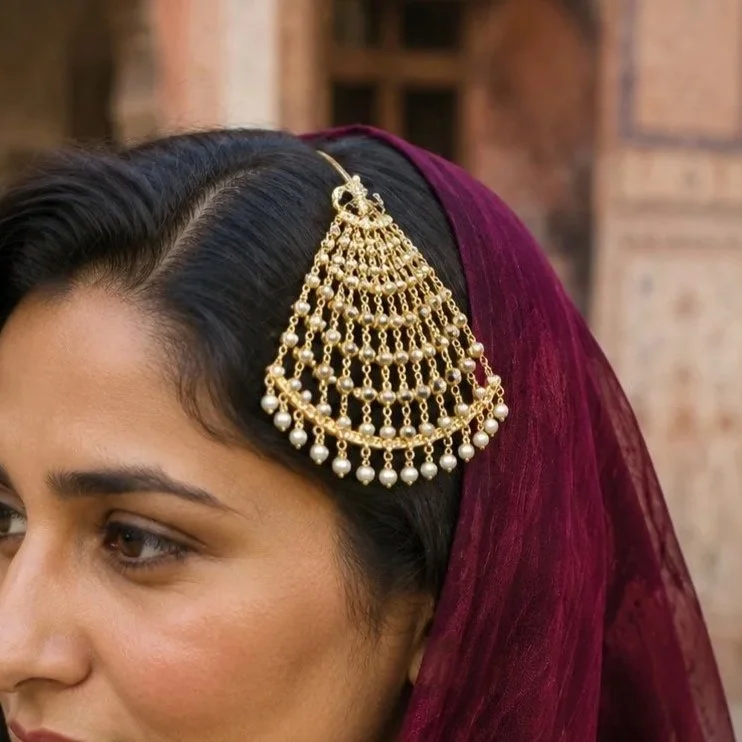
Jhumar/ Passa
A fan-shaped ornament worn at one side of the head, particularly associated with western Punjab.
-
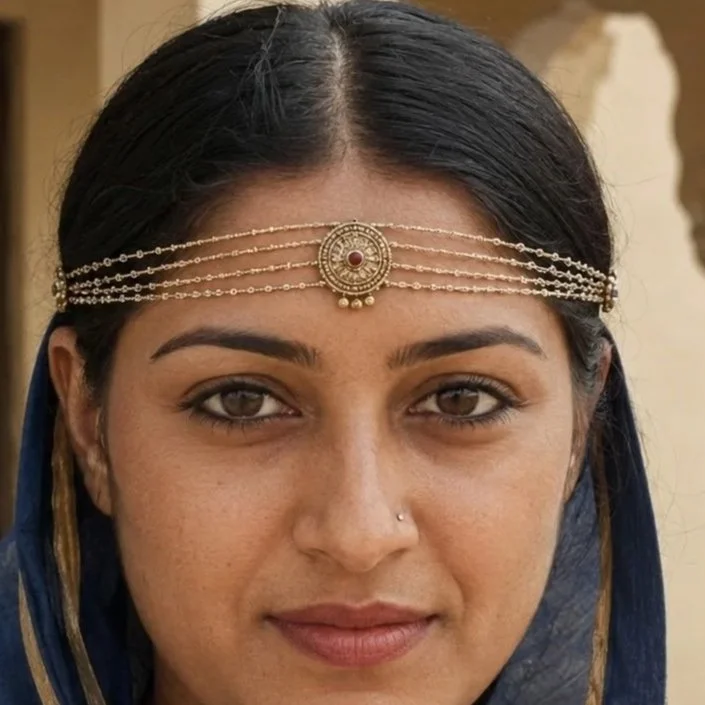
Damni/ Singhar Patti
Chains or a jewelled band arranged across the forehead.
-
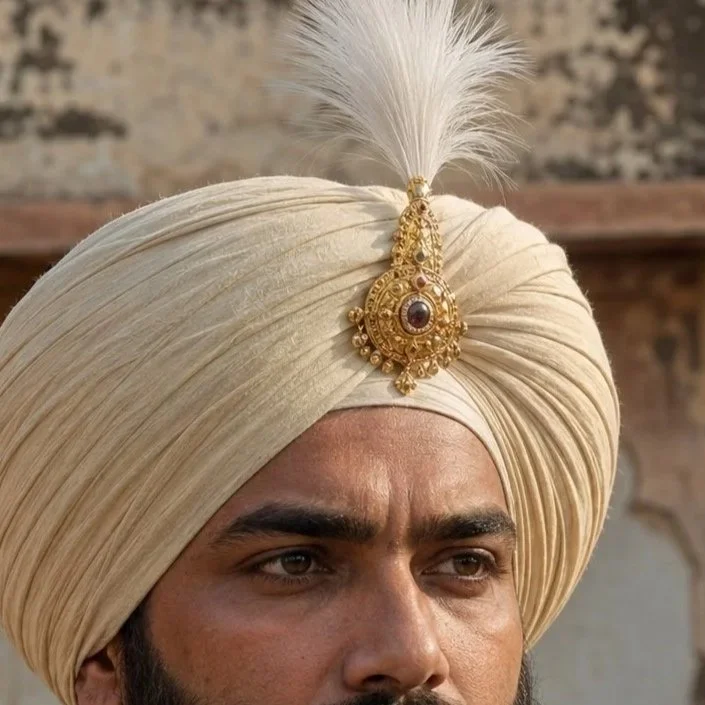
Sarpech / Kalgi
A jewelled ornament attached to a man’s turban.
-
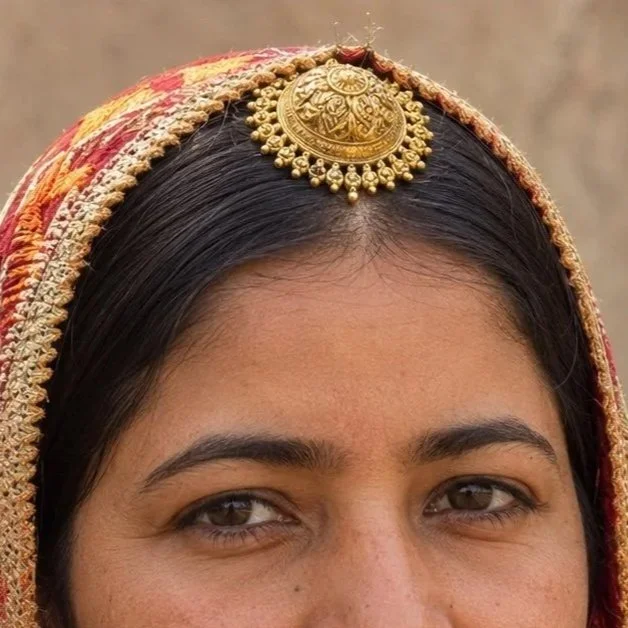
Saggi Phul
A rounded floral ornament fixed over the hair, helping secure a phulkari or dupatta.
-
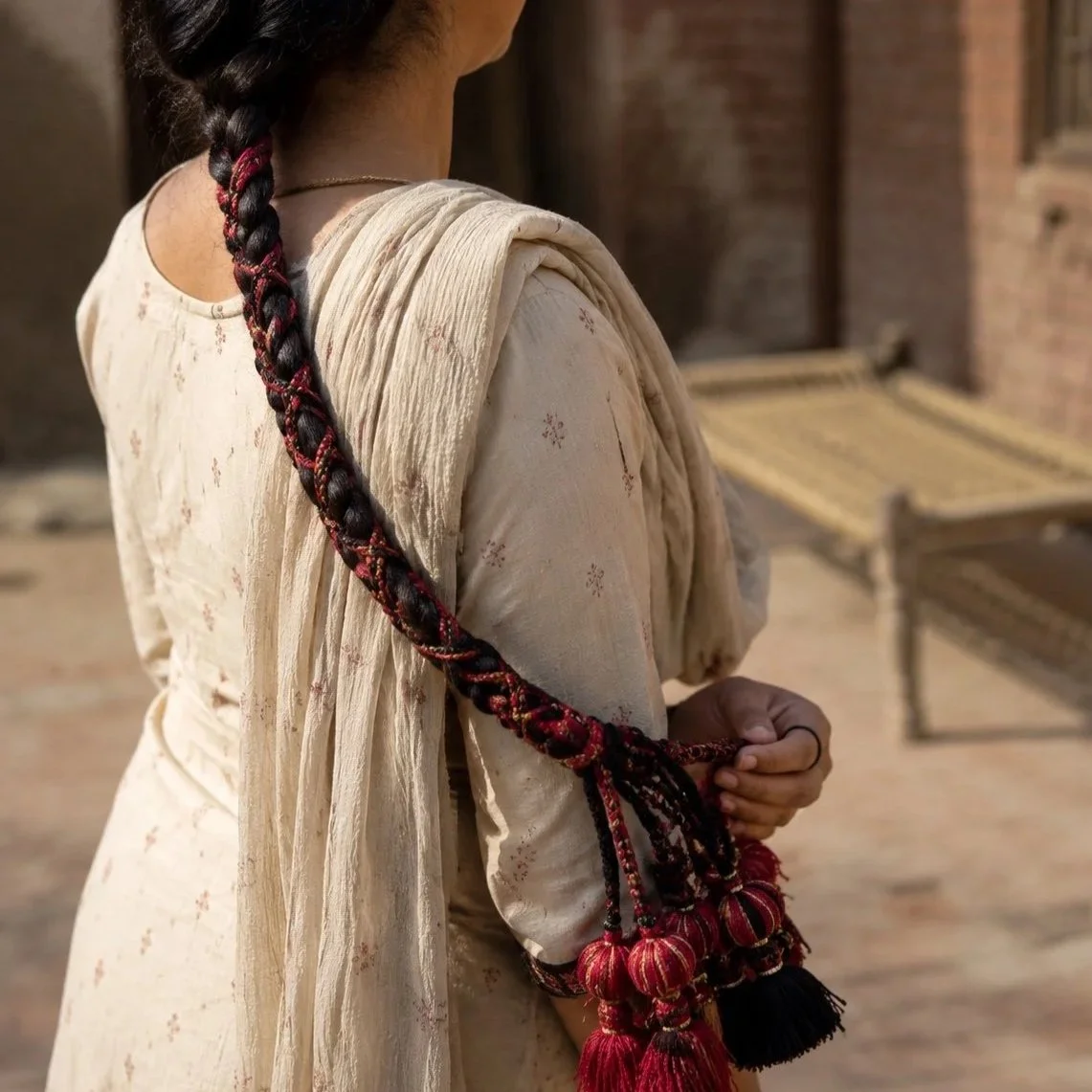
Paranda
Coloured silk threads braided into the hair and finished with decorative tassels.
-
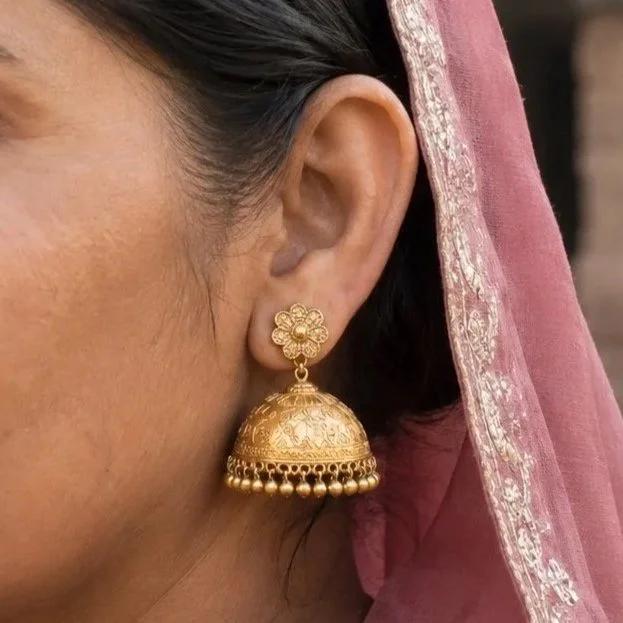
Jhumka
A bell-shaped earring decorated with beads, chains or small hanging pieces.
-
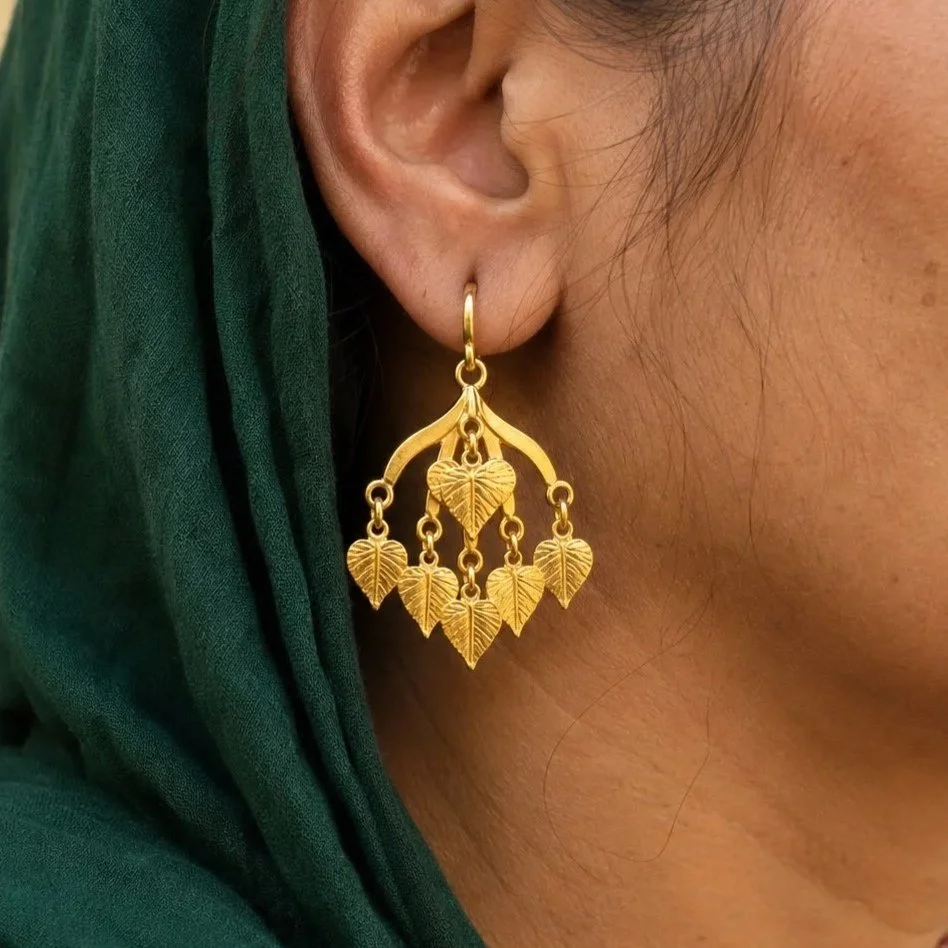
Pipal Patti/ Pipal Watta
An earring finished with small gold leaves shaped like those of the pipal tree.
-
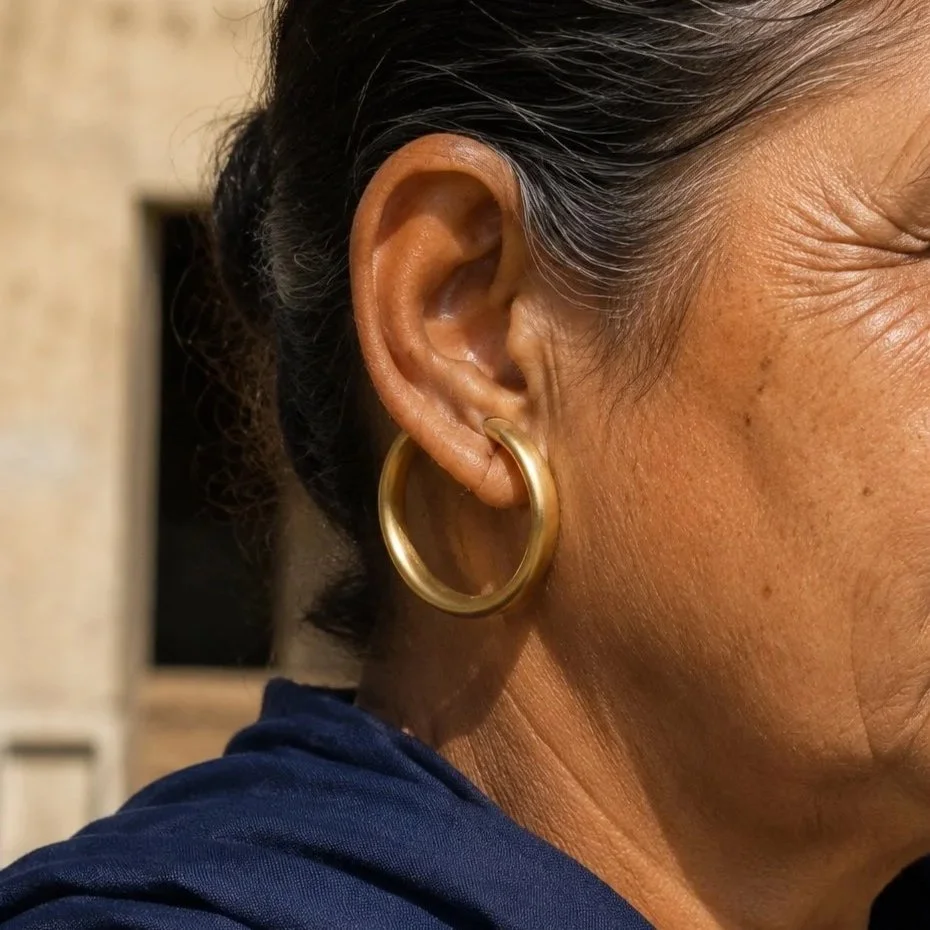
Bali
Circular earrings ranging from small hoops to much larger rings.
-
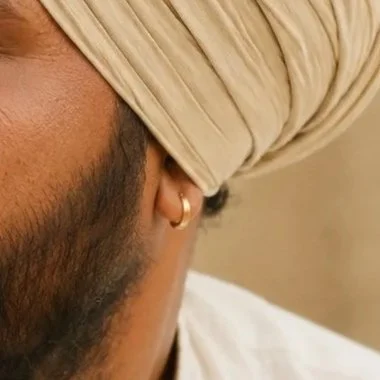
Murki
A small hoop traditionally worn by Punjabi men.
-
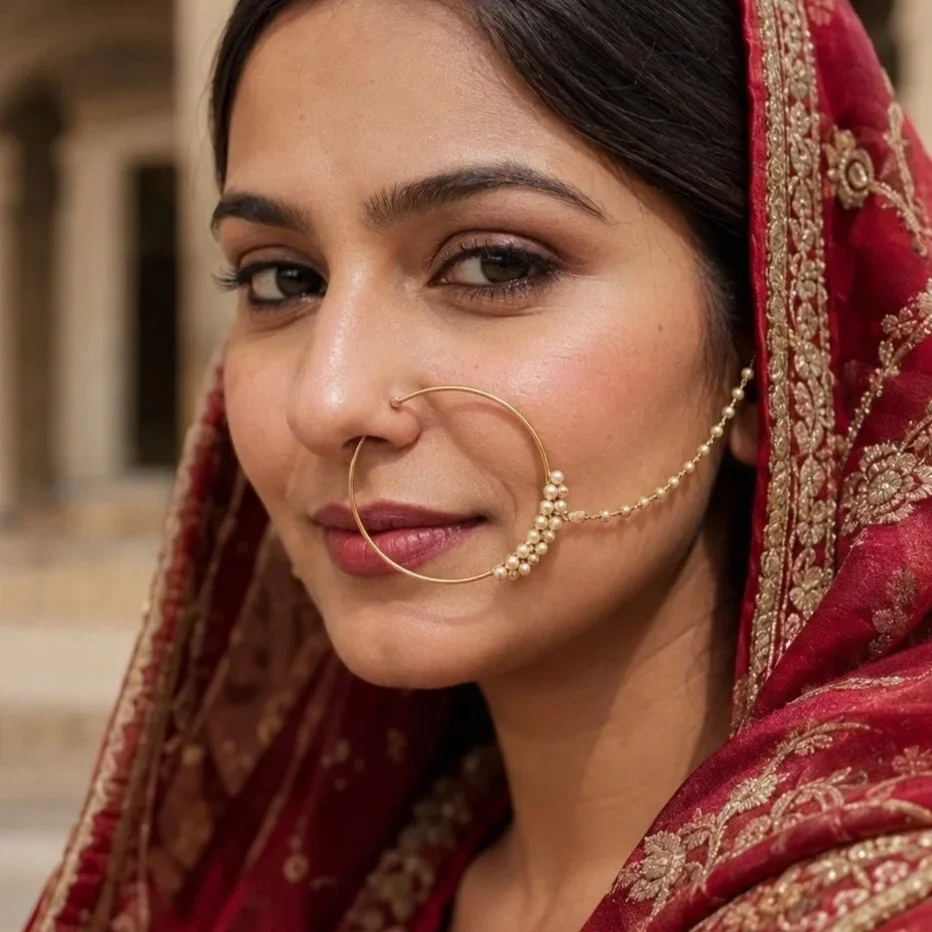
Nath
A large nose ring, often decorated with pearls or stones and sometimes connected to the hair by a chain.
-
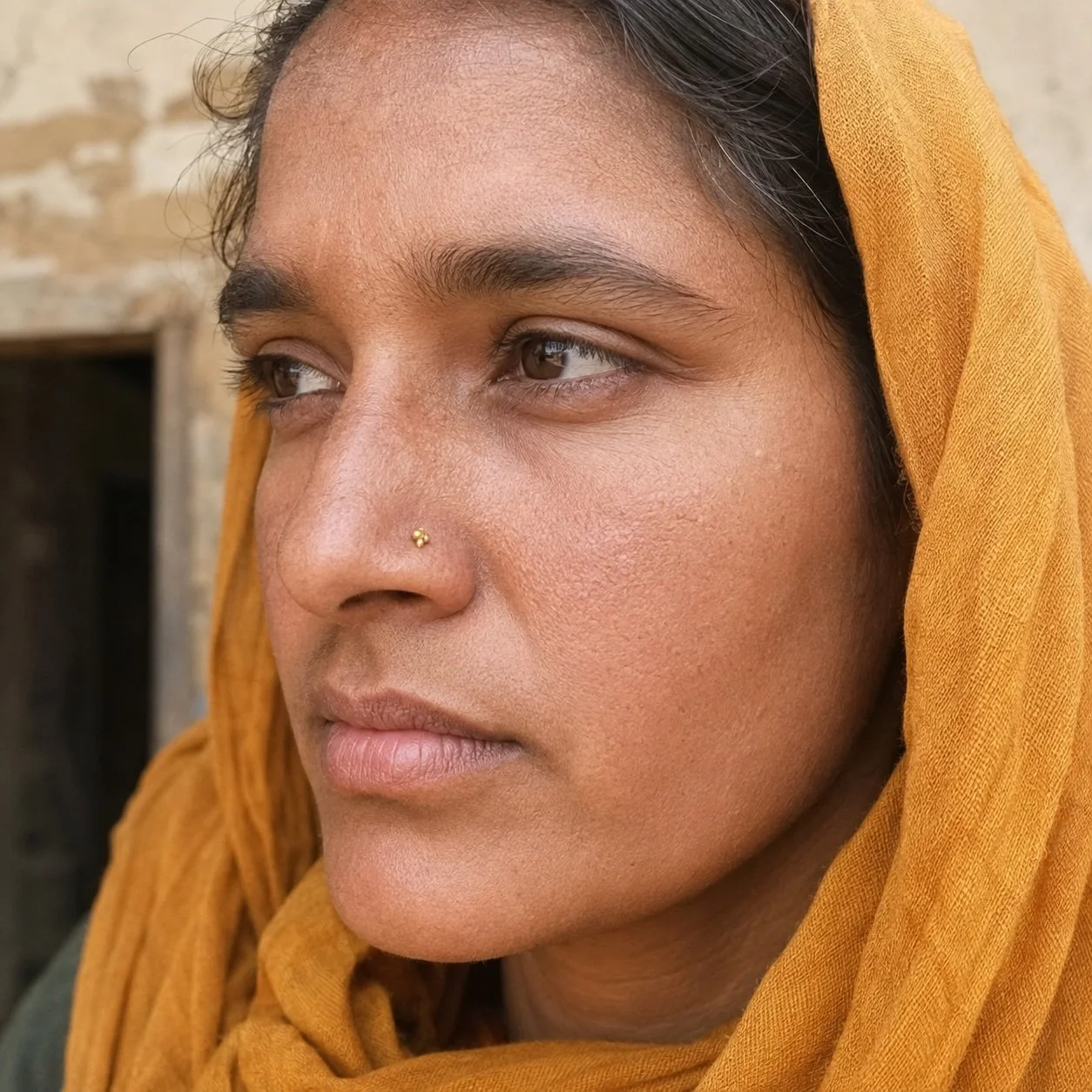
Laung/ Koka
A small nose stud, named after its resemblance to a clove.
-
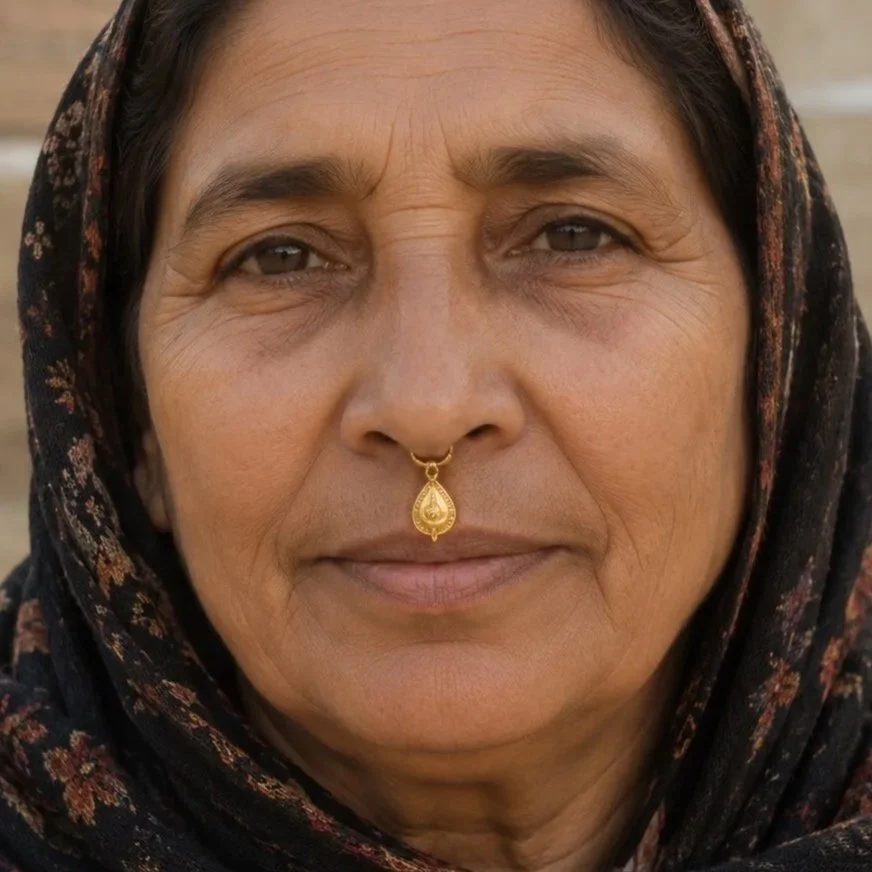
Bulak
An older pendant-style nose ornament worn alone or suspended from a nath.
-
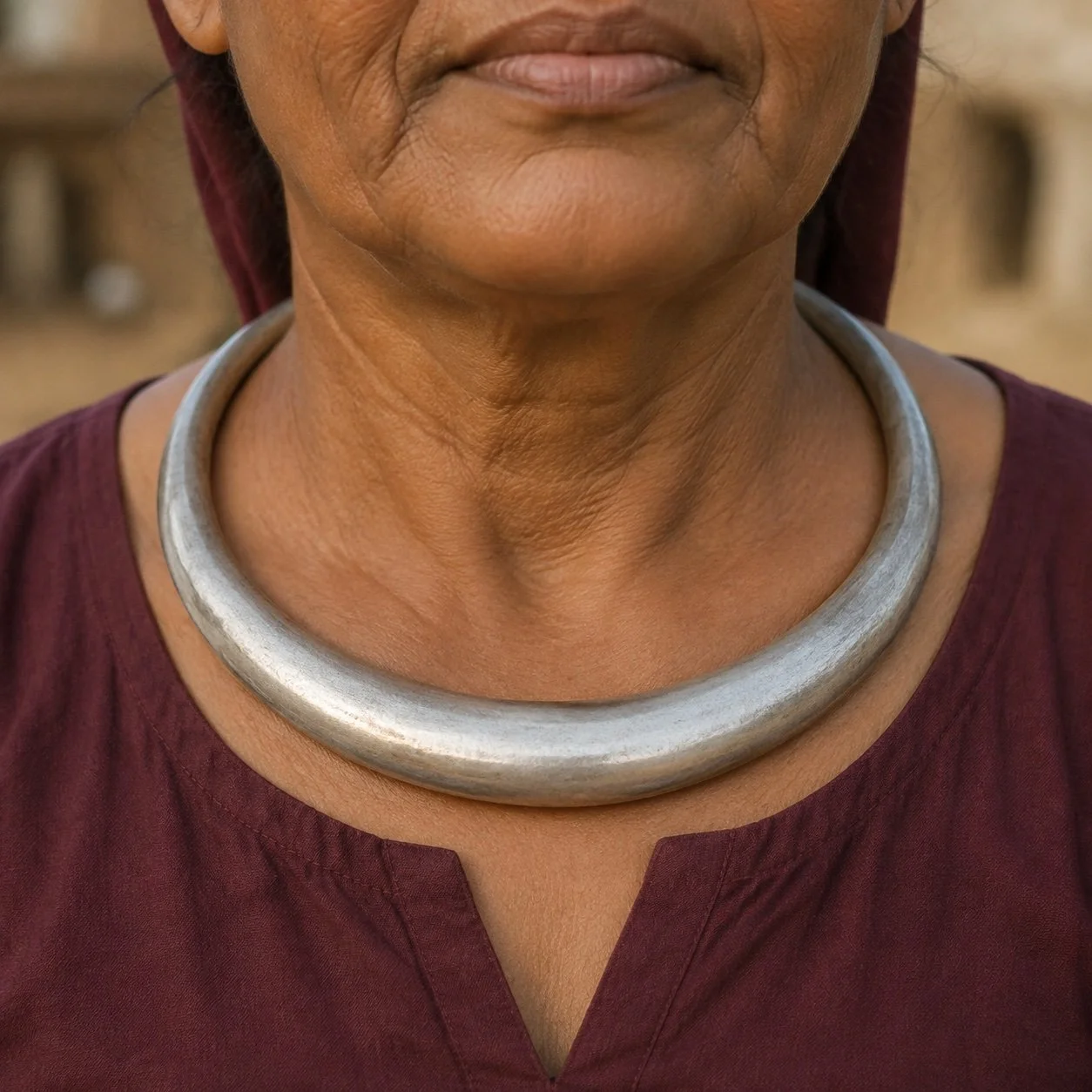
Hansli/ Hassi
A rigid silver or gold torque fitted closely around the neck.
-
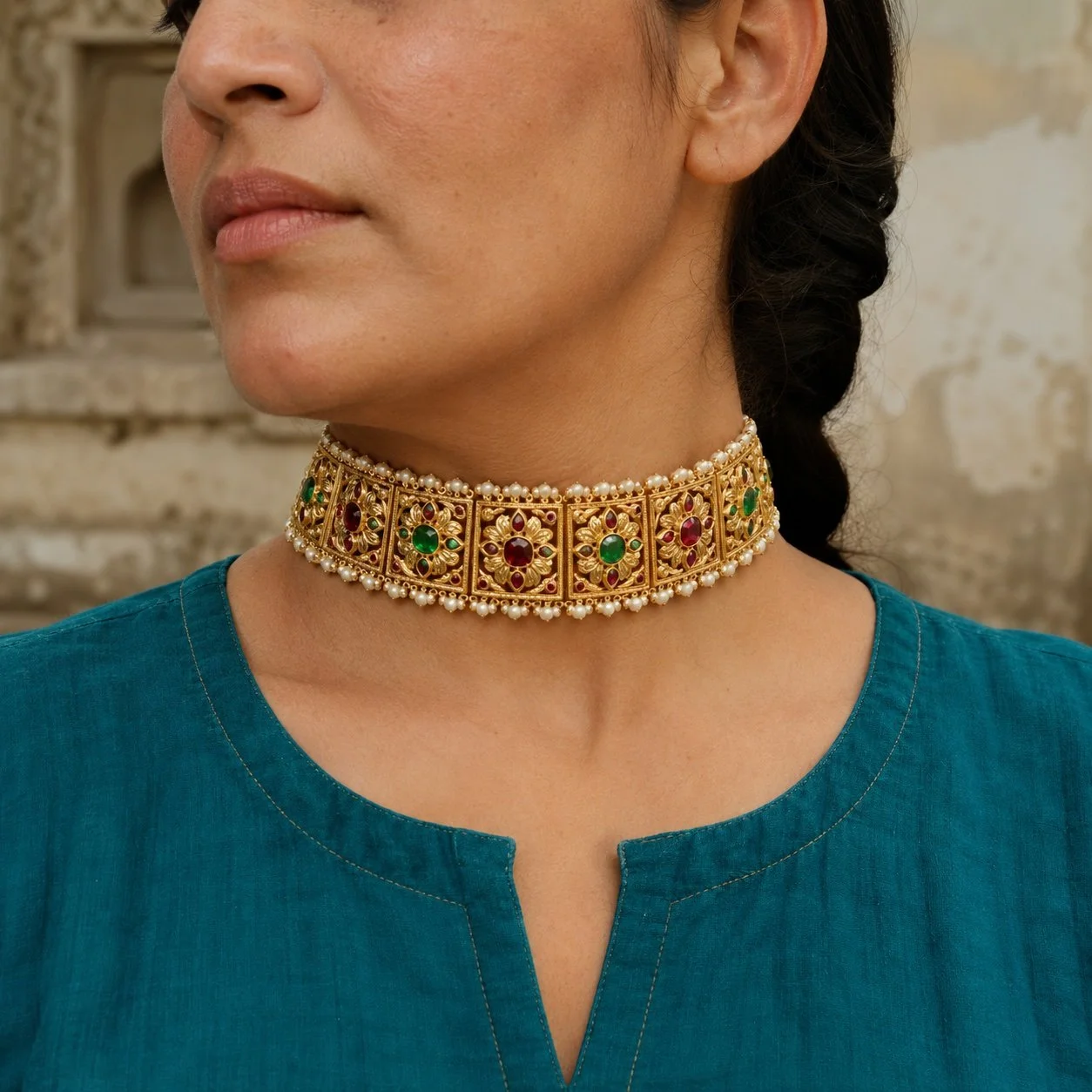
Guluband
A broad jewelled collar worn high against the neck.
-
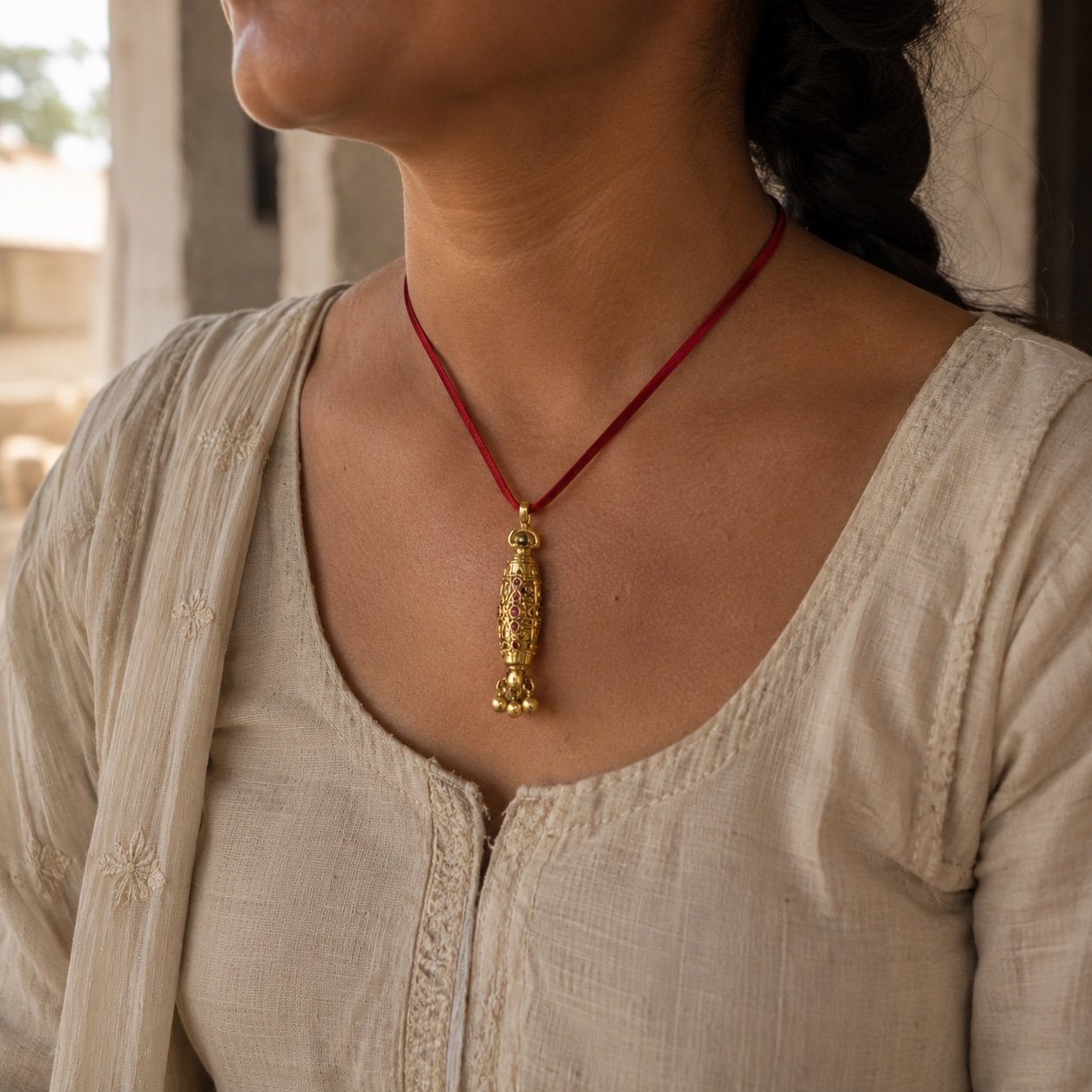
Jugni
An elongated pendant suspended from silk thread or a necklace.
-
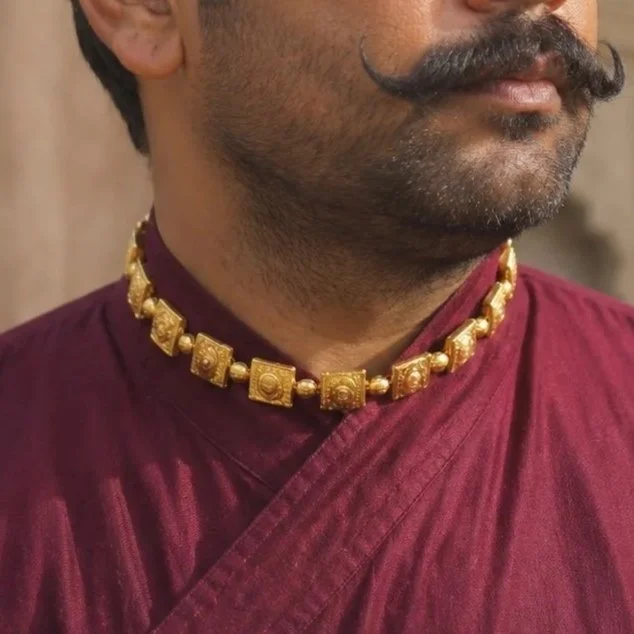
Kanth
A close-fitting necklace worn by both men and women.
-
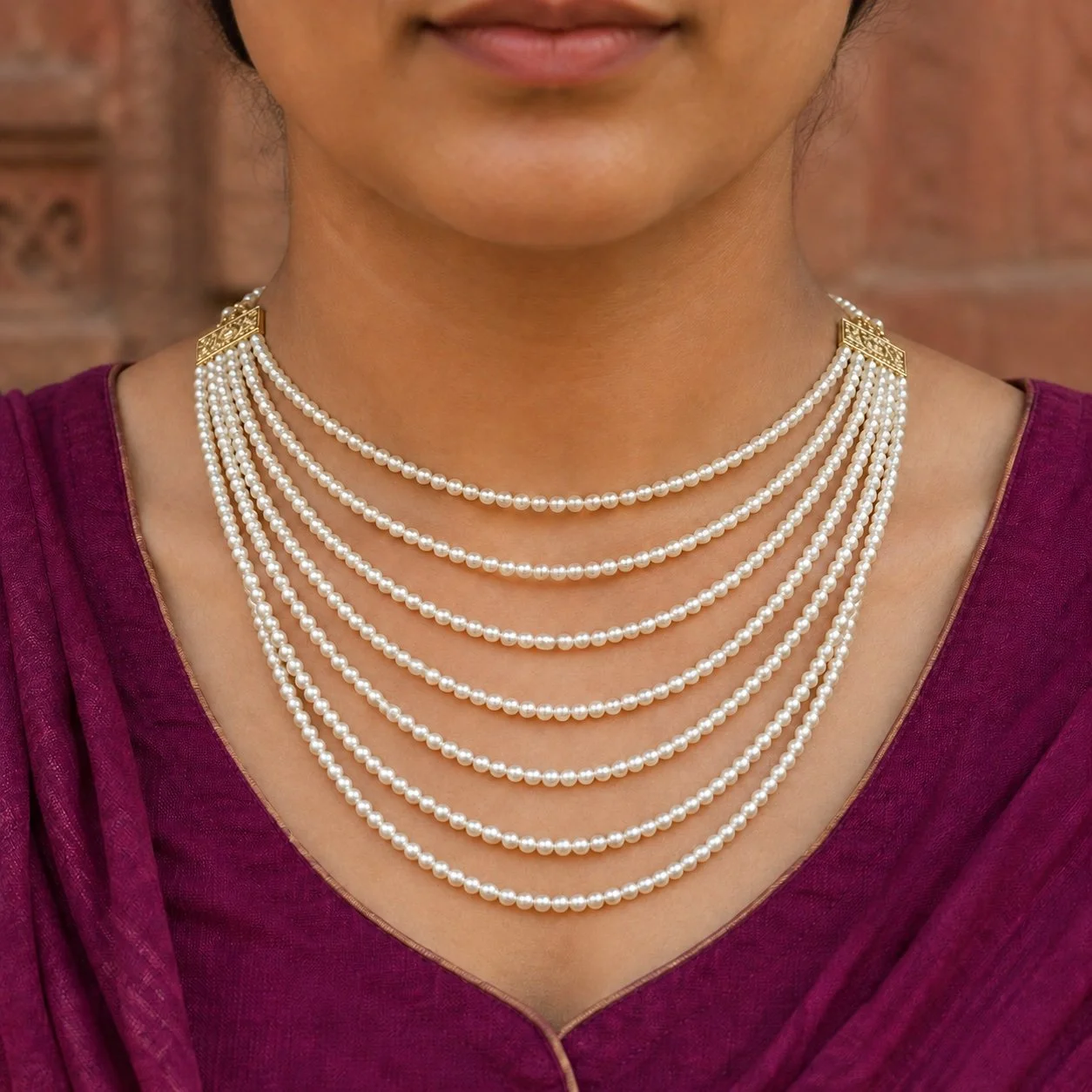
Satlara
An elaborate necklace made from seven descending strands.
-
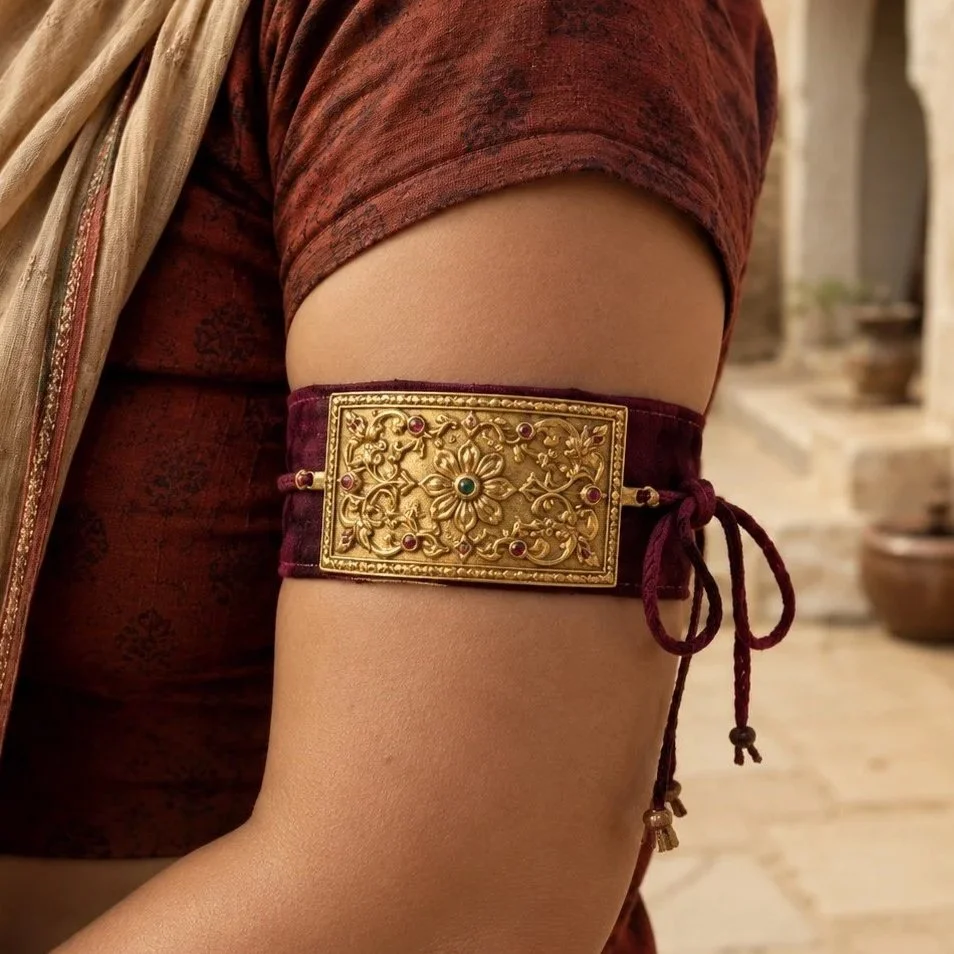
Bazuband
A broad ornament tied around the upper arm.
-
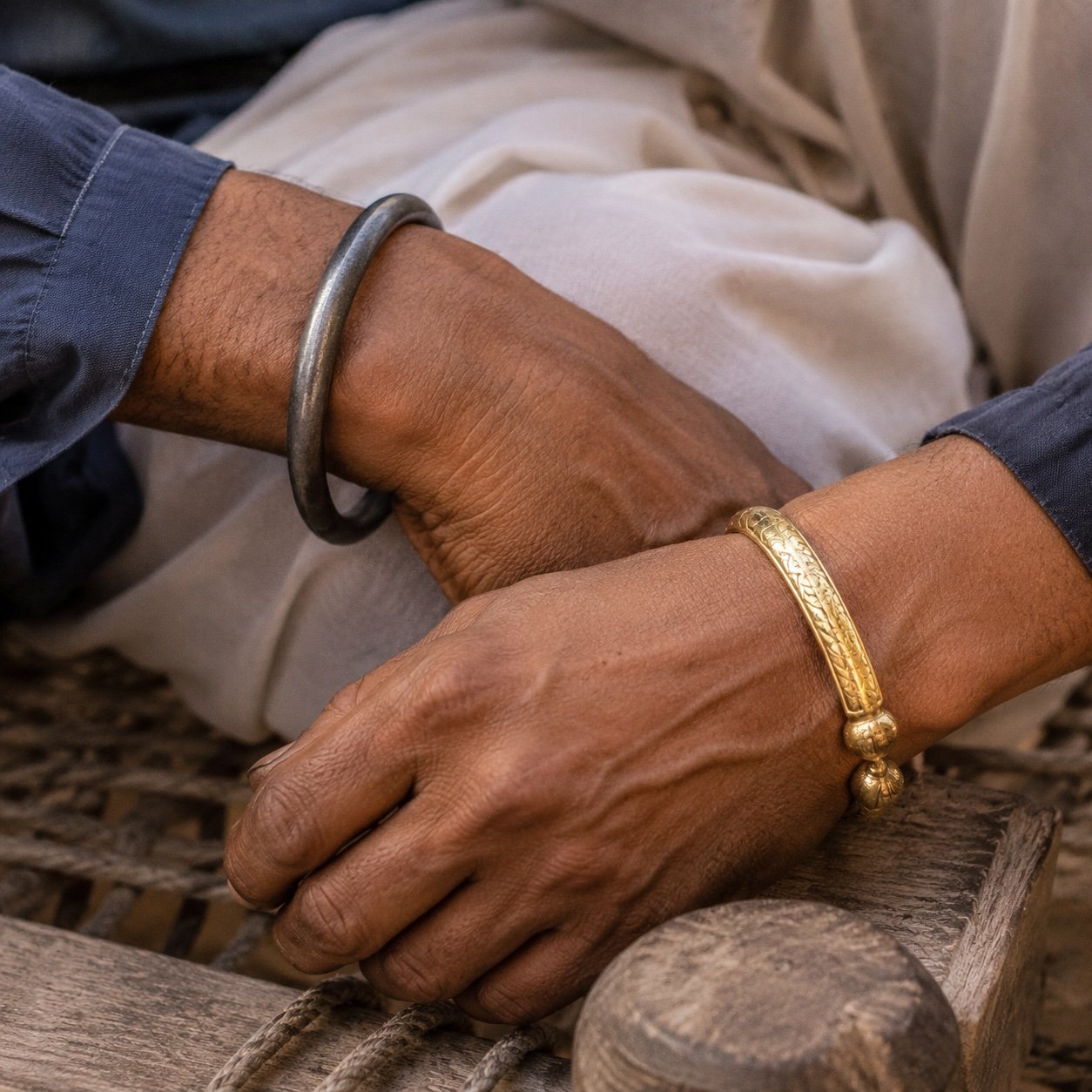
Kara/ Kangan
Rigid metal bracelets.
-
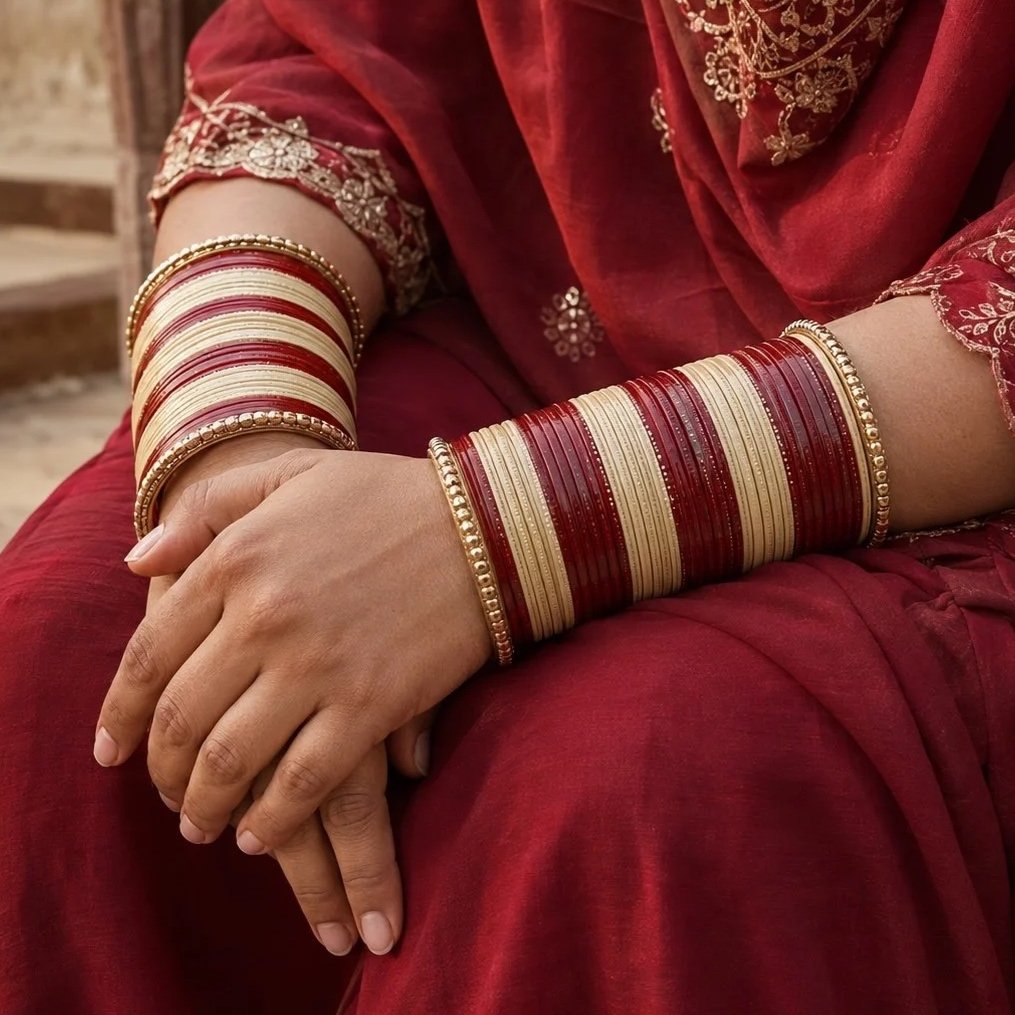
Churian/ Chura
Sets of bangles; the bridal chura is specifically connected with marriage.
-
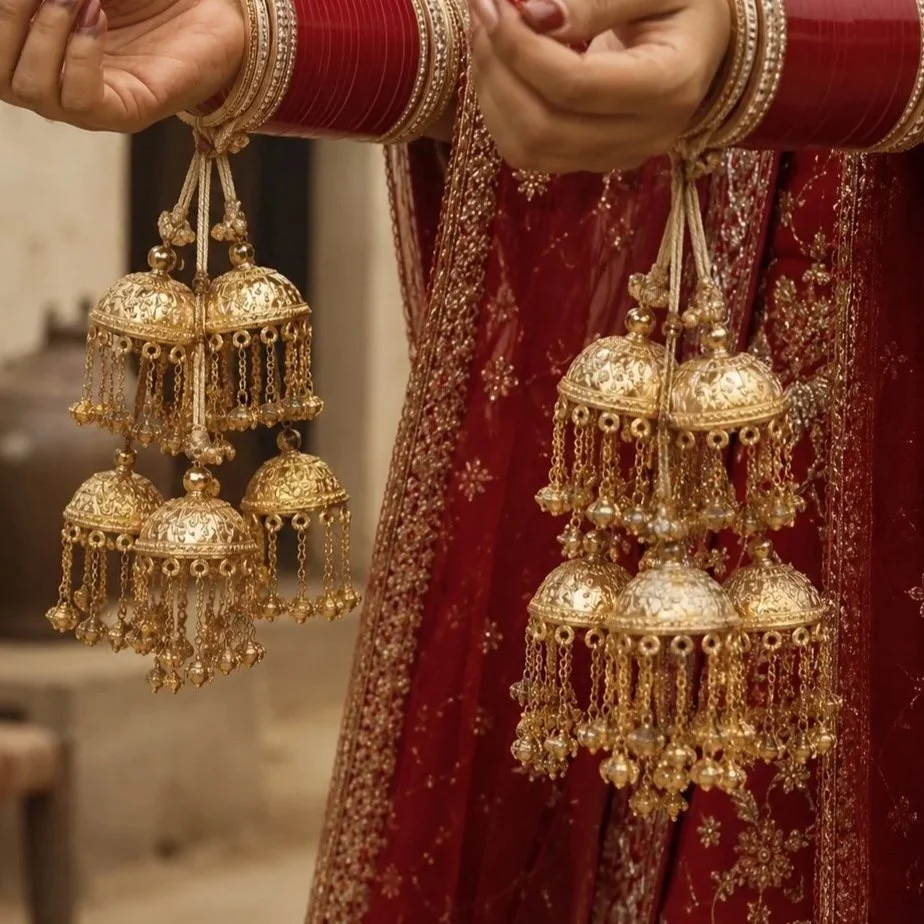
kaleera
Hanging bridal ornaments tied to the bride’s bangles.
-
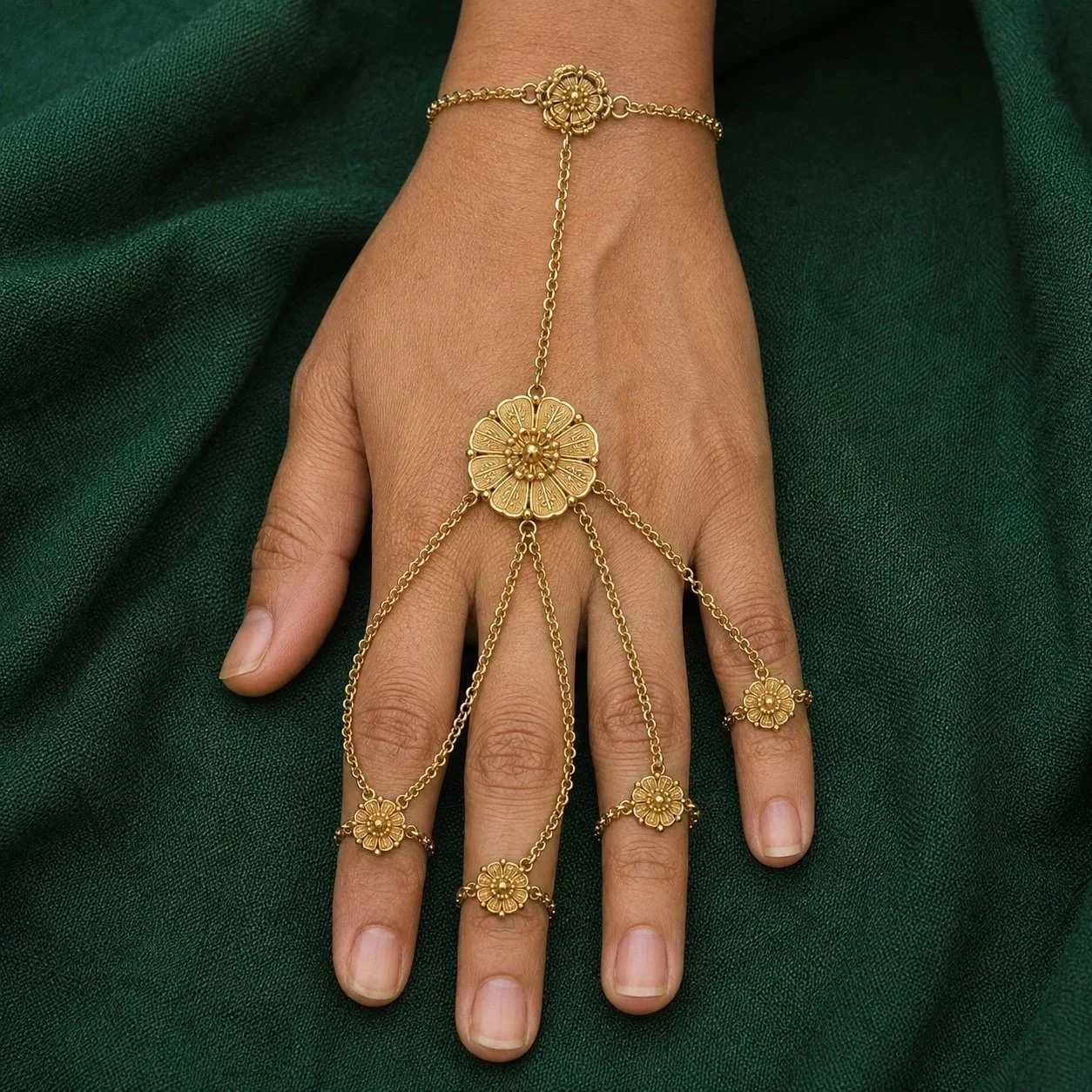
Hathphool
A hand ornament connecting a wrist bracelet to one or more finger rings.
-
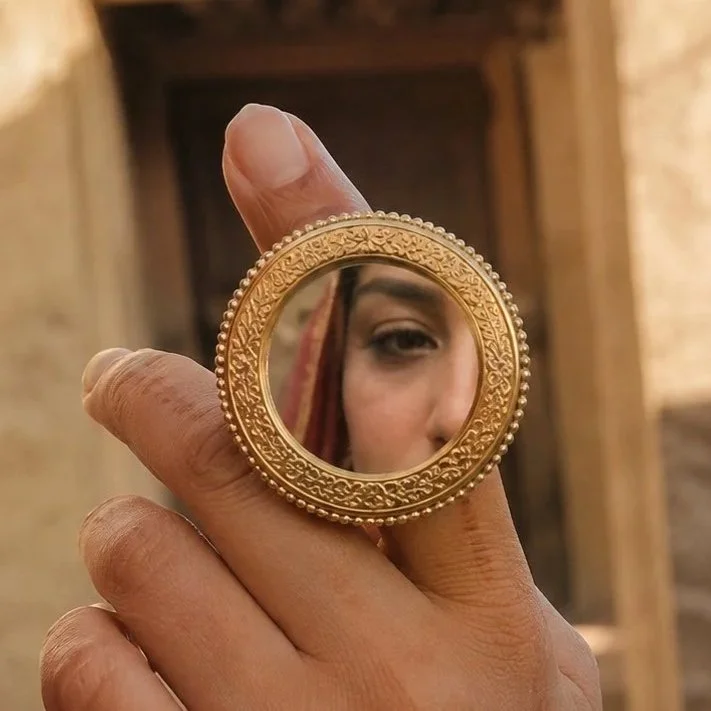
Arsi
A large ring carrying a small mirror, traditionally worn by a bride.
-
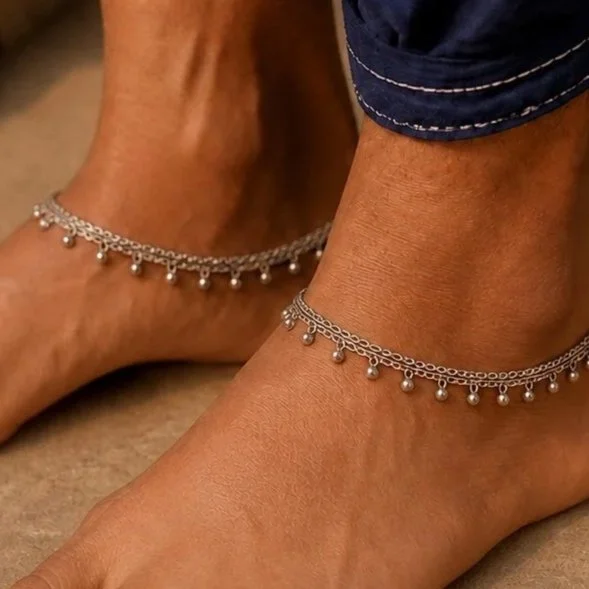
Panjeb
A silver anklet formed from chains, plaques and small hanging pieces.
-
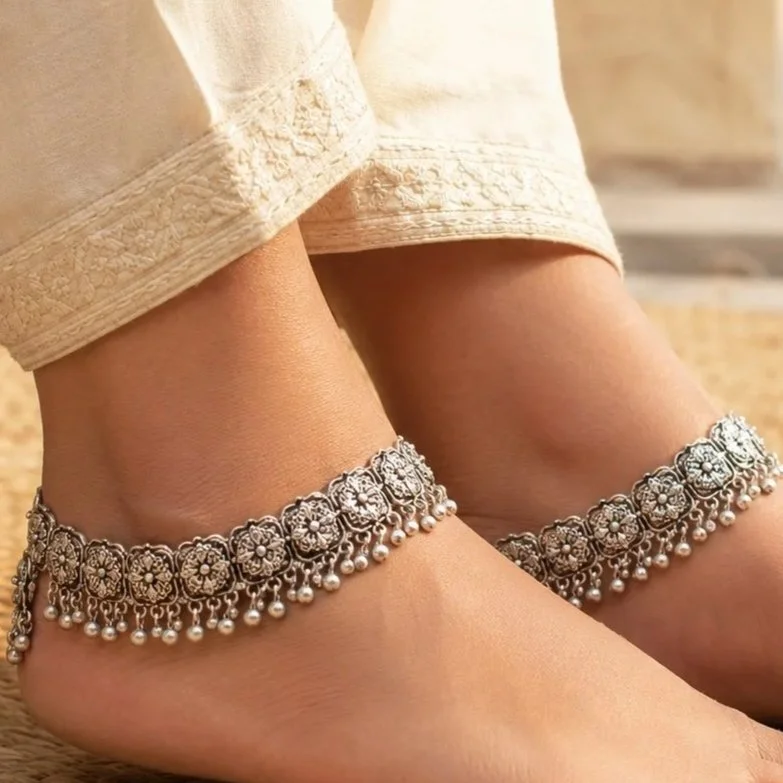
Jhanjar
A heavier anklet that rattles or rings as its wearer walks.
-
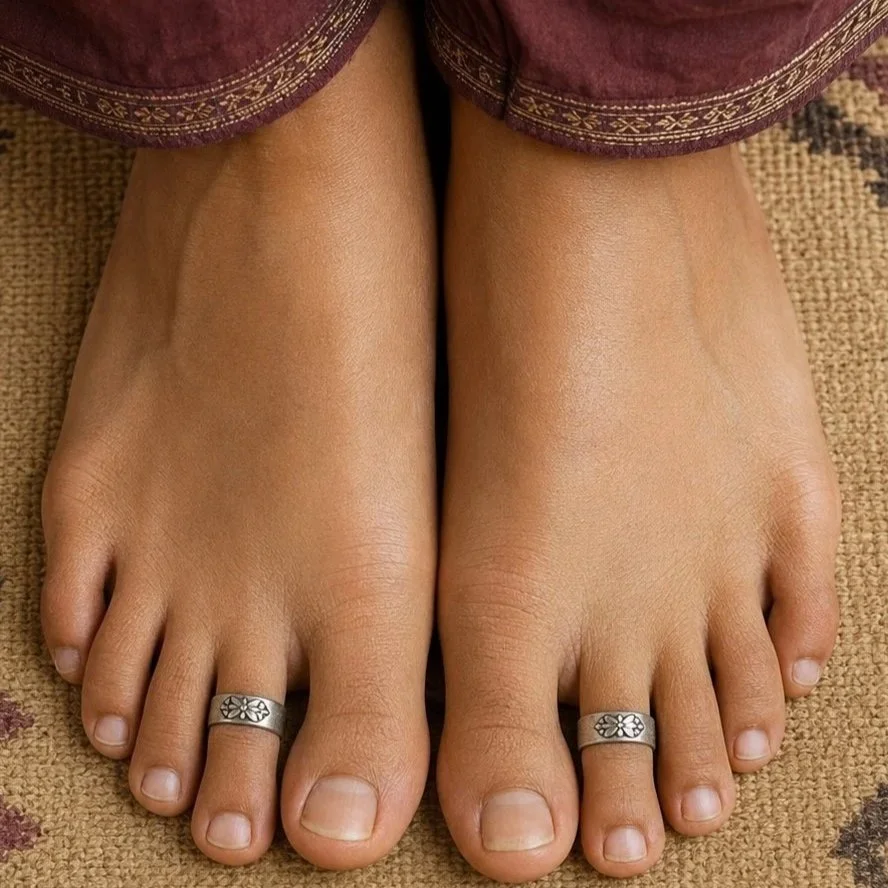
Challa
Rings worn around the toes, commonly made from silver.
Traditional Punjabi jewellery was made from gold and silver, with glass, beads, pearls, stones and coloured silk used for less costly or more decorative pieces. Some ornaments were simple enough for everyday wear, while others were reserved for weddings, festivals and wealthy households. Jewellery could be placed across the entire body.
Punjab did not develop one standard jewellery tradition. Designs changed between regions, communities and social classes, while one ornament could carry several names or appear in slightly different forms. Many pieces were also shared with neighbouring parts of South and Central Asia, but were adapted through Punjabi materials, craftsmanship and customs.
Women wore the largest variety, particularly during marriage, when the nath, chura, kaleere and other pieces carried ceremonial meaning.
Men also wore earrings, necklaces, rings, bracelets and ornaments attached to the turban.
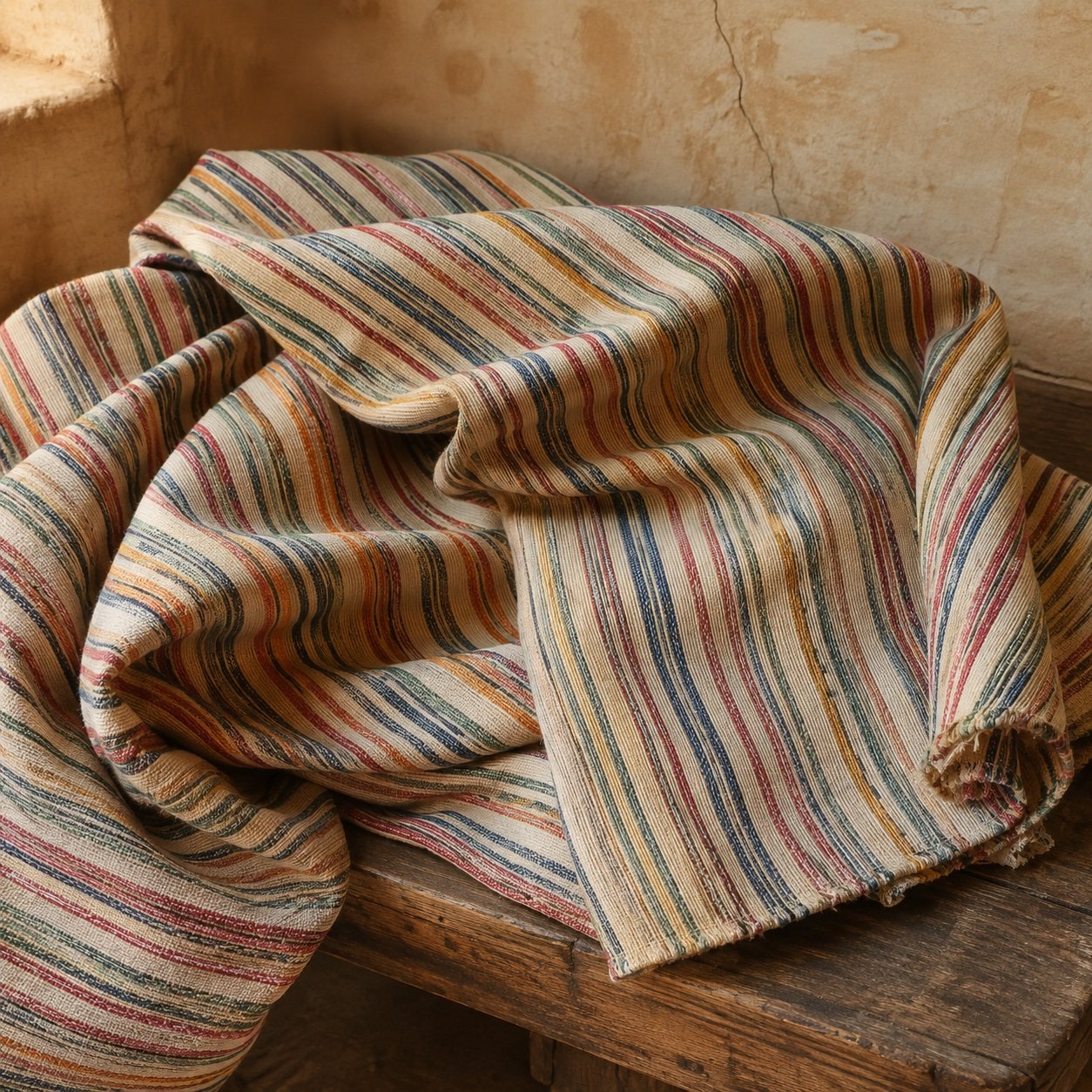
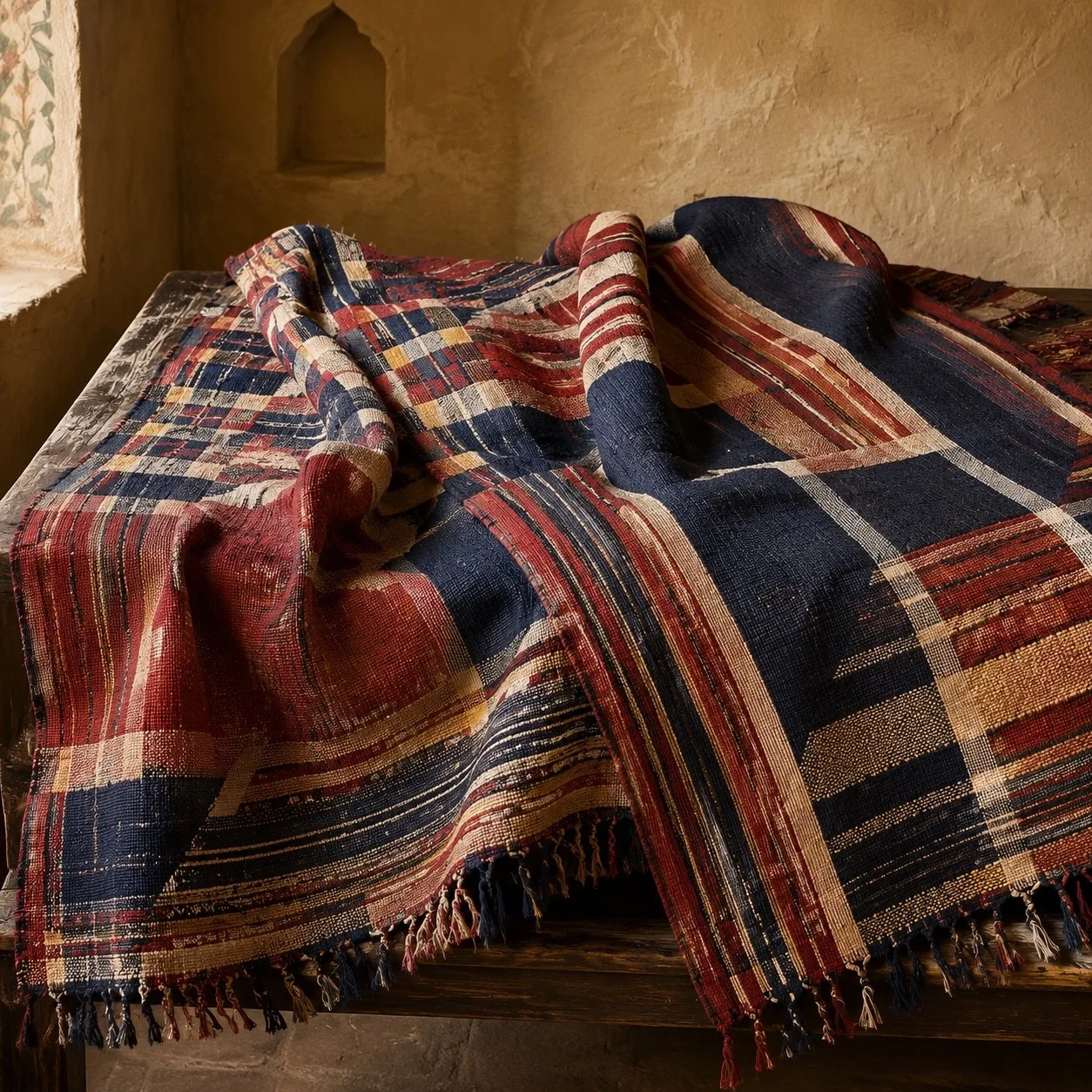
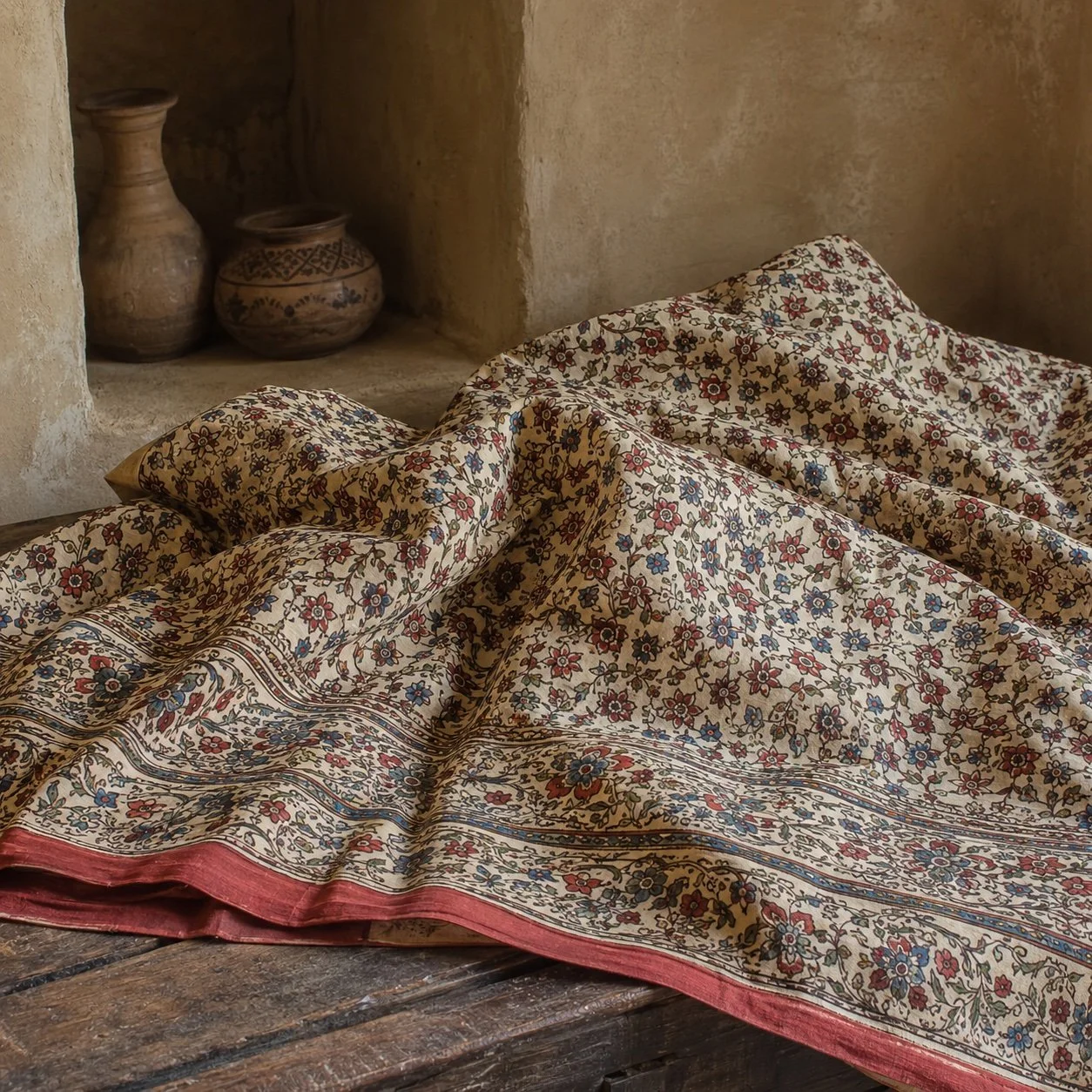
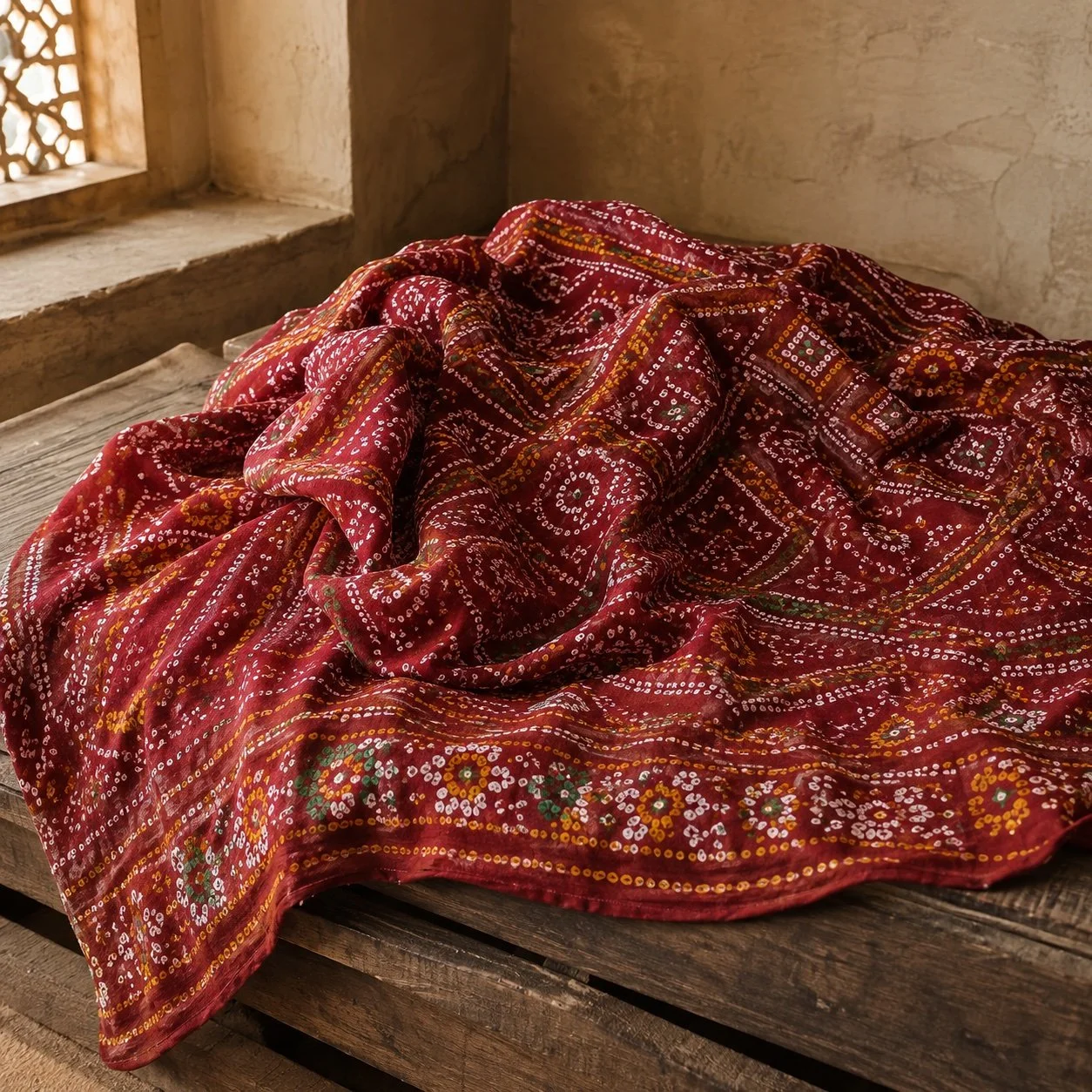
Textiles & Embroidery
-
![]()
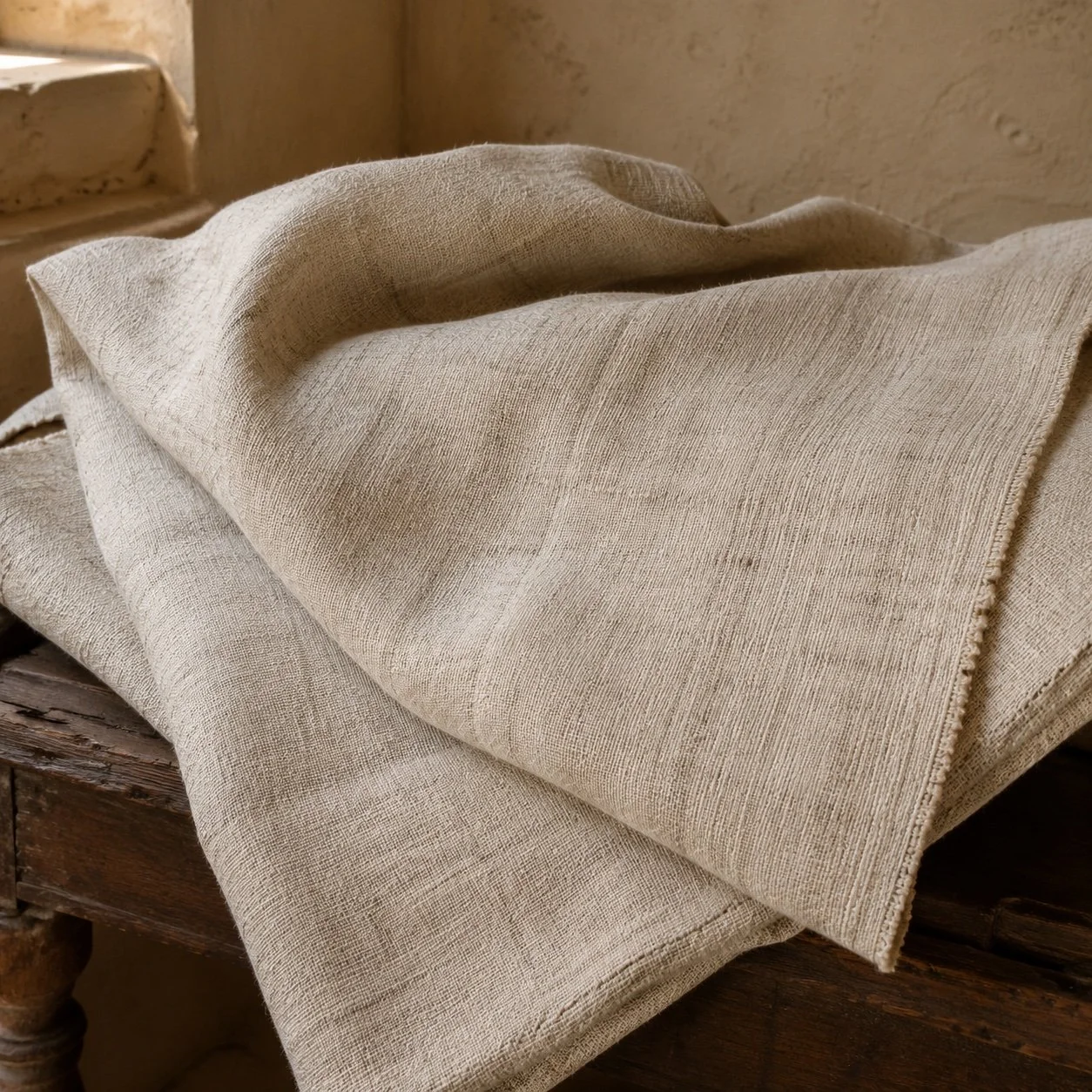
Khaddar
-
![]()
Sussi
-
![]()
Khes
-
![]()
Multani Chint
-
![]()
Cholistan Bandhani
-
![]()
Phulkari
-
![]()
Bagh Embriodery
-
![]()
Chope
-
![]()
Sainchi Phulkari
-
![]()
Tilla
-
![]()
Mukesh
-
![]()
Gota
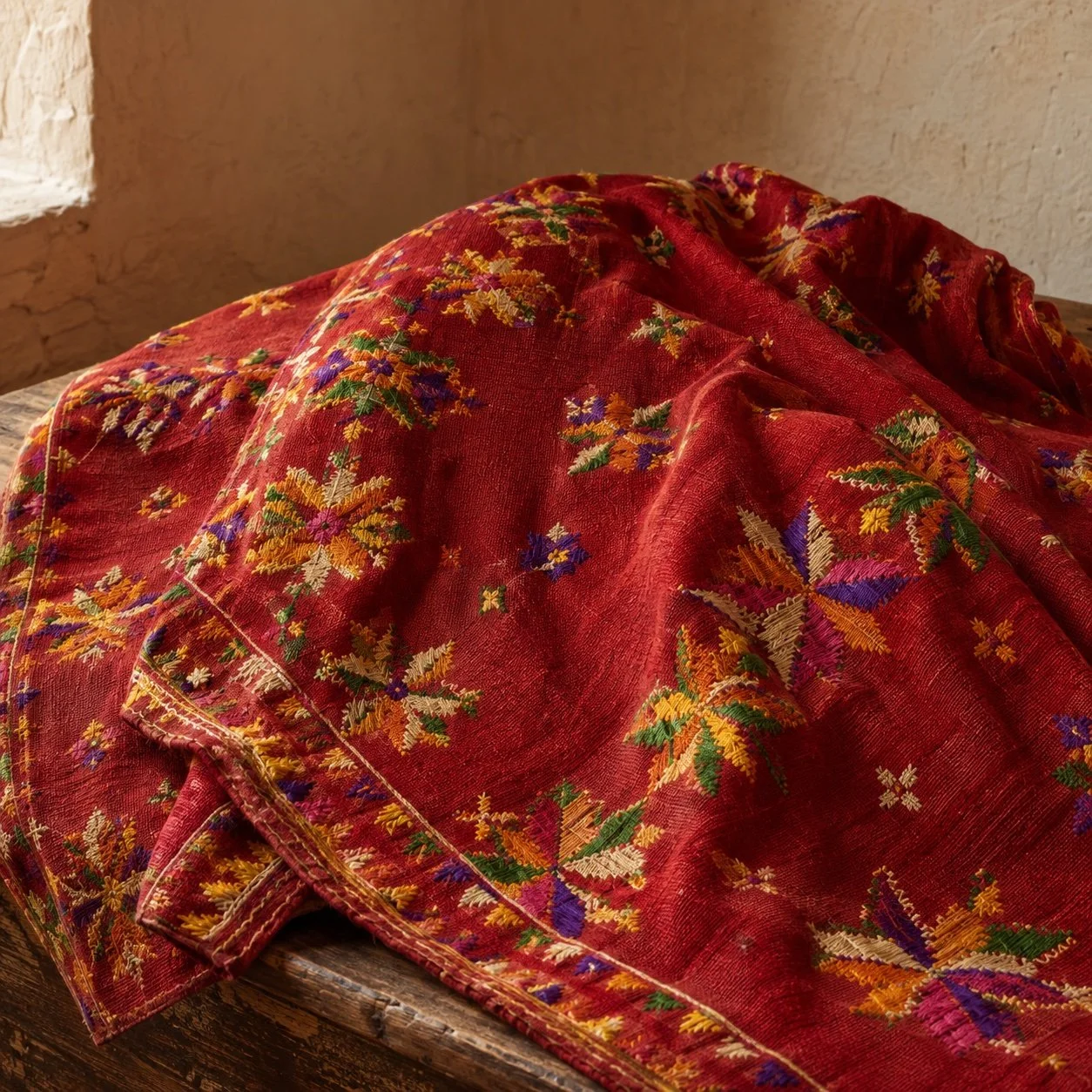
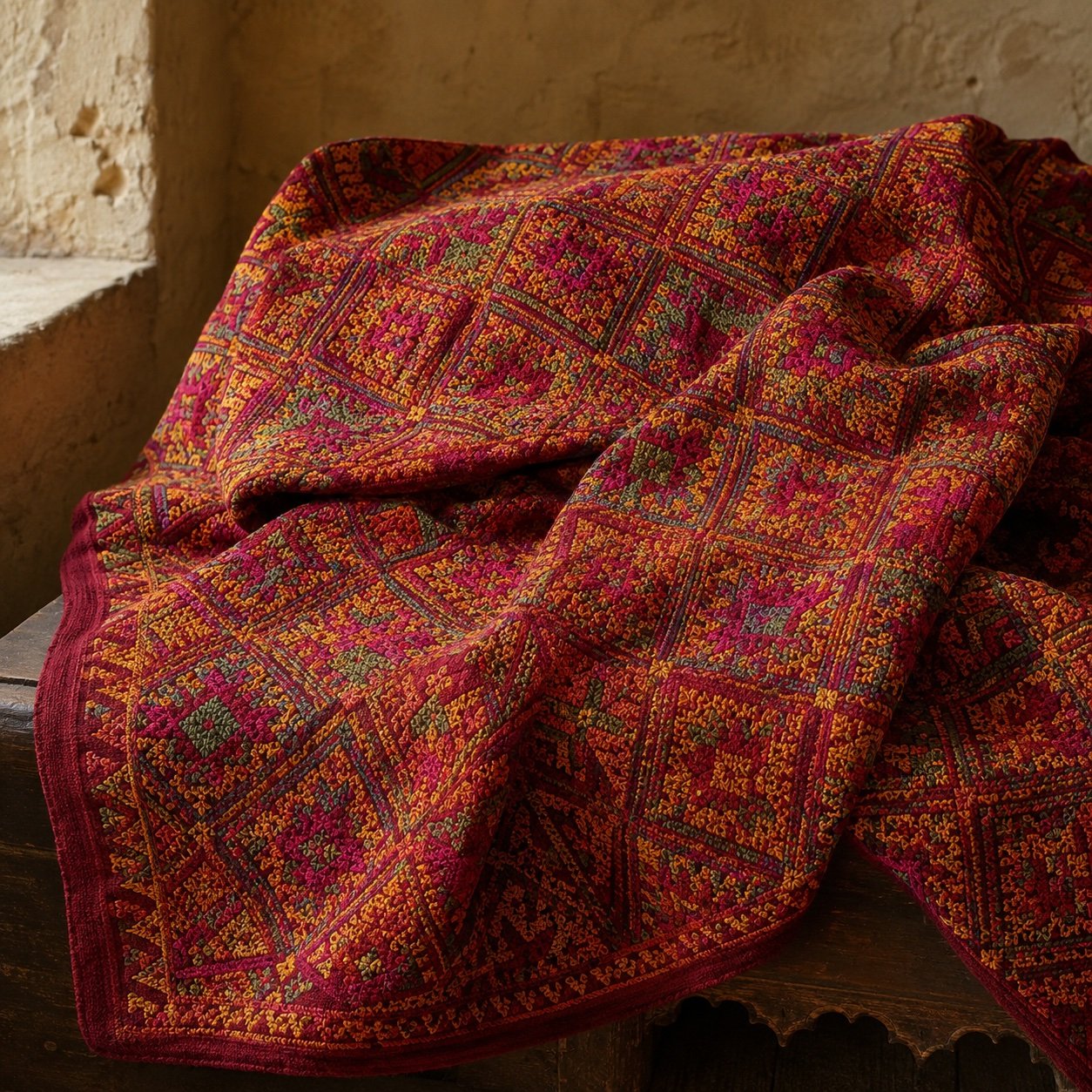
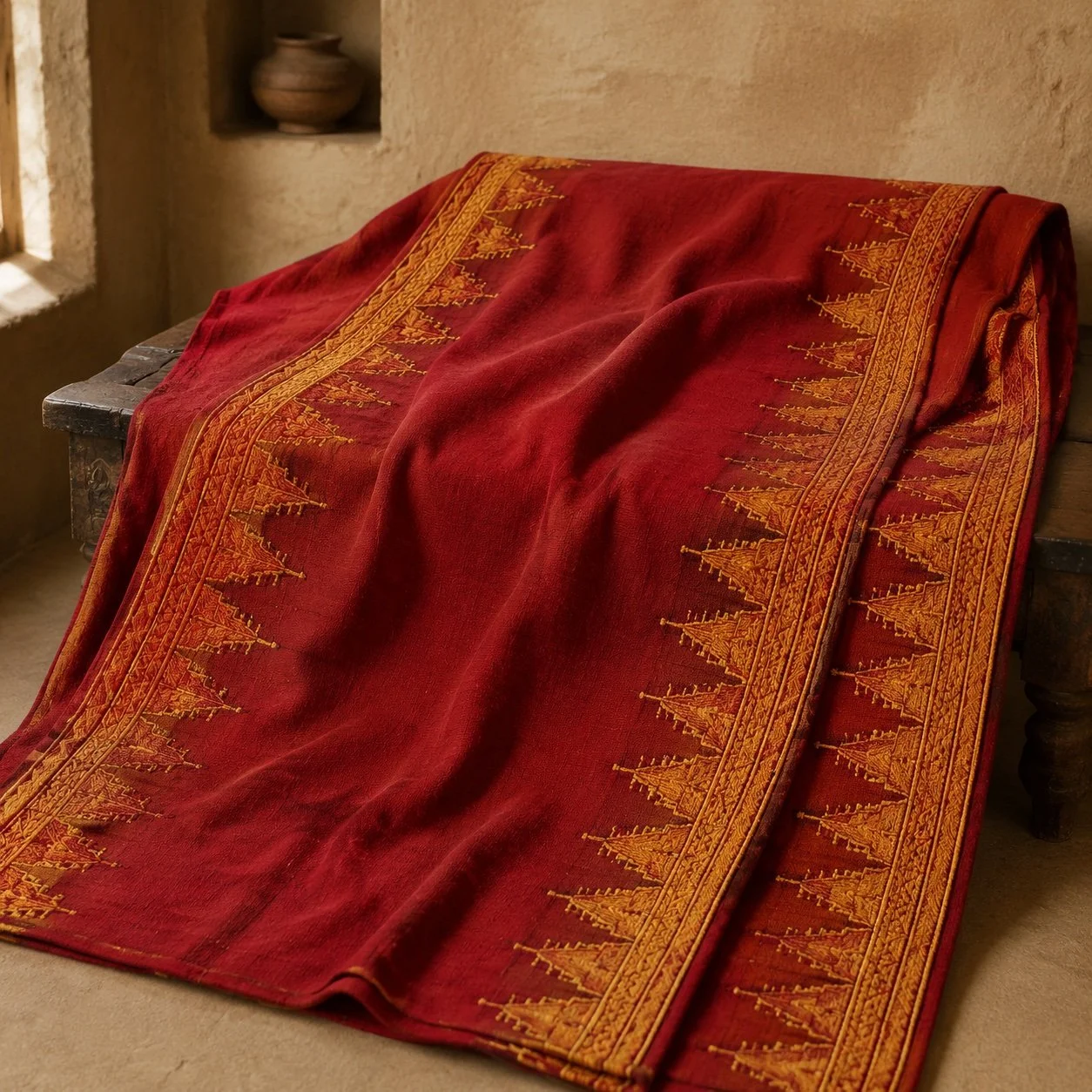
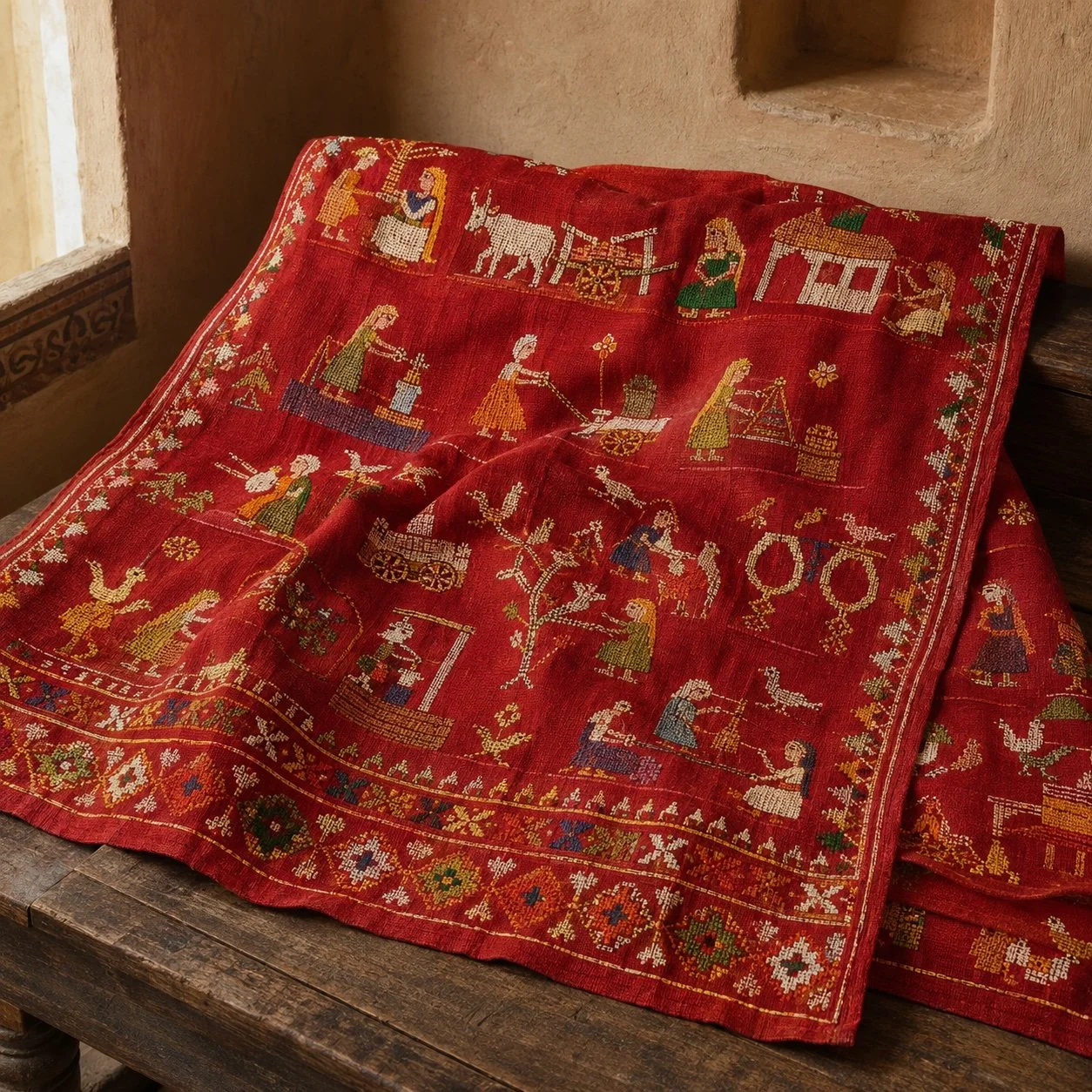
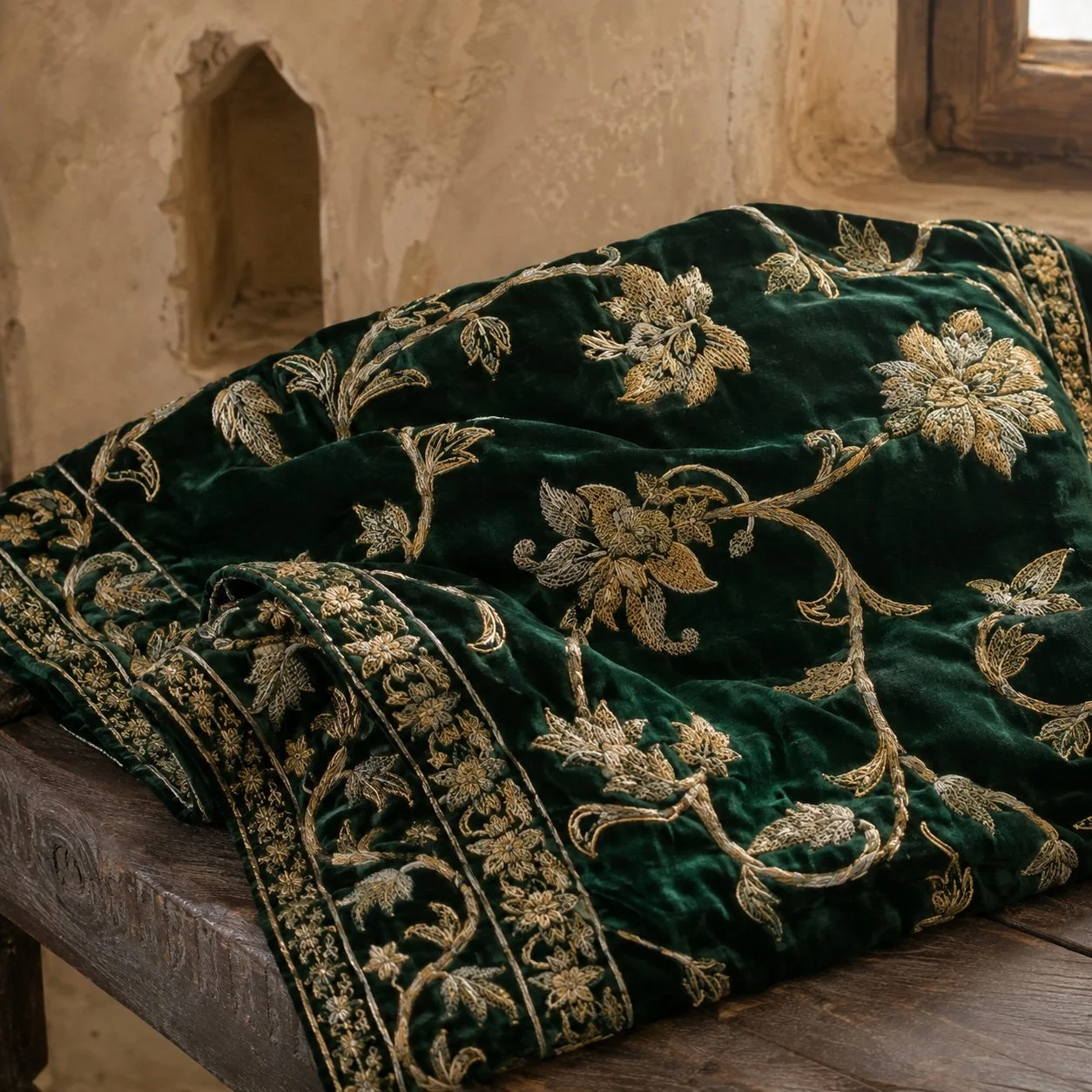
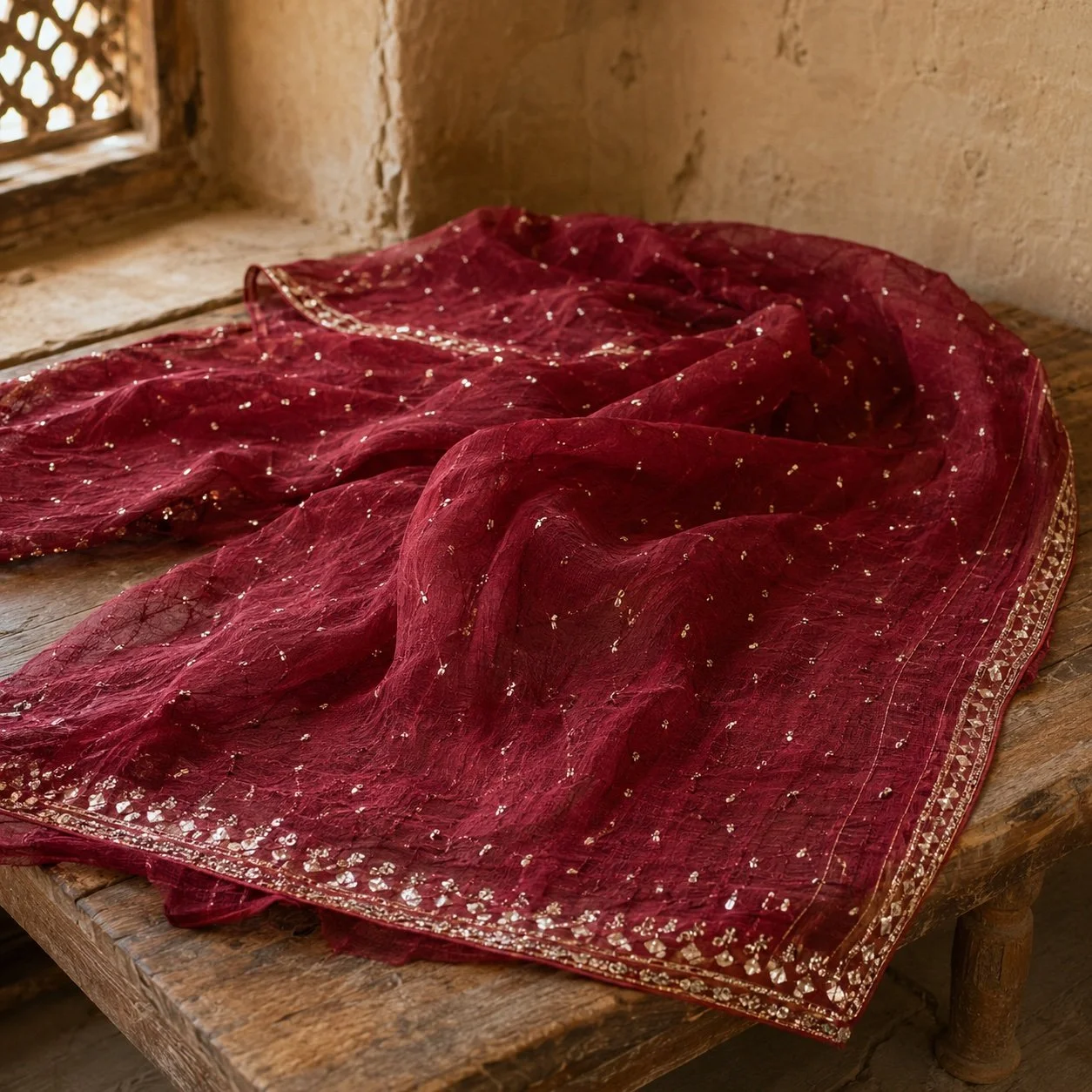
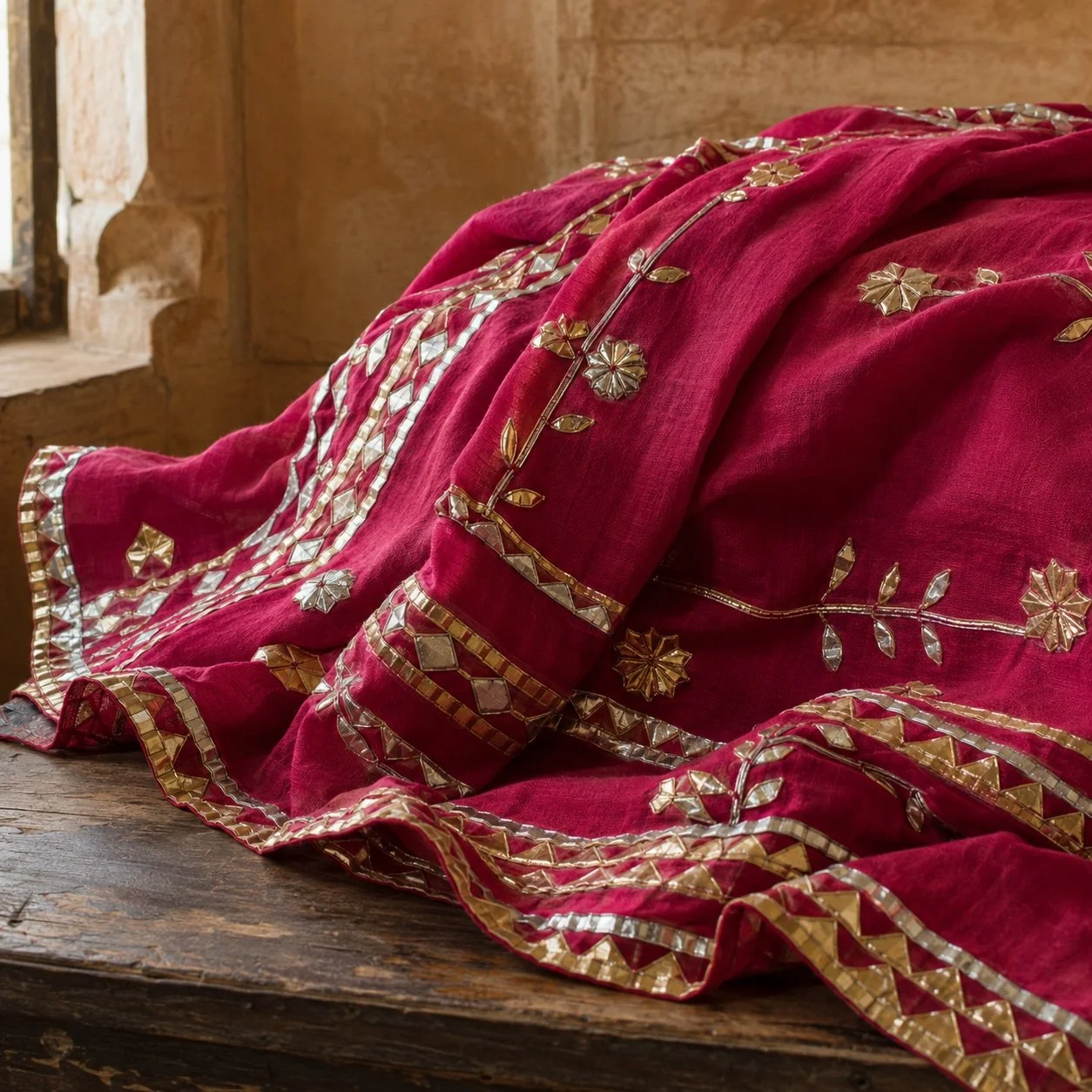
Regional Variations
Punjabi dress was never identical across the region.
Colder northern and northwestern areas used heavier cloth and additional layers, while clothing across the southern plains and Cholistan was often lighter and more loosely arranged. Local crafts created further differences: phulkari developed in numerous forms, Multan became known for printed cotton and metallic embroidery, and Cholistani textiles used bright tie-dyed patterns.
These traditions did not end at fixed borders. Fabrics, garments and decorative techniques travelled through trade, marriage and migration, allowing neighbouring styles to overlap. Punjabi clothing therefore shared a recognisable foundation while continuing to change between regions, communities and individual households.