
Major Folk Traditions
~
Folk Instruments
~
Major Folk Traditions ~ Folk Instruments ~
Punjab’s memory, carried in music.
Work. Rhythm. Tradition.The folk music that accompanied everyday life across generations.
Types of Folk Song
~
Types of Folk Song ~
Punjab’s folk music is the music that grew from the everyday lives of its people - sung in homes and fields, beside spinning wheels, during journeys, at seasonal festivals and through the ceremonies that marked birth, marriage and other milestones of life.
These songs were passed from one generation to the next by listening rather than through written notation. As they travelled between singers, villages and regions, their words and melodies changed. There was seldom one fixed version. Each community could reshape a song around its own dialect, experiences and memories. Folk music also had many purposes. It gave rhythm to labour, brought people together in celebration, preserved popular tales, and expressed emotions that were not always spoken openly - particularly the experiences of women, separation, migration, longing and grief. This tradition developed across the Punjab region long before its division by a modern border.
This page traces Punjab’s major folk traditions, distinctive instruments and different types of folk singing. It also explores how this music shaped Punjabi culture - and how, in turn, the land and lives of its people shaped the music.
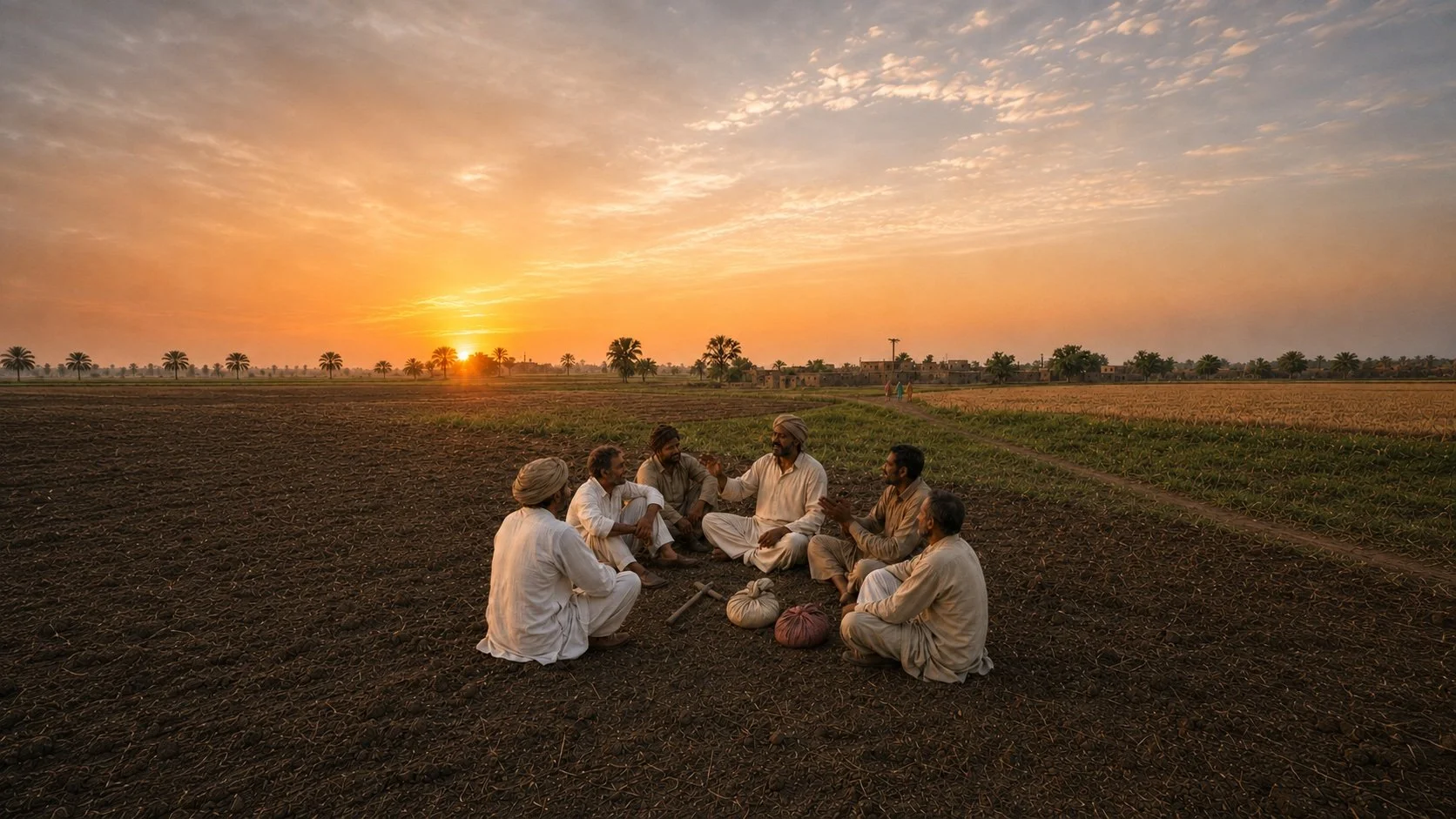
Instruments of Punjabi Folk Music
-
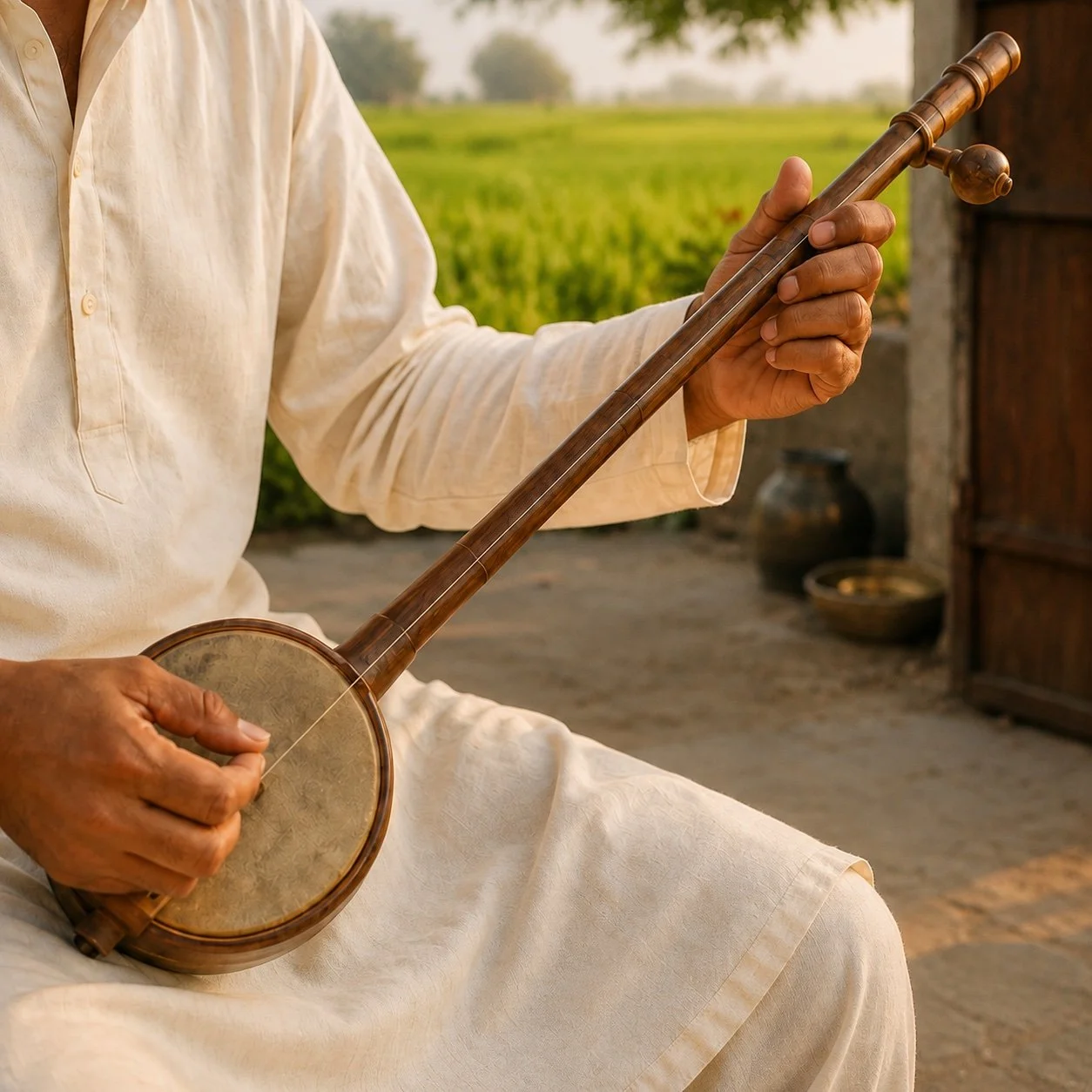
Tumbi
A traditional Punjabi instrument with one metal string stretched across a small resonator and plucked repeatedly with one finger.
-
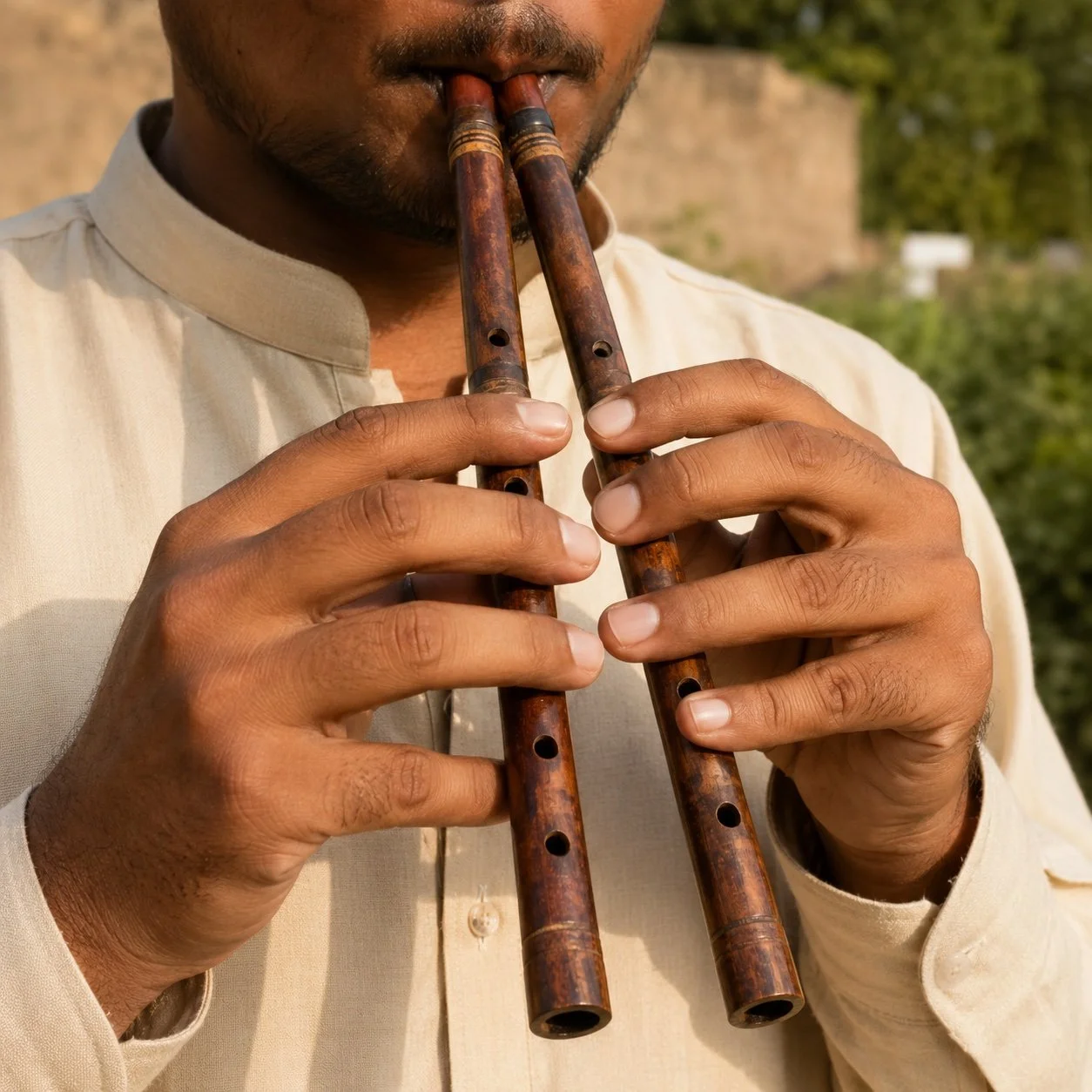
Algoza
Two wooden flutes played simultaneously, with one providing the melody and the other a continuous humming sound.
-
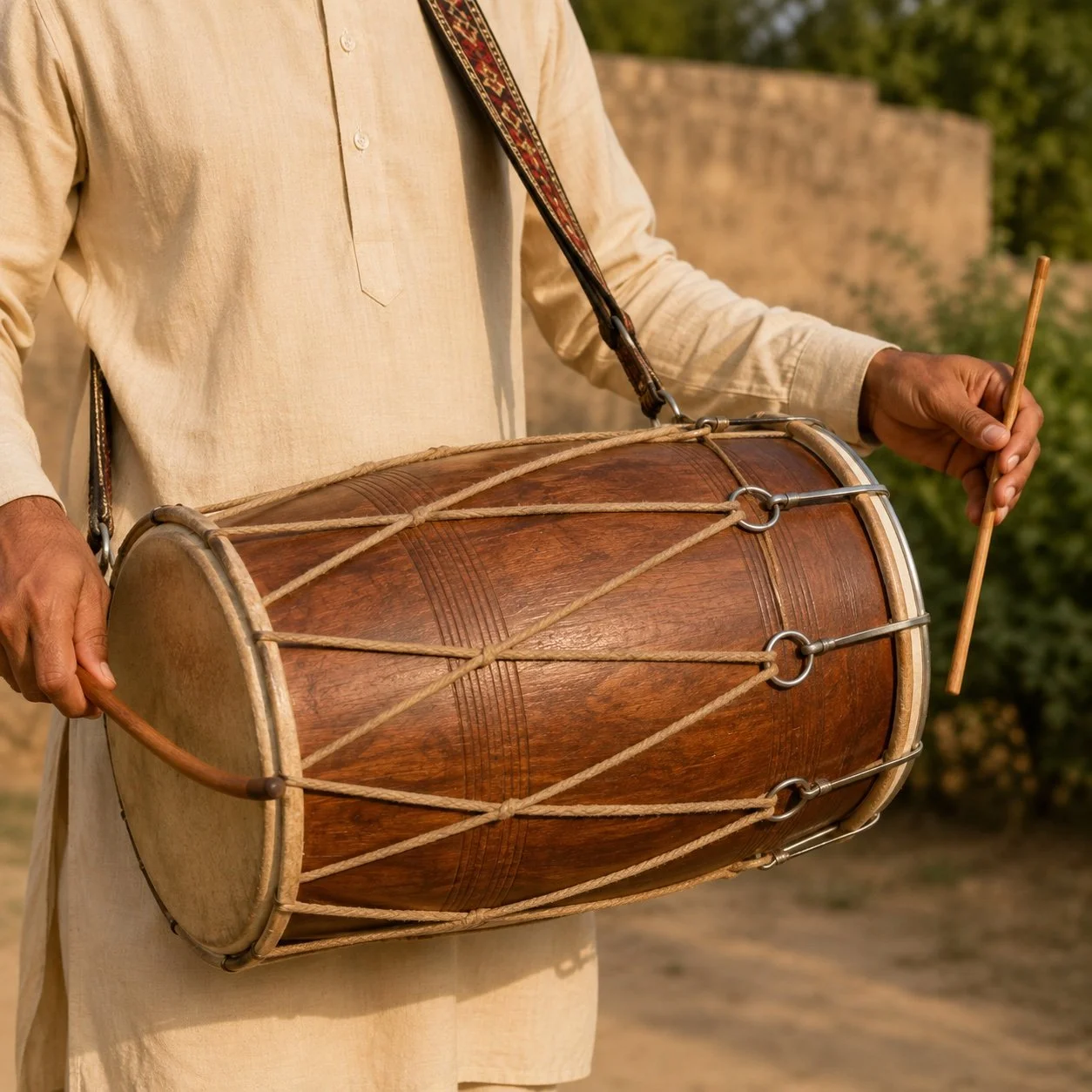
Dhol
A large, double-headed barrel drum carried with a shoulder strap. Played using a curved bass stick and a thinner treble stick.
-
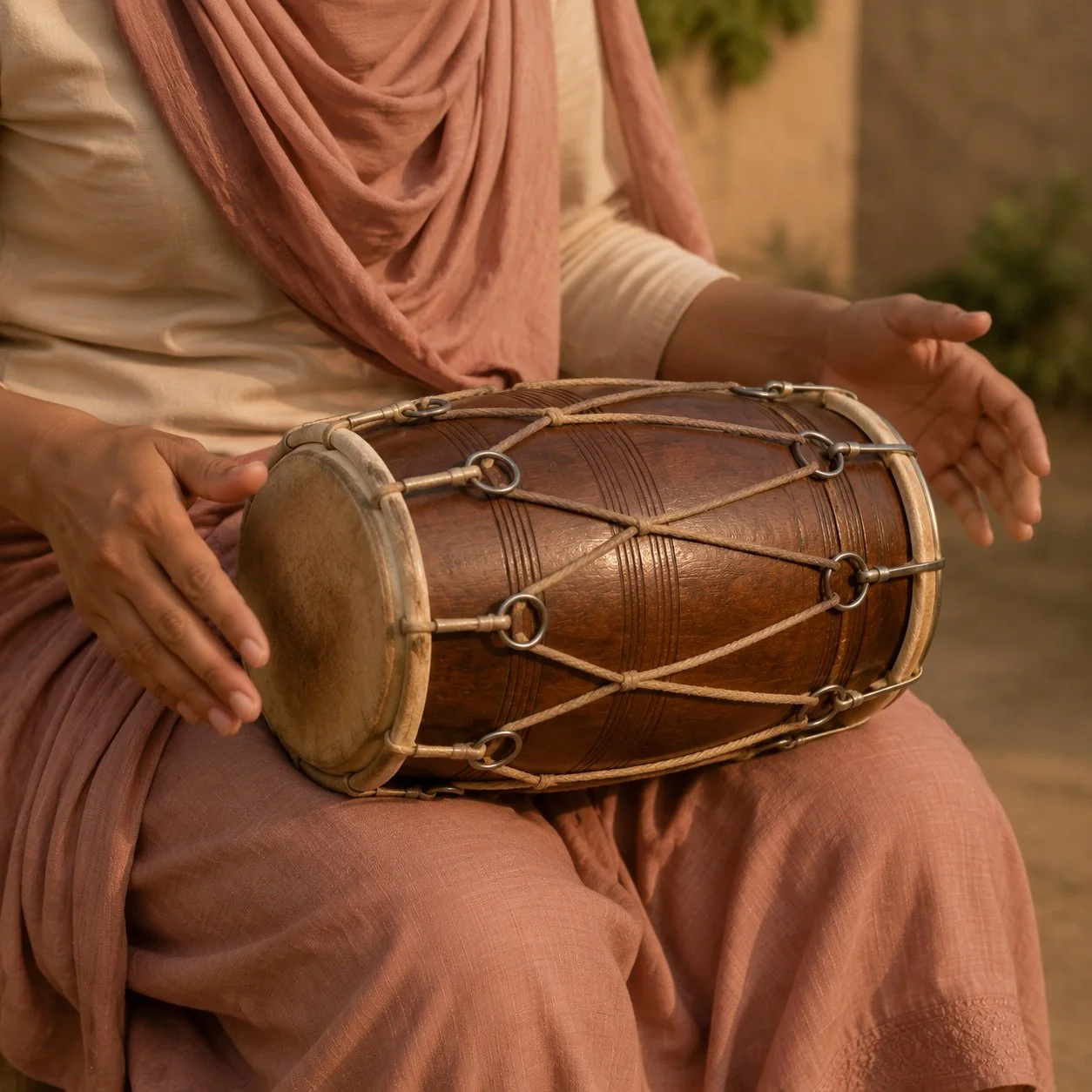
Dholki
A smaller, double-headed barrel drum played with both hands.
-
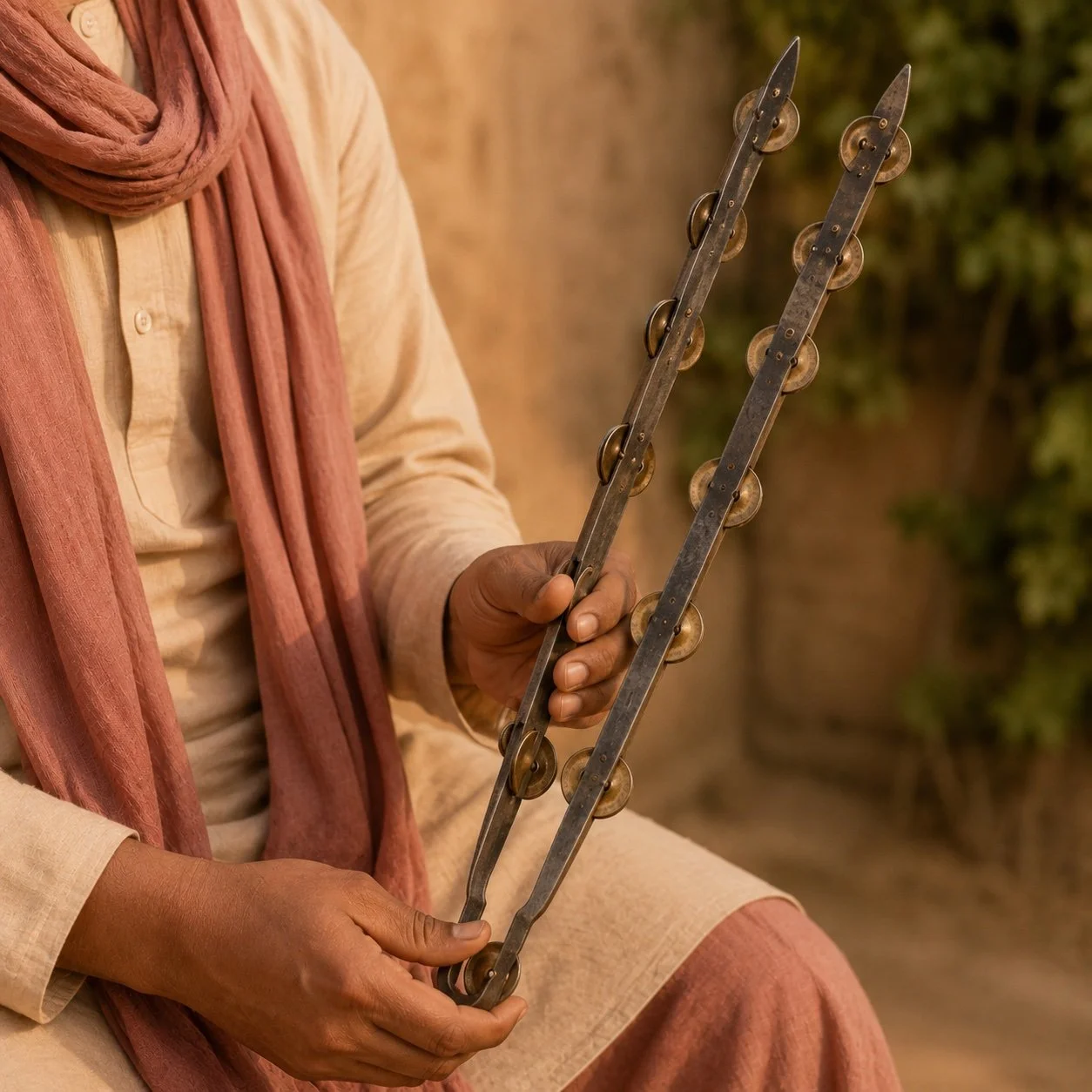
Chimta
Two long iron arms fitted with metal discs that jingle when the arms are struck together.
-
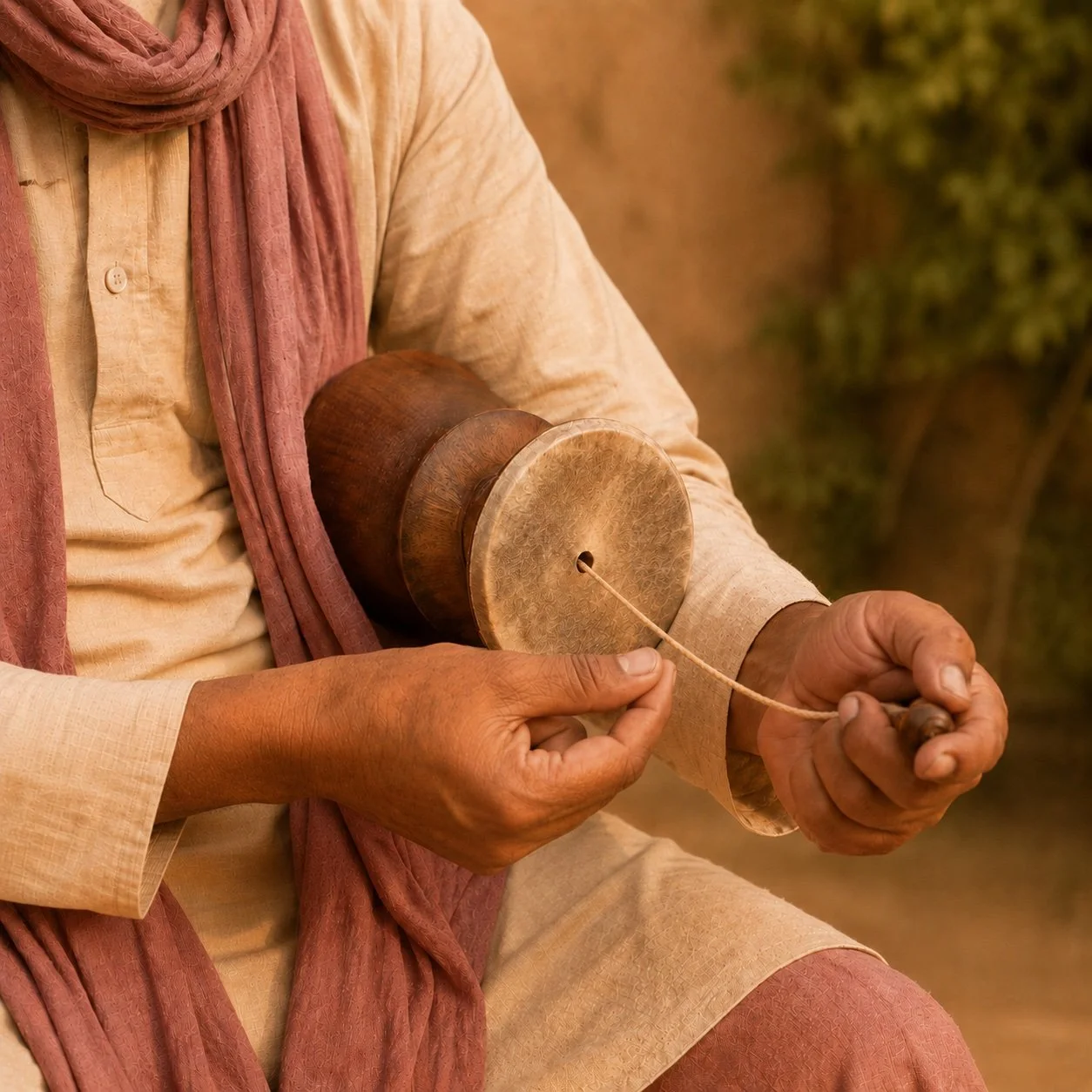
Bugchu
A small hourglass-shaped instrument with a skin membrane and single cord that is tensioned and plucked to produce different pitches.
-
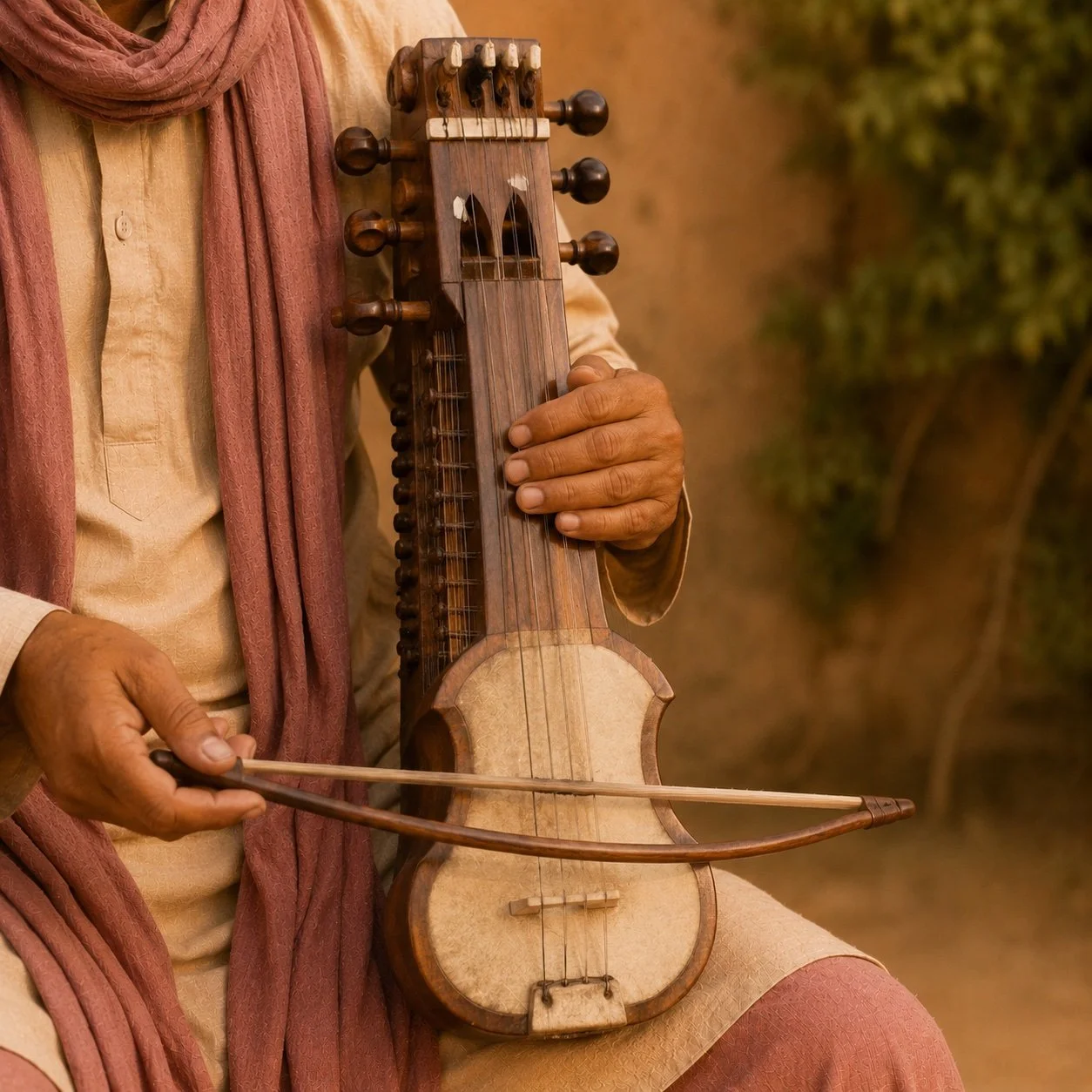
Sarangi
A short-necked bowed instrument with several main and sympathetic strings.
-
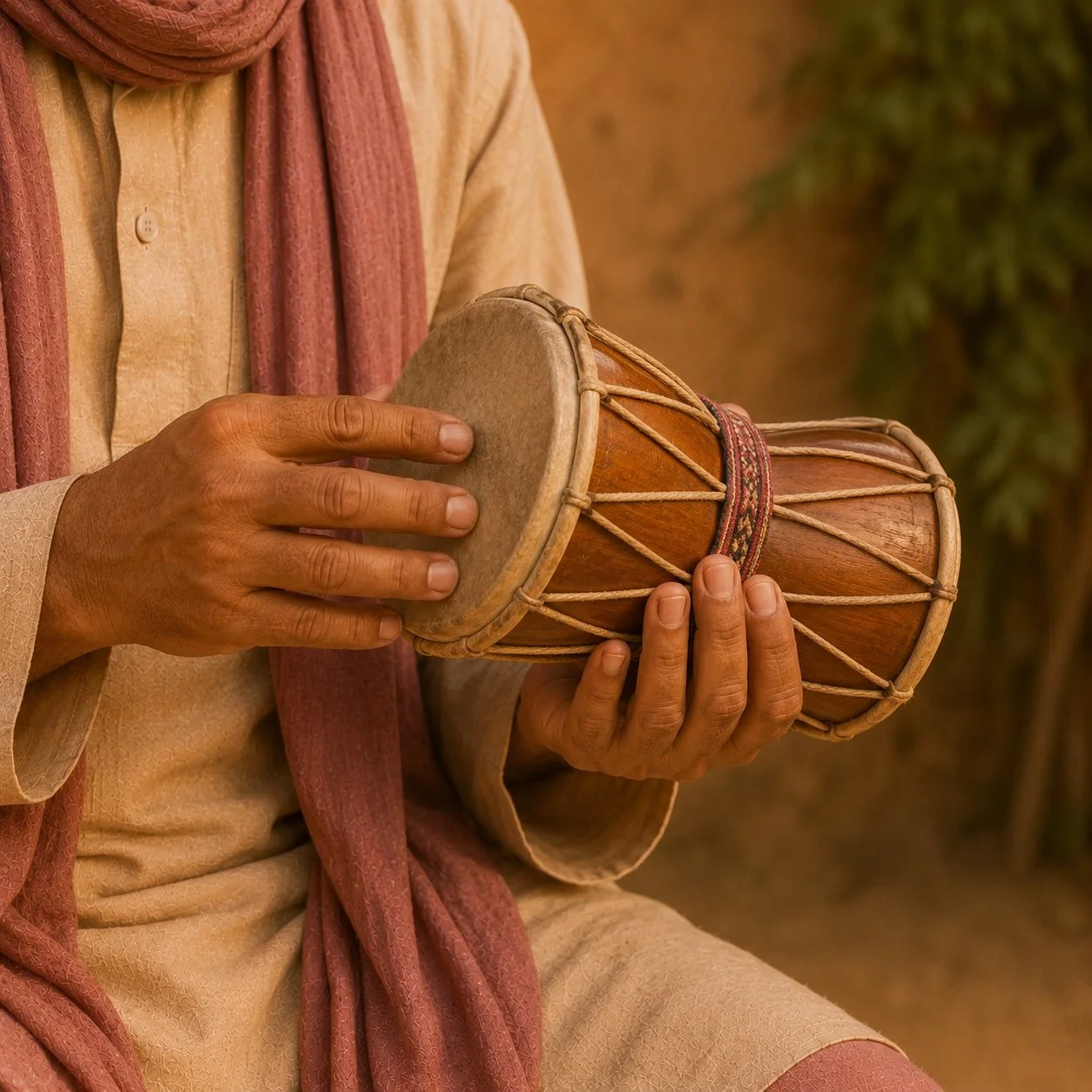
Dhadd
A small hourglass-shaped hand drum held in one palm and struck with the fingers of the other hand.
-
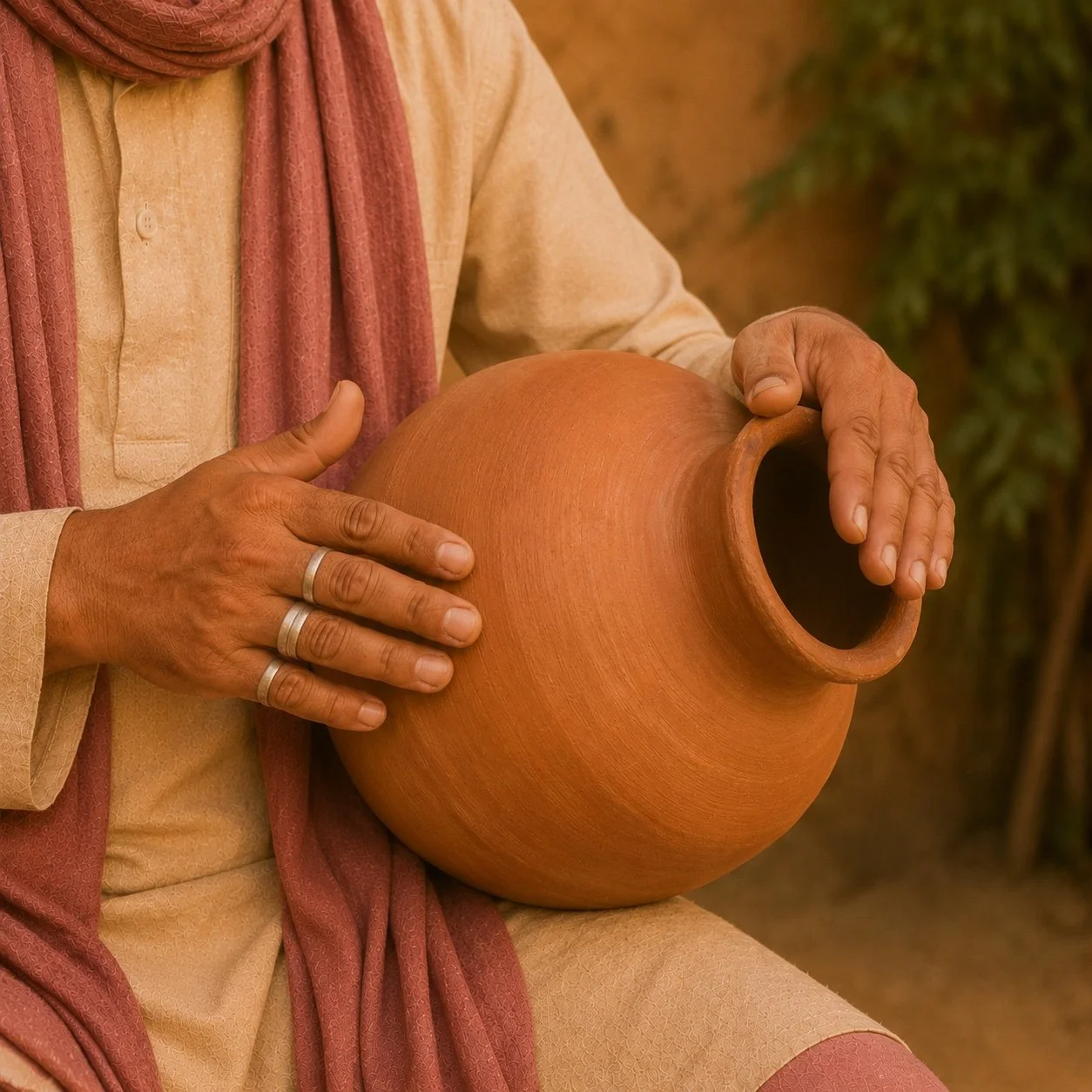
Ghara
A clay pitcher played by striking its outer surface with ringed fingers and covering its open mouth with the other hand.
-
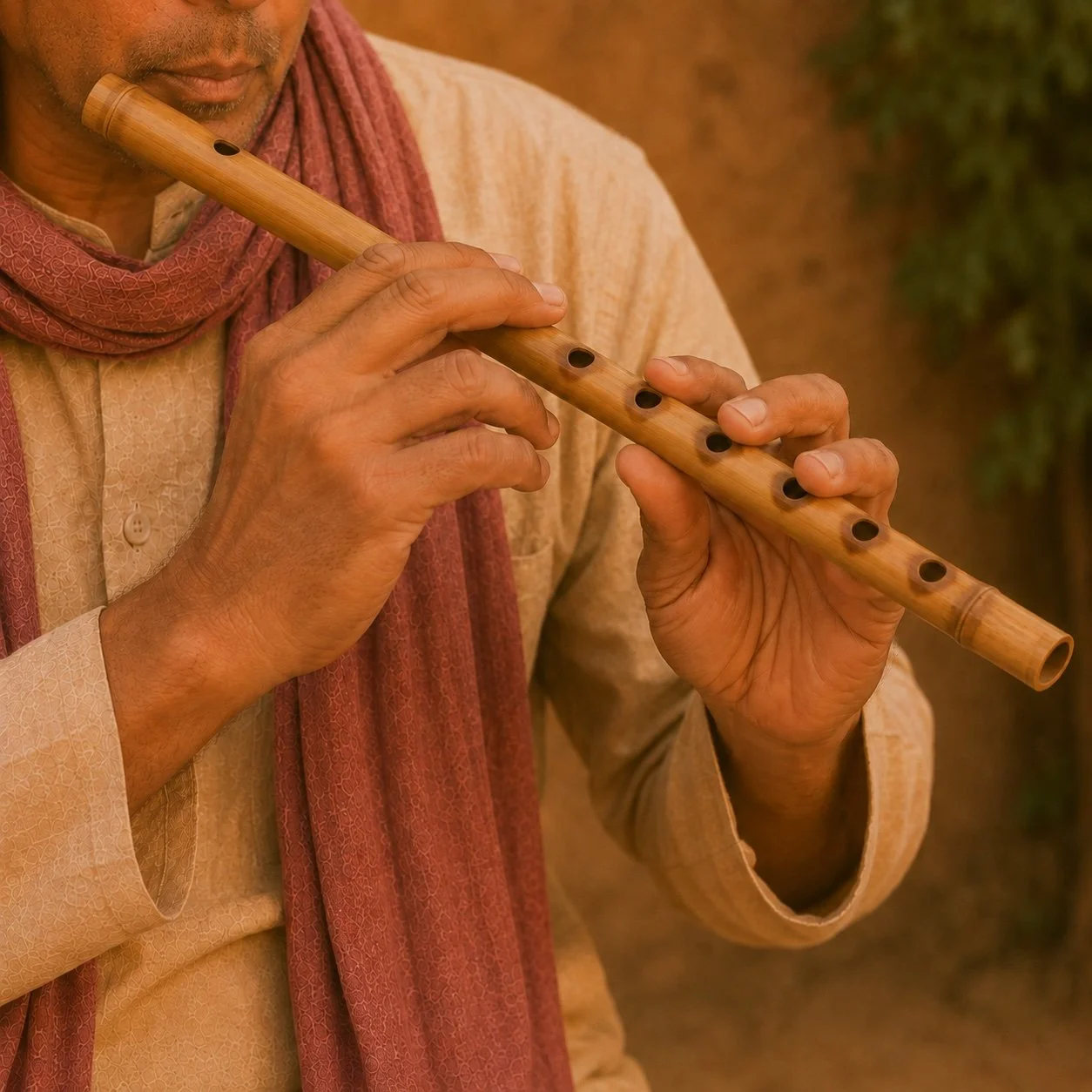
Bansuri/ Vanjali
A bamboo flute with a blowing hole and a series of finger holes used to control its notes.
Subjects of Folk Music
Subjects of Folk Music
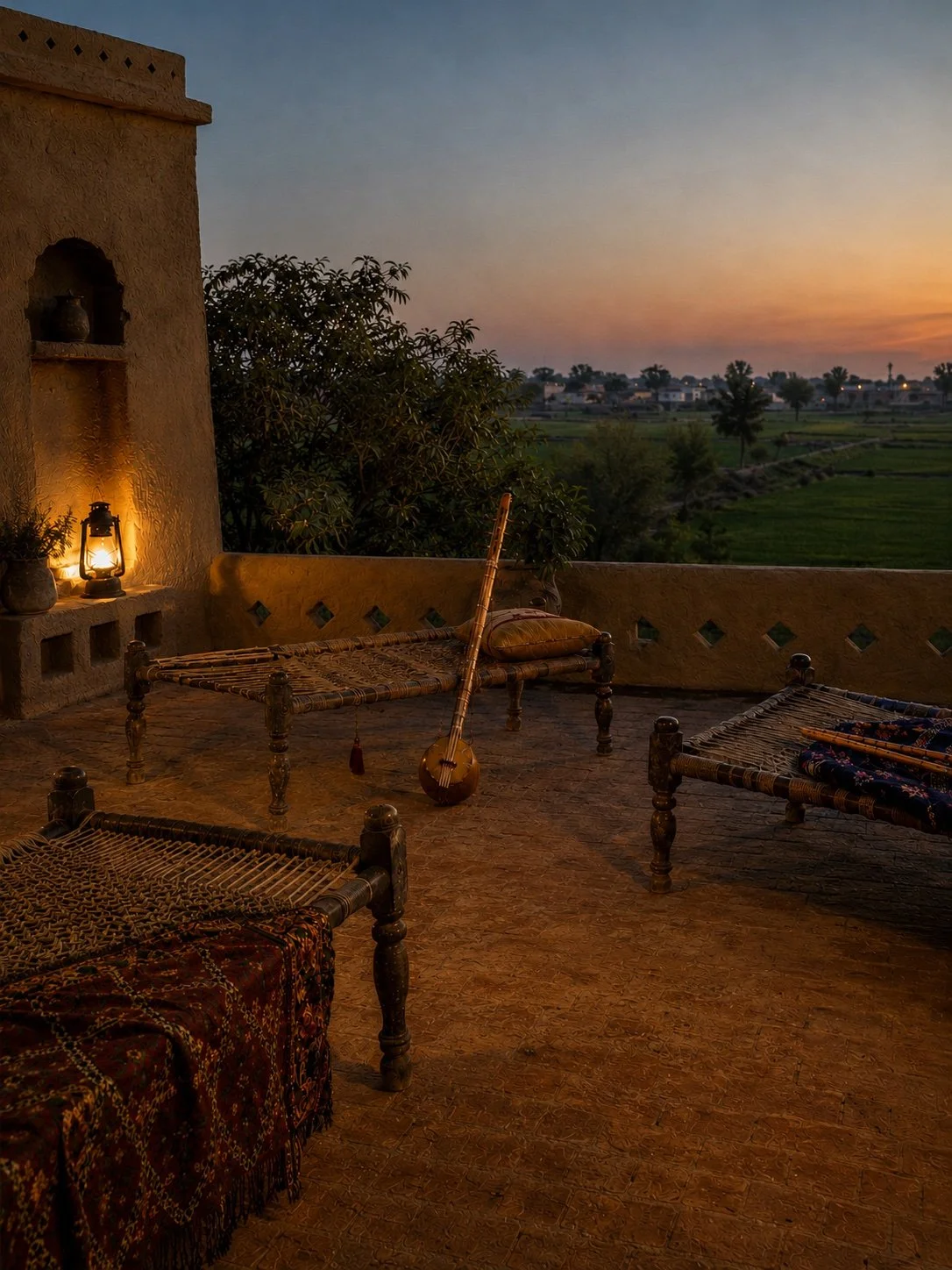
Punjabi folk music developed around the lives of the people who sang it.
Its subjects are as varied as Punjab itself.
Songs passed between generations, carrying stories of love and separation, marriage, family life, spiritual devotion, local heroes, farming, migration and the changing seasons.
Women sang inside the home. Farmers sang in the fields. Weddings, festivals, shrines and community gatherings each carried their own music.
Ballads remembered warriors, rebels and legendary lovers.
Regional songs reflected the dialects, landscapes and histories of different parts of Punjab.
These subjects were never completely separate. A wedding song could also speak of separation. A Sufi poem could use the language of romantic love. A regional ballad could preserve both history and legend.
Through folk music, the lives and emotions rarely recorded in written history were remembered.
Forms of Folk Singing
-
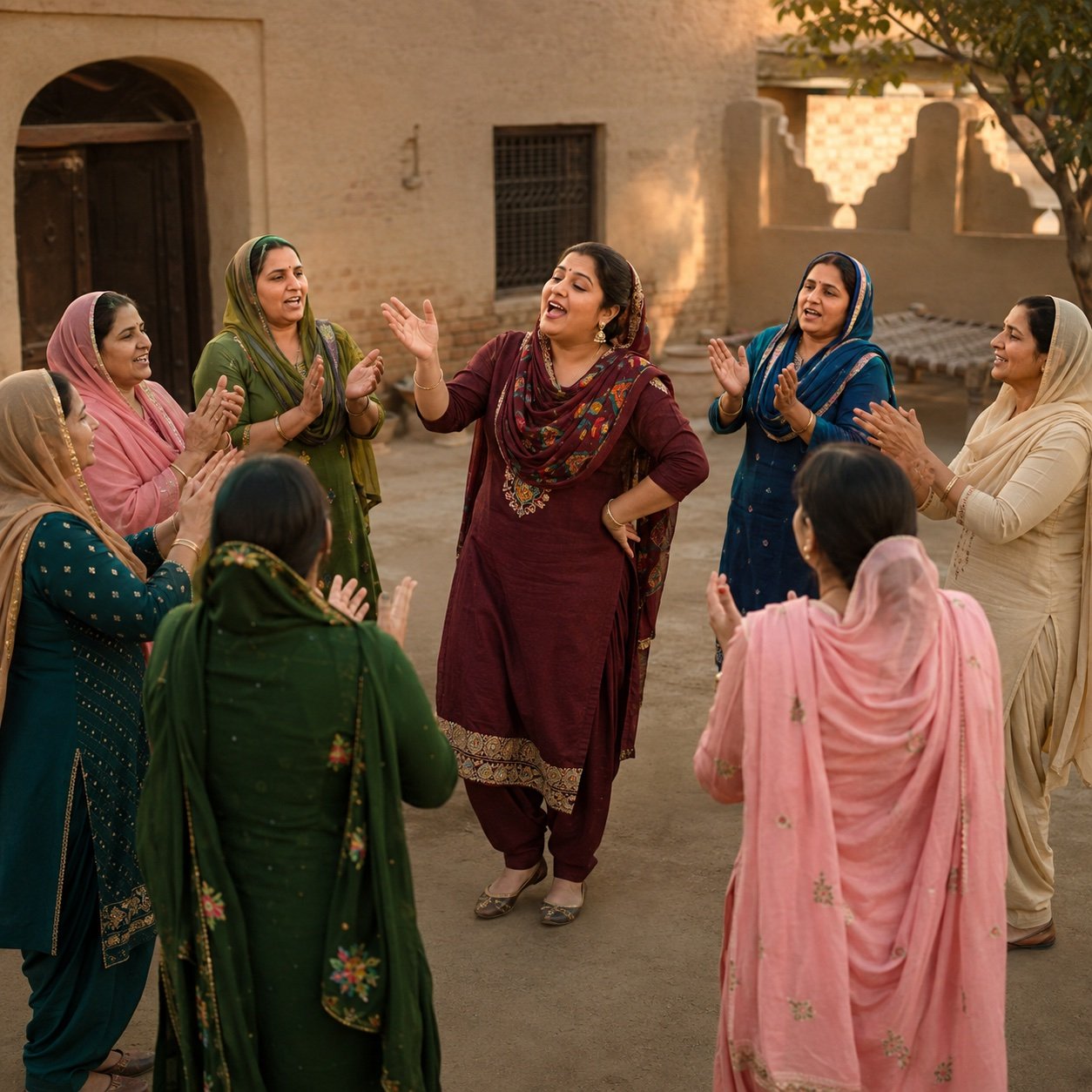
Boli/ Boliyan
Short, rhythmic verses sung during dancing and celebrations - often between people, expressing humour, teasing, relationships or everyday village life.
-
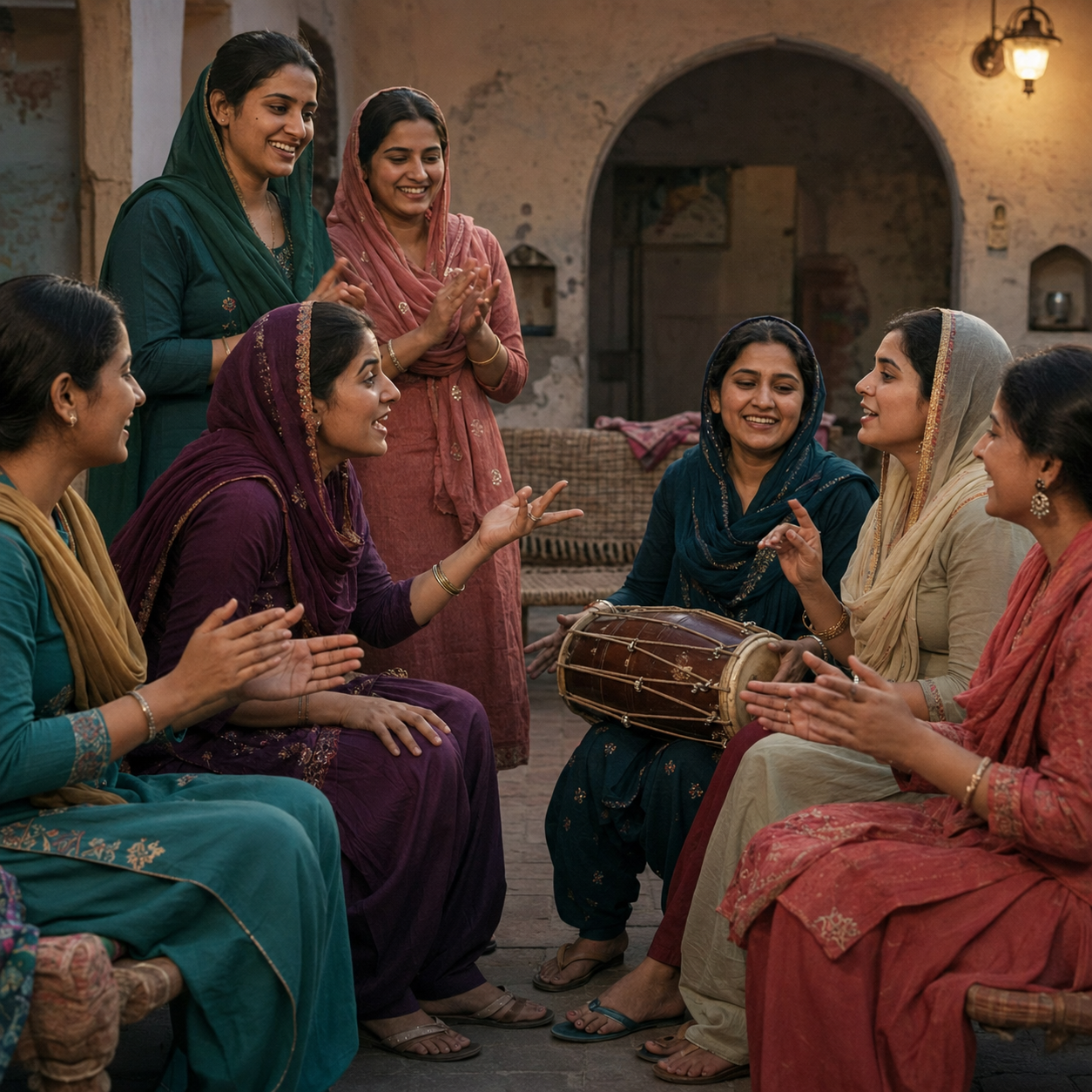
Tappa/ Tappe
Quick-moving verses that use repetition and lively rhythms to express love, separation, flirtation and emotional longing.
-
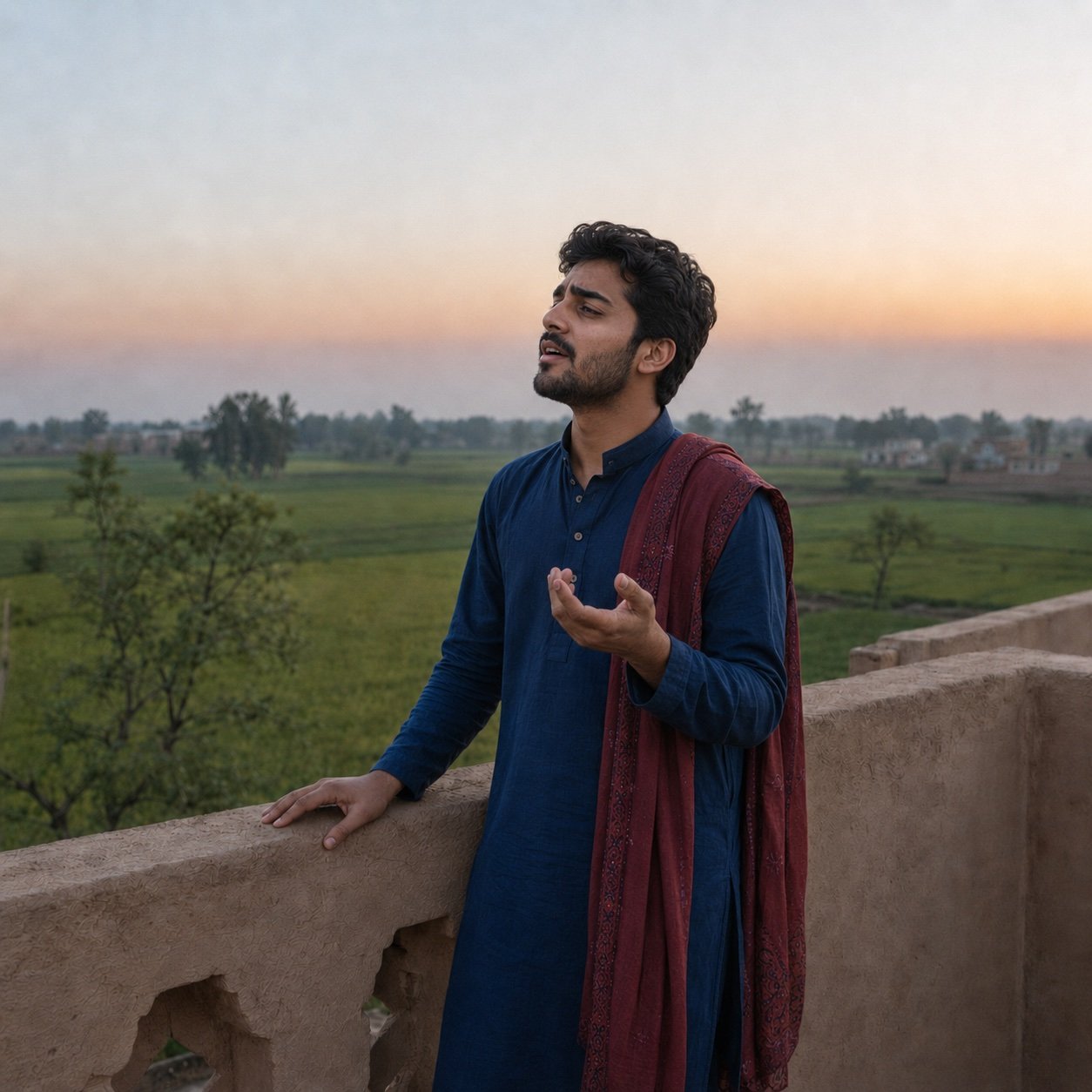
Mahiya
A brief three-line lyrical form traditionally used to express love, devotion, longing and separation from the beloved.
-
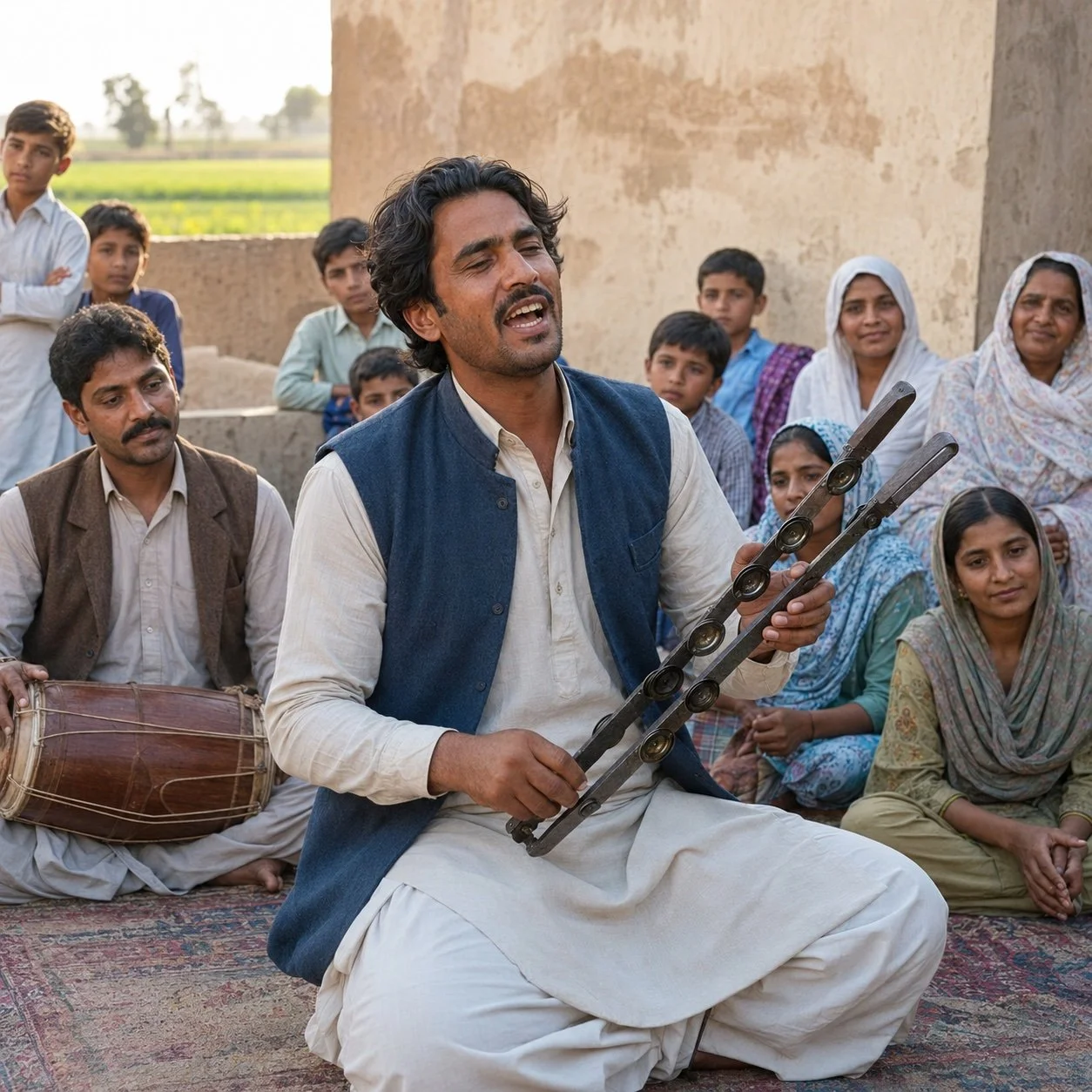
Jugni
A travelling refrain that moves between places and people, allowing singers to comment on society, politics and everyday life.
-
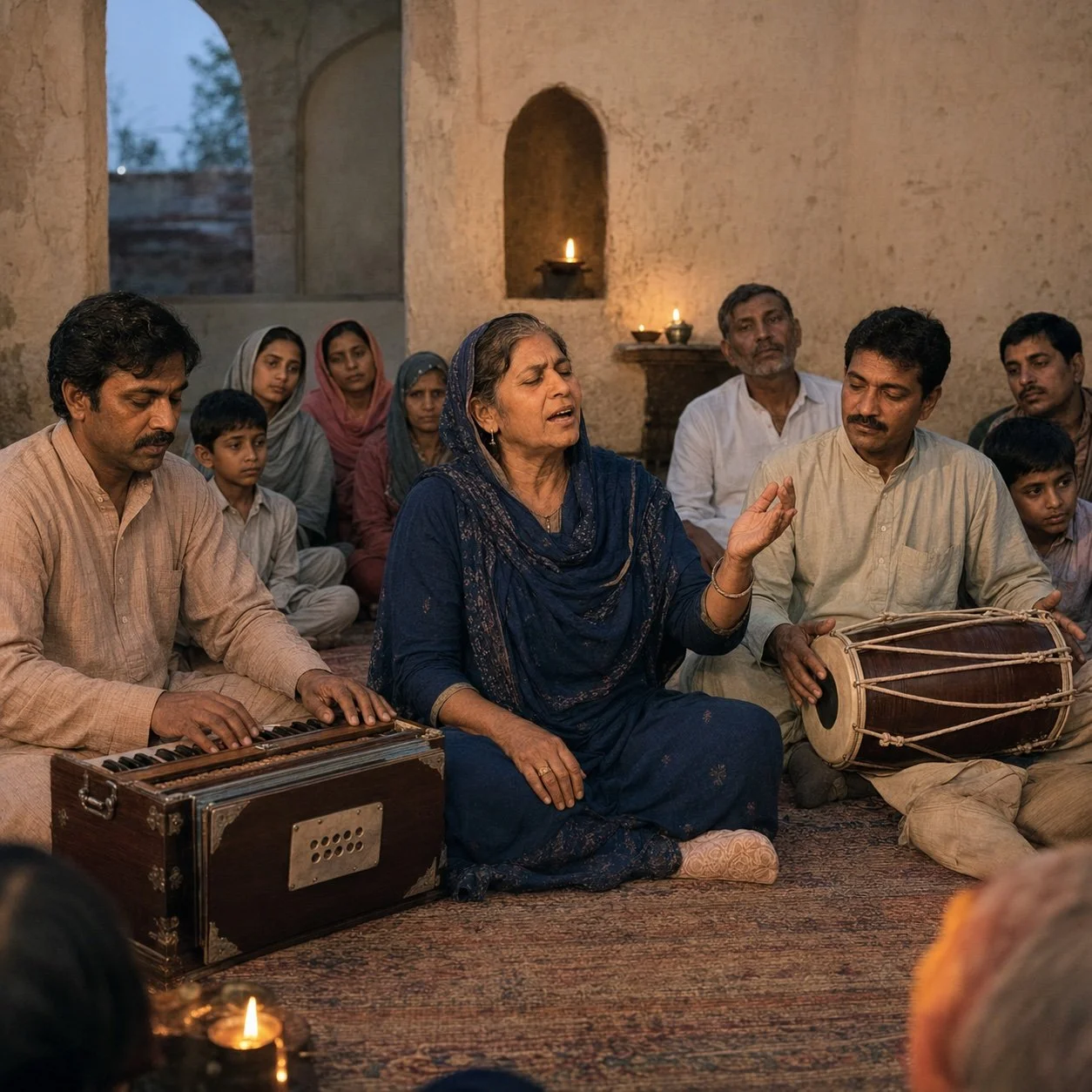
Kafi
A lyrical poetic form closely connected with Punjabi Sufi thought, exploring divine love, spiritual longing and the human soul.
-
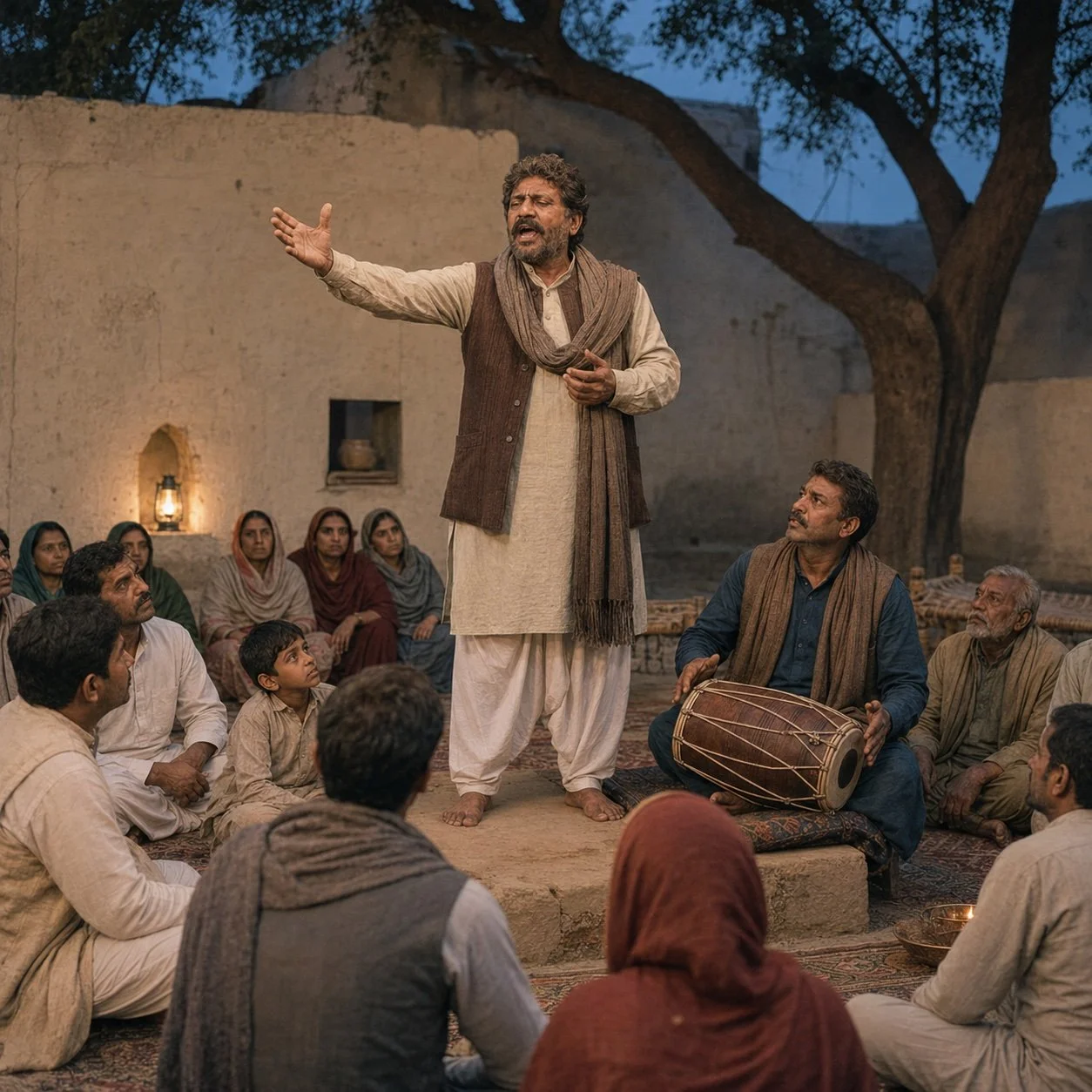
Vaar
A long narrative composition recounting battles, heroic figures, sacrifice or important events preserved within Punjab’s collective memory.
-
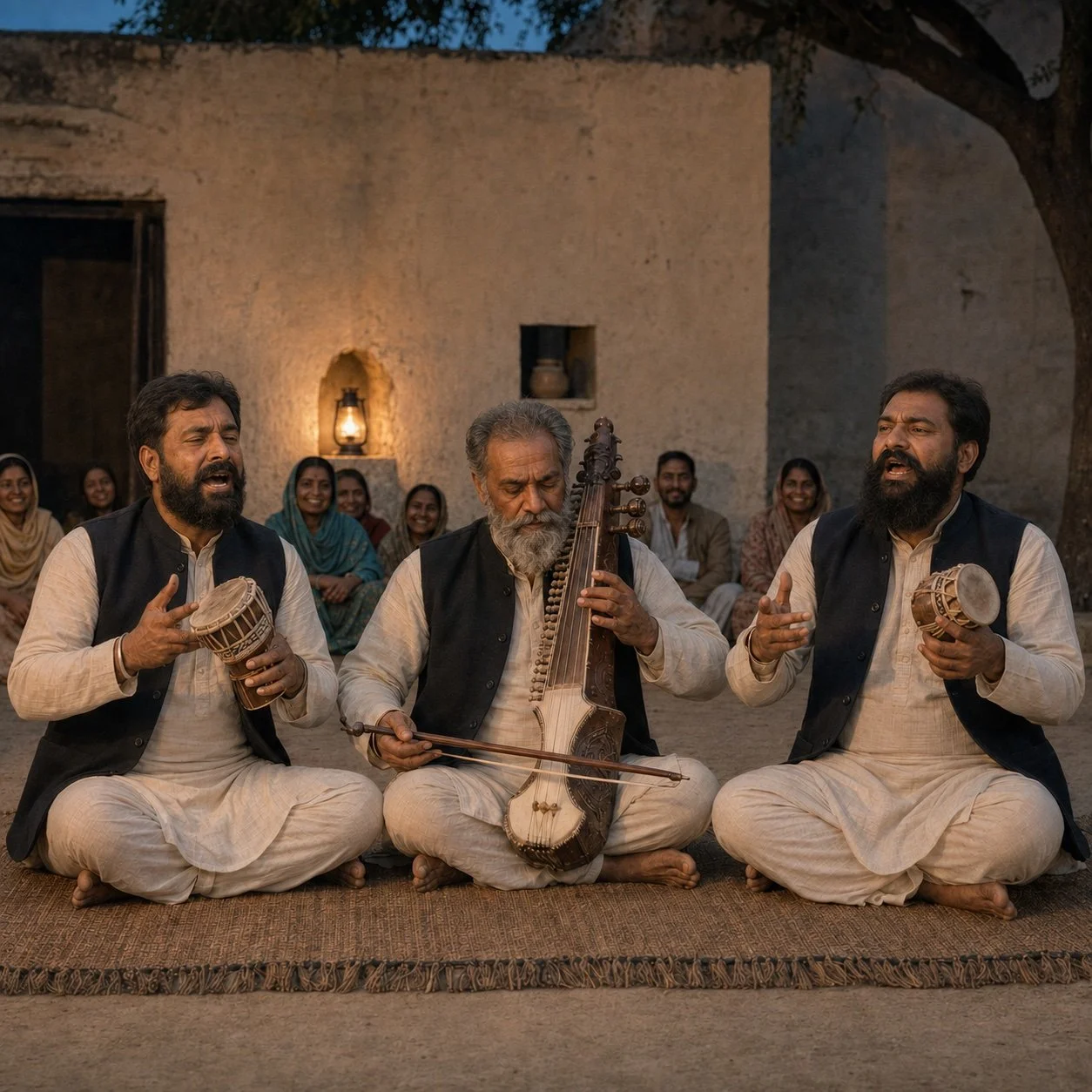
Dhadi
An energetic storytelling tradition in which performers sing historical and heroic ballads, traditionally accompanied by the dhadd and sarangi.
-
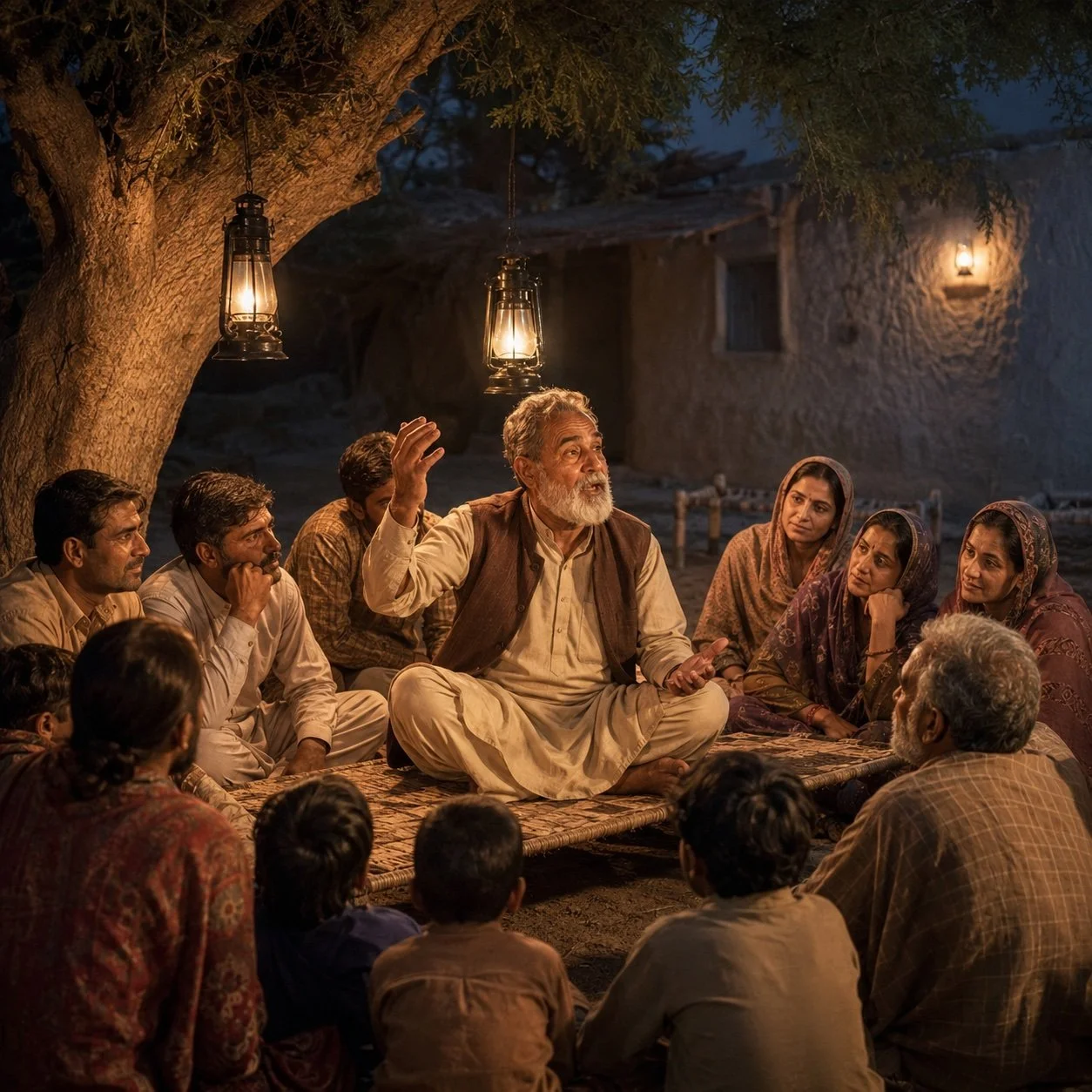
Qissa
An extended sung or recited narrative centred on legendary romances, difficult journeys, social conflict, morality and tragedy.
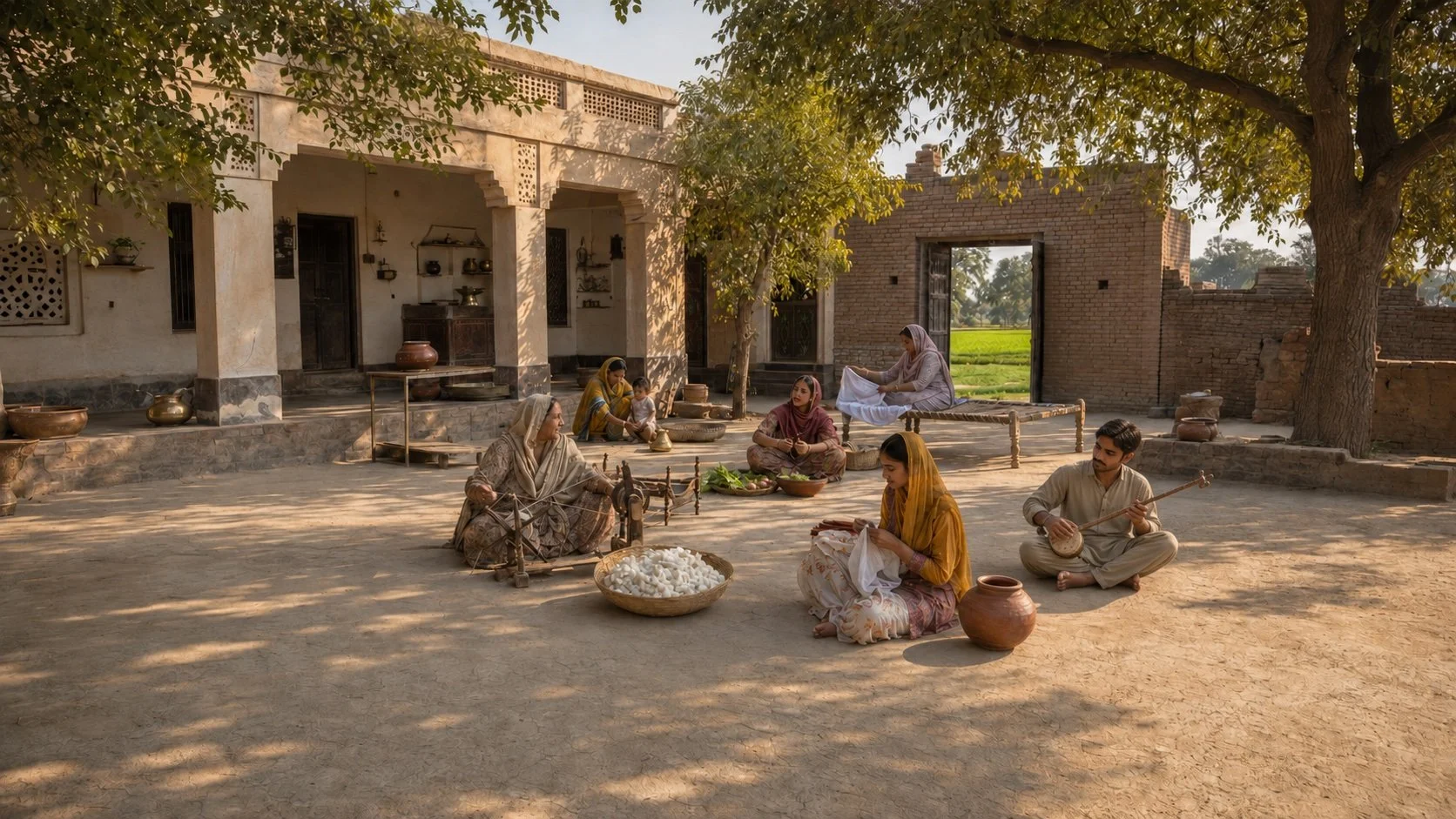
Folk music grew wherever Punjabi life was already happening.
Its origins cannot be dated because early folk music was rarely written down. Songs passed directly between people - heard in fields, repeated at weddings and carried from one village to another. Lyrics changed between regions, dialects and generations, allowing the music to grow with the people who performed it.
Folk music became part of nearly every stage of Punjabi life. There were songs for birth, marriage and mourning; for sowing, harvesting, festivals and changing seasons. Women sang while completing household work. Farmers sang during and after labour. Balladeers carried stories of love, bravery and loss between communities.
Music was not always a separate activity. Often, it simply continued alongside the work.
Its instruments grew from the same environment. The gharha was a clay water vessel that could be struck to create rhythm, while the chimta began as ordinary metal fire tongs. Tumbis used dried gourds, flutes were made from bamboo or reed, and drums drew upon wood and animal hide. Other instruments, such as the sarangi and dhadd, required specialist craftsmanship and training, but almost all were made from materials already familiar to Punjabi life.
Unlike classical music, folk music did not usually require formal training or a strict separation between musician and audience. It was learned by listening, repeating and participating. However, Punjab also had skilled professional folk musicians - including Mirasis, Dhadis and dholis - who preserved complex ballads and instrumental traditions.
More than entertainment, folk music became Punjab’s shared memory. It preserved regional language, humour, stories and beliefs. It gave people space to express separation, desire, frustration and criticism that could not always be spoken openly. It carried local histories among people who may never have encountered them in writing.
Punjab shaped its folk music through centuries of work, movement and emotion. Folk music returned the favour by shaping how Punjabi people remembered themselves.