
Talwandi
~
Sham Chaurasi
~
Karputhala
~
Patiala/ Kasur-Patiala
~
Talwandi ~ Sham Chaurasi ~ Karputhala ~ Patiala/ Kasur-Patiala ~
Punjab’s story of sound, lineage and expression.
Raga. Rhythm. Inheritance.The classical traditions carried through Punjab’s courts, sacred spaces and generations of musicians.
Classical Singing Styles
~
Instruments of classical Music
~
The Performance
~
Classical Singing Styles ~ Instruments of classical Music ~ The Performance ~
Punjabi classical music is built around raga - musical tone, rhythm and improvisation.
A raga provides the melodic structure. Tala organises the rhythm. The musician creates a classical song through a performance that is trained, but never completely fixed.
Unlike folk music, classical music was preserved through formal teaching. Knowledge passed directly from ustad - teacher to shagird - student through years of listening, repetition and practice.
Across Punjab, these traditions developed in royal courts, sacred spaces and generations of musical families. Different lineages formed their own methods of singing, performing and interpreting ragas. Over time, several became recognised as distinct gharanas. Punjab’s classical music belongs to the wider Hindustani tradition, but Punjabi musicians shaped their own gharanas, vocal styles and approaches to sound.
This page explores Punjab’s major classical gharanas, its principal singing styles and the instruments that helped carry them across generations.
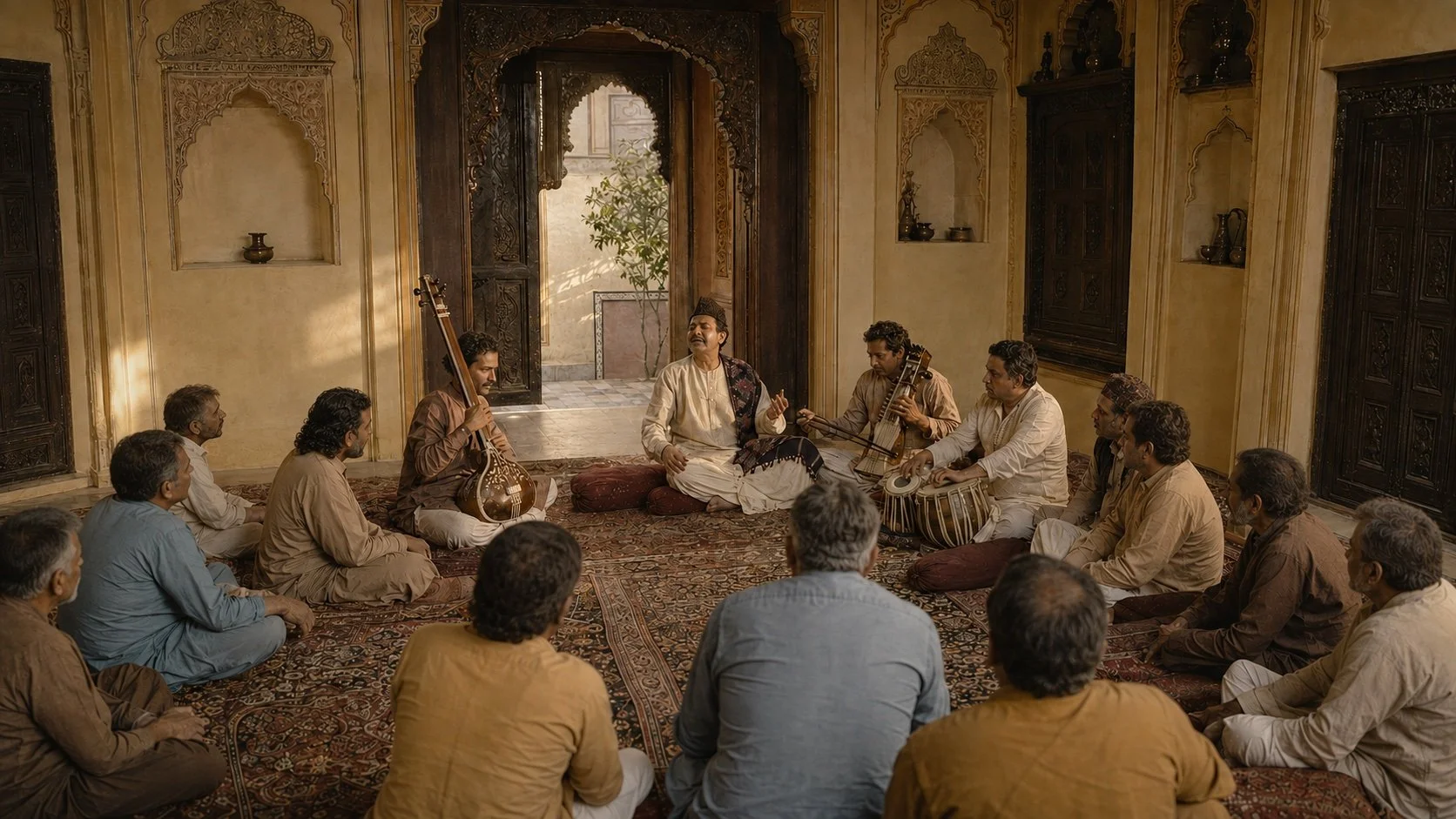
The Gharana - Houses of Classical Music
-
![]()
The Talwandi Gharana
Talwandi developed in Talwandi Rai near Ludhiana and is one of Punjab’s oldest dhrupad gharanas, traditionally tracing its lineage to musicians from Akbar’s court. Its Khandar bani style emphasised powerful voices, strong gamak and a complex balance between melody and rhythm. After Partition, its leading family migrated to Pakistan, where declining patronage left the tradition with very few practitioners.
-
![]()
The Sham Chaurasi Gharana
The Sham Chaurasi gharana developed near Hoshiarpur, in a town named for the chaurasi - eighty-four villages surrounding it. Its lineage is traditionally traced to Chand Khan and Suraj Khan during Mughal Emperor Akbar’s reign. It had a more flexible khayal style while keeping dhrupad’s strong command of rhythm. Sham Chaurasi became especially known for duet singing - but this was not simply two people singing the same notes. One voice worked through the lower and middle register while the other climbed higher, allowing alaap, sargam and rapid taans to pass between them. After Partition, its leading family migrated to Pakistan, where they continued the tradition.
-
![]()
The Karputhala Gharana
The Kapurthala gharana formed when musicians leaving Delhi found a new home in the royal court of Kapurthala. After 1857, Kanwar/ Prince Bikrama Singh brought Mir Nasir Ahmad - a musician trained in the Mughal court’s beenkar tradition to Punjab. Unlike Punjab’s mainly vocal gharanas, Kapurthala developed through both singing and stringed instruments. Its musicians applied dhrupad’s slow, careful exploration of a raga to the veena, sursingar and later the sitar, while its singers also absorbed elements of Gwalior styles. This made Kapurthala less of one fixed singing style and more of a meeting point between dhrupad, khayal and Punjab’s rababi musicians.
-
![]()
The Kasur - Patiala Gharana
The Kasur-Patiala gharana developed between the musicians of Kasur and the royal court of Patiala during the nineteenth century. Its foundations were laid by Mian Kallu, but the style was shaped by Ali Baksh Khan and Fateh Ali Khan, who combined training from several older gharanas rather than following only one. Their khayal singing favoured an open, powerful voice, complicated rhythm and fast taans that travelled easily across three octaves. Punjabi tappa also entered the style through its short, twisting phrases, while thumri allowed the words and emotion to carry more weight.
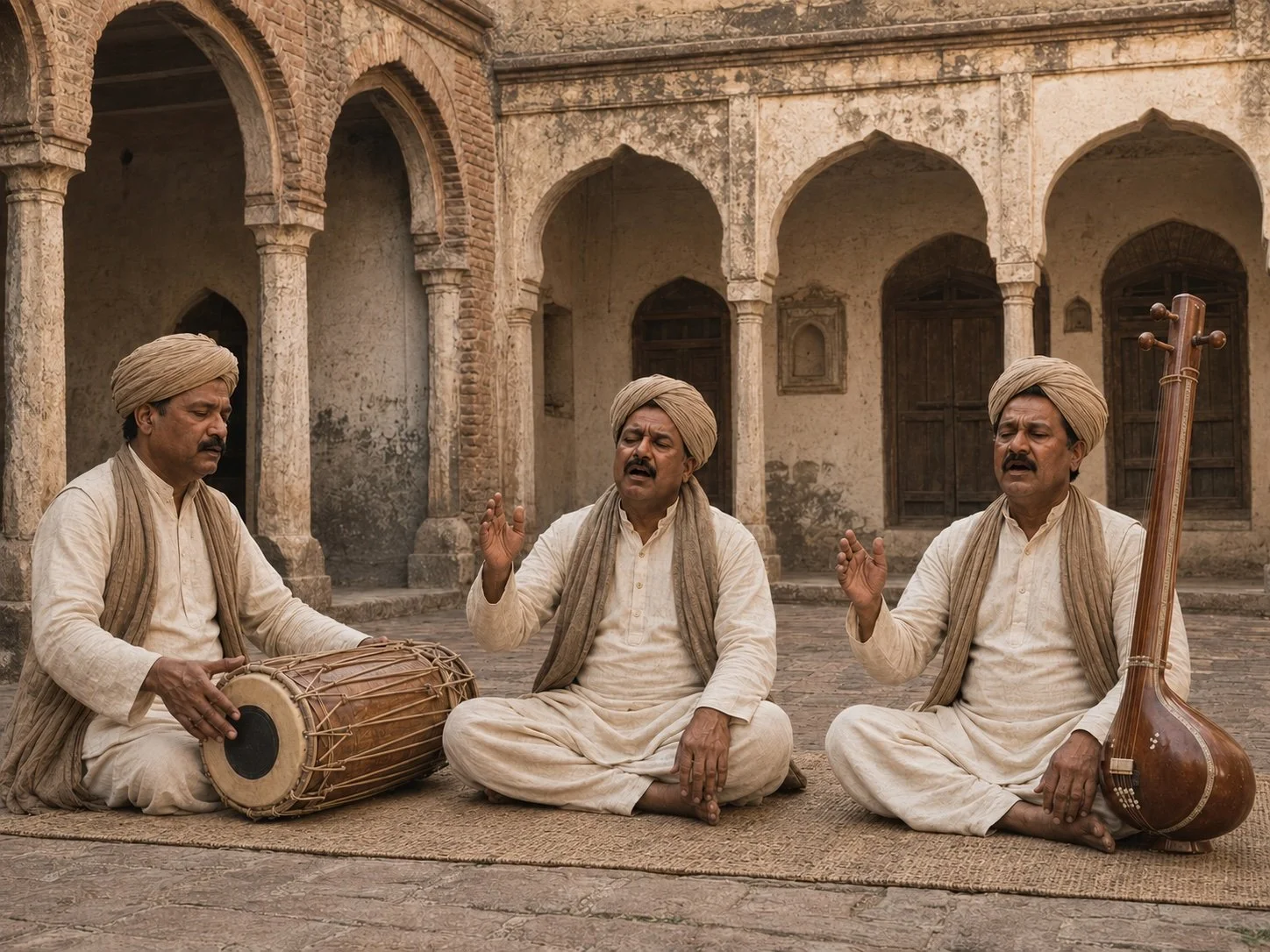
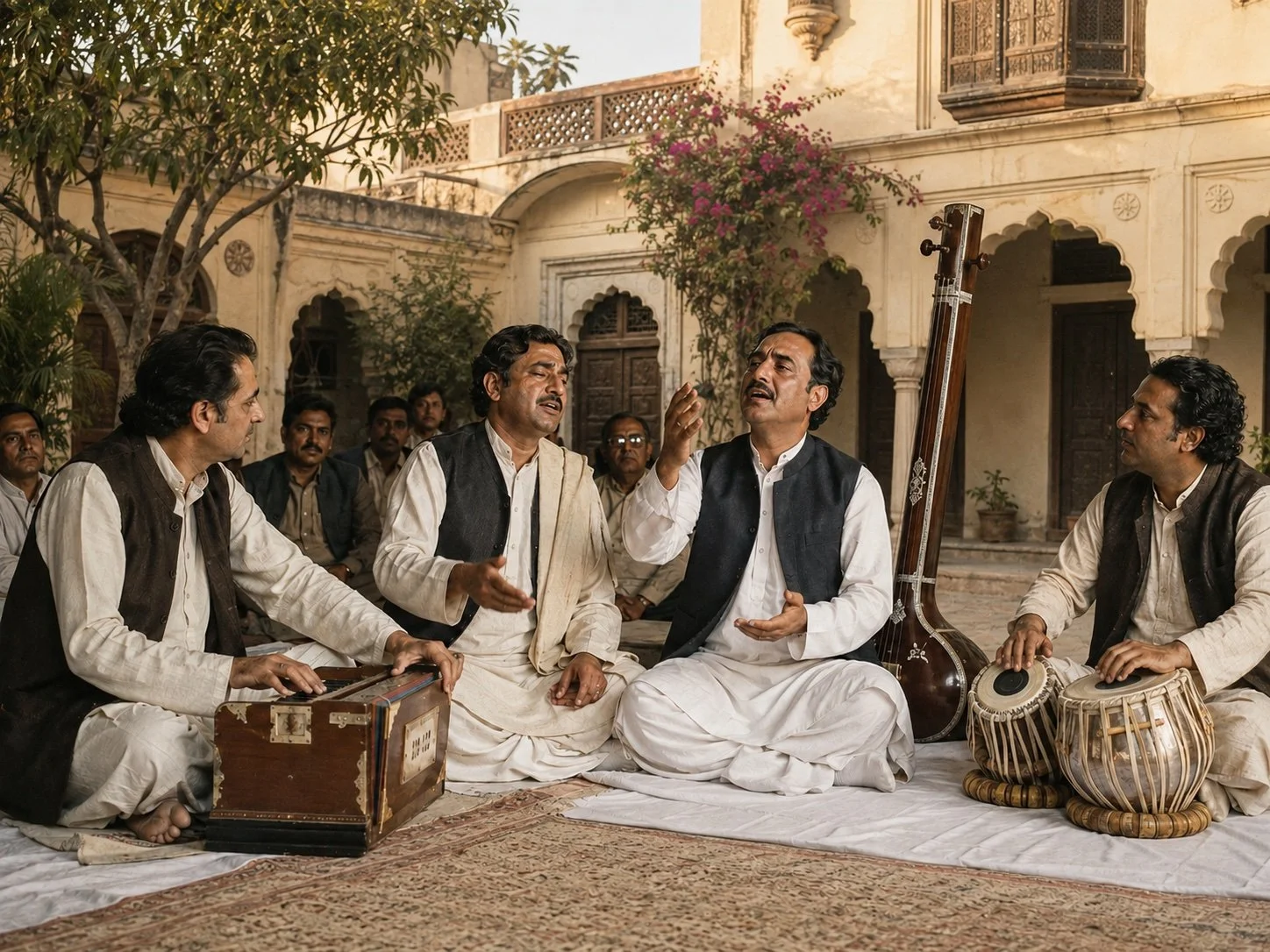
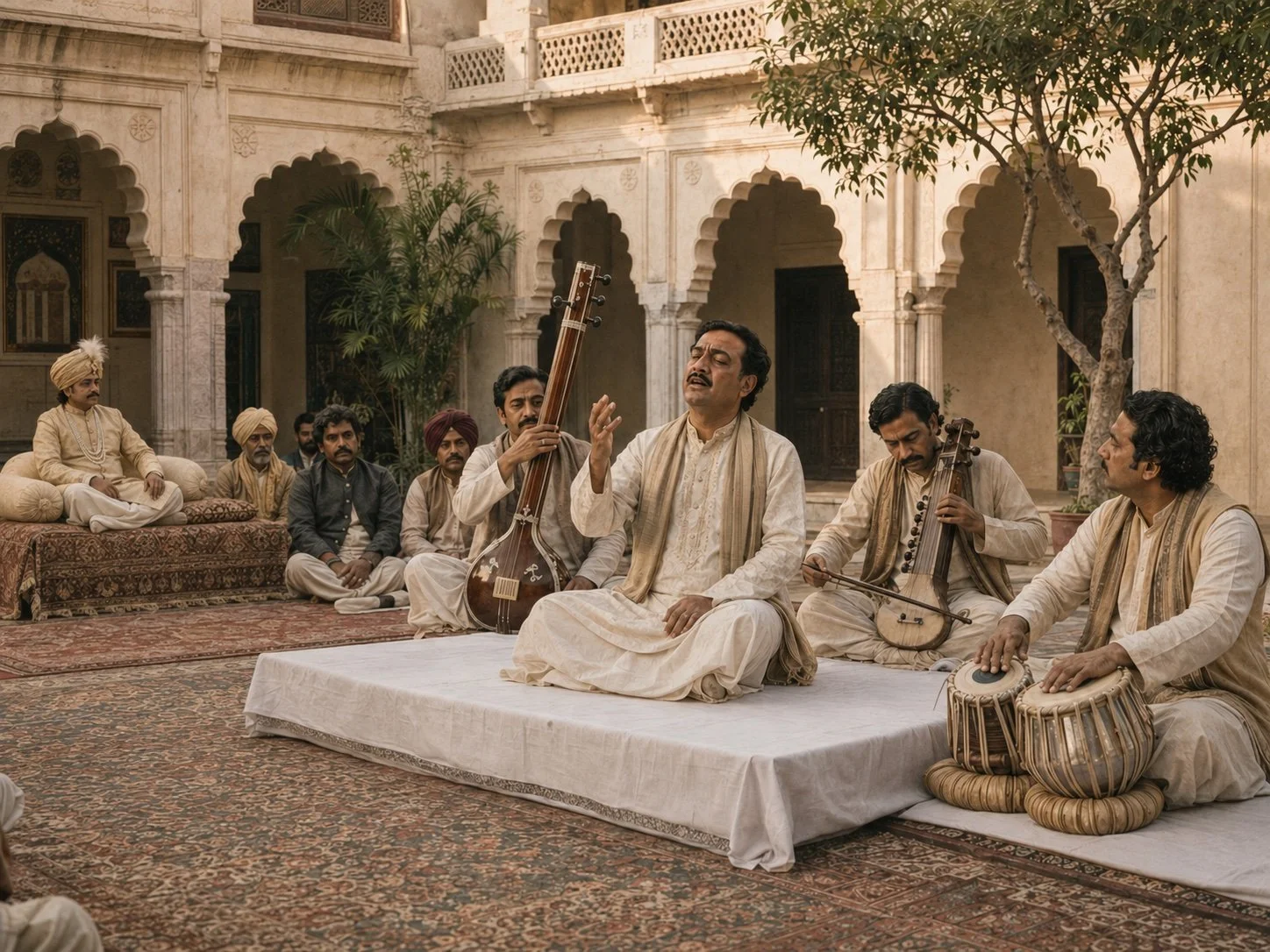
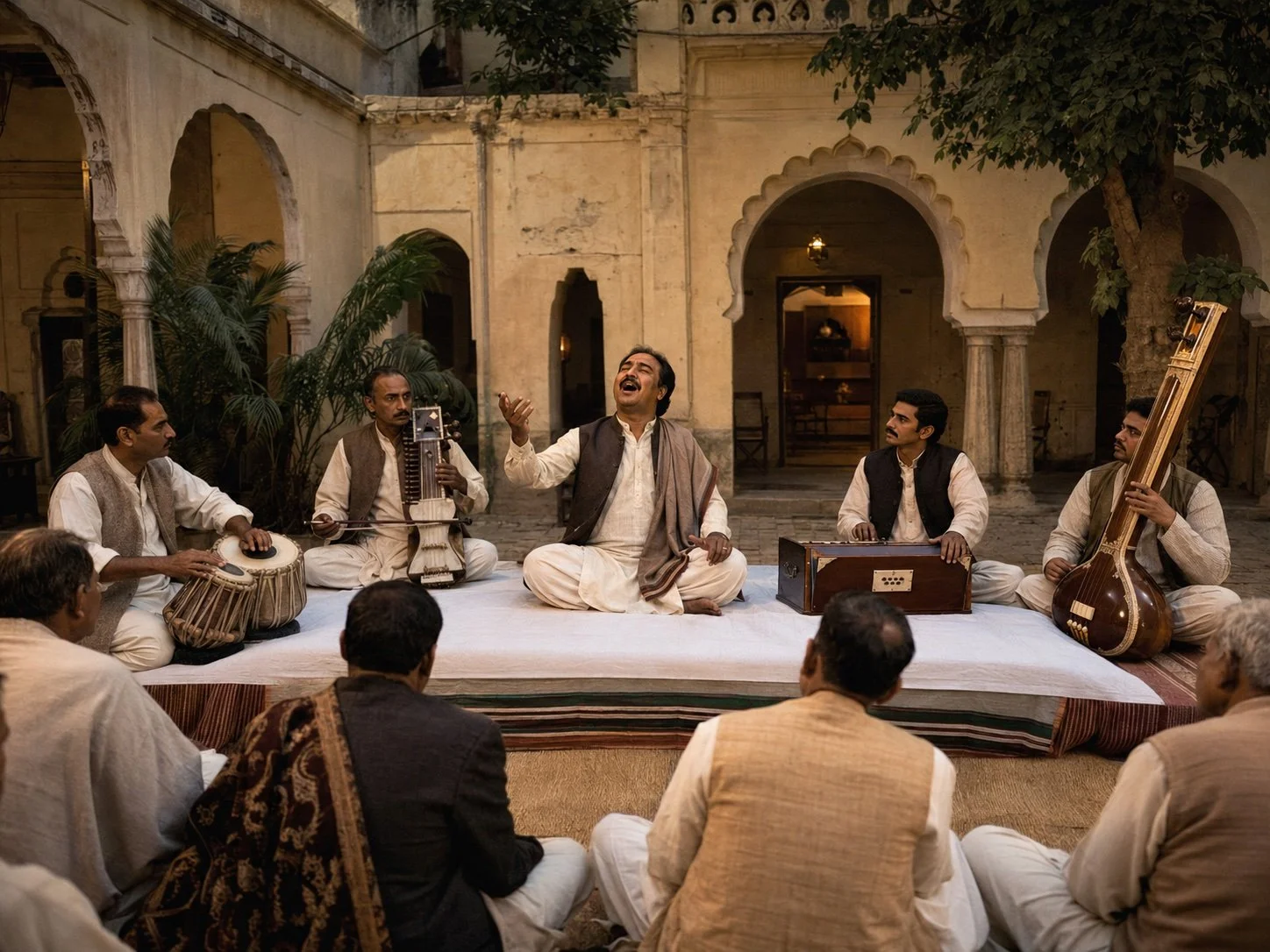
Instruments of Classical Music
-
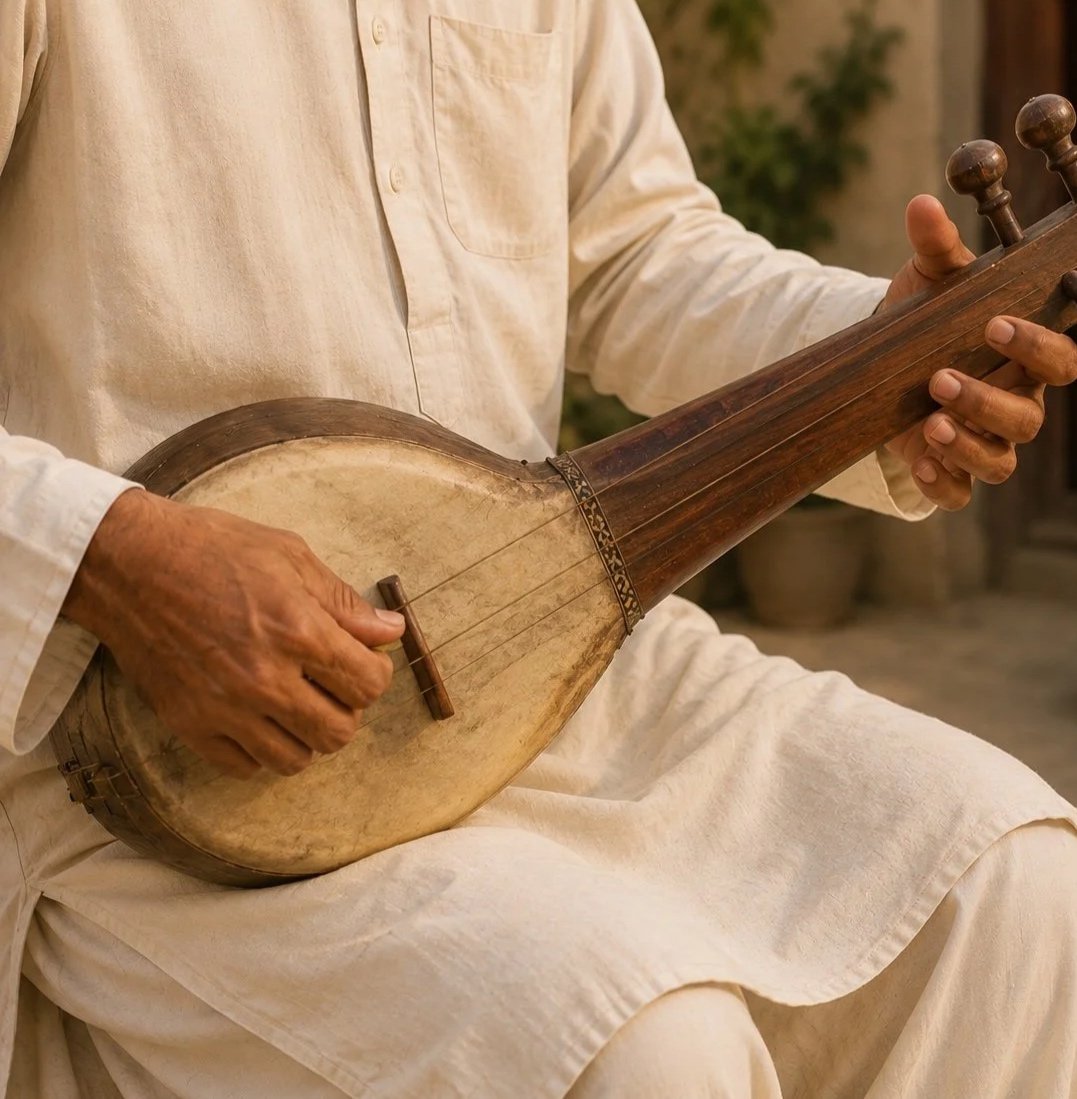
Rabab
A plucked string instrument with a skin-covered resonator and long wooden neck.
-
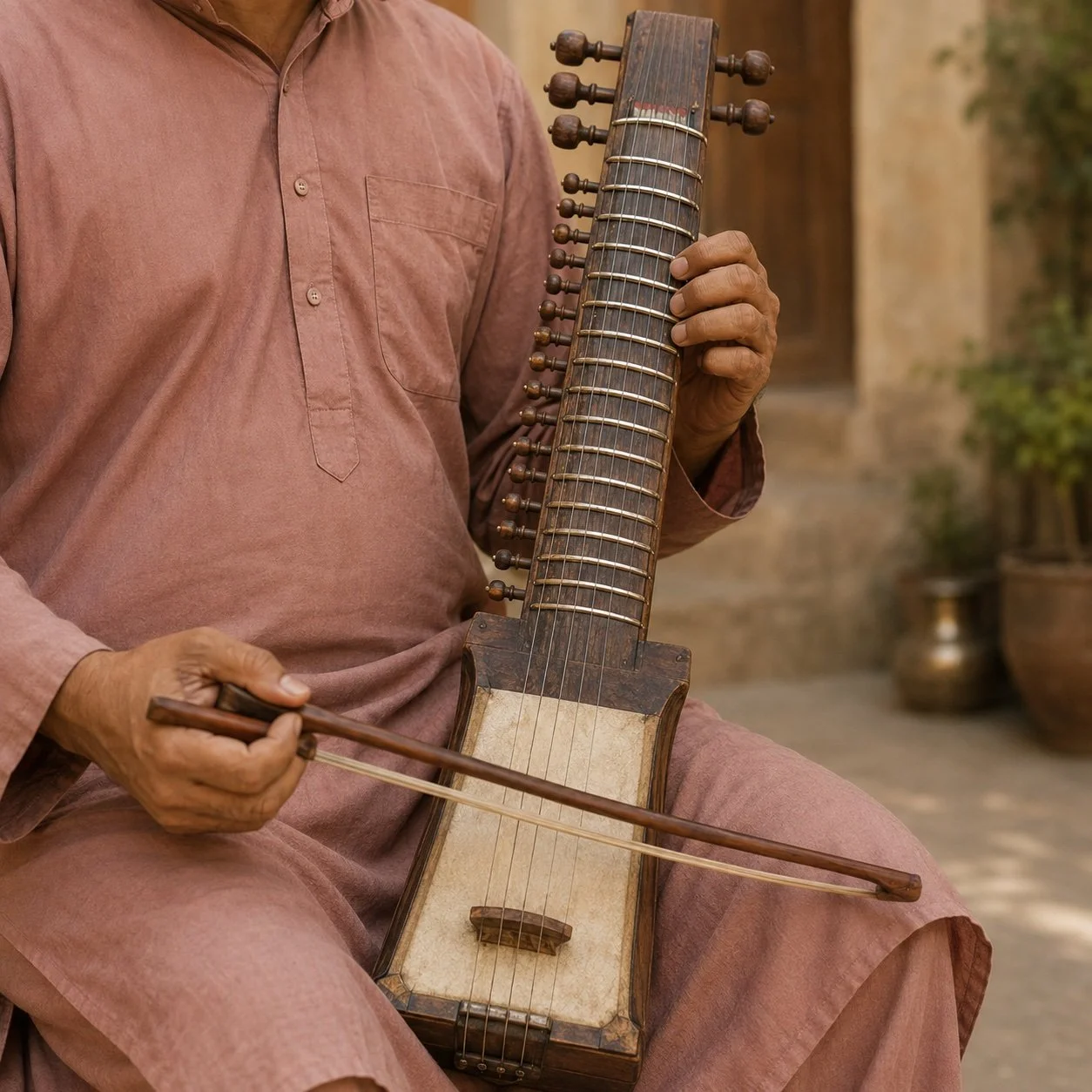
Dilruba
A bowed string instrument with a long, fretted neck and skin-covered wooden resonator.
-
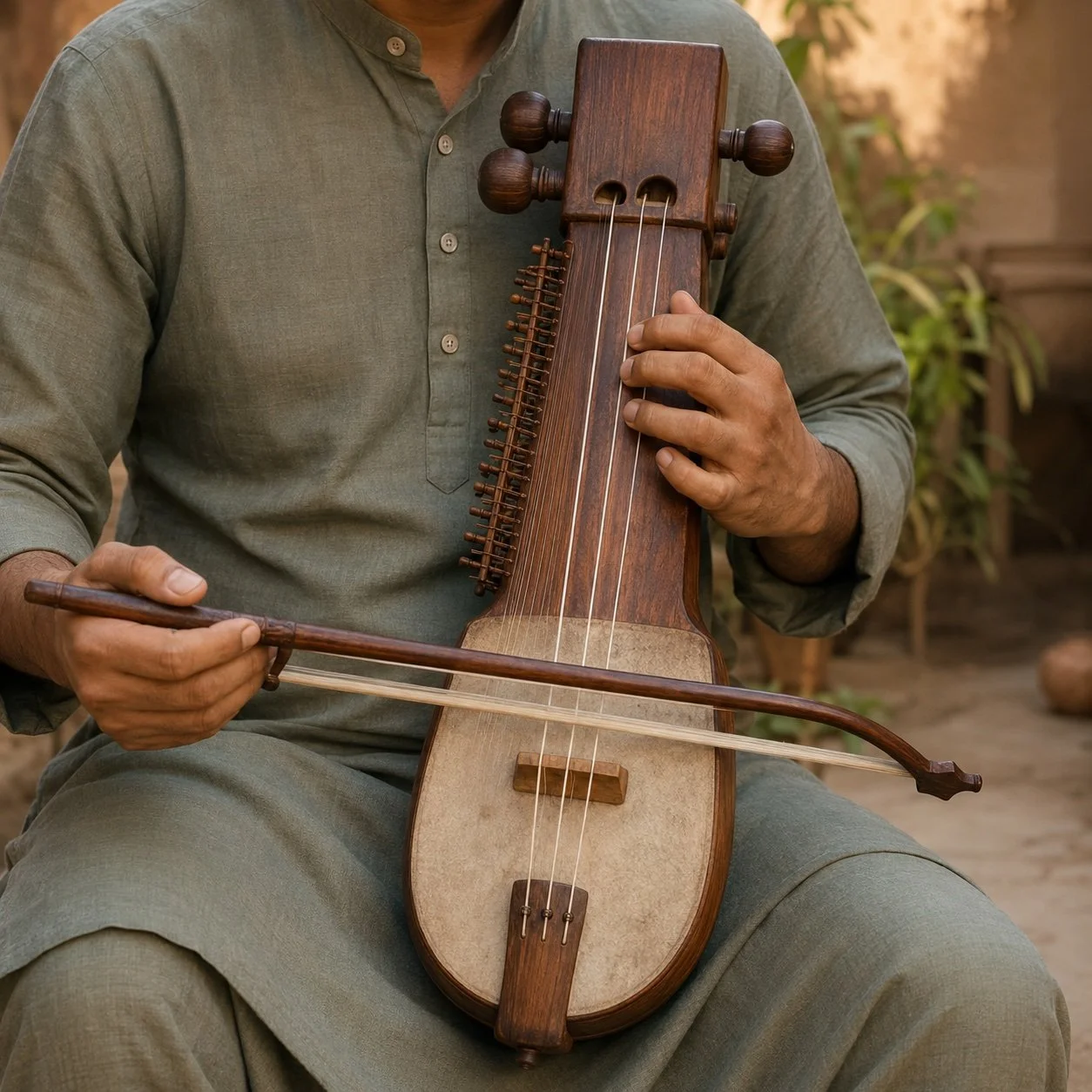
Sarangi
A short-necked bowed instrument with three main strings and numerous sympathetic strings, producing a deep tone.
-
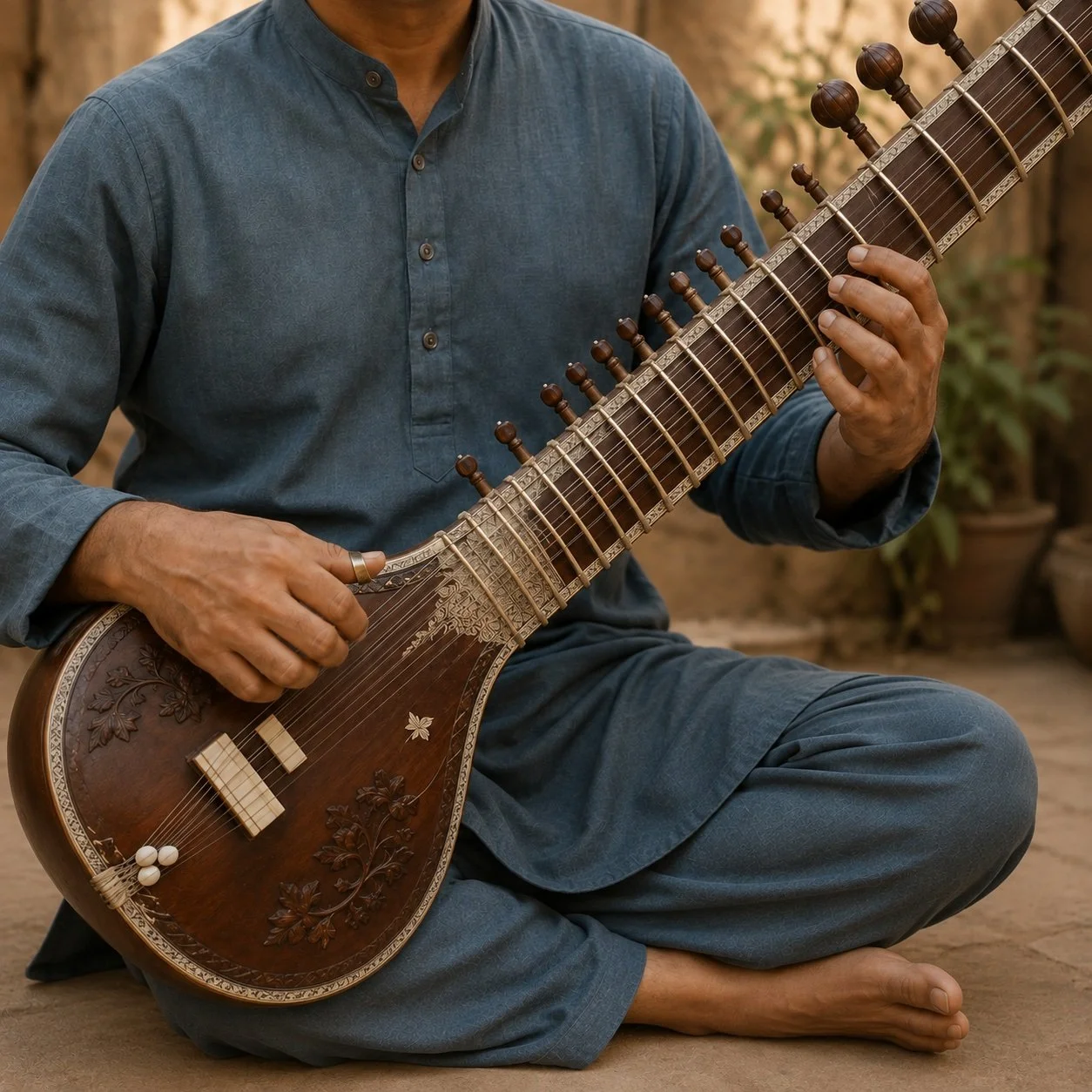
Sitar
A long-necked instrument with a large gourd resonator, movable metal frets and two sets of strings.
-
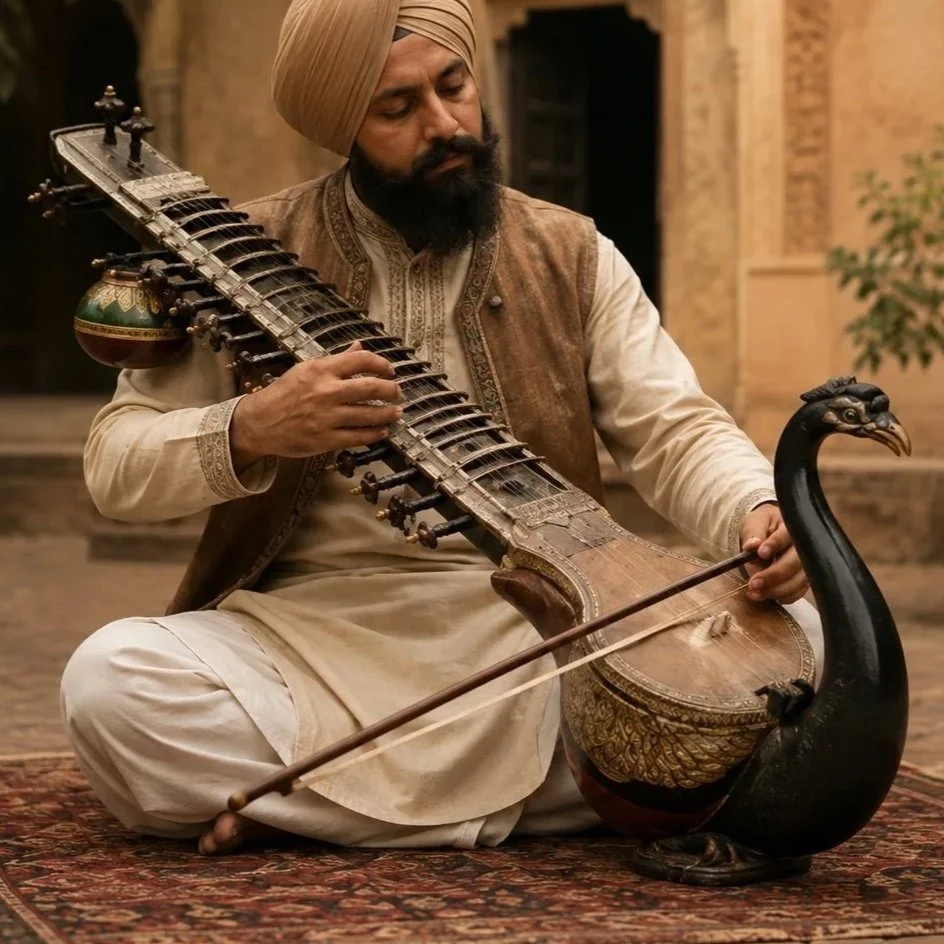
Taus
A large bowed instrument with a peacock-shaped body, fretted neck and sympathetic strings that give it a deep sound.
-
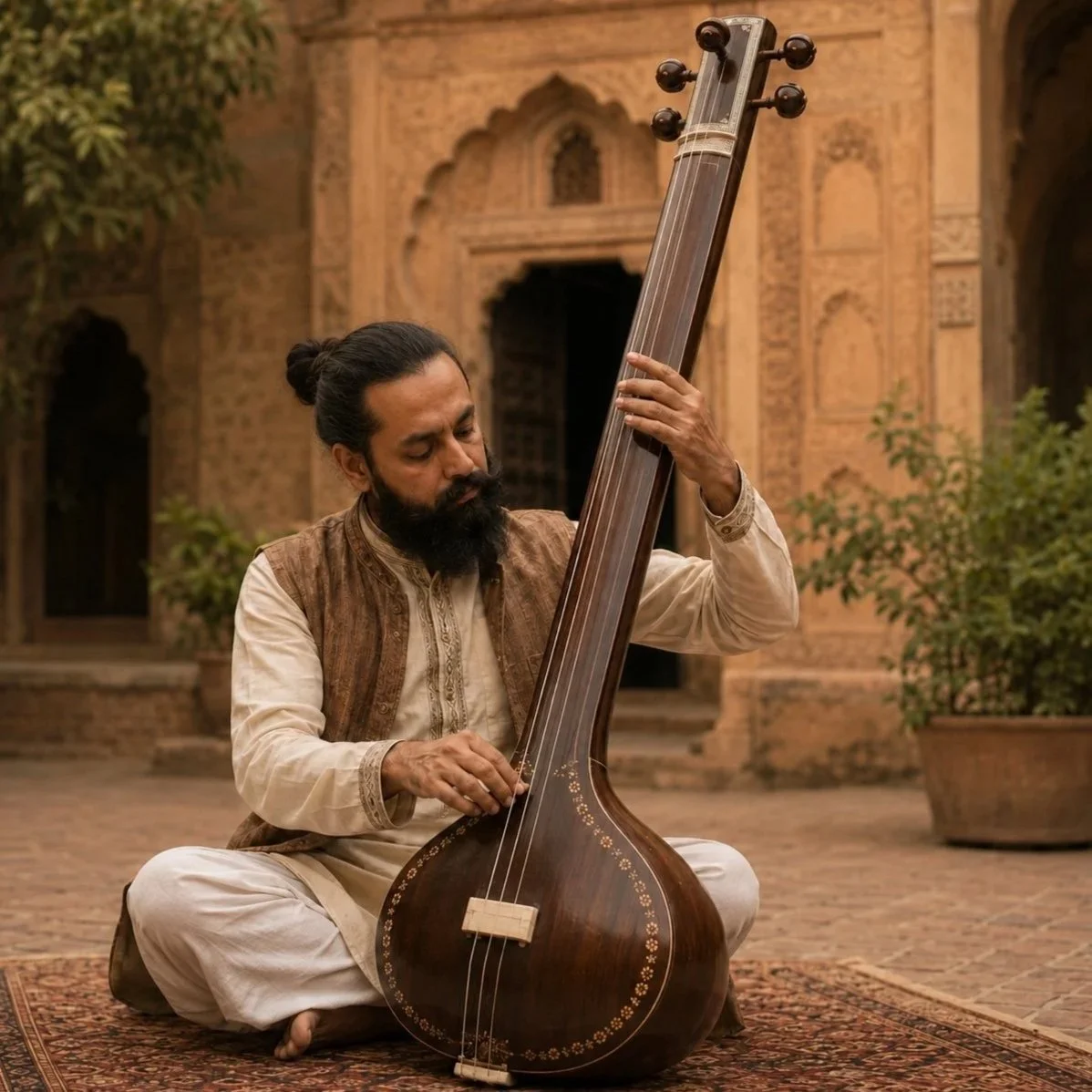
Tanpura
A long-necked, string instrument whose open strings are repeatedly plucked to create the continuous drone underlying a classical performance.
-
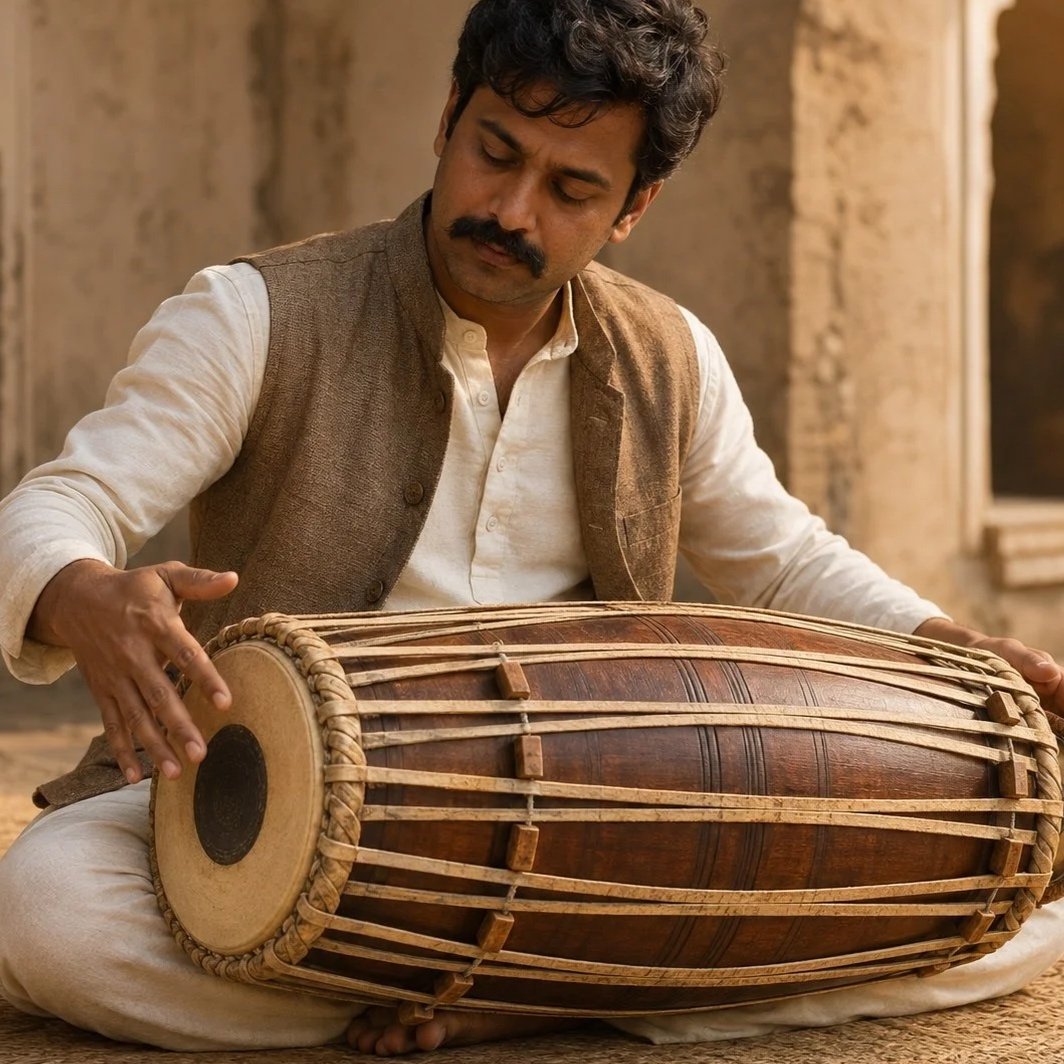
Pakhawaj
A barrel-shaped, double-headed drum played with both hands, traditionally used to accompany dhrupad singing.
-
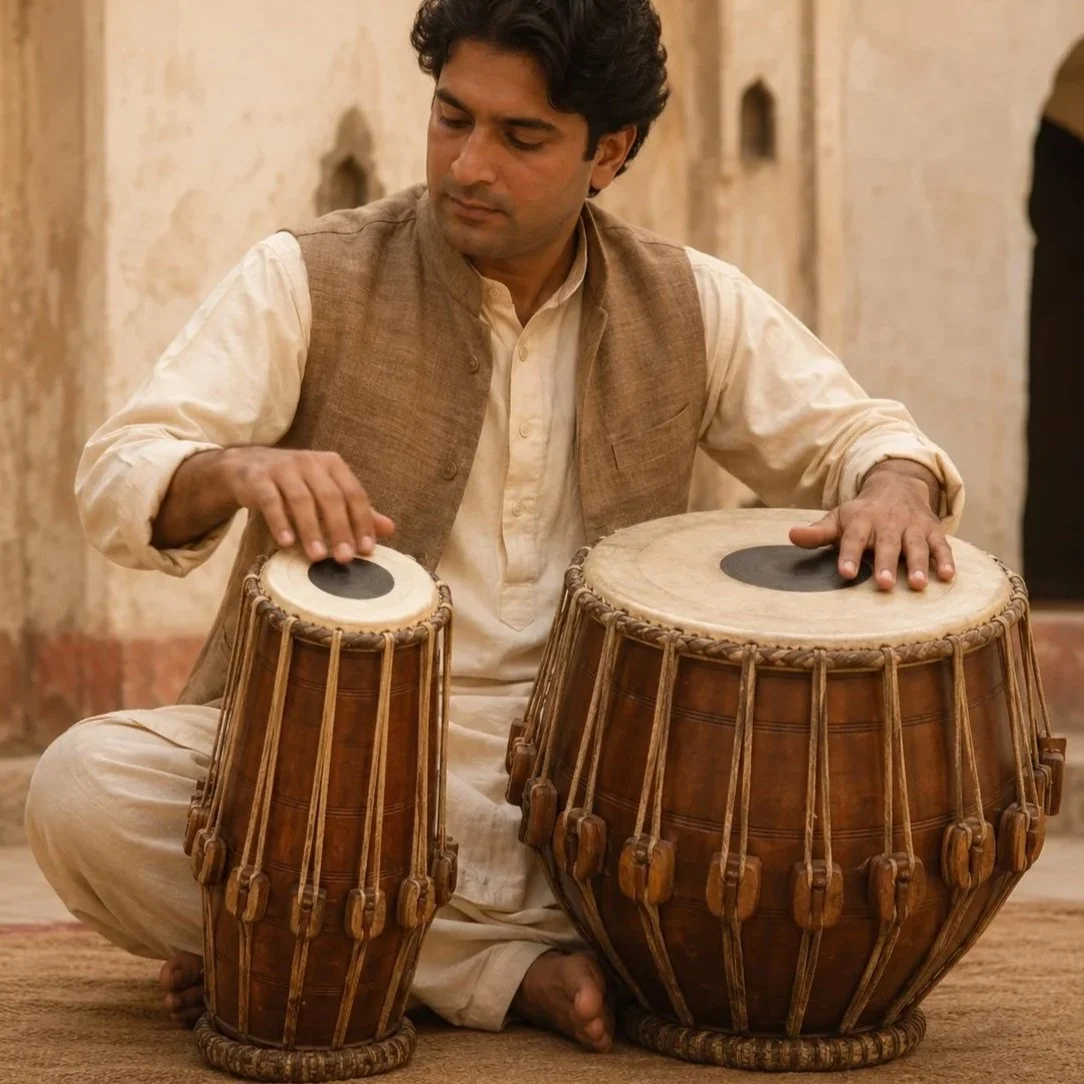
Jori
A pair of hand drums - combining a smaller treble drum with a larger wooden bass drum.
-
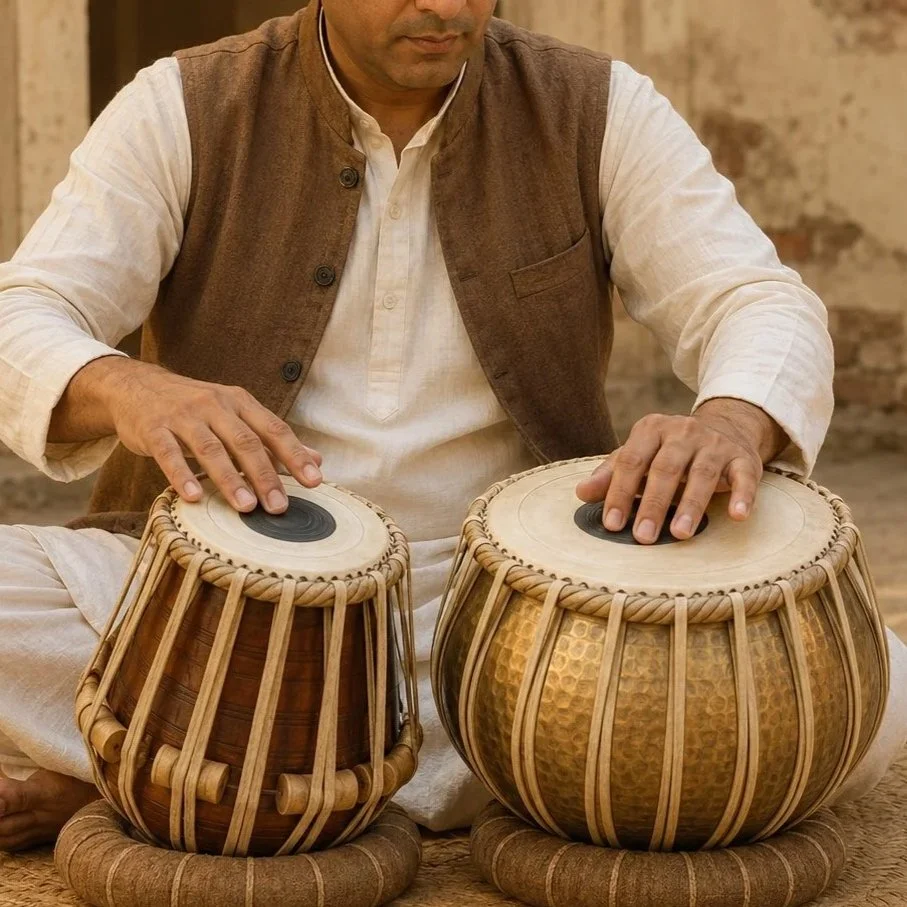
Tabla
A pair of hand drums consisting of a smaller wooden treble drum and a larger metal bass drum.
-
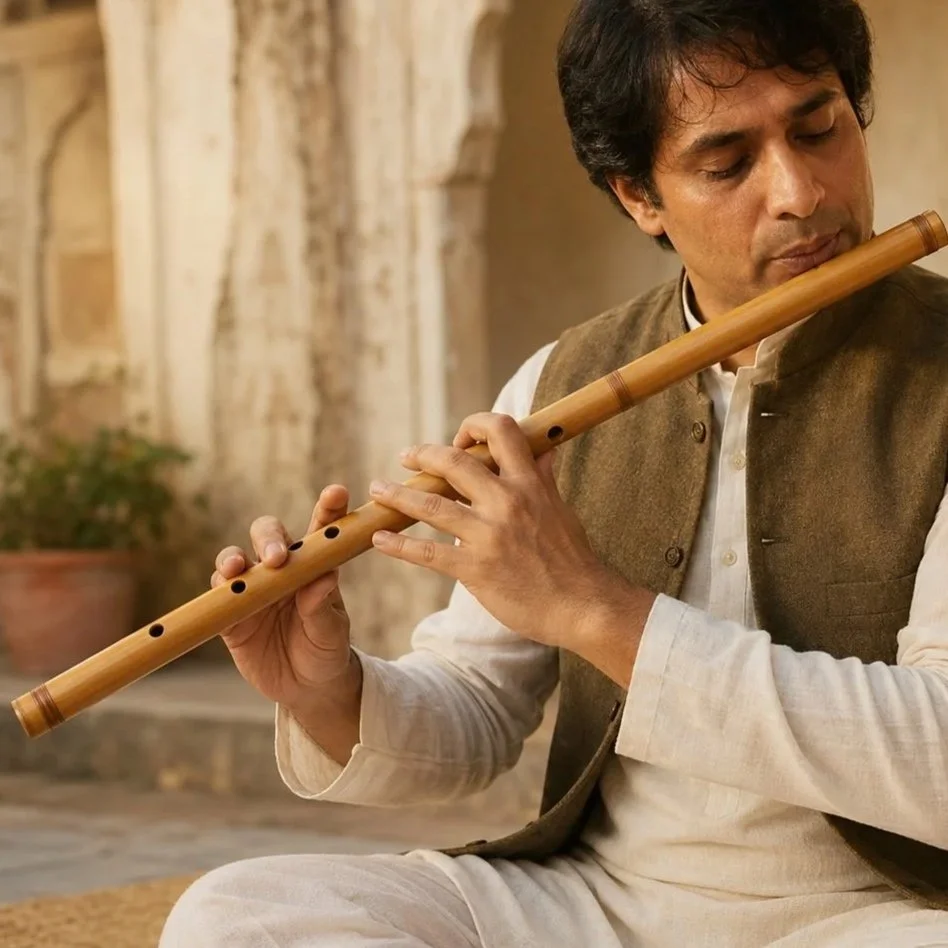
Bansuri
A side-blown bamboo flute with finger holes and no keys, used to shape sustained notes.
-
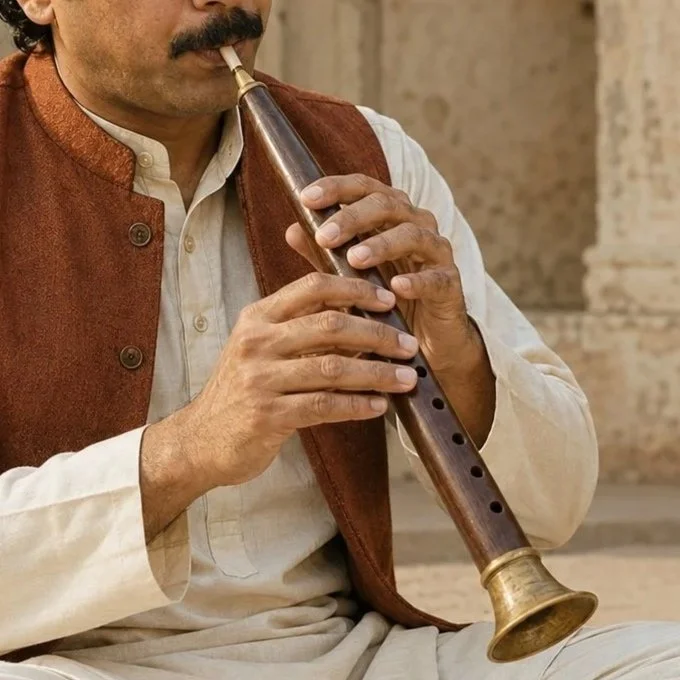
Shehnai
A double-reed wind instrument with a wooden body, finger holes and flared metal bell; known for its piercing tone.
-
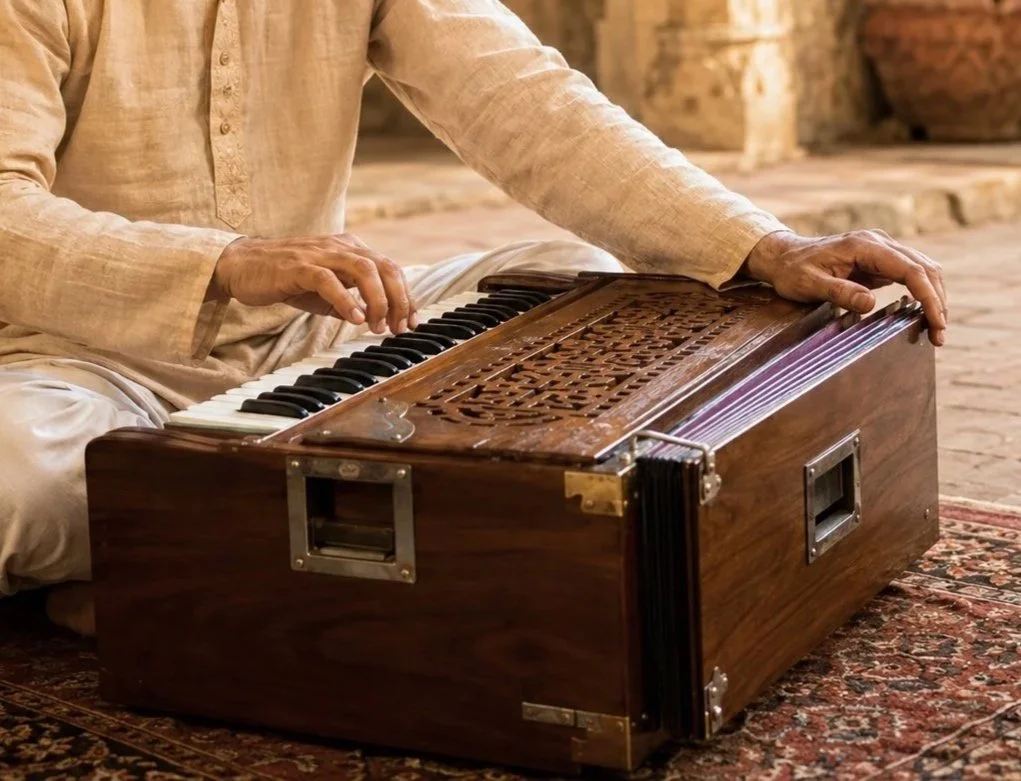
Harmonium
A small free-reed keyboard instrument whose bellows are pumped by hand.
Styles of Classical Music
-
Dhrupad
One of the oldest surviving forms of classical singing, dhrupad develops a raga slowly through deep, controlled notes. Its performances are traditionally accompanied by the tanpura and pakhawaj.
-
Khayal
Khayal gives the singer greater freedom to explore a raga through changing pace, emotion and improvisation. Its name means imagination, reflecting the creativity placed at the centre of each performance.
-
Tappa
Tappa grew from the quick songs associated with camel riders travelling through Punjab and Sindh before entering classical performance. Its short lyrics are carried through rapid notes and tightly twisting vocal phrases.
-
Thumri
Thumri places greater importance on the feeling behind its poetry than on strictly developing a raga. Singers may stretch, repeat or reshape a line to deepen its themes of love, devotion and separation.
-
Kafi
Kafi is both a poetic form and a style of singing closely associated with Punjabi Sufi poets. Its melodies are usually direct and lightly structured, allowing the meaning of the words to remain at the centre.
-
Tarana
Tarana replaces narrative lyrics with patterned syllables such as tanana and derena. These syllables allow the voice to behave almost like an instrument, moving through quick and rhythmically precise passages.
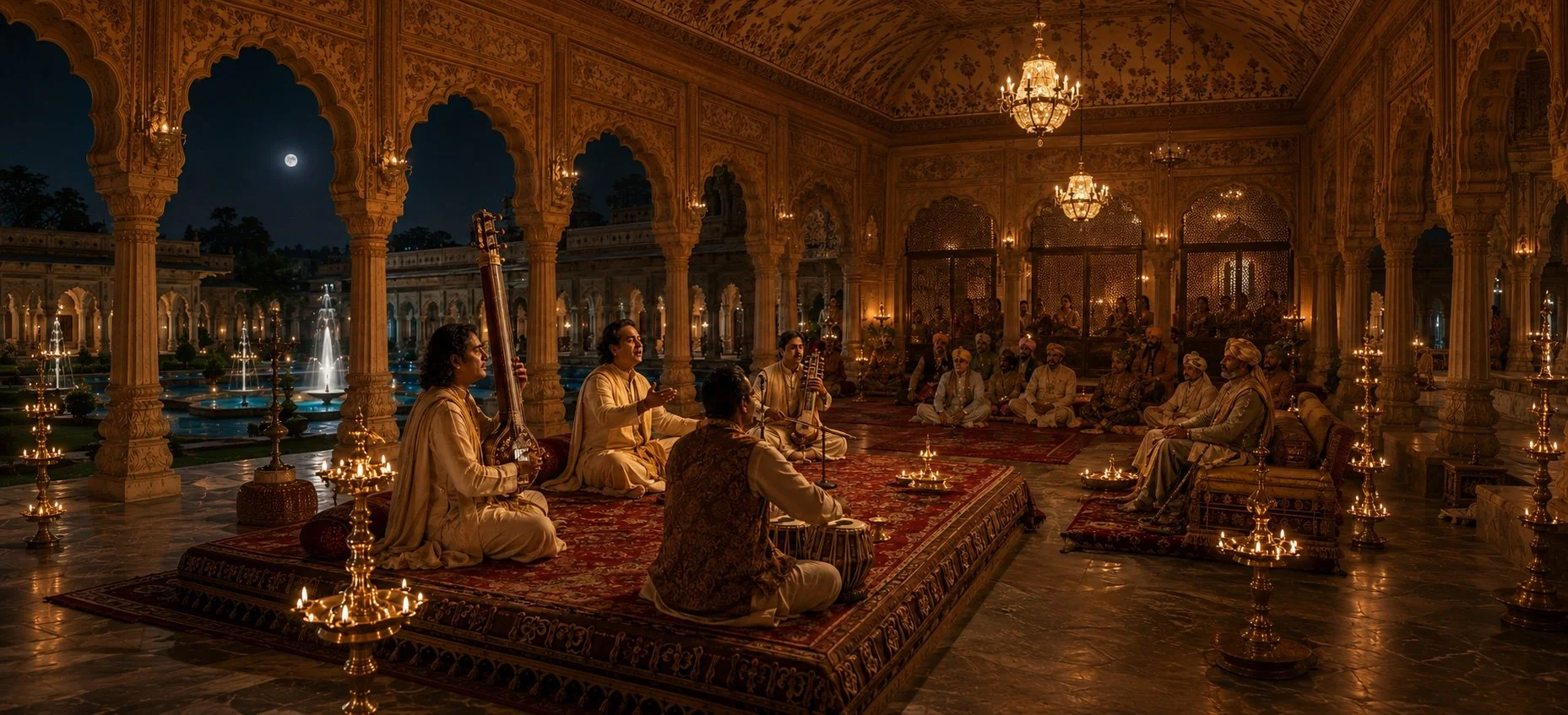
A classical performance usually develops one layer at a time.
Before the main performance begins, the musicians tune their instruments around the same central note. The tanpura then repeats a continuous background sound throughout the recital. It does not play a melody or keep a beat. Its purpose is to hold the musical centre, allowing the singer or instrumentalist to hear where every other note belongs.
The raag is introduced slowly. This opening is called the alaap, and it is usually performed without drums. Rather than beginning with a complete song, the musician moves gradually through the raag’s notes and phrases.
The performance begins with exploration before rhythm gives it shape.
A composed piece follows. In vocal music, this is usually called a bandish - a short set of lyrics and melody that the singer repeatedly returns to. The words may concern love, devotion, longing, nature or the seasons, but they are not always sung as a continuous story. Individual words and lines can be repeated, stretched or rearranged.
The tabla or pakhawaj then introduces the taal - a cycle of beats that continues beneath the performance. Unlike a simple beat counted endlessly forward, the taal repeatedly returns to its beginning. The sam - first beat, becomes an important returning point throughout.
Much of the performance is improvised. The musician may hold one note, move slowly between several notes or sing increasingly fast patterns. They may also sing the names of the notes - sa, re, ga, ma, pa, dha, ni - as part of the performance. A harmonium or sarangi often follows the singer, while the percussionist responds to changes in rhythm and speed.
Improvisation does not remove structure. The musician must remain within the raag, respect the rhythm and return to the composition at the correct moment. The pace often becomes faster as the performance continues. Melodic patterns grow shorter and more complex, the percussion becomes more active and the exchanges between musicians become easier for the audience to hear.
Different traditions organise this journey differently. Dhrupad usually develops the raag slowly and uses the pakhawaj, while khayal gives the singer greater freedom to reshape words and melody. Instrumental performances follow a similar movement from slow exploration towards rhythm and speed, although their sections have different names.
A classical performance is therefore neither completely fixed nor completely spontaneous. The raag, composition and rhythm already exist, but no two musicians will explore them in exactly the same way.
The tradition provides the structure. The performance reveals what the musician can do within it.